

Motmot

ムナオビオナガゴシキドリ 対 ミミジロゴシキドリ

Trachyphonus vaillantii 対 Stactolaema leucotis

ムナオビオナガゴシキドリとミミジロゴシキドリのクイズ
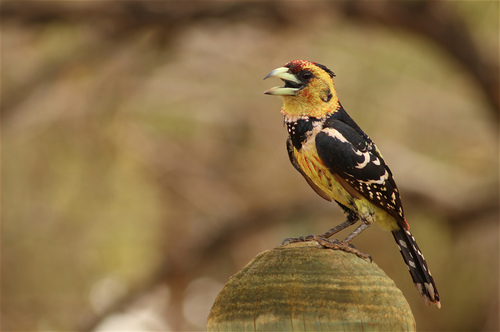
ムナオビオナガゴシキドリ (Trachyphonus vaillantii) ムナオビオナガゴシキドリ
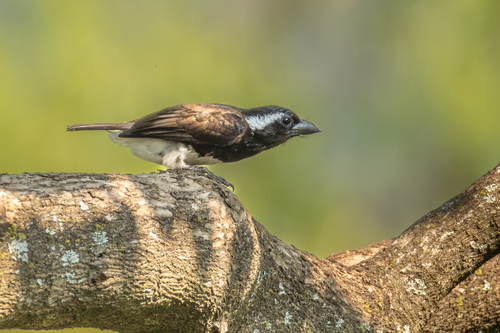
ミミジロゴシキドリ (Stactolaema leucotis) ミミジロゴシキドリ

メディア

読み込み中…

要点

クレストバーベットとミミジロゴシキドリを区別する最も信頼できるフィールドマークは、クレストバーベットの非常に大胆で多色の羽毛と小さな黒い冠であり、ミミジロゴシキドリのはるかに地味な暗褐色と白のパターン、目の後ろに明確な白いストライプがあることと比較されます。未熟なミミジロゴシキドリは全体的にさらに暗く、どの年齢でもクレストバーベットの明るい色を欠いています。飛んでいるときや止まっているとき、クレストバーベットの黄色、赤、黒、白の斑点模様は際立っており、ミミジロゴシキドリは白い腹と暗い頭で控えめです。くちばしの太さと顔の模様も重要です:クレストバーベットは太いくちばしと斑点のある黄色と赤の顔を持ち、ミミジロゴシキドリは暗い顔に鮮明な白い後眼ストライプを示します。両種は範囲と生息地が重なっているため、これらの視覚的手がかりに注意を払うことが不可欠です。

識別のコツ

  1. Face pattern: クレストバーベットは常に小さな黒い冠を持つ斑点のある黄色と赤の顔を示します。ミミジロゴシキドリは暗い顔に目の後ろに鮮明な白いストライプがあり、冠はありません。これはすべての年齢とすべての季節で信頼できます。
  2. Crest: クレストバーベットだけが小さな黒い冠を持っています。ミミジロゴシキドリの冠は滑らかに丸く、暗いです。
  3. Overall color: クレストバーベットは非常にカラフルで、特に頭と腹に黄色、赤、黒、白のパッチワークがあります。ミミジロゴシキドリは上面が暗褐色で、白い腹と顔、尾、翼に変動する白がありますが、黄色や赤は決してありません。
  4. Bill structure: クレストバーベットは太くて淡いくちばしを持ち、ミミジロゴシキドリのくちばしは黒く、あまり頑丈ではありません。これは良い光や近くから見ると最もよく見えます。
  5. Wing pattern: クレストバーベットの翼は黒に白い斑点があり、止まっているときや飛んでいるときに見えます。ミミジロゴシキドリの翼は単純な暗褐色で、斑点や大胆なパターンはありません。
  6. Belly color: クレストバーベットの腹は黄色に赤い斑点があります。ミミジロゴシキドリの腹は単純な白です。
  7. Neck band: クレストバーベットは首に広い黒いバンドを持ち、黄色の頭と体と対照的です。ミミジロゴシキドリには首のバンドがありません。
  8. Juvenile/immature confusion: 未熟なミミジロゴシキドリは全体的に黒っぽいですが、依然として黄色や赤はありません;白い後眼ストライプは常に存在します。若いクレストバーベットもカラフルで斑点があります。
  9. Tail and rump: クレストバーベットは体の端(尾/尾)に赤いマークを示し、ミミジロゴシキドリは尾に白が見えることがありますが、赤は決してありません。
  10. Leg color: ミミジロゴシキドリは黒から灰褐色の脚を持ち、灰色の足裏があります;これは微妙で、フィールドでは診断的であることは稀です。
  11. Behavior: クレストバーベットは地面で跳ねたり、露出した枝から目立って呼びかけたりするのがよく見られます。ミミジロゴシキドリはより樹上性で攻撃的ではありません。
  12. Flight style: クレストバーベットは飛ぶのをためらい、短距離でしか飛びません。ミミジロゴシキドリの飛行は記述されていませんが、森林のバーベットにとってはより典型的である可能性があります。
  13. Voice: 露出した止まり木から長いトリルの呼び声が聞こえた場合、それはクレストバーベットです。ミミジロゴシキドリの声はここでは記述されていません。
  14. Habitat: 両者は庭や森林の端でも見られることがあるため、生息地だけでは区別できません。
  15. Sex differences: 両種は性別が似ているため、性別は有用なフィールドマークではありません。

大きさ

ミミジロゴシキドリはクレストバーベット(メモには正確な測定はありませんが、小さな鳥として記述されています [wikipedia])よりもわずかに大きい(17–18 cm、48–63 g [wikipedia])です。フィールドでは、このサイズの違いは微妙で、両者が並んで見られない限り、信頼できる区別点ではありません。両種はずんぐりしていますが、クレストバーベットは太いくちばしと短い尾の印象のため、よりコンパクトに見えることがあります。

羽色

行動

クレストバーベットはしばしば単独またはペアで見られ、地面で跳ねたり、露出した枝から呼びかけたりします。彼らは他の鳥に対して攻撃的で、侵入者を追いかけたり攻撃したりすることがあります。彼らの飛行は弱く短く、カバーを通ったり枝に沿って移動することを好みます。ミミジロゴシキドリの行動はあまり記述されていませんが、森林のバーベットとして、一般的により樹上性で攻撃的ではありません。両者は似たような生息地で見られることがありますが、クレストバーベットは地面で餌を探したり、目立って呼びかけたりする可能性が高いです。

生息環境

両種は南部および東部アフリカ、エスワティニ、マラウイ、モザンビーク、南アフリカ、タンザニア、ジンバブエを含む広範囲に重なっています。クレストバーベットは森林や林の茂みから郊外の庭や水路まで、より広範囲の生息地を利用します。ミミジロゴシキドリは森林の種として記述され、より密で湿った生息地を好みます。しかし、両者は庭や森林の端でも見られることがあるため、生息地だけでは診断的ではありません。

声

クレストバーベットは非常に声が大きく、長く明確なトリルを生成し、長時間続くことがあります。この呼び声はしばしば露出した止まり木から発せられます。メモにはミミジロゴシキドリの声の記述はありませんので、声はクレストバーベットのための唯一のポジティブな手がかりです:長いトリルの呼び声が聞こえた場合、クレストバーベットの可能性が高いです。

より良い説明を送る

比較と同じ項目を使ってください。文章はすぐに公開されます。

The most reliable field mark to separate Crested Barbet from White-eared Barbet is the Crested Barbet's extremely bold, multi-colored plumage and small black crest, compared to the White-eared Barbet's much plainer dark brown and white pattern with a distinct white stripe behind the eye. Immature White-eared Barbets are even darker overall, lacking the Crested Barbet's bright colors at any age. In flight or perched, the Crested Barbet's yellow, red, black, and white speckled pattern stands out, while the White-eared Barbet remains subdued with a white belly and dark head. Bill thickness and facial pattern are also key: Crested Barbet has a thicker bill and a speckled yellow-red face, while White-eared Barbet shows a dark face with a crisp white post-ocular stripe. Both species overlap in range and habitat, so careful attention to these visual cues is essential.

  1. Face pattern: Crested Barbet always shows a speckled yellow and red face with a small black crest. White-eared Barbet has a dark face with a crisp white stripe behind the eye and no crest. This is reliable at all ages and in all seasons.
  2. Crest: Only Crested Barbet has a small black crest. White-eared Barbet's crown is smoothly rounded and dark.
  3. Overall color: Crested Barbet is extremely colorful—yellow, red, black, and white in a patchwork, especially on the head and belly. White-eared Barbet is dark brown above, with a white belly and variable white on the face, rump, and wings, but never any yellow or red.
  4. Bill structure: Crested Barbet has a thick, pale bill; White-eared Barbet's bill is black and less robust. This is best seen in good light or close views.
  5. Wing pattern: Crested Barbet's wings are black with white specks, visible when perched or in flight. White-eared Barbet's wings are plain dark brown, with no speckling or bold pattern.
  6. Belly color: Crested Barbet's belly is yellow with red speckles. White-eared Barbet's belly is plain white.
  7. Neck band: Crested Barbet has a broad black band on the neck, contrasting with the yellow head and body. White-eared Barbet lacks any neck band.
  8. Juvenile/immature confusion: Immature White-eared Barbets are blacker overall but still lack any yellow or red; the white post-ocular stripe is always present. Even young Crested Barbets are colorful and speckled.
  9. Tail and rump: Crested Barbet shows red markings at the end of the body (rump/tail), while White-eared Barbet may show some white on the rump but never red.
  10. Leg color: White-eared Barbet has black to grey-brown legs with grey soles; this is subtle and rarely diagnostic in the field.
  11. Behavior: Crested Barbet is more likely to be seen bouncing on the ground or calling conspicuously from an open branch. White-eared Barbet is more arboreal and less aggressive.
  12. Flight style: Crested Barbet is reluctant to fly and only does so for short distances. White-eared Barbet's flight is not described but is likely more typical for a woodland barbet.
  13. Voice: If you hear a long, trilling call from an exposed perch, it's Crested Barbet. White-eared Barbet's voice is not described here.
  14. Habitat: Both can occur in gardens and woodland edges, so do not rely on habitat alone for separation.
  15. Sex differences: Both species are sexually alike, so sex is not a useful field mark.

White-eared Barbet is slightly larger (17–18 cm, 48–63 g [wikipedia]) than Crested Barbet (no precise measurement in notes, but described as a small bird [wikipedia]). In the field, this size difference is subtle and not a reliable separation point unless both are seen side by side. Both species are stocky, but the Crested Barbet may appear more compact due to its thick bill and shorter tail impression.

  • Juvenile/Immature: Immature White-eared Barbets are blacker overall than adults, but still lack any yellow or red; they retain the white post-ocular stripe. Crested Barbet immatures are not specifically described, but even young birds show a mix of yellow, red, black, and white speckling, especially on the face and belly.
  • Adult: Crested Barbet is unmistakably colorful: yellow head and belly with red speckles, black and white speckled wings, a small black crest, and a broad black neck band. The face is speckled yellow and red. White-eared Barbet is dark brown above, with a white belly and a dark head, always showing a white stripe behind the eye. The amount of white on the face, rump, and wings varies, but never approaches the Crested Barbet's gaudiness. The White-eared Barbet's bill is black, while the Crested Barbet's is thick and pale. No age or seasonal variation in either species approaches the other's pattern.

Crested Barbets are often seen singly or in pairs, bouncing on the ground or calling from exposed branches. They are aggressive towards other birds and may chase or attack intruders. Their flight is weak and short, preferring to move through cover or along branches. White-eared Barbets' behavior is less described, but as woodland barbets, they are generally more arboreal and less aggressive. Both may be seen in similar habitats, but Crested Barbets are more likely to be seen foraging on the ground or calling conspicuously.

Both species overlap widely in southern and eastern Africa, including Eswatini, Malawi, Mozambique, South Africa, Tanzania, and Zimbabwe. Crested Barbet uses a broader range of habitats, from forests and woodland thickets to suburban gardens and watercourses. White-eared Barbet is described as a woodland species, favoring denser, moister habitats. However, both can occur in gardens and woodland edges, so habitat alone is not diagnostic.

Crested Barbet is highly vocal, producing a long, distinct trill that can continue for extended periods. This call is often given from an exposed perch. The notes do not describe White-eared Barbet's vocalizations, so voice is only a positive clue for Crested Barbet: if you hear a long, trilling call, Crested Barbet is likely.

変更を破棄しますか?

保存していない編集があります。今離れると失われます。

ムナオビオナガゴシキドリ · ミミジロゴシキドリ · 苦手な鳥