

Motmot

オニミズナギドリ/チチュウカイオニミズナギドリ 対 マンクスミズナギドリ

Calonectris diomedea 対 Puffinus puffinus

オニミズナギドリ/チチュウカイオニミズナギドリとマンクスミズナギドリのクイズ
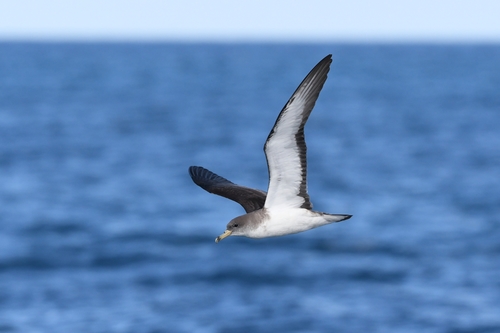
オニミズナギドリ/チチュウカイオニミズナギドリ (Calonectris diomedea) オニミズナギドリ/チチュウカイオニミズナギドリ
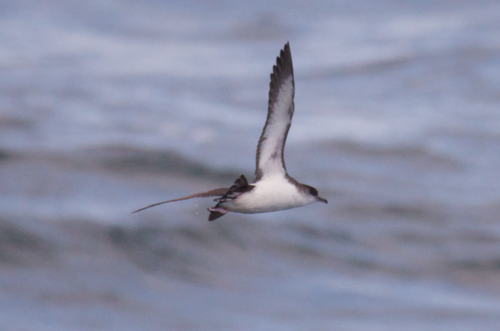
マンクスミズナギドリ (Puffinus puffinus) マンクスミズナギドリ

メディア

読み込み中…

要点

コリズミズナギドリとマンクスミズナギドリの最も信頼できるフィールドマークは、全体のサイズと構造です:コリズははるかに大きくてずんぐりしており、重いくちばしと広い翼を持っていますが、マンクスは明らかに小さくてスリムです。飛行中、コリズは白い腹面と淡い黄色のくちばしを持つ茶色がかった灰色の上翼を示し、一方マンクスは上面が鋭く黒く、下面が白く、高コントラストの外観を作り出します。下翼のパターンも重要です:コリズは主翼(特にP10)により多くの白を持ち、マンクスの下翼は主に白で、狭い暗い後縁があります。大きくてだらりとしたくちばしと茶色がかった色合いのミズナギドリを見たら、それはコリズです;小さくて鋭く黒と白の鳥で、暗いくちばしを持つのがマンクスです。両者は海上で混同されることがありますが、特に距離がある場合は、サイズ、構造、下翼のパターンに注意を払うことで区別できます。

識別のコツ

  1. サイズは最も迅速な区別要因:コリズはマンクスよりもはるかに大きくてずんぐりしており、広い翼幅と重い体を持っています。これは、鳥が一緒に見られる場合や他の種と比較する際に使用してください。
  2. くちばしの色と形:コリズは先端付近に暗い斑点のある淡い黄色のくちばしを持ち、厚くて重いです;マンクスのくちばしは細くて暗いです。これは近距離または良好な光の下で見ることができます。
  3. 上翼の色合い:コリズは上面が茶色がかった灰色で、暗い翼を持ち、柔らかく muted な外観を与えます。マンクスは上面が鋭く黒く、白い下面と強く対比しています。
  4. 下翼のパターン:コリズは主翼により多くの白を示し、特にP10で、下の翼先端をより白くします。マンクスの下翼は白で、狭い暗い後縁を持ち、コリズの翼先端ほど広く白くはありません。
  5. 下面:コリズは主に白で、翼の後縁に沿って茶色の縁があります。マンクスは下面がきれいな白で、特に後縁に鮮明な黒の縁があります。
  6. 頭と首:マンクスは黒い冠/うなじと白い顔/喉の間に鋭い区分があります;コリズはより均一に茶色がかった灰色で、対比があまり明確ではありません。
  7. 飛行スタイル:コリズは遅く、より重々しく、深く安定した翼拍動と長い滑空を持っています。マンクスは速く、敏捷で、しばしばバンクし、ひねり、黒と白の対比を示します。
  8. 距離での印象:コリズは長い翼を持ち、重く見え、しばしばだらりとした、楽に滑空します。マンクスはコンパクトで、「飛ぶ十字架」の形を持ち、方向を急速に変えます。
  9. 尾:コリズは暗い茶色の尾を持ち、時には上尾羽に白っぽい先端があります;マンクスの尾は黒く、短く、四角く切り取られ、黒い上面に溶け込んでいます。
  10. 脚と足:コリズは淡い肉色の脚と足を持っていますが、これらは海上ではめったに見えません。マンクスの脚についてはメモに記載されていません。
  11. 羽毛の落とし穴:両種は似ていますが、コリズは常にマンクスよりも茶色く、鮮明さが少ないように見えます。悪い光の下では、マンクスは曇った色に見えることがありますが、コリズほど茶色くも大きくもありません。
  12. 生息地と文脈:地中海で見られた場合、コリズの方がはるかに可能性が高いです;北大西洋、特に英国とアイルランドの近くでは、マンクスが一般的です。両者は西ヨーロッパの移動中に一緒に見られることがあります。
  13. 性別と年齢:両性は似ています;強い年齢特有のフィールドマークは記載されていないため、すべての年齢に対して構造と翼のパターンを使用してください。
  14. 声:メモには記載されていませんが、両者は海上ではほとんど静かです;これらの文脈でのフィールドの区別には声は役に立ちません。
  15. 疑問がある場合:サイズ、くちばしの色、黒と白の対比の鮮明さに焦点を当ててください—マンクスは常にコリズよりも鮮明にマーキングされ、小さいです。

大きさ

コリズミズナギドリはマンクスミズナギドリよりもかなり大きくて重いです。コリズは体重が約886gで、長さは45〜52cm、翼幅は112〜122cmです。マンクスははるかに軽く、約521gで、長さは30〜38cm、翼幅は76〜89cmです。この違いは直接比較すると明らかです:コリズは広い翼を持ち、重い体に見え、マンクスはスリムでコンパクトです。サイズだけで遠くの鳥を区別できますが、悪条件下での孤立した鳥には注意してください。

羽色

年齢特有の上翼パターンはどちらの種についても詳細には記載されていませんが、成鳥のコリズミズナギドリ(およびそれに続くスコポリズ)は、暗い翼を持つ茶色がかった灰色の上面と、主翼に広範囲にわたる白を持つ主に白い下翼を示します。特に最も外側の(P10)。対照的に、マンクスミズナギドリは上面が鋭く黒く、下面が白く、首と側面のきれいな区分があります。飛行中、マンクスの下翼は主に白ですが、後縁に沿って狭い暗い縁があります。コリズは暗い先端の斑点のある淡い黄色のくちばしを持ち、マンクスのくちばしは暗いです。両種の両性は似ています。幼鳥と未成熟の羽毛は、これらのメモでは特異的とは記載されていないため、成鳥と未成熟は主に上記の対比によって区別されます。

行動

両種は、家族の典型的な「シアリング」飛行を示し、硬い翼で海の上を低く滑空します。コリズミズナギドリの飛行は遅く、よりだらりとしており、しばしば重く見え、翼拍動が少なく、翼が広いです。マンクスミズナギドリはより敏捷で浮力があり、迅速でスナッピーな翼拍動を持ち、しばしばダイビングやバンクをする傾向があり、翼の姿勢から「飛ぶ十字架」と表現されることがあります。マンクスはしばしば水面に近く飛び、よりエネルギッシュに見えます。両種は繁殖コロニーを除いて、陸上にとまることはほとんどありません。

生息環境

コリズミズナギドリは岩の多い地中海の島々で繁殖し、繁殖シーズン外では大西洋で餌を探します。一方、マンクスミズナギドリは北大西洋の島々(英国、アイルランド、アイスランドなど)で繁殖し、南大西洋で冬を越します。海上では、両者は外洋性で大西洋で重なることがありますが、文脈が役立ちます:コリズは地中海と東大西洋でより可能性が高く、マンクスは北大西洋と英国諸島の近くで見られます。両者は沖合で見られますが、マンクスは北の沿岸近くで見られる可能性が高いです。

より良い説明を送る

比較と同じ項目を使ってください。文章はすぐに公開されます。

The most reliable field mark between Cory's Shearwater and Manx Shearwater is their overall size and structure: Cory's is much larger and bulkier, with a heavier bill and broader wings, while Manx is distinctly smaller and slimmer. In flight, Cory's shows a brownish-grey upperwing with a white underside and a pale yellow bill, whereas Manx is sharply black above and white below, creating a crisp, high-contrast look. The underwing pattern is also key: Cory's has more white on the primaries (especially P10), while Manx's underwing is mostly white with a narrow dark trailing edge. If you see a large, languid shearwater with pale bill and brownish tones, it's Cory's; a smaller, sharply black-and-white bird with a dark bill is Manx. Both can be confused at sea, especially at distance, but careful attention to size, structure, and underwing pattern will separate them.

  1. Size is the quickest separator: Cory's is much larger and bulkier than Manx, with a broad wingspan and heavy body. Use this when birds are seen together or with other species for scale.
  2. Bill color and shape: Cory's has a pale yellow bill with a dark patch near the tip, thick and heavy; Manx's bill is slender and dark. This is visible at close range or in good light.
  3. Upperwing coloration: Cory's is brownish-grey above with darker wings, giving a soft, muted look. Manx is sharply black above, contrasting strongly with its white underparts.
  4. Underwing pattern: Cory's shows more white on the primaries, especially P10, creating a whiter wingtip below. Manx's underwing is white with a narrow dark trailing edge, never as extensively white at the tips as Cory's.
  5. Underparts: Cory's is mostly white below with a brown border along the trailing edge of the wing. Manx is clean white below with a crisp black border, especially on the trailing edge.
  6. Head and neck: Manx has a sharp division between black crown/nape and white face/throat; Cory's is more uniformly brownish-grey with a less defined contrast.
  7. Flight style: Cory's is slower, more ponderous, with deep, steady wingbeats and long glides. Manx is quick, agile, and often banks and twists, showing its black-and-white contrast.
  8. Jizz at distance: Cory's appears long-winged and heavy, often with a languid, effortless glide. Manx looks compact, with a 'flying cross' shape and rapid changes in direction.
  9. Tail: Cory's has a dark brown tail, sometimes with whitish tips to the upper tail-coverts; Manx's tail is black, short, and square-cut, blending into the black upperparts.
  10. Legs and feet: Cory's has pale flesh-colored legs and feet, but these are rarely visible at sea. Manx's are not described in the notes.
  11. Plumage pitfalls: Both species are similar below, but Cory's always looks browner and less crisp than Manx. In poor light, Manx can look dusky, but never as brown or as large as Cory's.
  12. Habitat and context: If seen in the Mediterranean, Cory's is far more likely; in the North Atlantic, especially near the UK and Ireland, Manx is common. Both can occur together off western Europe in migration.
  13. Sex and age: Both sexes are similar; no strong age-specific field marks are described, so use structure and wing pattern for all ages.
  14. Voice: Not described in the notes, but both are largely silent at sea; vocalizations are not useful for field separation in these contexts.
  15. When in doubt: Focus on size, bill color, and the sharpness of the black-and-white contrast—Manx is always more sharply marked and smaller than Cory's.

Cory's Shearwater is substantially larger and heavier than Manx Shearwater. Cory's averages about 886 g in body mass and measures 45–52 cm in length with a 112–122 cm wingspan. Manx is much lighter, around 521 g, with a length of 30–38 cm and a wingspan of 76–89 cm. This difference is obvious in direct comparison: Cory's appears broad-winged and heavy-bodied, while Manx is slim and compact. Size alone can separate distant birds if seen together, but beware of lone birds in poor conditions.

Age-specific upperwing patterns are not described in detail for either species, but adult Cory's Shearwater (and by extension Scopoli's) shows brownish-grey upperparts with darker wings, and a mostly white underwing with extensive white on the primaries, especially the outermost (P10). Manx Shearwater, by contrast, is sharply black above and white below, with a clean division at the side of the neck and flanks. In flight, Manx's underwing is mostly white but edged with a narrow dark border along the trailing edge. Cory's has a paler yellow bill with a dark tip patch, while Manx's bill is dark. Both sexes are similar in both species. Juvenile and immature plumages are not described as distinctive for either in these notes, so adults and immatures are separated mainly by the above contrasts.

Both species exhibit the typical 'shearing' flight of their family, gliding low over the sea with stiff wings. Cory's Shearwater's flight is slower, more languid, and often appears heavier, with fewer wingbeats and broader wings. Manx Shearwater is more agile and buoyant, with rapid, snappy wingbeats and a tendency to dip and bank, often described as a 'flying cross' due to its wing posture. Manx often flies closer to the water surface and appears more energetic. Both species rarely perch on land except at breeding colonies.

Cory's Shearwater breeds on rocky Mediterranean islands and forages in the Atlantic outside the breeding season, while Manx Shearwater breeds on North Atlantic islands (UK, Ireland, Iceland, etc.) and winters in the South Atlantic. At sea, both are pelagic and can overlap in the Atlantic, but context can help: Cory's is more likely in the Mediterranean and eastern Atlantic, Manx in the North Atlantic and off the British Isles. Both are seen far offshore, but Manx is more likely near northern coasts.

変更を破棄しますか?

保存していない編集があります。今離れると失われます。

オニミズナギドリ/チチュウカイオニミズナギドリ · マンクスミズナギドリ · 苦手な鳥