

Motmot

コクイシャコ 対 フタツケズメシャコ

Campocolinus coqui 対 Pternistis bicalcaratus

コクイシャコとフタツケズメシャコのクイズ
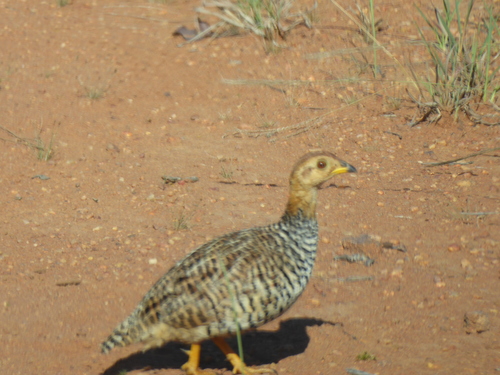
コクイシャコ (Campocolinus coqui) コクイシャコ
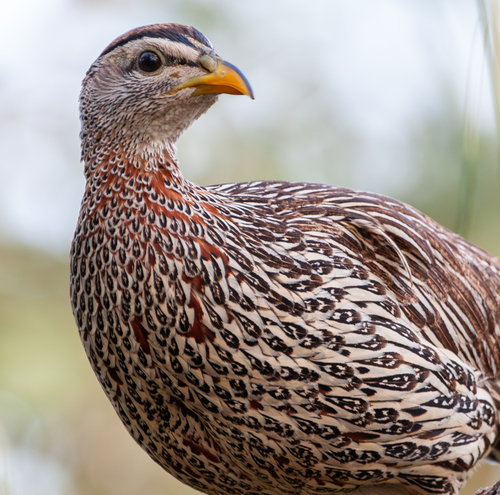
フタツケズメシャコ (Pternistis bicalcaratus) フタツケズメシャコ

メディア

読み込み中…

要点

フタツケズメシャコとコクイシャコを区別する最も信頼できるフィールドマークは、サイズ、頭の模様、脚のスパーの組み合わせです。フタツケズメシャコは明らかに大きくてがっしりしており、目を引く栗色の冠、白い眉斑、白い頬の斑点がありますが、コクイシャコは小さく、これらの強い顔のコントラストが欠けています。フタツケズメシャコのオスはほぼ常に2つの脚のスパーを示し、これはコクイシャコにはありません。未成熟のフタツケズメシャコは成鳥の雌に似ているため、若い鳥の場合はスパーよりも頭と顔の模様に注目してください。両種は内気で、静かに逃げることを好みますが、彼らの構造と羽毛は一貫した区別を提供します。

識別のコツ

  1. Size and bulk: フタツケズメシャコはコクイシャコよりもはるかに大きくて重いです。これは、特に鳥が並んでいるときや、スケールのために馴染みのある種と一緒にいるときに、遠くからでも明らかです。
  2. Head pattern: フタツケズメシャコの栗色の冠、白い眉斑、白い頬の斑点を探してください。これらはコクイシャコにはなく、顔がよりシンプルです。このマークはすべての年齢と性別に対して信頼できます。
  3. Neck collar: フタツケズメシャコの栗色の首輪は強いマークで、特にオスに見られ、コクイシャコにはありません。
  4. Leg spurs: 成熟したオスのフタツケズメシャコはほぼ常に脚ごとに2つのスパーを持っています(上のものは鈍い)。雌や若いオスはスパーが欠けていることがあるため、このマークは近距離で成熟したオスに最適です。コクイシャコはスパーがありません。
  5. Leg color: フタツケズメシャコは鈍い緑色の脚を持っていますが、コクイシャコの脚の色はここでは指定されていませんが、同じ緑がかったトーンは示していません。
  6. Upperpart pattern: 両種は上面が茶色ですが、フタツケズメシャコはクリーム色と暗色のストライプと斑点がより強く見られ、コクイシャコはより均一です。
  7. Underpart markings: フタツケズメシャコの胸と側面には、クリーム色の中央に斑点がある暗褐色の羽毛があります。コクイシャコはこの強いコントラストが欠けています。
  8. Structure: フタツケズメシャコは深い胸と頑丈な体を持ち、重い体型です。コクイシャコは全体的にスリムで繊細です。
  9. Flight style: フラッシュされたとき、フタツケズメシャコは強い、キジのような飛行で空中に爆発します。コクイシャコはより軽くフラッシュすることがありますが、これは微妙で常に診断的ではありません。
  10. Juvenile confusion: 未成熟のフタツケズメシャコは成鳥の雌に似ており、スパーが欠けているため、この年齢での区別には頭の模様とサイズに頼ってください。
  11. Sex differences: 雌のフタツケズメシャコはわずかに小さく、スパーが欠けていますが、それでも特徴的な頭と首の模様を示します。
  12. Habitat: 両種は開けたまたは軽く木立のある生息地を使用するため、フタツケズメシャコの範囲外でない限り、場所だけに頼らないでください。
  13. Vocalization: もし丘から機械的な「クラック・クラック・クラック」という音が聞こえたら、それはフタツケズメシャコです。コクイシャコの鳴き声はここでは説明されていません。
  14. Behavior: 両種は内気で、見えないように歩いて逃げることを好みますが、フタツケズメシャコは特にこの行動が注目されています。
  15. Pitfalls: スパーが欠けていて、より頑丈に見えない未成熟のフタツケズメシャコに注意してください。最初に頭の模様と全体のサイズを確認してください。

大きさ

フタツケズメシャコは大きくて重いです:オスは30〜34 cmの長さで、約507 gの重さがあり、雌は約381 gです [wikipedia]。コクイシャコは小さくて軽いです(ここでは正確な測定は提供されていませんが、フィールドでは常に明らかによりコンパクトです)。フタツケズメシャコはより頑丈で深い胸を持っているように見えますが、コクイシャコは全体的によりスリムです。

羽色

すべての年齢において、フタツケズメシャコは特徴的な頭の模様を示します:栗色の冠、白い眉斑、白い頬の斑点、栗色の首輪。上面は茶色で、暗色とクリーム色のストライプと斑点があり、胸と側面は暗褐色でクリーム色の中央に斑点があります。脚は鈍い緑色で、オスは2つの脚のスパーを持っています(未成熟のオスはこれを発達させるのに数ヶ月かかります)。雌は似ていますが、スパーが欠けており、わずかに小さいです。未成熟の個体は成鳥の雌のように見えるため、頭の模様が最良のフィールドマークとして残ります。コクイシャコは強い顔のコントラストと栗色の冠が欠けており、代わりにより均一で、あまり大胆にマークされていない顔と頭を示します。いずれの種についても、特定の年齢に特有の上翼や飛行のマークは資料には記載されていないため、すべての年齢に対して頭と体の模様に頼ってください。

行動

両種は目立たず、フラッシュするよりも歩いたり這ったりすることを好みますが、フタツケズメシャコは特に飛ぶことに対する抵抗が注目されています。押されたときにのみ爆発的に飛び立ちます。両種は地面で見ることができ、しばしばカバーのある開けた場所にいます。

生息環境

フタツケズメシャコは、特に熱帯西アフリカやまれにモロッコで、散在する木々のある開けた生息地を好みます。地面に巣を作ります。コクイシャコも開けたまたは軽く木立のある生息地を好むため、生息地だけでは範囲が重なる場所での信頼できる区別にはなりません。

声

フタツケズメシャコのオスは、特に春に丘から機械的な「クラック・クラック・クラック」と歌います。資料にはコクイシャコの声の説明は提供されていないため、フタツケズメシャコの特徴的な鳴き声が聞こえた場合にのみ声が役立ちます。

より良い説明を送る

比較と同じ項目を使ってください。文章はすぐに公開されます。

The most reliable field mark to separate Double-spurred Spurfowl from Coqui Francolin is the combination of size, head pattern, and leg spurs. Double-spurred Spurfowl is noticeably larger and bulkier, with a striking chestnut crown, white supercilium, and white cheek patches, while Coqui Francolin is smaller and lacks these strong facial contrasts. Males of Double-spurred Spurfowl almost always show two leg spurs, a feature absent in Coqui Francolin. Immature Double-spurred Spurfowl resemble adult females, so focus on head and face pattern rather than spurs for young birds. Both species can be shy and prefer to creep away, but their structure and plumage offer consistent separation.

  1. Size and bulk: Double-spurred Spurfowl is much larger and heavier than Coqui Francolin; this is often apparent even at a distance, especially when birds are side by side or with familiar species for scale.
  2. Head pattern: Look for the spurfowl's chestnut crown, white supercilium, and white cheek patches—these are absent in Coqui Francolin, which has a plainer face. This mark is reliable for all ages and sexes.
  3. Neck collar: The chestnut neck collar of Double-spurred Spurfowl is a strong mark, especially on males, and is not shown by Coqui Francolin.
  4. Leg spurs: Adult male Double-spurred Spurfowl almost always have two leg spurs per leg (the upper one blunt). Females and young males may lack spurs, so this mark is best used for mature males at close range. Coqui Francolin lacks spurs.
  5. Leg color: Double-spurred Spurfowl has dull green legs, while Coqui Francolin's leg color is not specified here, but it does not show the same greenish tone.
  6. Upperpart pattern: Both species are brown above, but Double-spurred Spurfowl is more heavily streaked and spotted with cream and dark, while Coqui Francolin is more uniform.
  7. Underpart markings: The spurfowl's chest and flanks have dark brown feathers edged and centrally spotted cream; Coqui Francolin lacks this strong contrast.
  8. Structure: The spurfowl is deep-chested and robust, with a heavy build; the francolin is slimmer and more delicate.
  9. Flight style: When flushed, Double-spurred Spurfowl explodes into the air with a strong, pheasant-like flight. Coqui Francolin may flush more lightly, but this is subtle and not always diagnostic.
  10. Juvenile confusion: Immature Double-spurred Spurfowl resemble adult females and lack spurs, so rely on head pattern and size for separation at this age.
  11. Sex differences: Female Double-spurred Spurfowl are slightly smaller and lack spurs, but still show the distinctive head and neck pattern.
  12. Habitat: Both species use open or lightly wooded habitats, so do not rely on location alone unless outside the spurfowl's range.
  13. Vocalization: If you hear a mechanical 'krak-krak-krak' from a mound, it is Double-spurred Spurfowl; Coqui Francolin's call is not described here.
  14. Behavior: Both species are shy and prefer to walk away unseen, but Double-spurred Spurfowl is especially noted for this behavior.
  15. Pitfalls: Beware of immature spurfowl, which lack spurs and can appear less robust—always check head pattern and overall size first.

Double-spurred Spurfowl is substantially larger and heavier: males measure 30–34 cm in length and weigh about 507 g, females about 381 g [wikipedia]. Coqui Francolin is smaller and lighter (precise measurements not provided here, but always noticeably more compact in the field). The spurfowl appears more robust and deep-chested, while the francolin is more slender overall.

For all ages, Double-spurred Spurfowl shows a distinctive head pattern: a chestnut crown, white supercilium, white cheek patches, and a chestnut neck collar. The upperparts are brown with dark and cream streaks and spots, and the chest and flanks are dark brown edged and centrally spotted cream. The legs are dull green, and males have two leg spurs (immature males take several months to develop these). Females are similar but lack spurs and are slightly smaller. Juveniles after post-juvenile moult look like adult females, so head pattern remains the best field mark. Coqui Francolin lacks the strong facial contrasts and chestnut crown, instead showing a more uniform, less boldly marked face and head. No distinctive age-specific upperwing or flight marks are noted for either species in the sources, so rely on head and body pattern for all ages.

Both species are unobtrusive and prefer to walk or creep away rather than flush, but Double-spurred Spurfowl is especially noted for its reluctance to fly, only taking off explosively when pressed. When flushed, the spurfowl has a strong, pheasant-like flight. Both species can be seen on the ground, often in open areas with some cover.

Double-spurred Spurfowl favors open habitats with scattered trees, especially in tropical West Africa and, rarely, Morocco. It nests on the ground. Coqui Francolin also prefers open or lightly wooded habitats, so habitat alone is not a reliable separator where ranges overlap.

Double-spurred Spurfowl males sing a mechanical 'krak-krak-krak' from a mound, especially in spring. No vocal description is provided for Coqui Francolin in the sources, so voice is only useful if the spurfowl's distinctive call is heard.

変更を破棄しますか?

保存していない編集があります。今離れると失われます。

コクイシャコ · フタツケズメシャコ · 苦手な鳥