

Motmot

ツクシガモ 対 ハシビロガモ

Tadorna tadorna 対 Spatula clypeata

ツクシガモとハシビロガモのクイズ
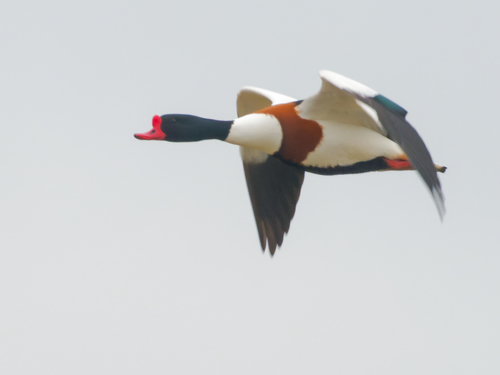
ツクシガモ (Tadorna tadorna) ツクシガモ
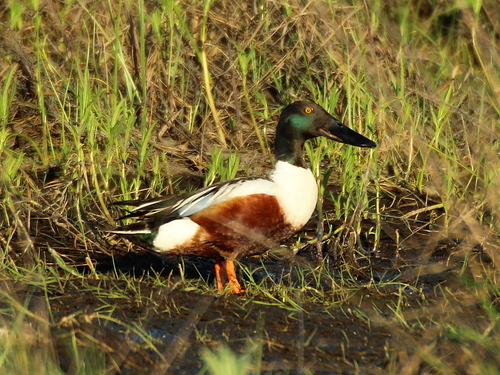
ハシビロガモ (Spatula clypeata) ハシビロガモ

メディア

読み込み中…

要点

コモンシェルダックとハシビロガモを区別する最も信頼できるフィールドマークは、全体の構造とくちばしの形です:シェルダックは大きく、短い首を持つガチョウのようなカモで、明るい赤みがかったピンクのくちばし(成鳥のオスでは膨らんでいます)を持っています。一方、ハシビロガモは明らかに小さく、スリムで、長くて幅広いスプーンのようなくちばしを持っています。飛行中、両種は強い翼の模様を示しますが、シェルダックの白い覆羽と黒い一次羽、緑色の光沢のある二次羽は、ハシビロガモの淡い青色の前羽と緑色の鏡と対照的です。両種の幼鳥はすでに成鳥のような翼の模様を示しています。シェルダックのオスとメスは似ていますが、ハシビロガモのメスは大きく、淡い縁のあるくちばしを持つまだら模様の茶色です。生息地の文脈に注意してください:シェルダックは開けた河口や塩水のプールを好み、ハシビロガモはより湿地や浅い湖に生息することが多いです。

識別のコツ

  1. サイズと形: シェルダックははるかに大きく、ずんぐりしており、短い首と直立した姿勢を持っています;ハシビロガモは小さく、スリムで、水面に低く座ります。両種が存在する場合、どの距離でも信頼できます。
  2. くちばしの形: シェルダックのくちばしは太く、短く、赤みがかったピンク(繁殖期の成鳥のオスでは目立つつまみがあります);ハシビロガモのくちばしは長く、幅広く、スプーン状で、特に横から見ると大きくて平らに見えます。これはすべての年齢と性別において近距離で診断的です。
  3. 成鳥のオスの羽色: オスのシェルダックは暗緑色の頭、白い体、栗色の胸帯、黒い腹を持っています;繁殖期のオスのハシビロガモは暗緑色の頭、白い胸、栗色の側面と腹を持っていますが、くちばしは黒く、はるかに大きいです。
  4. メスと日食の羽色: メスのシェルダックはオスに似ていますが小さく、顔にいくつかの白い斑点があり、くちばしは鈍いです;メスのハシビロガモはまだら模様の茶色(メスのマガモのよう)ですが、長くて幅広い灰色のくちばしがあり、縁はオレンジ色がかっています。日食の時、オスのハシビロガモはメスに似ていますが、青い前羽を保持します。
  5. 幼鳥の羽色: 幼鳥のシェルダックは上面が灰色で、主に下面は白く、成鳥の大胆な翼の模様を持っています;幼鳥のハシビロガモはメスに似ていますが、鈍いくちばしとコントラストが少ないです。
  6. 飛行中の翼の模様(すべての年齢): シェルダックは白い覆羽、黒い一次羽、緑色の光沢のある黒い二次羽、そして黒い飛行羽を除いて主に白い下翼を示します。ハシビロガモは淡い青色の前羽(特にオスで目立つ)、緑色の鏡、そしてその間に白い縁を示します;メスのハシビロガモの前羽は灰色です。
  7. 飛行中の下翼: シェルダックの下翼は主に白く、黒い飛行羽があります;ハシビロガモの下翼は詳細には記載されていませんが、この強いコントラストはありません。
  8. くちばしの色(近距離での観察): シェルダックのくちばしは常に赤みがかったピンク(オスでは明るいです);ハシビロガモのくちばしは黒(オス)または灰色でオレンジ色の縁がある(メス)です。
  9. 脚の色: ハシビロガモの脚は明るいオレンジ色;シェルダックの脚はピンクですが、距離があるとあまり目立ちません。
  10. 生息地の文脈: シェルダックは開けた河口、干潟、塩水のプールにいる可能性が高い;ハシビロガモは浅く、植生のある湿地や湖を好みます。
  11. 採餌行動: ハシビロガモはしばしばくちばしを左右に振って食べ物を濾します;シェルダックはガチョウのように草を食べたり、ダブリングしたりします。
  12. 群れのサイズ: 大きくて密な群れ(数百または数千)はシェルダックの可能性が高く、特に干潟で;ハシビロガモは通常小さなグループでいます。
  13. 声: シェルダックは大きくて深いホーンを出します;ハシビロガモの鳴き声はあまり特徴的ではなく、ここでは記載されていません。
  14. 性差: シェルダックのオスとメスは似ています(メスは小さく、顔にいくつかの白い部分があります);ハシビロガモのオスとメスは強く異なります(メスはまだら模様の茶色、オスは繁殖期に大胆な頭と胸の色を持っています)。
  15. くちばしのつまみ: 繁殖期の成鳥のオスのシェルダックだけが目立つくちばしのつまみを示します;ハシビロガモは決して示しません。

大きさ

コモンシェルダックはハシビロガモ(通常500〜800g)よりもはるかに大きく、重い(体重約1150g)。シェルダックは長さ55〜65cm、翼幅100〜120cmで、ずんぐりした短い首を持つガチョウのようなシルエットを持っています。ハシビロガモはよりコンパクトで(長さ44〜52cm、翼幅70〜84cm)、水面に対してスリムで低く見えます。直接比較すると、シェルダックはずんぐりしていて背が高く、ハシビロガモは明らかに華奢で軽いです。

羽色

両種の幼鳥と未成熟な鳥はすでにほとんどの成鳥の翼の模様の特徴を示しています。飛行中、すべての年齢のコモンシェルダックは目を引く白い上翼覆羽、黒い一次羽、強い緑色の光沢のある黒い二次羽を示します。下翼は主に白く、黒い飛行羽を除きます。すべての羽色のハシビロガモは淡い青色の前羽(光が悪いとあまり目立たない)、白で縁取られた緑色の鏡、そしてメスの灰色の前羽を示します。成鳥のオスのシェルダックは暗緑色の頭、白い体、栗色の胸帯、黒い腹で鮮やかにマーキングされています;くちばしは繁殖期のオスでは明るい赤で目立つつまみがあります。繁殖期の成鳥のオスのハシビロガモは暗緑色の頭、白い胸、栗色の側面と腹、そして巨大な黒いくちばしを持っています;日食の時、メスに似ていますが青い前羽を保持します。メスのシェルダックはオスに似ていますが小さく、顔にいくつかの白い斑点があり、くちばしは鈍いです;メスのハシビロガモは長くて幅広い灰色のくちばしを持つまだら模様の茶色です。幼鳥のシェルダックは上面が灰色で、主に下面は白く、成鳥の翼の模様を持っています;幼鳥のハシビロガモは成鳥のメスに似ていますが、鈍いくちばしとコントラストが少ないです。

行動

コモンシェルダックは特に換羽中に大きく目立つ群れで見られることが多く、開けた露出した生息地で草を食べたり泳いだりしています。両親はひなを守り、巣から長距離を導くことがあります。ハシビロガモは繁殖期以外はあまり群れを作らず、通常は小さなグループで、ダブリングして左右にくちばしを振って食べ物を濾します。ハシビロガモのユニークな採餌行動—特化したくちばしで水を濾すこと—は特徴的です。シェルダックは干潟を歩いたり草を食べたりするのが見られる一方、ハシビロガモはほぼ常に浅い水でダブリングしています。

生息環境

コモンシェルダックは開けた河口、潮間帯の干潟、塩水のプール、そしてますます内陸の淡水湖や川に強く関連しています。水の近くの穴や隙間で繁殖し、主に河口で冬を越します。ハシビロガモは浅く泥底の湿地、湖、そして水生無脊椎動物が豊富な湿地を好み、露出した潮間帯の干潟では見つかる可能性が低いです。両者は淡水に出現することがありますが、シェルダックはより沿岸で開けた国に生息し、ハシビロガモはより湿地で植生のある場所に生息します。

声

コモンシェルダックは大きなホーンを出し、これは典型的なダブリングカモのクワックよりも深く、共鳴します。ハシビロガモの鳴き声は提供されたメモには記載されていませんが、一般的にシェルダックのホーンよりも柔らかく、あまり特徴的ではありません。

より良い説明を送る

比較と同じ項目を使ってください。文章はすぐに公開されます。

The most reliable field mark to separate Common Shelduck from Northern Shoveler is overall structure and bill shape: Shelduck is a large, short-necked, goose-like duck with a bright reddish-pink bill (bulbous in adult males), while Northern Shoveler is distinctly smaller, slimmer, and has a long, broad, spatula-shaped bill. In flight, both species show strong wing patterns, but Shelduck’s white coverts and black primaries with green-glossed secondaries contrast with the Shoveler’s pale blue forewing and green speculum. Juveniles of both species already show adult-like wing patterns. Sexes are similar in Shelduck, while Shoveler females are mottled brown with a large, pale-edged bill. Watch for habitat context: Shelduck favors open estuaries and saline pools, while Shoveler is more often in marshes and shallow lakes.

  1. Size and shape: Shelduck is much larger and bulkier, with a short neck and upright stance; Shoveler is smaller, slimmer, and sits lower on the water. This is reliable at any distance when both species are present.
  2. Bill shape: Shelduck’s bill is thick, short, and reddish-pink (with a prominent knob in adult males during breeding); Shoveler’s bill is long, broad, and spatulate, appearing oversized and flat, especially in profile. This is diagnostic at close range for all ages and sexes.
  3. Adult male plumage: Male Shelduck has a dark green head, white body, chestnut breast band, and black belly; male Shoveler (breeding) has a dark green head, white breast, chestnut flanks and belly, but the bill is black and much larger.
  4. Female and eclipse plumage: Female Shelduck is similar to male but smaller, with some white flecks on the face and a duller bill; female Shoveler is mottled brown (like a female Mallard) but with a long, broad, greyish bill tinged orange at the edges. In eclipse, male Shoveler resembles the female but keeps the blue forewing.
  5. Juvenile plumage: Juvenile Shelduck is greyish above, mostly white below, with the adult’s bold wing pattern; juvenile Shoveler is mottled brown like the female, with a duller, broad bill.
  6. Wing pattern in flight (all ages): Shelduck shows white coverts, black primaries, black secondaries with green gloss, and mostly white underwing except black flight feathers. Shoveler shows pale blue forewing (especially obvious in males), green speculum, and white border between them; female Shoveler’s forewing is grey.
  7. Underwing in flight: Shelduck’s underwing is mostly white with black flight feathers; Shoveler’s underwing is not described in detail but lacks this strong contrast.
  8. Bill color (close views): Shelduck’s bill is always reddish-pink (brighter in males); Shoveler’s is black (male) or greyish with orange edges (female).
  9. Leg color: Shoveler’s legs are bright orange-red; Shelduck’s are pink, but this is less obvious at a distance.
  10. Habitat context: Shelduck is more likely on open estuaries, tidal flats, and saline pools; Shoveler prefers shallow, vegetated marshes and lakes.
  11. Feeding behavior: Shoveler often swings its bill side-to-side to filter food; Shelduck grazes or dabbles more like a goose.
  12. Flock size: Large, dense flocks (hundreds or thousands) are more likely Shelduck, especially on mudflats; Shoveler usually in small groups.
  13. Voice: Shelduck gives a loud, deep honk; Shoveler’s call is less distinctive and not described here.
  14. Sexual dimorphism: Shelduck sexes are similar (female smaller, some white on face); Shoveler sexes differ strongly (female mottled brown, male with bold head and breast colors in breeding).
  15. Bill knob: Only adult male Shelduck in breeding season shows a prominent bill knob; Shoveler never does.

Common Shelduck is much larger and heavier (body mass ~1150 g) than Northern Shoveler (typically 500–800 g). Shelduck measures 55–65 cm in length with a 100–120 cm wingspan, giving it a chunky, short-necked, goose-like silhouette. Northern Shoveler is more compact (44–52 cm long, 70–84 cm wingspan), appearing slim and low to the water. In direct comparison, Shelduck is bulkier and stands taller, while Shoveler is noticeably daintier and lighter.

Juvenile and immature birds of both species already show most adult wing pattern features. In flight, Common Shelduck of all ages shows striking white upperwing coverts, black primaries, and black secondaries with a strong green iridescent sheen. The underwing is mostly white except for black flight feathers. Northern Shoveler in all plumages shows a pale blue forewing (less obvious in poor light), a green speculum bordered by white, and a duller grey forewing in females. Adult male Shelduck is crisply marked with a dark green head, white body, chestnut breast band, and black belly; the bill is bright red with a prominent knob in breeding males. Adult male Shoveler (breeding) has a dark green head, white breast, chestnut flanks and belly, and a huge black bill; in eclipse, it resembles the female but retains the blue forewing. Female Shelduck is similar to male but smaller, with some white flecks on the face and a duller bill; female Shoveler is mottled brown with a long, broad, greyish bill tinged orange on the edges. Juvenile Shelduck is greyish above, mostly white below, with the adult wing pattern; juvenile Shoveler is similar to adult female but with a duller bill and less contrast.

Common Shelduck is often seen in large, conspicuous flocks, especially during moult, and can be found grazing or swimming in open, exposed habitats. Both parents guard ducklings, which may be led long distances from the nest. Northern Shoveler is less gregarious outside breeding, usually in small groups, and feeds by dabbling and swinging its bill side-to-side to filter food. Shoveler’s unique feeding behavior—sifting water with its specialized bill—is distinctive. Shelduck may be seen walking on mudflats or grazing, while Shoveler is almost always dabbling in shallow water.

Common Shelduck is strongly associated with open estuaries, tidal mudflats, saline pools, and increasingly, inland freshwater lakes and rivers in open country. It breeds in burrows or holes near water and winters mainly on estuaries. Northern Shoveler prefers shallow, mud-bottomed marshes, lakes, and wetlands rich in aquatic invertebrates, and is less likely to be found on exposed tidal flats. While both can occur in freshwater, Shelduck is more coastal and open-country, Shoveler more marshy and vegetated.

Common Shelduck gives a loud honk, which is deeper and more resonant than the typical dabbling duck quacks. Northern Shoveler’s calls are not described in the provided notes, but are generally softer and less distinctive than Shelduck’s honk.

変更を破棄しますか?

保存していない編集があります。今離れると失われます。

ツクシガモ · ハシビロガモ · 苦手な鳥