

Motmot

ヨーロッパヨシキリ 対 ニシオオヨシキリ

Acrocephalus scirpaceus 対 Acrocephalus arundinaceus

ヨーロッパヨシキリとニシオオヨシキリのクイズ
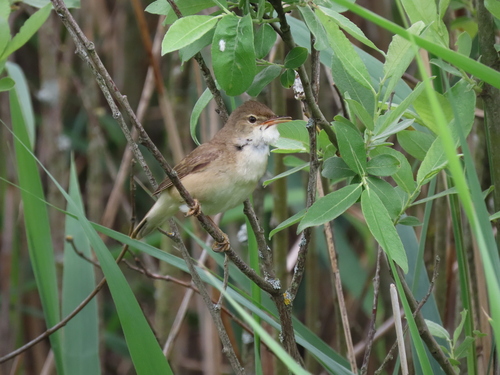
ヨーロッパヨシキリ (Acrocephalus scirpaceus) ヨーロッパヨシキリ
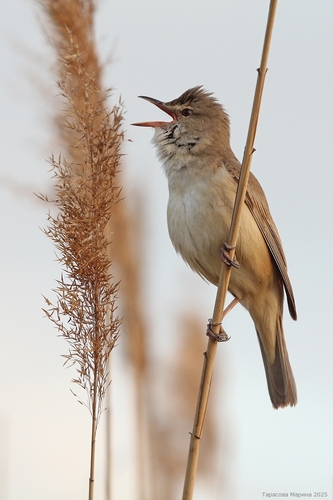
ニシオオヨシキリ (Acrocephalus arundinaceus) ニシオオヨシキリ

メディア

読み込み中…

要点

ヨーロッパヨシキリとニシオオヨシキリを区別する最も信頼できる方法はサイズです:ニシオオヨシキリははるかに大きく、明らかにがっしりとした体型と長い翼と尾を持ち、はるかに小さくスリムなヨーロッパヨシキリと比較して「ツグミサイズ」と表現されることがよくあります。両種は似たような無斑の茶色の上面とクリーム色の下面を持っていますが、ニシオオヨシキリは特に成鳥において、より強く、より明白な淡い眉斑(アイブロウ)を示します。両種の幼鳥は下面がより濃いクリーム色であるため、年齢だけでは安全な区別にはなりません。フィールドでは、ニシオオヨシキリの歌ははるかに大きく、遠くまで響きます。もし短時間または遠くからの視界しか得られない場合は、まず全体のサイズと眉斑の強さに注目してください。

識別のコツ

  1. サイズは最も信頼できるフィールドマークです: ニシオオヨシキリはヨーロッパヨシキリよりもはるかに大きく、重いです。特に他のヨシキリ類と比較できる場合、鳥のプロポーションをよく見ることができれば、これはしばしば診断的です。
  2. 眉斑(アイブロウ): ニシオオヨシキリはフィールドで明らかに見える強くて広い淡い眉斑を持っており、特に目の前にあります。ヨーロッパヨシキリの眉斑は薄いかほとんど存在しません。これは成鳥と年長の幼鳥にとって重要なマークです。
  3. くちばしのサイズ: ニシオオヨシキリのくちばしは明らかに大きく重く、全体的な頑丈な構造に合っています。ヨーロッパヨシキリのくちばしはより細く、繊細です。
  4. 幼鳥の下面の色: 両種の幼鳥は下面がより濃いクリーム色であるため、これは信頼できる区別にはなりません。
  5. 上面: 両種は上面が無斑の茶色であるため、これは区別には役立ちません。
  6. 翼と尾の長さ: ニシオオヨシキリは翼が長く、尾も長いため、止まっているときや飛んでいるときにより細長い外観を与えます。
  7. 姿勢と行動: ニシオオヨシキリは歌っているときに特に、より直立してオープンな場所に止まることが多いですが、ヨーロッパヨシキリはより隠れがちで敏捷で、急速にヨシの中を移動します。
  8. 歌: 大きく、厳しい、遠くまで響く歌が聞こえたら、それはニシオオヨシキリです。ヨーロッパヨシキリの歌ははるかに柔らかく、力強さに欠けます。
  9. 生息地の文脈: 非常に小さなヨシ原や孤立したパッチでは、ヨーロッパヨシキリの方が可能性が高いです。ニシオオヨシキリは大きく密なヨシ原を好みます。
  10. 飛行の印象: ニシオオヨシキリは飛行中に重くて力強く見えますが、ヨーロッパヨシキリはスリムでよりひらひらしています。
  11. 特徴的な翼や飛行のマークはない: 両種には年齢特有の上翼や飛行のマークがなく、区別には役立ちません。
  12. 性別は似ている: 両種は羽毛において性差がほとんどないか全くないため、同定に性別を頼ることはできません。
  13. 疑わしい場合は、サイズと眉斑に注目してください: これら二つの特徴があれば、ほぼすべての個体をしっかりと区別できます。
  14. 遠くのまたは逆光の鳥に注意してください: 遠くまたは悪い光の中では、サイズと眉斑を判断するのが難しい場合があるため、マークの組み合わせを使用し、可能であれば歌を利用してください。
  15. 下面の色だけに頼らないでください: 両種は特に幼鳥では下面がクリーム色に見えることがあります。

大きさ

ニシオオヨシキリはあらゆる寸法でヨーロッパヨシキリよりも劇的に大きいです。ニシオオヨシキリは長さ16〜21 cm、翼幅25〜30 cm、質量22〜38 gであるのに対し、ヨーロッパヨシキリは長さわずか13 cm、翼幅17〜21 cm、質量約12 gです [wikidata, wikipedia]。フィールドでは、ニシオオヨシキリはほぼ2倍の重さに見え、はるかに頑丈で、尾が長く、くちばしが大きくて厚いです。このサイズの違いは、他のヨシ原の鳥と並んで見た場合でも、遠くからでも明らかです。

羽色

両種は無斑の茶色の上面とクリーム色から白っぽい下面を持っています。両性の成鳥は似ています。最も一貫した羽毛の違いは眉斑です:ニシオオヨシキリは目の前で特に強くて広い淡い眉斑を持っていますが、ヨーロッパヨシキリの眉斑は薄いかほとんど存在しません。両種の幼鳥は下面がより濃いクリーム色であるため、これは安全な区別にはなりません。どちらの種にも年齢に関係なく特徴的な上翼や飛行のマークはありません。くちばしの構造は似ていますが、ニシオオヨシキリの方が相対的に大きく重いです。悪い光や遠くから見ると、サイズと眉斑を除いて、二つは非常に似て見えることがあります。

行動

両種は通常、ヨシ原を這い回っているのが見られます。ニシオオヨシキリはそのサイズのため、動きがより鈍く、意図的に見えることが多く、時にはより直立してオープンな場所に止まることがあり、特に歌っているときにそうです。ヨーロッパヨシキリはより敏捷で、ヨシの中を迅速かつ目立たずに移動する傾向があり、しばしば植物の中で低く保たれます。飛行中、ニシオオヨシキリはより重く、翼が長く見えますが、ヨーロッパヨシキリはスリムでより繊細に見えます。

生息環境

両種はヨシ原で繁殖しますが、ニシオオヨシキリはより大きく密なヨシ原を好み、広範囲の湿地で見つかる可能性が高いです。ヨーロッパヨシキリはより適応性があり、小さなヨシのパッチ、溝、さらには散在するヨシの塊でも見つかることがあります。繁殖シーズン外では、両種はサハラ以南のアフリカに移動し、さまざまな湿地生息地で見つかりますが、ニシオオヨシキリは茂みの藪や水田も利用することがあります。

声

ニシオオヨシキリの歌は非常に大きく、厳しく、遠くまで響き、チャタリングとクロークの質感("carr-carr-cree-cree-cree-jet-jet")を持ち、しばしば露出した止まり木から発せられます。オスは短くシンプルな領土の歌と、メスを引き寄せるための長くより複雑な歌の両方を使用します。ヨーロッパヨシキリの歌ははるかに柔らかく、リズミカルでチャタリング("jit-jit-jit")で、典型的なアクロセファルスの口笛やいくつかの模倣を含みますが、ニシオオヨシキリの音量や厳しさには欠けています。もし遠くで歌っているヨシキリの声が非常に大きい場合、それはほぼ確実にニシオオヨシキリです。

より良い説明を送る

比較と同じ項目を使ってください。文章はすぐに公開されます。

The most reliable way to separate Common Reed Warbler from Great Reed Warbler is by size: Great Reed Warbler is much larger, with a noticeably bulkier build and longer wings and tail, often described as 'thrush-sized' compared to the much smaller, slimmer Common Reed Warbler. Both species have similar unstreaked brown upperparts and buff underparts, but Great Reed Warbler shows a stronger, more obvious pale supercilium (eyebrow), especially in adults. Juveniles of both are richer buff below, so age alone is not a safe separator. In the field, Great Reed Warbler’s song is much louder and more far-carrying. If only brief or distant views are available, focus first on overall size and the strength of the supercilium.

  1. Size is the most reliable field mark: Great Reed Warbler is much larger and heavier than Common Reed Warbler. If you get a good look at the bird’s proportions, especially if you can compare it to other reedbed birds, this is often diagnostic.
  2. Supercilium (eyebrow): Great Reed Warbler has a strong, broad, pale supercilium that is obvious in the field, especially in front of the eye. Common Reed Warbler’s supercilium is faint or nearly absent. This is a key mark for adults and older juveniles.
  3. Bill size: Great Reed Warbler’s bill is noticeably larger and heavier, matching its overall robust structure. Common Reed Warbler’s bill is finer and more delicate.
  4. Underparts color in juveniles: Both species’ juveniles are richer buff below, so this is not a reliable separator.
  5. Upperparts: Both species are unstreaked brown above, so this is not helpful for separation.
  6. Wing and tail length: Great Reed Warbler has longer wings and a longer tail, giving it a more elongated appearance when perched or in flight.
  7. Posture and behavior: Great Reed Warbler often perches more upright and in the open, especially when singing, while Common Reed Warbler is more skulking and agile, moving quickly through reeds.
  8. Song: If you hear a loud, harsh, far-carrying song, it is Great Reed Warbler. Common Reed Warbler’s song is much softer and less forceful.
  9. Habitat context: In very small reedbeds or isolated patches, Common Reed Warbler is more likely. Great Reed Warbler prefers large, dense reedbeds.
  10. Flight jizz: Great Reed Warbler looks heavy and powerful in flight, while Common Reed Warbler is slimmer and more fluttery.
  11. No distinctive wing or flight marks: Neither species has age-specific upperwing or flight marks that are useful for separation.
  12. Sexes similar: Both species show little or no sexual dimorphism in plumage, so do not rely on sex for identification.
  13. If in doubt, focus on size and supercilium: These two features together will separate almost all individuals seen well.
  14. Beware of distant or backlit birds: At a distance or in poor light, size and supercilium may be hard to judge, so use a combination of marks and, if possible, song.
  15. Do not rely on underpart color alone: Both can appear buffy below, especially juveniles.

Great Reed Warbler is dramatically larger than Common Reed Warbler in every dimension. Great Reed Warbler measures 16–21 cm in length with a wingspan of 25–30 cm and a mass of 22–38 g, while Common Reed Warbler is only 13 cm long with a wingspan of 17–21 cm and a mass of about 12 g [wikidata, wikipedia]. In the field, Great Reed Warbler appears almost twice as heavy and much more robust, with a longer tail and a larger, thicker bill. This size difference is often obvious even at a distance or when seen alongside other reedbed birds.

Both species have unstreaked brown upperparts and buff to whitish underparts. Adults of both sexes are similar. The most consistent plumage difference is the supercilium: Great Reed Warbler has a much stronger and broader pale eyebrow, especially in front of the eye, while Common Reed Warbler’s supercilium is faint or almost absent. Juveniles of both are richer buff below, so this is not a safe separator. There are no notes of distinctive upperwing or flight marks in either species for any age. Bill structure is similar, but Great Reed Warbler’s is proportionally larger and heavier. In poor light or at a distance, the two can look very similar except for size and supercilium.

Both species are typically seen clambering through reedbeds. Great Reed Warbler, due to its size, often appears more sluggish and deliberate in its movements, sometimes perching more upright and in the open, especially when singing. Common Reed Warbler is more agile and tends to move quickly and unobtrusively through reeds, often keeping lower in the vegetation. In flight, Great Reed Warbler looks heavier and longer-winged, while Common Reed Warbler appears slimmer and more delicate.

Both species breed in reedbeds, but Great Reed Warbler prefers larger, denser reedbeds and is more likely to be found in extensive marshes. Common Reed Warbler is more adaptable and can be found in smaller reed patches, ditches, and even scattered clumps of reeds. Outside the breeding season, both migrate to sub-Saharan Africa and can be found in a range of wetland habitats, but Great Reed Warbler may also use bush thickets and rice fields.

Great Reed Warbler’s song is extremely loud, harsh, and far-carrying, with a chattering and croaking quality ("carr-carr-cree-cree-cree-jet-jet"), often delivered from an exposed perch. Males use both short, simple territorial songs and longer, more complex songs to attract females. Common Reed Warbler’s song is much softer, more rhythmic and chattering ("jit-jit-jit"), with typical Acrocephalus whistles and some mimicry, but lacks the volume and harshness of Great Reed Warbler. If you hear a warbler singing at a distance and it is extremely loud, it is almost certainly Great Reed Warbler.

変更を破棄しますか?

保存していない編集があります。今離れると失われます。

ヨーロッパヨシキリ · ニシオオヨシキリ · 苦手な鳥