

Motmot

チョウゲンボウ 対 ハヤブサ

Falco tinnunculus 対 Falco peregrinus

チョウゲンボウとハヤブサのクイズ
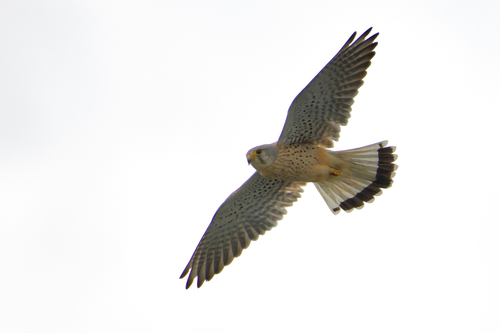
チョウゲンボウ (Falco tinnunculus) チョウゲンボウ
ハヤブサ (Falco peregrinus) ハヤブサ

メディア

読み込み中…

要点

チョウゲンボウとハヤブサを区別する最も信頼できるフィールドマークは、全体の羽毛と構造です:チョウゲンボウは、長い尾と細い翼を持ち、淡い色合いで、重く斑点や筋模様のある茶色の外観を示します。一方、ハヤブサはよりがっしりしており、青灰色の背中、太い黒い頭、強い暗い横縞を持っています。幼鳥のチョウゲンボウは成鳥の雌に似ていますが、より茶色で筋模様が多く、幼鳥のハヤブサは成鳥よりも暗く、より重いマーキングがあります。飛行中、チョウゲンボウはしばしば翼を浅いV字に保ちながらホバリングしますが、ハヤブサは力強く、水平な翼の打撃を使用し、めったにホバリングしません。サイズも手がかりです:ハヤブサはチョウゲンボウよりも明らかに大きく、頑丈です。

識別のコツ

  1. Size and bulk: ハヤブサはチョウゲンボウよりもはるかに大きく、重いです。もしその鳥がカラスサイズで力強く見えるなら、それはおそらくハヤブサです;チョウゲンボウは明らかに小さく、細身です。
  2. Tail shape and length: チョウゲンボウは、黒い横縞(雌/幼鳥)または青灰色(雄)を持つ長く狭い尾を持ち、飛行中やホバリング中にしばしば扇状に広がります。ハヤブサは、チョウゲンボウのように長く、明らかに横縞のある尾を持つことはありません。
  3. Wing shape and flight style: チョウゲンボウは長く狭い翼を持ち、ホバリング中にしばしば浅いV字に保ちます。ハヤブサはより広く、尖った翼を持ち、その飛行は強く、直接的で水平です;彼らはめったに、もしあればホバリングしません。
  4. Hovering behavior: もしあなたがその場でホバリングしているハヤブサを見たら、それはほぼ確実にチョウゲンボウです。ハヤブサは典型的なチョウゲンボウのスタイルでホバリングしません。
  5. Head pattern: ハヤブサは太い黒い「ヘルメット」と厚い口ひげのストライプを持ち、顔に際立ったコントラストを与えます。チョウゲンボウはより淡い頭を持ち、薄い黒い頬のストライプがあり、完全なヘルメットの外観はありません。
  6. Back and upperparts color: 成鳥の雄のチョウゲンボウは青灰色の帽子と尾を持ち、栗色の背中と黒い斑点があります。雌と幼鳥はより均一に茶色です。ハヤブサは上面が青灰色で、決して栗色や斑点はありません。
  7. Underparts: チョウゲンボウは淡いまたは薄い色で細かい黒い筋模様があり;ハヤブサは白で太い黒い横縞(成鳥)または重い筋模様(幼鳥)があります。チョウゲンボウはハヤブサの鮮明な横縞を示すことはありません。
  8. Bare parts color: チョウゲンボウは明るい黄色の嘴、足、目のリングを持っています;ハヤブサも黄色の裸の部分を持っていますが、これは強い区別要因ではありません。
  9. Perched posture: チョウゲンボウはしばしば細く直立して見え、長い尾が下に垂れています。ハヤブサはより水平に止まり、胸が深く、コンパクトに見えます。
  10. Sexual dimorphism: 両種は性別間のサイズの違いを示しますが、チョウゲンボウだけが強い色の違いを示します(雄は青灰色、雌は茶色)。ハヤブサは性別間で色が似ています。
  11. Juvenile confusion: 幼いチョウゲンボウは成鳥の雌に似ていますが、下側がより筋模様があります;幼鳥のハヤブサは成鳥よりも暗く、より重いマーキングがあり、すでに強い顔のパターンが存在します。
  12. Habitat context: チョウゲンボウは農地、開けた国、道路沿いの環境で見られる可能性が高いです;ハヤブサは特に都市で崖や高い建物の近くにいる可能性が高いです。
  13. Hunting style: チョウゲンボウは小さな哺乳類や昆虫を狩り、しばしばホバリングから行います;ハヤブサは飛行中の鳥を狩り、高速の急降下を使用します。
  14. Tail barring: チョウゲンボウの尾(特に雌と幼鳥)は複数の黒い横縞を示します;ハヤブサの尾はより均一で、明らかに横縞が少ないです。
  15. Facial expression: ハヤブサの顔はヘルメットと口ひげのために凶暴で大胆に見えます;チョウゲンボウはより柔らかく、コントラストの少ない顔を持っています。

大きさ

チョウゲンボウは小型のハヤブサで、平均体重は約184g、体長は32〜39cm、翼幅は65〜82cmです。ハヤブサは明らかに大きく、カラスサイズと表現され、目に見えて重い体格と頑丈なプロポーションを持っています。ここではハヤブサの正確な体重は提供されていませんが、フィールドでの違いは明らかです:ハヤブサははるかに力強く、胸が深く、翼が広く、チョウゲンボウの細く長い尾のシルエットと比較して、短く鈍い尾を持っています。

羽色

行動

チョウゲンボウはそのホバリング狩猟スタイルで有名で、しばしば空中で静止し、急速な翼の打撃と扇状の尾で獲物を探します。ハヤブサはめったにホバリングせず、代わりに高度からの高速の急降下や速く直接的な飛行で狩ります。チョウゲンボウはしばしば開けた国の電線やポストに止まりますが、ハヤブサは崖や高い建物などの高い止まり木を好み、空中で高く飛んでいるか、鳥を追いかけているのが見られる可能性が高いです。

生息環境

両種は広範囲の開けた生息地で見られますが、チョウゲンボウは農地、草地、都市の端でより頻繁に見られ、しばしばフィールドや道路の上で狩りをします。ハヤブサは巣作りのために崖や高い構造物のある開けた風景を好み、特に都市では高層ビルを代替の崖として使用することが一般的です。チョウゲンボウは人間の近くにいることに対してより寛容で、郊外や田舎の環境でしばしば見られますが、ハヤブサは巣の場所の選択においてより専門的です。

より良い説明を送る

比較と同じ項目を使ってください。文章はすぐに公開されます。

The most reliable field mark to separate Common Kestrel from Peregrine Falcon is overall plumage and structure: kestrels show a pale, heavily spotted or streaked brown appearance with a long tail and slim wings, while peregrines are bulkier, with a blue-grey back, bold black head, and strong dark barring below. Juvenile kestrels resemble adult females but are browner and streakier, whereas juvenile peregrines are darker and more heavily marked than adults. In flight, kestrels often hover with wings held in a shallow V, while peregrines use powerful, level wingbeats and rarely hover. Size is also a clue: peregrines are markedly larger and more robust than kestrels.

  1. Size and bulk: Peregrine Falcons are much larger and heavier than Common Kestrels. If the bird looks crow-sized and powerful, it's likely a peregrine; kestrels are noticeably smaller and slimmer.
  2. Tail shape and length: Kestrels have a long, narrow tail with black bars (female/juvenile) or blue-grey (male), often fanned in flight or when hovering. Peregrines have a shorter, more squared tail, never as long or as obviously barred as a kestrel's.
  3. Wing shape and flight style: Kestrels have long, narrow wings and often hold them in a shallow V when hovering. Peregrines have broader, more pointed wings, and their flight is strong, direct, and level; they rarely, if ever, hover.
  4. Hovering behavior: If you see a falcon hovering in place, it's almost certainly a kestrel. Peregrines do not hover in the typical kestrel fashion.
  5. Head pattern: Peregrines have a bold black "helmet" and thick moustachial stripe, giving the face a striking contrast. Kestrels have a paler head with a thinner black malar stripe and lack the full helmeted look.
  6. Back and upperparts color: Adult male kestrels have a blue-grey cap and tail, with chestnut brown upperparts and black spots. Females and juveniles are more uniformly brown. Peregrines are blue-grey above, never chestnut or spotted.
  7. Underparts: Kestrels are buff or pale with fine black streaks; peregrines are white with bold black barring (adults) or heavy streaking (juveniles). Kestrels never show the crisp barring of a peregrine.
  8. Bare parts color: Kestrels have bright yellow cere, feet, and eye-ring; peregrines also have yellow bare parts, but this is not a strong separator.
  9. Perched posture: Kestrels often appear slim and upright, with a long tail hanging down. Peregrines perch more horizontally, looking deep-chested and compact.
  10. Sexual dimorphism: Both species show size differences between sexes, but only kestrels show strong color differences (male blue-grey, female brown). Peregrines are similar in color between sexes.
  11. Juvenile confusion: Young kestrels resemble adult females but are streakier below; juvenile peregrines are darker and more heavily marked than adults, with a strong facial pattern already present.
  12. Habitat context: Kestrels are more likely in farmland, open country, and roadside settings; peregrines are more likely near cliffs or tall buildings, especially in cities.
  13. Hunting style: Kestrels hunt small mammals and insects, often from a hover; peregrines hunt birds in flight, using high-speed stoops.
  14. Tail barring: Kestrel tails (especially females and juveniles) show multiple black bars; peregrine tails are more uniform and less obviously barred.
  15. Facial expression: The peregrine's face looks fierce and bold due to the helmet and moustache; kestrels have a softer, less contrasting face.

Common Kestrel is a small falcon, averaging around 184 g in body mass, with a length of 32–39 cm and a wingspan of 65–82 cm. Peregrine Falcon is significantly larger, described as crow-sized, with a noticeably heavier build and bulkier proportions. While exact mass for peregrine is not provided here, the difference is obvious in the field: peregrines appear much more powerful and deep-chested, with broader wings and a shorter, blunter tail compared to the kestrel's slim, long-tailed silhouette.

  • Juvenile/immature plumage: Juvenile Common Kestrels look like adult females but with broader streaks below and paler yellow bare parts. Their upperparts are brown with blackish spots, and the tail is brown with black bars. Juvenile Peregrine Falcons are darker overall, with brownish upperparts and heavily streaked or barred underparts, and already show the strong facial pattern (dark helmet) typical of the species.

  • Adult plumage: Adult male kestrels have a blue-grey cap and tail, with a chestnut brown back and black spots; females and juveniles lack the blue-grey and are more uniformly brown. Both sexes have a clear black malar stripe. Peregrines of all ages have a blue-grey back, bold black head and moustachial stripe, and white underparts with strong black barring (adults) or streaking (juveniles). The peregrine's tail is shorter and more square-tipped, and the underparts are much cleaner white with crisp barring, never the buffy, streaked look of a kestrel.

Common Kestrel is famous for its hovering hunting style, often seen stationary in the air with rapid wingbeats and tail fanned, scanning for prey. Peregrine Falcon rarely hovers; instead, it hunts by high-speed stoops from altitude or fast, direct flight. Kestrels often perch on wires or posts in open country, while peregrines prefer high perches such as cliffs or tall buildings and are more likely to be seen flying high or chasing birds in open airspace.

Both species can be found in a wide range of open habitats, but kestrels are more often seen in farmland, grassland, and urban edges, frequently hunting over fields and roadsides. Peregrines prefer open landscapes with cliffs or tall structures for nesting, and are especially common in cities where they use skyscrapers as substitute cliffs. Kestrels are more tolerant of close human presence and are often seen in suburban and rural settings, while peregrines are more specialized in their choice of nest sites.

変更を破棄しますか?

保存していない編集があります。今離れると失われます。

チョウゲンボウ · ハヤブサ · 苦手な鳥