

Motmot

チョウゲンボウ 対 シロハヤブサ

Falco tinnunculus 対 Falco rusticolus

チョウゲンボウとシロハヤブサのクイズ
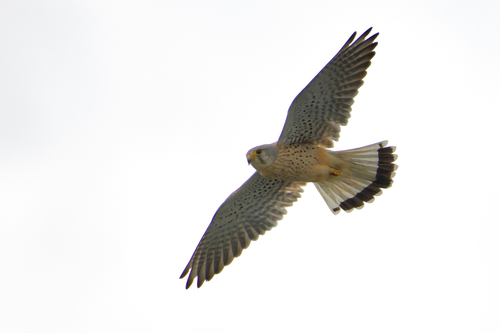
チョウゲンボウ (Falco tinnunculus) チョウゲンボウ
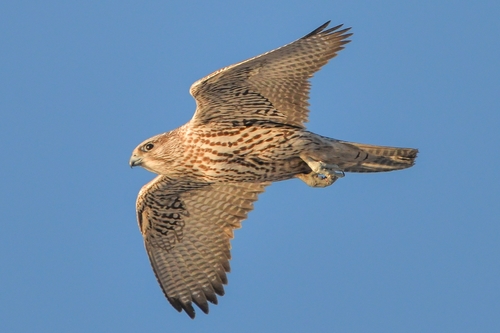
シロハヤブサ (Falco rusticolus) シロハヤブサ

メディア

読み込み中…

要点

チョウゲンボウとシロハヤブサを区別する最も信頼できる方法は、サイズと構造です:シロハヤブサは非常に大きくてがっしりしており、翼幅もはるかに広いのに対し、チョウゲンボウはスリムで小さなハヤブサで、長い尾を持っています。飛行中、シロハヤブサは力強く重々しく見えますが、チョウゲンボウは軽快で敏捷で、しばしばホバリングしているのが見られます。羽毛も役立ちます:チョウゲンボウは常に上面が温かい茶色で黒い斑点があり、明確な黒いマラーストライプがありますが、シロハヤブサは非常に変動があり、ほぼ全て白から暗い茶色または黒っぽいものまであり、強いマラーストライプはありません。幼鳥のチョウゲンボウは成鳥の雌に似ていますが、シロハヤブサの幼鳥は成鳥よりも暗く茶色です。もしハヤブサが止まっているか飛んでいるのを見て不明な場合は、まず全体のサイズと体格に注目し、次にチョウゲンボウの長い尾と温かい茶色のトーンと、シロハヤブサの巨大な体格と変動する、しばしば淡いまたは縞模様の羽毛を確認してください。

識別のコツ

  1. Size is decisive: シロハヤブサは巨大で、翼幅と体格はバズardや小型の鷲に近い;チョウゲンボウはスリムで小さく、ツグミよりわずかに大きいだけです。もしその鳥が巨大に見えるなら、それはチョウゲンボウではありません。
  2. Structure in flight: チョウゲンボウは長く狭い翼と長い尾を持ち、スリムで敏捷な外観を与えます;シロハヤブサは広い翼を持ち、バレル状の胸部と重い体を持ち、相対的に短い尾を持っています。
  3. Hovering behavior: チョウゲンボウは狩りの際に頻繁にその場でホバリングします;シロハヤブサはほとんどホバリングせず、代わりに強く直接的な飛行を使用します。
  4. Tail shape and markings: チョウゲンボウの尾は長く、複数の黒いバーと白い縁取りのある黒い先端があります。シロハヤブサの尾はハヤブサよりも長いですが、チョウゲンボウの尾ほど長くはなく、パターンは形態によって異なりますが、チョウゲンボウのようにきれいにバーが入ったり先端が白くなったりすることはありません。
  5. Facial pattern: チョウゲンボウは常に強い黒いマラーストライプ(口ひげのような印)を示します;シロハヤブサは特に茶色や白の形態では、明確なマラーストライプがありません。
  6. Plumage color: チョウゲンボウは常に温かい栗色で上面が黒い斑点があります;シロハヤブサは非常に変動があり、全て白から暗い茶色/黒っぽいものまでありますが、決して温かい赤褐色ではありません。
  7. Juvenile differences: 幼鳥のチョウゲンボウは成鳥の雌に似ていますが、下側の縞模様が広くなっています;幼鳥のシロハヤブサは成鳥よりも暗く茶色ですが、チョウゲンボウの温かいトーンや顔の模様はまだありません。
  8. Sexual dimorphism: オスのチョウゲンボウは青灰色の帽子と尾を持っています;シロハヤブサは性に基づく色の違いを示しませんが、黒い形態は雌に多く見られます。
  9. Perching habits: チョウゲンボウはしばしばワイヤー、ポスト、または建物に止まります;シロハヤブサは崖や大きな岩を好み、人造構造物を使用することはほとんどありません。
  10. Habitat context: チョウゲンボウは開けた国、農地、都市部、さらには市の中心部に広く分布しています;シロハヤブサは高緯度の種で、北アメリカとシベリアの北部の北極ツンドラと崖で繁殖し、漂流者として南に遠く出ることはほとんどありません。
  11. Relative abundance: ヨーロッパと温帯アジアのほとんどでは、小さなハヤブサはほぼ確実にチョウゲンボウです;シロハヤブサは北極の範囲外では非常に珍しいです。
  12. Flight jizz: チョウゲンボウの飛行は浮遊感があり、ひらひらしていて、しばしばホバリングを伴います;シロハヤブサは力強く、安定しており、直接的で、空中でほとんど停止しません。
  13. Bare part color: チョウゲンボウは明るい黄色のセリ、目の輪、足を持っています;シロハヤブサの裸の部分は目立たず、年齢や形態によって異なります。
  14. Plumage variability: シロハヤブサはほぼ全て白(ハヤブサの中でユニーク)、銀色、茶色、または黒っぽいことがあります;チョウゲンボウはこれらの極端な色合いを示すことはありません。
  15. Mistaken identity: もし北の遠くで大きく淡いハヤブサを見たら、シロハヤブサを考えてください;もし農地や都市で小さくホバリングしている温かい茶色のハヤブサを見たら、それはチョウゲンボウです。

大きさ

サイズは最も顕著な違いです。チョウゲンボウは小さなハヤブサで、平均して184gの質量を持ち、体長は32〜39cm、翼幅は65〜82cmです。シロハヤブサは世界で最も大きなハヤブサです:オスは48〜61cmの長さと110〜130cmの翼幅を持ち(雌はさらに大きい)、平均質量は1,100gを超え、2,100g以上になることもあります。フィールドでは、シロハヤブサは大きなバズardや小型の鷲に近いサイズですが、チョウゲンボウはツグミよりわずかに大きいだけで、はるかに繊細です。距離があっても、シロハヤブサの体格と広い翼は明らかですが、チョウゲンボウはスリムで長い尾を持っています。

羽色

幼鳥と成鳥の雌のチョウゲンボウは、上面が温かい栗色で黒っぽい斑点や縞模様があり、下面は薄い色で狭い暗い縞模様があり、常に目立つ黒いマラーストライプを示します。オスは青灰色の帽子と尾を持っていますが、すべての年齢と性別は黒い先端と狭い白い縁取りのある長い縞模様の尾を持っています。幼鳥は下側の縞模様が広く、裸の部分が淡いです。シロハヤブサの羽毛は非常に変動があり、ほぼ全て白(白い形態)、淡い銀色の灰色(銀)、茶色、または黒っぽいことがあります。茶色の形態は後頭部と頭頂にクリーム色の縞模様があり、明確なマラーストライプがありません。黒い形態は下部が heavily spotted です。幼鳥は成鳥よりも暗く茶色ですが、決してチョウゲンボウの温かい栗色のトーンや強いマラーストライプを示しません。シロハヤブサは決してチョウゲンボウの温かい茶色、黒い斑点、明確な顔の模様の組み合わせを示しません。飛行中、シロハヤブサの上面は広く、しばしば淡いまたは縞模様がありますが、チョウゲンボウの上面は常に赤褐色で黒い斑点があります。

行動

チョウゲンボウはそのホバリング飛行で有名で、獲物を探している間、空中で静止しているのがよく見られます。敏捷で、素早い翼の動きとワイヤーやポストに止まる傾向があります。シロハヤブサは力強く直接的な飛行をするハヤブサで、ほとんどホバリングせず、通常は開けたツンドラや崖の上を強く速く飛んで狩りをします。シロハヤブサは大きな岩や崖に止まり、人造の止まり木を使用することはほとんどありません。社会的には、チョウゲンボウは緩いコロニーで巣を作ることがありますが、シロハヤブサはより孤立しており、テリトリーを持っています。

生息環境

チョウゲンボウはユーラシアとアフリカ全体に広く分布し、開けた国、農地、町、さらには市の中心部に見られます。しばしば建物や木の穴に巣を作ります。シロハヤブサは高緯度の種で、北アメリカとシベリアの北部の北極ツンドラと崖で繁殖し、漂流者として南に遠く出ることはほとんどありません。もし温帯ヨーロッパの都市や農地でハヤブサを見たら、それはほぼ確実にチョウゲンボウです;シロハヤブサは遠くの開けた北の風景に制限されており、繁殖範囲の外では非常に珍しいです。

より良い説明を送る

比較と同じ項目を使ってください。文章はすぐに公開されます。

The most reliable way to separate Common Kestrel from Gyr Falcon is by size and structure: Gyr Falcon is vastly larger and bulkier, with a much broader wingspan, while Common Kestrel is a slim, small falcon with a long tail. In flight, Gyr Falcon appears powerful and heavy, whereas Common Kestrel is light and agile, often seen hovering. Plumage is also helpful: Common Kestrel is always warm brown above with black spots and a distinct black malar stripe, while Gyr Falcon is highly variable, ranging from nearly all white to dark brown or blackish, and lacks a strong malar stripe. Juvenile Common Kestrels resemble adult females, but Gyr Falcon juveniles are darker and browner than adults. If you see a falcon perched or in flight and are unsure, focus first on overall size and bulk, then check for the kestrel's long tail and warm brown tones versus the Gyr's massive build and variable, often paler or streaked plumage.

  1. Size is decisive: Gyr Falcon is massive, with a wingspan and bulk more like a buzzard or small eagle; Common Kestrel is slim and small, only slightly larger than a thrush. If the bird looks huge, it's not a kestrel.
  2. Structure in flight: Kestrel has long, narrow wings and a long tail, giving it a slim, agile look; Gyr Falcon is broad-winged, barrel-chested, and heavy-bodied, with a proportionally shorter tail.
  3. Hovering behavior: Common Kestrel frequently hovers in place while hunting; Gyr Falcon almost never hovers, instead using strong, direct flight.
  4. Tail shape and markings: Kestrel's tail is long, with multiple black bars and a black tip edged in white. Gyr Falcon's tail is longer than a peregrine's but not as long as kestrel's, and the pattern varies by morph but is never as cleanly barred or tipped as kestrel's.
  5. Facial pattern: Kestrel always shows a strong black malar stripe (mustache mark); Gyr Falcon lacks a well-defined malar stripe, especially in brown and white morphs.
  6. Plumage color: Kestrel is always warm chestnut brown above with black spots; Gyr Falcon is highly variable, from all white to dark brown/blackish, but never warm rufous.
  7. Juvenile differences: Juvenile kestrels look like adult females but with broader underside streaks; juvenile Gyr Falcons are darker and browner than adults but still lack the kestrel's warm tones and facial markings.
  8. Sexual dimorphism: Male kestrels have blue-grey caps and tails; Gyr Falcon shows no sex-based color differences, though black morphs are more common in females.
  9. Perching habits: Kestrel often perches on wires, posts, or buildings; Gyr Falcon prefers cliffs or large rocks, rarely using man-made structures.
  10. Habitat context: Kestrel is common in open country, farmland, and urban areas; Gyr Falcon is restricted to Arctic tundra and cliffs, rarely seen in settled areas.
  11. Relative abundance: In most of Europe and temperate Asia, any small falcon is almost certainly a kestrel; Gyr Falcon is extremely rare outside its Arctic range.
  12. Flight jizz: Kestrel's flight is buoyant and fluttery, often with hovering; Gyr Falcon is powerful, steady, and direct, rarely pausing in the air.
  13. Bare part color: Kestrel has bright yellow cere, eye ring, and feet; Gyr Falcon's bare parts are less conspicuous and vary with age and morph.
  14. Plumage variability: Gyr Falcon can be nearly all white (unique among falcons), silvery, brown, or blackish; kestrel never shows these extremes.
  15. Mistaken identity: If you see a large, pale falcon in the far north, consider Gyr Falcon; if you see a small, hovering, warm brown falcon in farmland or city, it's a kestrel.

Size is the most striking difference. Common Kestrel is a small falcon, averaging around 184 g in mass, with a body length of 32–39 cm and a wingspan of 65–82 cm. Gyr Falcon is the largest falcon in the world: males are 48–61 cm long and 110–130 cm in wingspan (females even larger), with average masses over 1,100 g and up to 2,100 g or more. In the field, Gyr Falcon is closer in size to a large buzzard or small eagle, while Common Kestrel is only slightly bigger than a thrush and much more delicate. Even at a distance, Gyr Falcon's bulk and broad wings are obvious, while kestrel is slim and long-tailed.

Juvenile and adult female Common Kestrels are warm chestnut brown above with blackish spots and streaks, buff below with narrow dark streaks, and always show a prominent black malar stripe. Males have a blue-grey cap and tail, but all ages and sexes show a long, barred tail with a black tip and narrow white rim. Juveniles have broader underside streaks and paler bare parts. Gyr Falcon plumage is highly variable: it can be nearly all white (white morph), pale silvery-grey (silver), brown, or blackish. Brown morphs have cream streaking on the nape and crown and lack a well-defined malar stripe. Black morphs have heavily spotted underparts. Juveniles are darker and browner than adults, but never show the warm chestnut tones or strong malar stripe of kestrel. Gyr Falcon never shows the combination of warm brown, black spotting, and distinct facial markings of kestrel. In flight, Gyr Falcon's upperparts are broad and often paler or streaked, while kestrel's are always rufous with black spots.

Common Kestrel is famous for its hovering flight, often seen stationary in the air while searching for prey. It is agile, with quick wingbeats and a tendency to perch on wires or posts. Gyr Falcon is a powerful, direct flier, rarely hovers, and typically hunts with strong, fast flight over open tundra or cliffs. Gyr Falcon perches on large rocks or cliffs and is much less likely to be seen hovering or using man-made perches. Socially, kestrels may nest in loose colonies, while Gyr Falcons are more solitary and territorial.

Common Kestrel is widespread across Eurasia and Africa, found in open country, farmland, towns, and even city centers. It often nests on buildings or in tree holes. Gyr Falcon is a high-latitude species, breeding on Arctic tundra and cliffs in northern North America and Siberia, rarely venturing far south except as a vagrant. If you see a falcon in a city or farmland in temperate Europe, it is almost certainly a kestrel; Gyr Falcon is restricted to remote, open, northern landscapes and is very rare outside its breeding range.

変更を破棄しますか?

保存していない編集があります。今離れると失われます。

チョウゲンボウ · シロハヤブサ · 苦手な鳥