

Motmot

クビワモリハヤブサ 対 アオモリハヤブサ

Micrastur semitorquatus 対 Micrastur mirandollei

クビワモリハヤブサとアオモリハヤブサのクイズ
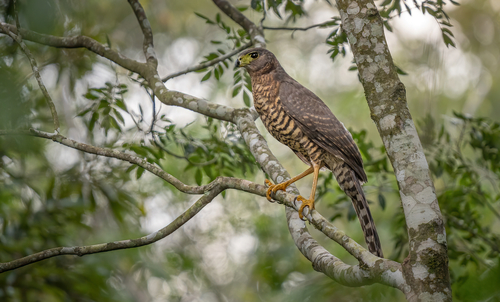
クビワモリハヤブサ (Micrastur semitorquatus) クビワモリハヤブサ
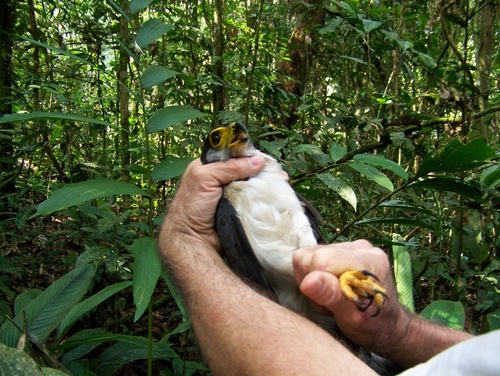
アオモリハヤブサ (Micrastur mirandollei) アオモリハヤブサ

メディア

読み込み中…

要点

クビワモリハヤブサとアオモリハヤブサを区別する最も信頼できる方法は、サイズと構造によるものです:クビワは明らかに大きくてがっしりしており、尾が長く、翼は短くて丸みを帯びています。一方、アオモリは明らかに小さく、よりコンパクトです。両者は似たような暗い上面と淡い下面を示すことがありますが、クビワはしばしば対照的な淡い襟(ほとんどの形態で)と、より重く、より強力な体格を持っています。幼鳥の羽毛はフィールドで強く区別されませんので、サイズ、尾のパターン、微妙な羽毛の手がかりに焦点を当ててください。両種は秘密主義的な森林の猛禽類ですが、これらの詳細に注意を払うことで、特に止まっている時や低空飛行の視点で、通常は識別が可能です。

識別のコツ

  1. Size and bulk: クビワはアオモリよりもはるかに大きくて重いです。良い視界や参照物があるときにこれを利用してください。
  2. Tail length and shape: クビワはより長く、柔軟な尾を持ち、しばしば翼よりも比例的に長く見えます。アオモリの尾は短く、目立ちません。
  3. Wing shape: クビワは短く、より丸みを帯びた翼を示します(密な森林での操縦に適応しています)。アオモリの翼はほとんどのハヤブサよりも短いですが、クビワよりも相対的に長く、丸みが少ないです。
  4. Pale collar: ほとんどのクビワモリハヤブサ(淡い形態と黄褐色の形態)は、暗い背中と対照的な後頭部に明確な淡い襟を持っています。アオモリはこの特徴がなく、上面はより均一なスレートグレーです。
  5. Upperparts color: クビワは暗い背中を持っていますが、いくつかの形態では茶色がかった色合いを示すことがあります。アオモリはより均一で冷たいスレートグレーで、頭頂部は暗く、頬は淡いです。
  6. Underparts: 両者は淡い下面を持っていますが、クビワの下面は清潔な白色で、アオモリの下面は白からクリーム色で、淡い暗い軸の筋があります。
  7. Tail pattern: アオモリの尾には白い先端と3本の狭い、しばしば不明瞭な白い帯があります。クビワの尾はあまり明確に帯状ではなく、より長く見えます。
  8. Leg and cere color: 両者は黄色の脚を持っていますが、アオモリの脚は明るい黄色で、頭部は緑がかった黄色です。クビワの脚は淡い黄色ですが、フィールドでは微妙です。
  9. Juvenile plumage: 幼鳥のアオモリは上面が暗い茶色がかった灰色で、下面はオフホワイトから黄褐色で、鱗状の外観を持っています。クビワの幼鳥は、6週間で白い産毛から幼鳥の羽毛に移行しますが、この年齢のフィールドマークは微妙です。
  10. Behavior: クビワはアオモリよりも地面を走ったり跳ねたりするのがよく見られ、アオモリは時々アリの群れを追いかけます。
  11. Habitat context: 両者は密な森林に生息していますが、クビワはより広範囲の森林タイプにいる可能性が高く、アオモリはより深く、あまり乱されていない森林を好むかもしれません。
  12. Flight style: 両者は敏捷ですが、クビワの長い尾とがっしりした体格は、飛行中に異なる印象を与えます—遅く、より強力で、より多くの尾の操縦があります。
  13. Sexual dimorphism: クビワは強いサイズの二形性を示します(雌ははるかに大きい)が、これは性別が知られている場合にのみ有用です。
  14. Voice: 鳴き声は検出に重要ですが、両種の鳴き声に非常に精通していない限り、分離のための信頼できる診断にはなりません。
  15. Pitfalls: クビワの形態変異(淡い、黄褐色、暗色)に注意してください。暗い形態はアオモリに似ることがありますが、サイズ、構造、尾のパターンで区別できます。

大きさ

クビワモリハヤブサは最大のMicrasturで、オスは平均約523g、メスは740g、長さは46–58cm、翼幅は72–86cmです。アオモリハヤブサは小さく、オスは約420g、メスは500–556g、長さは40–45cm、翼幅は65–71cmです。フィールドでは、クビワはがっしりしていて尾が長く見え、アオモリはよりコンパクトで尾が短いです。両者を一緒に見るか、スケール感を持っている場合、クビワはほぼハヤブサのサイズとして際立つべきで、アオモリは雌のコチョウゲンボウや小型のハヤブサに近いです。

羽色

幼鳥の羽毛はフィールドで明確に区別されませんが、いくつかの手がかりがあります。幼鳥のアオモリは上面が暗い茶色がかった灰色で、下面はオフホワイトから黄褐色で、鱗状の外観を持っています。一方、クビワの幼鳥は6週間で白い産毛から幼鳥の羽毛に移行しますが、この年齢のフィールドマークは微妙です。成鳥では、クビワ(特に淡い形態と黄褐色の形態)は後頭部に明確な淡い襟を持ち、白い首と胸、暗い背中を持っています。アオモリの成鳥は均一なスレートグレーの上面(頭頂部は暗く、頬は淡い)、白からクリーム色の下面に淡い暗い軸の筋があり、白い先端と3本の狭い、しばしば不明瞭な白い帯を持つ尾を持っています。クビワの尾はより長く、あまり明確に帯状ではありません。両者は黄色の脚を持っていますが、アオモリの脚は明るい黄色とされ、頭部は緑がかった黄色です。

行動

両種は秘密主義的で、密な森林の樹冠に隠れていることが多く、見られるよりも声で検出されることが多いです。クビワモリハヤブサは待ち伏せで狩りをし、時には森林の床を走ったり跳ねたりし、密なカバーでの追跡を助ける強力で柔軟な尾が注目されています。アオモリも下層から中層で狩りをし、時には地面に降りて、アリの群れを追いかけて獲物を捕まえることがあります。両者は多才な捕食者ですが、クビワの大きなサイズは、より大きな哺乳類や鳥を含む幅広い獲物を捕まえることを可能にします。

生息環境

両種は中南米の熱帯雨林に生息していますが、クビワモリハヤブサはより広範囲に分布し、その範囲で最も一般的な大型森林ハヤブサです。アオモリは同じ地域の多くで重なりますが、南米の最南部には存在しません。両者は密で成熟した森林を好みますが、アオモリは原生林の内部により制限される可能性があり、クビワはより広範囲の森林タイプに見られます。

声

両種は秘密主義的で、しばしば鳴き声で検出されますが、情報源はどちらの種についても詳細な鳴き声の説明を提供していません。実際には、声は検出に重要ですが、経験がない限り、分離のための信頼できる診断にはなりません。

より良い説明を送る

比較と同じ項目を使ってください。文章はすぐに公開されます。

The most reliable way to separate Collared Forest-Falcon from Slaty-backed Forest-Falcon is by size and structure: Collared is distinctly larger and bulkier, with a longer tail and shorter, rounder wings, while Slaty-backed is noticeably smaller and more compact. Both can show similar dark upperparts and pale underparts, but Collared often has a contrasting pale collar (in most morphs) and a heavier, more powerful build. Juvenile plumages are not strongly differentiated in the field, so focus on size, tail pattern, and subtle plumage cues. Both species are secretive forest raptors, but careful attention to these details—especially in perched or low-flight views—will usually clinch the ID.

  1. Size and bulk: Collared is much larger and heavier than Slaty-backed; use this when you have a good view or reference objects.
  2. Tail length and shape: Collared has a longer, more flexible tail, often appearing proportionally longer than the wings; Slaty-backed's tail is shorter and less prominent.
  3. Wing shape: Collared shows shorter, more rounded wings (adapted for maneuvering in dense forest); Slaty-backed's wings are shorter than most falcons but relatively longer and less rounded than Collared.
  4. Pale collar: Most Collared Forest-Falcons (pale and tawny morphs) have a distinct pale collar at the nape, contrasting with the dark back; Slaty-backed lacks this feature and is more uniformly slate-gray above.
  5. Upperparts color: Collared is dark-backed but can show brownish tones in some morphs; Slaty-backed is a more uniform, cold slate-gray, darker on the crown, paler on the cheeks.
  6. Underparts: Both have pale underparts, but Collared's are clean white, while Slaty-backed's are white to cream with faint dark shaft streaks.
  7. Tail pattern: Slaty-backed's tail has a white tip and three narrow, often indistinct, white bars; Collared's tail is less distinctly barred and appears longer.
  8. Leg and cere color: Both have yellow legs, but Slaty-backed's are described as bright yellow with a greenish yellow cere; Collared's are light yellow, but this is subtle in the field.
  9. Juvenile plumage: Juvenile Slaty-backed is dark brownish-gray above and off-white to yellowish buff below with a scaly look; Collared juveniles are less distinctly marked, transitioning from down to juvenile feathers by six weeks.
  10. Behavior: Collared may be seen running or hopping on the ground more often than Slaty-backed, which sometimes follows ant swarms.
  11. Habitat context: Both are in dense forest, but Collared is more likely in a wider range of forest types, while Slaty-backed may prefer deeper, less disturbed forest.
  12. Flight style: Both are agile in dense cover, but Collared's longer tail and bulkier build give it a different jizz in flight—slower, more powerful, and with more tail steering.
  13. Sexual dimorphism: Collared shows strong size dimorphism (females much larger), but this is only useful if sex is known.
  14. Voice: Calls are important for detection but not reliably diagnostic for separation unless you are very familiar with both species' vocalizations.
  15. Pitfalls: Beware of morph variation in Collared (pale, tawny, dark); dark morphs can look more like Slaty-backed, but size, structure, and tail pattern still separate them.

Collared Forest-Falcon is the largest Micrastur, with males averaging about 523 g and females 740 g, and a length of 46–58 cm with a wingspan of 72–86 cm. Slaty-backed Forest-Falcon is smaller, with males about 420 g, females 500–556 g, length 40–45 cm, and wingspan 65–71 cm. In the field, Collared appears bulkier and longer-tailed, while Slaty-backed is more compact and shorter-tailed. If you see both together or have a good sense of scale, Collared should stand out as nearly the size of a Peregrine Falcon, while Slaty-backed is closer to a female Merlin or small male Peregrine.

Juvenile plumages are not sharply differentiated in the field, but some cues exist. Juvenile Slaty-backed shows dark brownish-gray upperparts and off-white to yellowish buff underparts with a scaly appearance, while Collared juveniles transition from white natal down to juvenile feathers by six weeks, but field marks for this age are subtle. In adults, Collared (especially pale and tawny morphs) shows a distinct pale collar at the nape, a white neck and breast, and a dark back. Slaty-backed adults have uniformly slate-gray upperparts (darker on the crown, paler on the cheeks), white to cream underparts with faint dark shaft streaks, and a tail with a white tip and three narrow, often indistinct, white bars. Collared's tail is longer and less distinctly barred. Both have yellow legs, but Slaty-backed's are described as bright yellow, and its cere is greenish yellow.

Both species are secretive, often remaining hidden in dense forest canopy and more often detected by voice than seen. Collared Forest-Falcon hunts by ambush, sometimes running or hopping on the forest floor, and is noted for its powerful, flexible tail aiding pursuit in dense cover. Slaty-backed also hunts from the understorey to mid-levels and will go to the ground, sometimes following army ant swarms to catch prey flushed by the ants. Both are versatile predators, but Collared's larger size allows it to take a wider range of prey, including larger mammals and birds.

Both species inhabit tropical rainforests in Central and South America, but Collared Forest-Falcon is more widespread and is the most common large forest falcon in its range. Slaty-backed overlaps in much of the same region but is absent from southernmost South America. Both prefer dense, mature forest, but Slaty-backed may be more restricted to primary forest interiors, while Collared can be found in a wider range of forest types.

Both species are secretive and often detected by their calls, but the sources do not provide detailed vocal descriptions for either species. In practice, voice is important for detection but not reliably diagnostic for separation without experience.

変更を破棄しますか?

保存していない編集があります。今離れると失われます。

クビワモリハヤブサ · アオモリハヤブサ · 苦手な鳥