

Motmot

チリオオトウゾクカモメ 対 ミナミオオトウゾクカモメ

Stercorarius chilensis 対 Stercorarius antarcticus

チリオオトウゾクカモメとミナミオオトウゾクカモメのクイズ
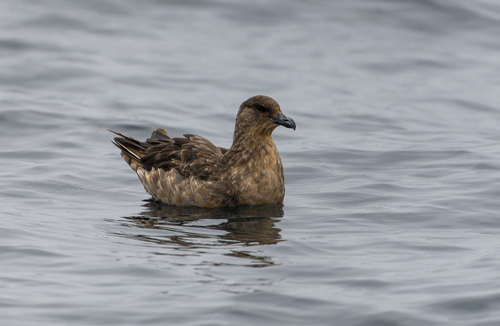
チリオオトウゾクカモメ (Stercorarius chilensis) チリオオトウゾクカモメ
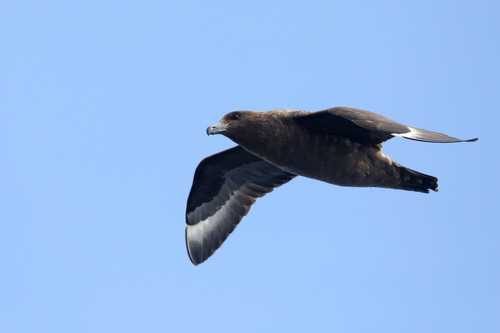
ミナミオオトウゾクカモメ (Stercorarius antarcticus) ミナミオオトウゾクカモメ

メディア

読み込み中…

要点

チリオオトウゾクカモメとミナミオオトウゾクカモメの最も信頼できるフィールドマークは、チリオオトウゾクカモメの特徴的な暗い帽子とシナモン色の喉と下翼であり、特に飛行中または静止中に明らかです。幼鳥のチリオオトウゾクカモメは全体的に明るく、強い帽子を持ち、成鳥の胸の襟が欠けていることが多いのに対し、ミナミオオトウゾクカモメは重く、がっしりとしており、これらの対照的な顔色や下翼の色が欠けています。ミナミオオトウゾクカモメは最大のトウゾクカモメであり、より均一な茶色の羽毛と、止まっているときも飛んでいるときも重い印象を持っています。両種は南アメリカの南部で重なることがありますが、チリオオトウゾクカモメはよりコンパクトで色の対比が強く、ミナミオオトウゾクカモメはがっしりとしていて地味です。

識別のコツ

  1. 暗い帽子とシナモン色の喉(チリオオトウゾクカモメ): 特に成鳥において、シナモン色の喉と下顔と対照的な鮮明な暗い帽子を探してください。ミナミオオトウゾクカモメはこの特徴がなく、均一に茶色です。成鳥とほとんどの幼鳥に有効です。
  2. シナモン色の下翼(チリオオトウゾクカモメ): 飛行中、下翼にシナモン色または赤みがかった色合いがあるか確認してください。時には鈍いですが、通常は見え、特に幼鳥と成鳥において。ミナミオオトウゾクカモメの下翼は平坦な茶色で、この対比が欠けています。
  3. 顔のストリーキング(チリオオトウゾクカモメ成鳥): 成鳥のチリオオトウゾクカモメには顔と首に淡い金色のストリーキングがあり、ミナミオオトウゾクカモメにはありません。
  4. 胸の襟(チリオオトウゾクカモメ成鳥): 成鳥は上胸に暗い帯を示し、幼鳥はこれが欠けていることがあります。ミナミオオトウゾクカモメはどの年齢でも胸の襟を示しません。
  5. 幼鳥の明るさ(チリオオトウゾクカモメ): 幼鳥のチリオオトウゾクカモメは全体的に明るく、強い帽子を持ち、淡いストリーキングがありません。ミナミオオトウゾクカモメの幼鳥は均一に茶色で、強い対比が欠けています。
  6. 全体的な印象と構造: チリオオトウゾクカモメは特に飛行中により細身でコンパクトであり、ミナミオオトウゾクカモメは重く、がっしりとしており、止まっているときも飛んでいるときもより力強く見えます。
  7. くちばしの色と形: チリオオトウゾクカモメは暗い先端を持つ小さな青みがかったくちばしを持っています。ミナミオオトウゾクカモメのくちばしは重く、色がはっきりしていません(メモにはミナミオオトウゾクカモメの詳細は提供されていませんが、全体的な印象は重いです)。
  8. 脚の色: チリオオトウゾクカモメは黒い脚を持っています。ミナミオオトウゾクカモメの脚の色は指定されていませんが、これは主要なフィールドマークではありません。
  9. 飛行中の上翼のパターン: チリオオトウゾクカモメは翼に白い三日月を示すことがあります(ウィキペディアによる)、一方でミナミオオトウゾクカモメの翼は平坦な茶色です。これは新しい羽毛の鳥に最も有効です。
  10. 羽毛の均一性: ミナミオオトウゾクカモメは全体的に平坦な茶色で、すべての年齢で対比やパターンがほとんどありません。チリオオトウゾクカモメは常に顔や下翼に対比を示します。
  11. 生息地の文脈: 温帯南アメリカの沿岸生息地では、チリオオトウゾクカモメがより可能性があります。亜南極の島々や南極の水域では、ミナミオオトウゾクカモメが期待されます。
  12. サイズと体重: サイズを補助的なマークとして使用してください—ミナミオオトウゾクカモメは最大のトウゾクカモメであり、チリオオトウゾクカモメよりも明らかに重く、がっしりしていますが、重なりや視点によっては遠くからは信頼できない場合があります。
  13. ハイブリッドの混乱: チリオオトウゾクカモメはアルゼンチン南部でフォークランド(ミナミ)オオトウゾクカモメとハイブリダイズする可能性があり、中間的な特徴を持つ鳥を生じることがあります。鳥が混合した特徴を示す場合は、場所とハイブリダイゼーションの可能性を考慮してください。
  14. 季節的移動: チリオオトウゾクカモメは繁殖シーズン外でブラジルやペルーまで北上しますが、ミナミオオトウゾクカモメは年間を通じてより南にいます。範囲外の鳥は注意深く調べる必要があります。
  15. 行動の文脈: 繁殖コロニーでは、チリオオトウゾクカモメは複雑な社会的ディスプレイを示すことがありますが、これらはフィールドでは診断的であることは稀です。

大きさ

ミナミオオトウゾクカモメはチリオオトウゾクカモメよりも明らかに大きく、重いです。ミナミオオトウゾクカモメは長さ52〜64 cm、翼幅126〜160 cm、体重1.2〜2.18 kgで、最も重いトウゾクカモメ種であり、最大のカモメに匹敵します。チリオオトウゾクカモメはわずかに小さく、よりコンパクトで、翼幅は130〜138 cmです(メモには長さや体重は記載されていませんが、明らかにミナミオオトウゾクカモメよりも質量が少ないです)。フィールドでは、ミナミオオトウゾクカモメはがっしりとして力強く見え、チリオオトウゾクカモメは特に飛行中により細身でコンパクトに見えます。

羽色

幼鳥と未熟なチリオオトウゾクカモメは成鳥よりも明るく、強い暗い帽子を持ち、古い鳥の淡いストリーキングや胸の襟が欠けています。彼らの下翼はシナモン色で、時には鈍いですが、羽毛の残りと対照的です。成鳥は暗い帽子、顔と首に淡い金色のストリーキング、シナモン色の喉と下顔、胸の襟を持っています。上面、側面、頬は暗く、下面は均一に明るいです。対照的に、ミナミオオトウゾクカモメはすべての年齢で均一に茶色であり、チリオオトウゾクカモメの強い顔の対比、シナモン色の色合い、または淡いストリーキングが欠けています。ミナミオオトウゾクカモメは暗い帽子やシナモン色の喉/下翼を示さず、彼らの羽毛は対比がはるかに少なく、すべての羽毛で平坦で重い印象を与えます。

行動

両種は攻撃的で捕食的な海鳥ですが、チリオオトウゾクカモメは砂浜に漂着した海藻の上に密集した繁殖コロニーを形成することで知られ、南チリの漁業との関連が知られています。ミナミオオトウゾクカモメは亜南極および南極地域で繁殖し、これらの地域で人間との大胆で時には遊び心のある相互作用で知られています。繁殖コロニーでは、チリオオトウゾクカモメは空中攻撃や従属的なディスプレイを含む複雑な社会行動を示しますが、ミナミオオトウゾクカモメはこの点についてはメモにあまり記載されていません。

生息環境

チリオオトウゾクカモメは南チリとアルゼンチンの沿岸で繁殖し、しばしば海藻と淡水の小川のある砂浜で繁殖し、非繁殖シーズンにはペルーやブラジルまで北上します。ミナミオオトウゾクカモメは亜南極および南極地域で繁殖し、繁殖シーズン外に北上しますが、一般的にはチリオオトウゾクカモメよりも南にいます。南アメリカでは、チリオオトウゾクカモメは温帯沿岸生息地で期待されるトウゾクカモメであり、ミナミオオトウゾクカモメは亜南極の島々や南極の水域でより可能性があります。最南部の南アメリカでは重なりが発生することがありますが、文脈と場所がそれらを区別するのに役立ちます。

より良い説明を送る

比較と同じ項目を使ってください。文章はすぐに公開されます。

The most reliable field mark between Chilean Skua and Brown Skua is the Chilean's distinctive dark cap and cinnamon-colored throat and underwings, especially obvious in flight or at rest. Juvenile Chilean Skuas are brighter overall, with a strong cap and often lack the adult's pectoral collar, while Brown Skuas are heavier, bulkier, and lack these contrasting facial and underwing colors. Brown Skuas are the largest skuas, with a more uniform brown plumage and a heavier jizz both perched and in flight. Both species can overlap in southern South America, but Chilean Skua is more compact and shows more color contrast, while Brown Skua is bulkier and plainer.

  1. Dark cap and cinnamon throat (Chilean Skua): Look for a sharply defined dark cap contrasting with a cinnamon-colored throat and lower face, especially in adults. Brown Skua lacks this feature and is uniformly brown. Works for adults and most immatures.
  2. Cinnamon underwing (Chilean Skua): In flight, check for cinnamon or reddish tones on the underwing, sometimes dull but usually visible, especially on juveniles and adults. Brown Skua's underwing is plain brown, lacking this contrast.
  3. Facial streaking (Chilean Skua adult): Pale gold streaking on the face and neck is present in adult Chilean Skuas, absent in Brown Skuas.
  4. Pectoral collar (Chilean Skua adult): Adults show a dark band across the upper chest; juveniles may lack this. Brown Skua does not show a pectoral collar at any age.
  5. Juvenile brightness (Chilean Skua): Juvenile Chilean Skuas are brighter overall, with a strong cap and no pale streaking. Brown Skua juveniles are uniformly brown and lack strong contrasts.
  6. Overall jizz and structure: Chilean Skua is more slender and compact, especially in flight, while Brown Skua is heavier, bulkier, and more powerful-looking both perched and flying.
  7. Bill color and shape: Chilean Skua has a small, bluish bill with a dark tip; Brown Skua's bill is heavier and less distinctly colored (details not provided for Brown Skua in notes, but overall impression is heavier).
  8. Leg color: Chilean Skua has black legs; Brown Skua's leg color is not specified, but this is not a primary field mark.
  9. Upperwing pattern in flight: Chilean Skua may show white crescents on the wings (per Wikipedia), while Brown Skua's wing is plain brown. This is most useful on fresh-plumaged birds.
  10. Plumage uniformity: Brown Skua is plain brown throughout, with little contrast or pattern, at all ages. Chilean Skua always shows some contrast, especially on the face and underwing.
  11. Habitat context: In temperate South American coastal habitats, Chilean Skua is more likely. In subantarctic islands or Antarctic waters, Brown Skua is expected.
  12. Size and bulk: Use size as a supporting mark—Brown Skua is the largest skua, noticeably heavier and bulkier than Chilean Skua, but overlap and perspective can make this unreliable at distance.
  13. Hybrid confusion: Be aware that Chilean Skua can hybridize with Falkland (Brown) Skua in southern Argentina, potentially producing birds with intermediate features. If a bird shows mixed characters, consider location and the possibility of hybridization.
  14. Seasonal movement: Chilean Skua ranges north to Brazil and Peru outside the breeding season; Brown Skua is more southerly year-round. Out-of-range birds should be scrutinized carefully.
  15. Behavioral context: In breeding colonies, Chilean Skua may show complex social displays, but these are rarely diagnostic in the field.

Brown Skua is notably larger and heavier than Chilean Skua. Brown Skua measures 52–64 cm in length with a wingspan of 126–160 cm and a body mass ranging from 1.2–2.18 kg, making it the heaviest skua species and rivaling the largest gulls. Chilean Skua is slightly smaller and more compact, with a wingspan of 130–138 cm (no length or mass given in the notes, but clearly less massive than Brown Skua). In the field, Brown Skua appears bulkier and more powerful, while Chilean Skua is more slender and compact, especially in flight.

Juvenile and immature Chilean Skuas are brighter than adults, with a strong dark cap and lacking the pale streaking and pectoral collar of older birds. Their underwings are cinnamon-colored, sometimes dull, but still contrasting with the rest of the plumage. Adults have a dark cap, pale gold streaking on the face and neck, a cinnamon throat and lower face, and a pectoral collar. The upperparts, flanks, and cheeks are dark, while the underparts are uniformly light. Brown Skua, in contrast, is uniformly brown overall at all ages, lacking the strong facial contrasts, cinnamon tones, or pale streaking of Chilean Skua. Brown Skuas do not show a dark cap or a cinnamon throat/underwing, and their plumage is much less contrasting, appearing plain and heavy-set in all plumages.

Both species are aggressive and predatory seabirds, but Chilean Skua is noted for forming dense breeding colonies on sandy coasts with beached kelp, and for its association with fisheries in southern Chile. Brown Skua breeds in subantarctic and Antarctic zones and is known for its bold, sometimes playful interactions with humans in those regions. In breeding colonies, Chilean Skuas show complex social behaviors, including aerial attacks and submissive displays, while Brown Skuas are less described in this regard in the notes.

Chilean Skua breeds along the coasts of southern Chile and Argentina, often on sandy beaches with kelp and freshwater streams, and ranges north to Peru and Brazil in the nonbreeding season. Brown Skua breeds in subantarctic and Antarctic zones and moves north outside the breeding season, but is generally more southerly than Chilean Skua. In South America, Chilean Skua is the expected skua in temperate coastal habitats, while Brown Skua is more likely in subantarctic islands and Antarctic waters. Overlap may occur in southernmost South America, but context and location can help separate them.

変更を破棄しますか?

保存していない編集があります。今離れると失われます。

チリオオトウゾクカモメ · ミナミオオトウゾクカモメ · 苦手な鳥