

Motmot

アカガシラチメドリ 対 ノドジロヒタキ

Timalia pileata 対 Anthipes monileger

アカガシラチメドリとノドジロヒタキのクイズ
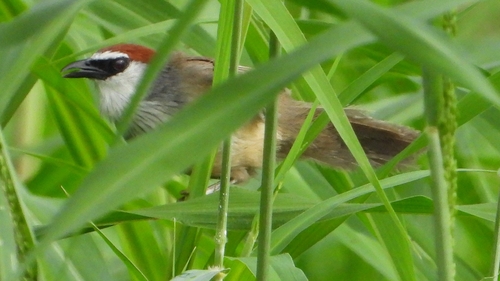
アカガシラチメドリ (Timalia pileata) アカガシラチメドリ
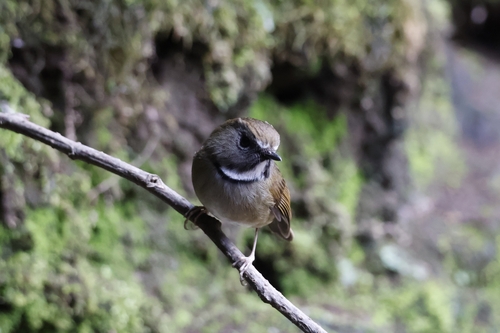
ノドジロヒタキ (Anthipes monileger) ノドジロヒタキ

メディア

読み込み中…

要点

アカガシラチメドリとノドジロヒタキを区別する最も信頼できるフィールドマークは、アカガシラチメドリの目を引く栗色の冠と黒いマスクで、白い額と眉毛によって際立っています。一方、ノドジロヒタキはそのような大胆な頭の模様がなく、特徴的な白い喉の斑点(ゴルゲット)があります。アカガシラチメドリはまた、明らかに大きくてがっしりしており、長いくさび形の尾と太くて黒いくちばしを持っていますが、ノドジロヒタキは小さく、より繊細で、アカガシラチメドリの頭の模様がありません。豊かな栗色の冠と強い顔のマスクを持つ鳥を見たら、それはアカガシラチメドリです。小さく、地味な頭の鳥で白い喉を持っているのを見たら、それはノドジロヒタキです。これらの違いはすべての年齢と性別に当てはまり、両種はフィールドマークにおいて年齢と性別に関して類似しています。

識別のコツ

  1. 頭の模様が最も決定的なマークです: アカガシラチメドリは常に豊かな栗色の冠、黒いマスク、白い額、白い眉毛のラインを示します。ノドジロヒタキはこれらがなく、代わりに白い喉の斑点を持つ地味な頭を示します。
  2. 白い喉の斑点(ゴルゲット): ノドジロヒタキだけがはっきりとした白いゴルゲットを持っています。アカガシラチメドリの喉は対照的に白くなく、白は額と眉毛に限られています。
  3. 尾の形と長さ: アカガシラチメドリは長いくさび形の尾を持ち、しばしば水平に保たれたり、振られたりします。ノドジロヒタキの尾は短く、くさび形ではありません。
  4. くちばしの構造: アカガシラチメドリは太くて黒いくちばしを持っていますが、ノドジロヒタキのくちばしはより細く、頑丈さに欠けます。
  5. サイズと体格: アカガシラチメドリはがっしりしていて長い(19 g、15.5–17 cm)ですが、ノドジロヒタキははるかに小さくて軽い(11 g)です。
  6. 虹彩の色(稀に見える): オスのアカガシラチメドリはルビー色の虹彩を持ち、メスは黒い虹彩を持っています。ノドジロヒタキの虹彩の色はフィールドでは診断的ではありません。
  7. 全体の羽毛: アカガシラチメドリは頭を除いて上も下も地味な茶色で、翼の帯や縞模様はありません。ノドジロヒタキは全体的に地味ですが、きれいな白い喉を持っています。
  8. 行動: アカガシラチメドリは密な草や葦の中で不器用に動き、しばしば尾を振ります。ノドジロヒタキは直立して止まり、昆虫を捕まえるために素早く飛び出します。
  9. 生息地: アカガシラチメドリは低地の草地、葦、低木を好み、ノドジロヒタキは湿った山地の森林に生息しています。
  10. 飛行と止まり方: アカガシラチメドリは長い尾と重い体で細長く見え、ノドジロヒタキはコンパクトで直立して止まります。
  11. 年齢特有の翼の模様はなし: 両種は特徴的な幼鳥や未成熟の翼の模様を欠いています。すべての年齢に対して頭と体の羽毛に焦点を当ててください。
  12. 性別は類似: 両種は羽毛において性的二形性がほとんどないため、これらのマークはオスとメスの両方に適用されます。
  13. 季節的変化なし: 説明されたフィールドマークは年間を通じて存在します。
  14. 落とし穴: 照明が悪いと、アカガシラチメドリの栗色の冠とマスクが鈍く見えることがありますが、白い額と眉毛は通常目立ちます。ノドジロヒタキの白い喉は常にはっきりと定義されています。
  15. 重複する場所: 生息地と行動を補助的な手がかりとして使用しますが、自信を持って識別するためには頭の模様と喉の斑点に頼ってください。

大きさ

アカガシラチメドリはノドジロヒタキ(11.0 g)よりもかなり重い(19.0 g)[wikidata]だけでなく、長さも異なります(15.5–17 cm対ノドジロヒタキの小さいサイズ、具体的には記載されていませんが、はるかに少ない)。フィールドでは、アカガシラチメドリはがっしりしていて細長く見え、相対的に長い尾と太いくちばしを持ち、ノドジロヒタキはコンパクトで優雅です。このサイズの違いは、両種が似たような状況で見られるときに通常明らかです。

羽色

どちらの種にも年齢特有の上翼や飛行パターンのマークは記載されていないため、頭と体の羽毛に焦点を当ててください。すべての年齢と性別のアカガシラチメドリは、豊かな栗色の冠、黒いマスク、白い額、白い眉毛(スーペリシリウム)を示し、その他は地味な茶色で、帯のない上面と下面を持っています。性別は似ていますが、オスはルビー色の虹彩を持ち、メスは黒い虹彩を持っています—フィールドでは見るのが難しいです。ノドジロヒタキはアカガシラチメドリの大胆な頭の模様が欠けており、代わりに地味な頭と、その他の地味な羽毛と対照的な診断的な白い喉の斑点(ゴルゲット)を持っています。ノドジロヒタキの羽毛は全体的により控えめで、強い顔の模様や冠はありません。両種は、どの年齢や季節においても翼の帯や目立つ上翼のパターンを欠いています。

行動

アカガシラチメドリはしばしば水平な姿勢で移動し、長いくさび形の尾をバランスに使用し、尾を振ったり傾けたりすることがあります。密な植生の中で隠れる傾向があり、動きが不器用または重いように見えることがあります。ノドジロヒタキはより活発で敏捷で、通常は直立して止まり、昆虫を捕まえるために素早く飛び出し、素早い動きとより繊細な態度を持っています。アカガシラチメドリの行動は小さなレールやレンバブラーに似ており、ノドジロヒタキは典型的な小さなヒタキのように振る舞います。

生息環境

両種は範囲が重なることがありますが、アカガシラチメドリは低地の草地、葦、低木のある地域、しばしば水の近くで見られることが多いのに対し、ノドジロヒタキは亜熱帯または熱帯の湿った山地の森林を好みます[wikipedia]。密で湿った草地や葦の中にいる場合、アカガシラチメドリの方が可能性が高く、森林の下草、特に丘陵や山岳地帯ではノドジロヒタキが期待されます。

より良い説明を送る

比較と同じ項目を使ってください。文章はすぐに公開されます。

The most reliable field mark to separate Chestnut-capped Babbler from White-gorgeted Flycatcher is the babbler's striking chestnut crown and black mask, set off by a white forehead and eyebrow, versus the flycatcher's lack of such bold head pattern and its distinctive white throat patch (gorget). The babbler is also noticeably larger and bulkier, with a long, wedge-shaped tail and thick, black bill, while the flycatcher is smaller, more delicate, and lacks the babbler's head markings. If you see a bird with a rich chestnut cap and a strong facial mask, it's the babbler; if you see a small, plain-headed bird with a white throat, it's the flycatcher. These differences hold for all ages and sexes, as both species are similar across age and sex in the field marks described.

  1. Head pattern is the most decisive mark: Chestnut-capped Babbler always shows a rich chestnut crown, black mask, white forehead, and white eyebrow line; White-gorgeted Flycatcher lacks these, instead showing a plain head with a white throat patch.
  2. White throat patch (gorget): Only the flycatcher has a sharply defined white gorget; the babbler’s throat is not contrastingly white, and its white is confined to the forehead and eyebrow.
  3. Tail shape and length: The babbler has a long, wedge-shaped tail, often held horizontally or flicked; the flycatcher’s tail is shorter and not wedge-shaped.
  4. Bill structure: Chestnut-capped Babbler has a thick, black bill; the flycatcher’s bill is finer and less robust.
  5. Size and build: The babbler is bulkier and longer (19 g, 15.5–17 cm), while the flycatcher is much smaller and lighter (11 g), with a more delicate build.
  6. Iris color (rarely visible): Male babbler has a ruby-red iris, female a black iris; flycatcher’s iris color is not diagnostic in the field.
  7. Plumage overall: The babbler is plain brown above and below (apart from the head), with no wing bars or streaking; the flycatcher is duller overall but with a clean white throat.
  8. Behavior: Babbler moves clumsily in dense grass or reeds, often flicking its tail; flycatcher perches upright and makes quick sallies for insects.
  9. Habitat: Babbler prefers lowland grassland, reeds, and scrub; flycatcher is found in moist montane forests.
  10. Flight and perched jizz: Babbler appears elongated with a long tail and heavy body; flycatcher is compact and perches upright.
  11. No age-specific wing pattern: Both species lack distinctive juvenile or immature wing markings; focus on head and body plumage for all ages.
  12. Sexes similar: Both species show little sexual dimorphism in plumage, so these marks work for both male and female.
  13. No seasonal change: The described field marks are present year-round.
  14. Pitfalls: In poor light, the babbler’s chestnut crown and mask may look duller, but the white forehead and eyebrow usually stand out; the flycatcher’s white throat is always sharply defined.
  15. Where they overlap: Use habitat and behavior as supporting clues, but rely on head pattern and throat patch for a confident ID.

Chestnut-capped Babbler is significantly heavier (19.0 g) than White-gorgeted Flycatcher (11.0 g) [wikidata], and also longer (15.5–17 cm vs. flycatcher’s smaller size, not specified but much less). In the field, the babbler appears bulkier and more elongated, with a proportionally longer tail and thicker bill, while the flycatcher is compact and dainty. This size difference is usually obvious when both species are seen in similar contexts.

There are no age-specific upperwing or flight pattern marks described for either species, so focus on head and body plumage. Chestnut-capped Babbler of all ages and sexes shows a rich chestnut crown, black mask, white forehead, and white supercilium (eyebrow), with otherwise plain brown, unbarred upperparts and underparts. The sexes are similar, but males have a ruby-red iris and females a black iris—hard to see in the field. White-gorgeted Flycatcher lacks the babbler's bold head pattern; instead, it has a plain head and a diagnostic white throat patch (gorget) contrasting with otherwise duller plumage. The flycatcher’s plumage is more subdued overall, with no strong facial markings or cap. Both species lack wing bars or striking upperwing patterns in any age or season.

Chestnut-capped Babbler often moves with a horizontal posture, using its long, wedge-shaped tail for balance, and may flick or cock its tail. It tends to skulk in dense vegetation and can appear clumsy or heavy in movement. White-gorgeted Flycatcher is more active and agile, typically perching upright and sallying out to catch insects, with quick, darting movements and a more delicate demeanor. The babbler’s behavior is more reminiscent of a small rail or wren-babbler, while the flycatcher behaves like a typical small flycatcher.

Both species can overlap in range, but Chestnut-capped Babbler is most often found in lowland grasslands, reeds, and scrubby areas, often near water, while White-gorgeted Flycatcher prefers subtropical or tropical moist montane forests [wikipedia]. If you are in dense, wet grassland or reedbeds, babbler is more likely; in forest undergrowth, especially in hilly or mountainous terrain, the flycatcher is expected.

変更を破棄しますか?

保存していない編集があります。今離れると失われます。

アカガシラチメドリ · ノドジロヒタキ · 苦手な鳥