

Motmot

Timalie coiffée vs Gobemouche à gorge blanche

Timalia pileata contre Anthipes monileger

Faire un quiz avec Timalie coiffée et Gobemouche à gorge blanche
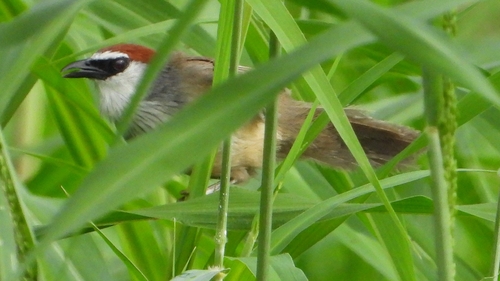
Timalie coiffée (Timalia pileata) Timalie coiffée
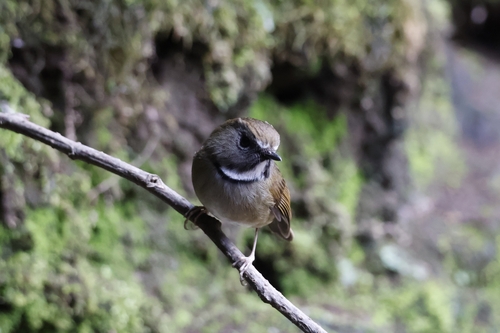
Gobemouche à gorge blanche (Anthipes monileger) Gobemouche à gorge blanche

Médias

Chargement…

En bref

The most reliable field mark to separate Chestnut-capped Babbler from White-gorgeted Flycatcher is the babbler's striking chestnut crown and black mask, set off by a white forehead and eyebrow, versus the flycatcher's lack of such bold head pattern and its distinctive white throat patch (gorget). The babbler is also noticeably larger and bulkier, with a long, wedge-shaped tail and thick, black bill, while the flycatcher is smaller, more delicate, and lacks the babbler's head markings. If you see a bird with a rich chestnut cap and a strong facial mask, it's the babbler; if you see a small, plain-headed bird with a white throat, it's the flycatcher. These differences hold for all ages and sexes, as both species are similar across age and sex in the field marks described.

Conseils d’identification

  1. Head pattern is the most decisive mark: Chestnut-capped Babbler always shows a rich chestnut crown, black mask, white forehead, and white eyebrow line; White-gorgeted Flycatcher lacks these, instead showing a plain head with a white throat patch.
  2. White throat patch (gorget): Only the flycatcher has a sharply defined white gorget; the babbler’s throat is not contrastingly white, and its white is confined to the forehead and eyebrow.
  3. Tail shape and length: The babbler has a long, wedge-shaped tail, often held horizontally or flicked; the flycatcher’s tail is shorter and not wedge-shaped.
  4. Bill structure: Chestnut-capped Babbler has a thick, black bill; the flycatcher’s bill is finer and less robust.
  5. Size and build: The babbler is bulkier and longer (19 g, 15.5–17 cm), while the flycatcher is much smaller and lighter (11 g), with a more delicate build.
  6. Iris color (rarely visible): Male babbler has a ruby-red iris, female a black iris; flycatcher’s iris color is not diagnostic in the field.
  7. Plumage overall: The babbler is plain brown above and below (apart from the head), with no wing bars or streaking; the flycatcher is duller overall but with a clean white throat.
  8. Behavior: Babbler moves clumsily in dense grass or reeds, often flicking its tail; flycatcher perches upright and makes quick sallies for insects.
  9. Habitat: Babbler prefers lowland grassland, reeds, and scrub; flycatcher is found in moist montane forests.
  10. Flight and perched jizz: Babbler appears elongated with a long tail and heavy body; flycatcher is compact and perches upright.
  11. No age-specific wing pattern: Both species lack distinctive juvenile or immature wing markings; focus on head and body plumage for all ages.
  12. Sexes similar: Both species show little sexual dimorphism in plumage, so these marks work for both male and female.
  13. No seasonal change: The described field marks are present year-round.
  14. Pitfalls: In poor light, the babbler’s chestnut crown and mask may look duller, but the white forehead and eyebrow usually stand out; the flycatcher’s white throat is always sharply defined.
  15. Where they overlap: Use habitat and behavior as supporting clues, but rely on head pattern and throat patch for a confident ID.

Taille

Chestnut-capped Babbler is significantly heavier (19.0 g) than White-gorgeted Flycatcher (11.0 g) [wikidata], and also longer (15.5–17 cm vs. flycatcher’s smaller size, not specified but much less). In the field, the babbler appears bulkier and more elongated, with a proportionally longer tail and thicker bill, while the flycatcher is compact and dainty. This size difference is usually obvious when both species are seen in similar contexts.

Plumage

There are no age-specific upperwing or flight pattern marks described for either species, so focus on head and body plumage. Chestnut-capped Babbler of all ages and sexes shows a rich chestnut crown, black mask, white forehead, and white supercilium (eyebrow), with otherwise plain brown, unbarred upperparts and underparts. The sexes are similar, but males have a ruby-red iris and females a black iris—hard to see in the field. White-gorgeted Flycatcher lacks the babbler's bold head pattern; instead, it has a plain head and a diagnostic white throat patch (gorget) contrasting with otherwise duller plumage. The flycatcher’s plumage is more subdued overall, with no strong facial markings or cap. Both species lack wing bars or striking upperwing patterns in any age or season.

Comportement

Chestnut-capped Babbler often moves with a horizontal posture, using its long, wedge-shaped tail for balance, and may flick or cock its tail. It tends to skulk in dense vegetation and can appear clumsy or heavy in movement. White-gorgeted Flycatcher is more active and agile, typically perching upright and sallying out to catch insects, with quick, darting movements and a more delicate demeanor. The babbler’s behavior is more reminiscent of a small rail or wren-babbler, while the flycatcher behaves like a typical small flycatcher.

Habitat

Both species can overlap in range, but Chestnut-capped Babbler is most often found in lowland grasslands, reeds, and scrubby areas, often near water, while White-gorgeted Flycatcher prefers subtropical or tropical moist montane forests [wikipedia]. If you are in dense, wet grassland or reedbeds, babbler is more likely; in forest undergrowth, especially in hilly or mountainous terrain, the flycatcher is expected.

Envoyer une meilleure description

Utilise les mêmes sections que la comparaison. Ton texte est publié tout de suite.

The most reliable field mark to separate Chestnut-capped Babbler from White-gorgeted Flycatcher is the babbler's striking chestnut crown and black mask, set off by a white forehead and eyebrow, versus the flycatcher's lack of such bold head pattern and its distinctive white throat patch (gorget). The babbler is also noticeably larger and bulkier, with a long, wedge-shaped tail and thick, black bill, while the flycatcher is smaller, more delicate, and lacks the babbler's head markings. If you see a bird with a rich chestnut cap and a strong facial mask, it's the babbler; if you see a small, plain-headed bird with a white throat, it's the flycatcher. These differences hold for all ages and sexes, as both species are similar across age and sex in the field marks described.

  1. Head pattern is the most decisive mark: Chestnut-capped Babbler always shows a rich chestnut crown, black mask, white forehead, and white eyebrow line; White-gorgeted Flycatcher lacks these, instead showing a plain head with a white throat patch.
  2. White throat patch (gorget): Only the flycatcher has a sharply defined white gorget; the babbler’s throat is not contrastingly white, and its white is confined to the forehead and eyebrow.
  3. Tail shape and length: The babbler has a long, wedge-shaped tail, often held horizontally or flicked; the flycatcher’s tail is shorter and not wedge-shaped.
  4. Bill structure: Chestnut-capped Babbler has a thick, black bill; the flycatcher’s bill is finer and less robust.
  5. Size and build: The babbler is bulkier and longer (19 g, 15.5–17 cm), while the flycatcher is much smaller and lighter (11 g), with a more delicate build.
  6. Iris color (rarely visible): Male babbler has a ruby-red iris, female a black iris; flycatcher’s iris color is not diagnostic in the field.
  7. Plumage overall: The babbler is plain brown above and below (apart from the head), with no wing bars or streaking; the flycatcher is duller overall but with a clean white throat.
  8. Behavior: Babbler moves clumsily in dense grass or reeds, often flicking its tail; flycatcher perches upright and makes quick sallies for insects.
  9. Habitat: Babbler prefers lowland grassland, reeds, and scrub; flycatcher is found in moist montane forests.
  10. Flight and perched jizz: Babbler appears elongated with a long tail and heavy body; flycatcher is compact and perches upright.
  11. No age-specific wing pattern: Both species lack distinctive juvenile or immature wing markings; focus on head and body plumage for all ages.
  12. Sexes similar: Both species show little sexual dimorphism in plumage, so these marks work for both male and female.
  13. No seasonal change: The described field marks are present year-round.
  14. Pitfalls: In poor light, the babbler’s chestnut crown and mask may look duller, but the white forehead and eyebrow usually stand out; the flycatcher’s white throat is always sharply defined.
  15. Where they overlap: Use habitat and behavior as supporting clues, but rely on head pattern and throat patch for a confident ID.

Chestnut-capped Babbler is significantly heavier (19.0 g) than White-gorgeted Flycatcher (11.0 g) [wikidata], and also longer (15.5–17 cm vs. flycatcher’s smaller size, not specified but much less). In the field, the babbler appears bulkier and more elongated, with a proportionally longer tail and thicker bill, while the flycatcher is compact and dainty. This size difference is usually obvious when both species are seen in similar contexts.

There are no age-specific upperwing or flight pattern marks described for either species, so focus on head and body plumage. Chestnut-capped Babbler of all ages and sexes shows a rich chestnut crown, black mask, white forehead, and white supercilium (eyebrow), with otherwise plain brown, unbarred upperparts and underparts. The sexes are similar, but males have a ruby-red iris and females a black iris—hard to see in the field. White-gorgeted Flycatcher lacks the babbler's bold head pattern; instead, it has a plain head and a diagnostic white throat patch (gorget) contrasting with otherwise duller plumage. The flycatcher’s plumage is more subdued overall, with no strong facial markings or cap. Both species lack wing bars or striking upperwing patterns in any age or season.

Chestnut-capped Babbler often moves with a horizontal posture, using its long, wedge-shaped tail for balance, and may flick or cock its tail. It tends to skulk in dense vegetation and can appear clumsy or heavy in movement. White-gorgeted Flycatcher is more active and agile, typically perching upright and sallying out to catch insects, with quick, darting movements and a more delicate demeanor. The babbler’s behavior is more reminiscent of a small rail or wren-babbler, while the flycatcher behaves like a typical small flycatcher.

Both species can overlap in range, but Chestnut-capped Babbler is most often found in lowland grasslands, reeds, and scrubby areas, often near water, while White-gorgeted Flycatcher prefers subtropical or tropical moist montane forests [wikipedia]. If you are in dense, wet grassland or reedbeds, babbler is more likely; in forest undergrowth, especially in hilly or mountainous terrain, the flycatcher is expected.

Abandonner tes modifications ?

Tu as des modifications non enregistrées. Si tu pars maintenant, elles seront perdues.

Timalie coiffée · Gobemouche à gorge blanche · Mes oiseaux difficiles