

Motmot

コスズメフクロウ 対 アカスズメフクロウ

Glaucidium griseiceps 対 Glaucidium brasilianum

コスズメフクロウとアカスズメフクロウのクイズ
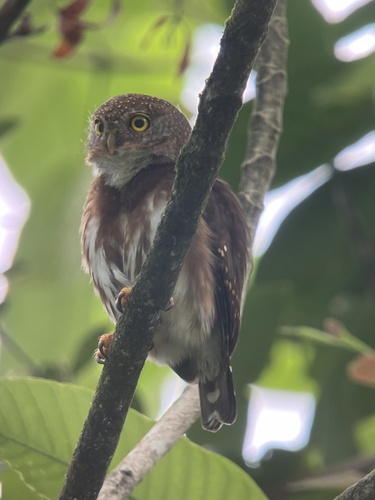
コスズメフクロウ (Glaucidium griseiceps) コスズメフクロウ
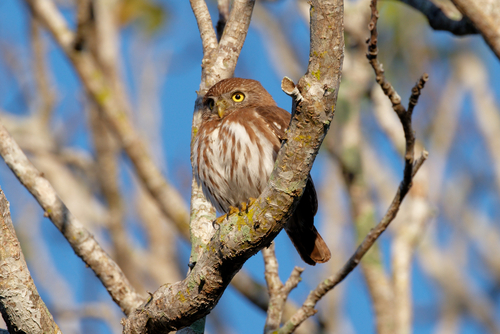
アカスズメフクロウ (Glaucidium brasilianum) アカスズメフクロウ

メディア

読み込み中…

要点

コスズメフクロウとアカスズメフクロウの最も信頼できるフィールドマークは、全体の色合いと頭の模様であり、特に成鳥において顕著です。コスズメフクロウは、バフから白っぽい斑点のある灰褐色の冠と、豊かな茶色の背中を示します。一方、アカスズメフクロウは非常に変動が大きいですが、典型的には縞模様のある冠を持ち、全体的により赤褐色になることがあります。幼鳥のコスズメフクロウは、斑点や縞模様がない平坦な灰色の冠と後頭部を持っています。両種とも後頭部に「偽の目」を持っていますが、背景色と目立ち方が異なります。アカスズメフクロウは一般的に重く、しばしばより頑丈に見え、大きな足を持っています。フィールドでは、アカスズメフクロウは開けたまたは半開けの生息地で見られる可能性が高く、コスズメフクロウは湿った森林を好みます。

識別のコツ

  1. Juvenile head pattern: 鳥が斑点や縞模様のない平坦な灰色の冠と後頭部を持ち、すすけた「偽の目」を持っている場合、それは幼鳥のコスズメフクロウです。アカスズメフクロウの幼鳥は常に冠に何らかの縞模様や斑点を示します。
  2. Crown markings (adults): コスズメフクロウは灰褐色の冠にバフから白っぽい斑点があります。アカスズメフクロウは斑点ではなく、細長い白またはバフの縞模様を持っています。
  3. Supercilia: アカスズメフクロウは顔の円盤の上に目立つ白い眉斑を示しますが、コスズメフクロウにはありません。
  4. Overall coloration: コスズメフクロウは常に上面が豊かな茶色ですが、アカスズメフクロウは灰褐色、赤褐色、または中間的な色合いになることがあります。赤褐色または非常に淡い個体はほぼ確実にアカスズメフクロウです。
  5. Tail pattern: コスズメフクロウは淡い横縞のある茶色の尾を持っています。アカスズメフクロウは黒と白の縞模様の尾または均一な赤褐色の尾(赤褐色の変異体)を持つことがあります。
  6. Underpart streaking: 両種とも下部に縞模様がありますが、アカスズメフクロウはしばしばより重い縞模様を持ち、縞模様は通常白です。
  7. Wing coverts: アカスズメフクロウは翼の覆羽に明らかな白い斑点を示しますが、コスズメフクロウのものは目立ちません。
  8. 'False eyes' on nape: 両種ともこれを持っていますが、コスズメフクロウのものはより暗い背景にあり、アカスズメフクロウのものよりも鮮明に見えないことがあります。
  9. Structure: アカスズメフクロウはより頑丈で、大きな足と爪を持ち、特に止まっているときに目立ちます。コスズメフクロウはより細身です。
  10. Size: アカスズメフクロウは重い(約70 g対50–58 g)ですが、両者が並んで見られない限り、判断は難しいです。
  11. Flight style: アカスズメフクロウはしばしばうねるような、キツツキのような動きで飛びます。コスズメフクロウの飛行はそのように説明されることは少ないです。
  12. Habitat: 湿った閉じた森林では、コスズメフクロウがはるかに見られる可能性が高いです。半開けの、エッジ、または乾燥した生息地では、アカスズメフクロウがデフォルトです。
  13. Geographic context: あなたが南西部のアメリカ、パナマ/コロンビア以外の南アメリカ、または開けた国にいる場合、アカスズメフクロウが期待されます。南メキシコからパナマまでの密な低地森林では、コスズメフクロウが見られる可能性があります。
  14. Vocalization: もし間隔を空けた数回のフクロウの声で始まり、短い間隔の後に急速な一連の声が聞こえた場合、コスズメフクロウを疑ってください。ただし、アカスズメフクロウの声はここでは説明されていないため、注意して使用してください。
  15. Sex/season: 両性は似ていますが、アカスズメフクロウの雌はより赤褐色である可能性があります。どちらの種にも強い季節的な羽毛の違いは説明されていません。

大きさ

アカスズメフクロウは、平均的な成鳥の質量が約69.65 g [wikidata]で、コスズメフクロウのオス(50.6–58.8 g)および雌(約56 g)[wikipedia]と比較して、より重いです。両種は長さが似ています(コスズメフクロウ: 13–18 cm; アカスズメフクロウ: 約15 cm)ですが、アカスズメフクロウは特に頑丈で、足と爪が不釣り合いに大きいです。このより大きな外見は微妙ですが、特に止まっているときに役立つ手がかりとなることがあります。

羽色

行動

アカスズメフクロウは昼間に狩りをしているのがよく見られ、時にはうねるようなキツツキのような飛び方をします。彼らはより大胆で、開けた場所で活動する可能性が高いです。コスズメフクロウは開けた場所で見られることが少なく、密な森林内またはその近くに留まる傾向があります。両種とも時にはオープンに止まりますが、アカスズメフクロウはより目立ちやすく、半開けの生息地で狩りをする可能性が高いです。

生息環境

コスズメフクロウは、南メキシコからパナマ、そして南米北西部にかけての湿った森林に限定されています。彼らは森林の専門家であり、密な森林から離れて見つかることはほとんどありません。対照的に、アカスズメフクロウは非常に広範囲に分布し、南西部のアメリカからアルゼンチンまでのさまざまな半開けの森林生息地で一般的です。中央アメリカでは、アカスズメフクロウは乾燥した、より開けた、またはエッジの生息地で見られる可能性が高く、コスズメフクロウは完全な湿った森林で期待される種です。

声

コスズメフクロウは、2〜4回の均等に間隔を空けたフクロウの声で始まり、短い間隔の後に6〜18回の類似の音の急速な一連の声を出します(「フー、フー、フー...」)、時には最初にトリルが含まれます。アカスズメフクロウの声は提供されたメモには記載されていないため、この情報だけでは音声による区別は信頼できません。

より良い説明を送る

比較と同じ項目を使ってください。文章はすぐに公開されます。

The most reliable field mark between Central American Pygmy-Owl and Ferruginous Pygmy-Owl is overall coloration and head pattern, especially in adults: Central American Pygmy-Owl shows a grayish-brown crown with buff to whitish spots and a rich brown back, while Ferruginous Pygmy-Owl is highly variable but typically has a streaked crown and can be much more rufous overall. Juvenile Central American Pygmy-Owls have a plain gray crown and nape, lacking the spots and streaks of Ferruginous Pygmy-Owl. Both species have 'false eyes' on the nape, but the background color and prominence differ. Ferruginous Pygmy-Owl is generally heavier and often appears stockier with larger feet. In the field, Ferruginous Pygmy-Owl is much more likely in open or semi-open habitats, while Central American Pygmy-Owl prefers humid forests.

  1. Juvenile head pattern: If the bird has a plain gray crown and nape with no spots or streaks, and sooty 'false eyes,' it is a juvenile Central American Pygmy-Owl. Ferruginous juveniles always show some streaking or spotting on the crown.
  2. Crown markings (adults): Central American Pygmy-Owl has buff to whitish spots on a grayish-brown crown; Ferruginous Pygmy-Owl has elongated white or buff streaks, not spots.
  3. Supercilia: Ferruginous Pygmy-Owl shows prominent white supercilia above the facial disc, which Central American lacks.
  4. Overall coloration: Central American is consistently rich brown above, while Ferruginous can be gray-brown, rufous, or intermediate. A rufous or very pale individual is almost certainly Ferruginous.
  5. Tail pattern: Central American has a brown tail with pale bars; Ferruginous can have a black-and-white barred tail or a uniform rufous tail (in rufous morphs).
  6. Underpart streaking: Both are streaked below, but Ferruginous is often more heavily streaked and the streaks are usually white.
  7. Wing coverts: Ferruginous Pygmy-Owl shows obvious white spots on the wing coverts; Central American's are less conspicuous.
  8. 'False eyes' on nape: Both species have these, but Central American's are set in a darker background and may appear less sharply defined than Ferruginous's.
  9. Structure: Ferruginous is stockier with larger feet and talons, especially noticeable when perched. Central American is more slender.
  10. Size: Ferruginous is heavier (about 70 g vs. 50–58 g), but this is hard to judge unless both are seen side by side.
  11. Flight style: Ferruginous often flies with an undulating, woodpecker-like motion. Central American's flight is less frequently described as such.
  12. Habitat: In humid, closed forest, Central American is much more likely. In semi-open, edge, or drier habitats, Ferruginous is the default.
  13. Geographic context: If you are in the southwestern US, South America outside Panama/Colombia, or open country, Ferruginous is expected. In dense lowland forest from southern Mexico to Panama, Central American is likely.
  14. Vocalization: If you hear a song starting with a few spaced hoots, a pause, then a rapid series, suspect Central American. However, Ferruginous's song is not described here, so use with caution.
  15. Sex/season: Both sexes are similar, but Ferruginous females may be more rufous. No strong seasonal plumage differences are described for either species.

Ferruginous Pygmy-Owl is the heavier of the two, with an average adult mass of about 69.65 g [wikidata], compared to Central American Pygmy-Owl males (50.6–58.8 g) and females (~56 g) [wikipedia]. Both species are similar in length (Central American: 13–18 cm; Ferruginous: ~15 cm), but Ferruginous Pygmy-Owl is notably stockier and has disproportionately large feet and talons. This bulkier appearance can be a subtle but useful clue, especially when perched.

  • Juvenile/immature birds: Central American Pygmy-Owl juveniles have a plain gray crown and nape, unspotted, with sooty 'false eyes' on the nape. This contrasts with Ferruginous Pygmy-Owl, which even as a juvenile shows a streaked or spotted crown and more prominent white supercilia above the facial disc. If you see a small owl with a plain gray head and no crown spots, Central American is likely.
  • Adults: Central American Pygmy-Owl adults have a grayish-brown crown with buff to whitish spots, a rich brown upperpart, and a tail with pale bars. Underparts are whitish with reddish brown streaks. Ferruginous Pygmy-Owl adults are much more variable: they can be gray-brown with a black-and-white barred tail or rich rufous with a uniform rufous tail. Their crown is streaked (not spotted), and they have prominent white supercilia. Both have 'false eyes' on the nape, but Central American's are set in a darker background, while Ferruginous's are more sharply defined. Ferruginous also tends to show heavier streaking below and more obvious white spots on the wing coverts.

Ferruginous Pygmy-Owl is often seen hunting during daylight, sometimes with an undulating, woodpecker-like flight. It is bolder and more likely to be active in open areas. Central American Pygmy-Owl is less often seen in the open and tends to stay within or near dense forest. Both species perch openly at times, but Ferruginous is more likely to be conspicuous and to hunt in semi-open habitats.

Central American Pygmy-Owl is restricted to humid forests from southern Mexico through Panama and into northwestern South America. It is a forest specialist and rarely found away from dense woodland. Ferruginous Pygmy-Owl, in contrast, is extremely widespread and common in a range of semi-open wooded habitats, from the southwestern US to Argentina. In Central America, Ferruginous is likely in drier, more open, or edge habitats, while Central American is the expected pygmy-owl in intact humid forest.

Central American Pygmy-Owl gives a song that starts with 2–4 evenly spaced hoots, a brief pause, then a rapid series of 6–18 similar notes ('huu-huu, huu-huu-huu...'), sometimes with trills at the start. Ferruginous Pygmy-Owl's song is not described in the provided notes, so vocalization is not a reliable separator based on this information alone.

変更を破棄しますか?

保存していない編集があります。今離れると失われます。

コスズメフクロウ · アカスズメフクロウ · 苦手な鳥