

Motmot

ニシフタスジモズモドキ 対 フタスジモズモドキ

Vireo cassinii 対 Vireo solitarius

ニシフタスジモズモドキとフタスジモズモドキのクイズ
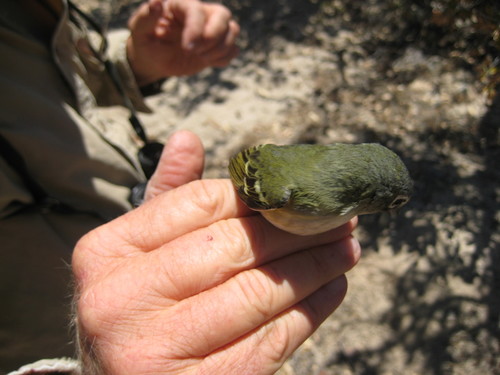
ニシフタスジモズモドキ (Vireo cassinii) ニシフタスジモズモドキ
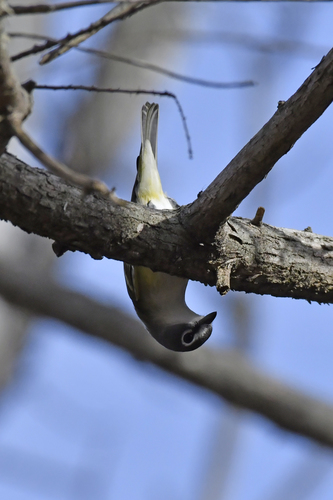
フタスジモズモドキ (Vireo solitarius) フタスジモズモドキ

メディア

読み込み中…

要点

カッシンモズモドキとフタスジモズモドキの最も信頼できるフィールドマークは、頭の色とコントラストです:カッシンは灰色がかったオリーブ色または茶色がかった灰色の冠を持ち、フタスジは白いアイマスクと緑がかった背中から際立つ深い青灰色の冠を示します。両種は大胆な白いアイマスクと翼帯を持っていますが、フタスジの翼帯はより明確に黄色であり、頭は明らかに青みがかっています。幼鳥と成鳥の羽毛は各種内で非常に似ているため、年齢は主要な区別要因ではありません。くちばしの形状や脇腹の黄色の量とトーンの微妙な違いが役立つことがありますが、頭の色との組み合わせで使用するのが最適です。分布域と生息地も強力な手がかりであり、繁殖分布はほとんど重なりません。

識別のコツ

  1. 頭の色は単独で最も良いフィールドマークです: カッシンモズモドキは灰色がかったオリーブ色または茶色がかった灰色の冠を持ち、フタスジモズモドキは白いアイマスクと緑がかった背中から際立つ深い青灰色の冠を示します。このコントラストは良い光の下で、止まっている鳥で最も明らかです。
  2. アイマスク: 両種は大胆な白いアイマスクを持っているため、このマークだけでは区別できません。頭の色との組み合わせで使用してください。
  3. 翼帯: フタスジモズモドキの翼帯は明確に黄色であり、カッシンの翼帯は白またはわずかに黄色がかっています。これは微妙ですが、明るい光や写真で役立つことがあります。
  4. 脇腹の色: フタスジモズモドキは通常、脇腹に明るく広範囲な黄色を示し、カッシンの黄色はより淡く制限されています。
  5. くちばしの形: カッシンはより小さく、細いくちばしを持ち、特に大きなくちばしのフタスジモズモドキ(alticola)と比較すると顕著です。直接比較や良い視界がないと判断が難しいことがあります。
  6. 冠のコントラスト: フタスジでは、青灰色の冠が白いアイマスクとオリーブグリーンの背中から明確に区別されます;カッシンでは、冠が背中とアイマスクにより滑らかに溶け込んでいます。
  7. 幼鳥の羽毛: 両種の幼鳥は成鳥に似ているため、年齢は信頼できる区別要因ではありません。どちらの種にも特有の幼鳥の翼や飛行マークは確認されていません。
  8. 分布域: カッシンはアメリカ西部と南ブリティッシュコロンビアで繁殖し、フタスジはカナダとアメリカ東部で繁殖します。重なりのないゾーンにいる場合、分布域は強力な手がかりです。
  9. 生息地: カッシンは西部の山々と丘陵の開けた森林を好み、フタスジは主に東部の常緑樹と落葉樹の混合林に見られます。
  10. 歌: カッシンは「質問と回答」のパターンを持つ長く持続的な歌唱で知られています。これを聞くと、カッシンの可能性が高いです。
  11. 採餌の高さ: 両種は中層から下層の樹冠で採餌するため、これは強力な区別要因ではありません。
  12. 性別と季節: 両種はほとんどまたは全く性的二形性を示さず、季節によって羽毛が大きく変わることはないため、これらは区別には役立ちません。
  13. 求愛行動: フタスジのオスは部分的な求愛巣を作ることがありますが、これはフィールドで観察されることは稀で、実用的な区別要因ではありません。
  14. サイズ: フタスジはわずかに大きく、がっしりとしていますが、重なりが広範囲であり、直接比較以外では信頼できるフィールドマークではありません。
  15. 落とし穴: アイマスクや翼帯だけに頼らないでください;常に良い光の下で頭の色と冠のコントラストを確認してください。分布域と生息地は特に移動期間外で強力なサポート手がかりです。

大きさ

両種は非常に似た全体のサイズと構造を持つ小さなモズモドキです。カッシンモズモドキは体重が約14.6g [wikidata]であるのに対し、フタスジモズモドキは13〜19g [wikipedia]の範囲です。フタスジモズモドキはわずかに長く(126〜148mm対カッシンの110〜140mm)、少しがっしりして見えることがありますが、これらの違いは微妙で、フィールドで診断的であることは稀です。くちばしのサイズは手がかりになることがあります:カッシンはわずかに小さく、細いくちばしを持ち、特に大きなくちばしのフタスジモズモドキ亜種(alticola)と比較すると顕著です。

羽色

幼鳥と成鳥の羽毛は各種内で似ているため、年齢は主要な区別要因ではありません。両種は大胆な白いアイマスク、白い腹部、2つの翼帯を示します。主な違いは頭と翼帯の色にあります:カッシンモズモドキは灰色がかったオリーブ色または茶色がかった灰色の冠と淡い黄色がかった脇腹を持ち、フタスジモズモドキは白いアイマスクと緑がかった背中から明確に対比される深い青灰色の冠を持ち、翼帯はより明確に黄色です。フタスジの脇腹の黄色は通常、より明るく広範囲です。両種の幼鳥は成鳥に似ているため、これらのマークは年間を通じて適用されます。

行動

両種は中層から下層の樹冠で計画的に採餌し、しばしば昆虫を探すために一時停止します。カッシンモズモドキは持続的で長い歌唱で知られ、時には他の鳥を引き寄せます。フタスジモズモドキのオスは部分的な求愛巣を作り、繁殖中により大きなテリトリーを守ります。両種は慎重に動きますが、行動の違いは微妙で、通常は声の手がかりなしでは診断的ではありません。

生息環境

カッシンモズモドキは特に太平洋州と南ブリティッシュコロンビアの西部山脈と丘陵の開けた森林で繁殖します。フタスジモズモドキは主にカナダとアメリカ東部の常緑樹と落葉樹の混合林で繁殖します。もしあなたが極西にいるなら、カッシンの可能性が高く、北東または南東ではフタスジが期待されます。彼らの分布域は、内陸西部の移動期間を除いてほとんど重なりません。

声

カッシンモズモドキは持続的な短い粗い笛のフレーズの連続を歌い、「質問と回答」のパターン(高音と低音の交互の終わり)を持つことが多く、時には「チャチャチャ」と表現されます。フタスジモズモドキの歌はここでは詳細に説明されていませんが、カッシンはその長く持続的な歌唱で知られています。両種はテリトリーと配偶者の引き寄せのために歌を使用しますが、カッシンの長い歌唱は手がかりになることがあります。

より良い説明を送る

比較と同じ項目を使ってください。文章はすぐに公開されます。

The most reliable field mark between Cassin's Vireo and Blue-headed Vireo is the color and contrast of the head: Cassin's has a grayish-olive or brownish-gray crown, while Blue-headed shows a deeper blue-gray crown that stands out sharply from the white spectacles and greenish back. Both species have bold white spectacles and wing bars, but Blue-headed's wing bars are more distinctly yellow, and its head is noticeably bluer. Juvenile and adult plumages are very similar within each species, so age is not a major separator. Bill shape and subtle differences in the amount and tone of yellow on the flanks can help, but are best used in combination with head color. Range and habitat are also strong clues, as their breeding distributions barely overlap.

  1. Head color is the single best field mark: Cassin's Vireo has a grayish-olive or brownish-gray crown, while Blue-headed Vireo shows a deep blue-gray crown that stands out from the white spectacles and greenish back. This contrast is most obvious in good light and on perched birds.
  2. Spectacles: Both species have bold white spectacles, so this mark alone does not separate them. Use in combination with head color.
  3. Wing bars: Blue-headed Vireo's wing bars are distinctly yellow, while Cassin's are white or only faintly yellowish. This is subtle but can help in bright light or photos.
  4. Flank color: Blue-headed Vireo usually shows brighter and more extensive yellow on the flanks, while Cassin's yellow is paler and more restricted.
  5. Bill shape: Cassin's has a smaller, thinner bill, especially compared to the larger-billed Blue-headed Vireo (alticola). This can be tricky to judge unless you have direct comparison or good views.
  6. Crown contrast: On Blue-headed, the blue-gray crown is sharply demarcated from the white spectacles and olive-green back; on Cassin's, the crown blends more smoothly into the back and spectacles.
  7. Juvenile plumage: Both species' juveniles look like adults, so age is not a reliable separator. No distinctive juvenile wing or flight marks are noted for either species.
  8. Range: Cassin's breeds in the western US and southern British Columbia; Blue-headed breeds in Canada and the eastern US. If you are outside the overlap zone, range is a strong clue.
  9. Habitat: Cassin's prefers open woodlands in western mountains and foothills; Blue-headed is found in mixed forests with evergreens and deciduous trees, mainly in the east.
  10. Song: Cassin's is known for long, persistent singing bouts with a 'question-and-answer' pattern. If you hear this, Cassin's is likely.
  11. Foraging height: Both species forage in the mid to lower canopy, so this is not a strong separator.
  12. Sex and season: Both species show little or no sexual dimorphism and do not change plumage significantly by season, so these are not useful for separation.
  13. Courtship behavior: Blue-headed males may build partial courtship nests, but this is rarely observed in the field and not a practical separator.
  14. Size: Blue-headed averages slightly larger and bulkier, but overlap is extensive and this is not a reliable field mark except in direct comparison.
  15. Pitfalls: Do not rely solely on spectacles or wing bars; always check head color and crown contrast in good light. Range and habitat are strong supporting clues, especially outside migration periods.

Both species are small vireos with very similar overall size and structure. Cassin's Vireo averages about 14.6 g in body mass [wikidata], while Blue-headed Vireo ranges from 13–19 g [wikipedia]. Blue-headed Vireo is slightly longer (126–148 mm vs. Cassin's 110–140 mm) and may appear a bit bulkier, but these differences are subtle and rarely diagnostic in the field. Bill size can be a clue: Cassin's has a slightly smaller, thinner bill, especially compared to the larger-billed Blue-headed Vireo subspecies (alticola).

Juvenile and adult plumages are similar within each species, so age is not a major separator. Both species show bold white spectacles, white underparts, and two wing bars. The key difference is in the head and wing bar color: Cassin's Vireo has a grayish-olive or brownish-gray crown and paler yellowish flanks, while Blue-headed Vireo has a deep blue-gray crown that contrasts sharply with the white spectacles and greenish back, and its wing bars are more distinctly yellow. The yellow on Blue-headed's flanks is usually brighter and more extensive. Juveniles of both species resemble adults, so these marks apply year-round.

Both species forage methodically in the mid to lower canopy, often pausing to scan for insects. Cassin's Vireo is known for its persistent, long bouts of singing, sometimes drawing in other birds. Blue-headed Vireo males build partial courtship nests and defend larger territories during breeding. Both species are deliberate movers, but behavioral differences are subtle and not usually diagnostic without vocal cues.

Cassin's Vireo breeds in open woodlands of western mountains and foothills, especially in the Pacific states and southern British Columbia. Blue-headed Vireo breeds in large temperate forests with a mix of evergreen and deciduous trees, mostly in Canada and the eastern US. If you are in the far west, Cassin's is much more likely; in the northeast or southeast, Blue-headed is expected. Their ranges barely overlap except possibly during migration in the interior West.

Cassin's Vireo sings a persistent series of short, rough-whistled phrases, often with a 'question-and-answer' pattern (alternating high and low endings), sometimes described as 'cha-cha-cha.' Blue-headed Vireo's song is not described in detail here, but Cassin's is noted for its long, persistent singing. Both species use song for territory and mate attraction, but Cassin's extended singing bouts can be a clue.

変更を破棄しますか?

保存していない編集があります。今離れると失われます。

ニシフタスジモズモドキ · フタスジモズモドキ · 苦手な鳥