

Motmot

シロハラムラサキツバメ 対 チャムネツバメ

Progne dominicensis 対 Progne tapera

シロハラムラサキツバメとチャムネツバメのクイズ
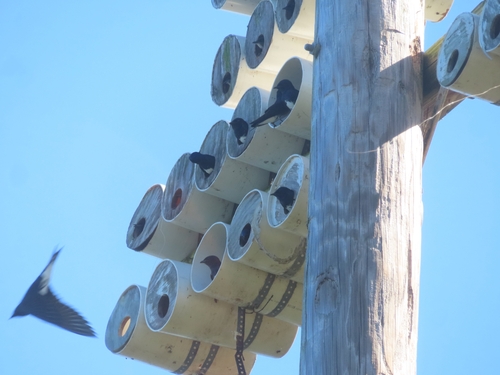
シロハラムラサキツバメ (Progne dominicensis) シロハラムラサキツバメ
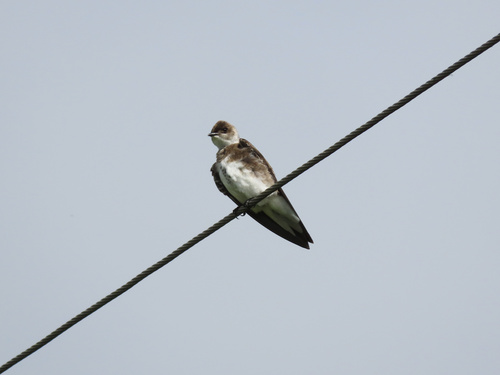
チャムネツバメ (Progne tapera) チャムネツバメ

メディア

読み込み中…

要点

カリブツバメとチャムネツバメの最も信頼できるフィールドマークは、腹部のパターンです:成鳥のカリブツバメ(特にオス)は、暗い上面との鮮明なコントラストを持つクリスプな白い下腹部を示し、チャムネツバメは常に白い腹部と砂褐色の上面を分ける茶色の胸帯(時には薄い)を示します。両種の幼鳥は混乱を招くことがありますが、若いチャムネツバメの茶色がかった洗いと尾の分岐が少ないことが助けになります。構造的には、カリブツバメはより大きく、ずっしりとしており、翼が広く、尾の分岐が深いです。両種は移動中や水上で一緒に見られることがあるため、これらの詳細に注意を払うことが重要です。

識別のコツ

  1. Breast band: チャムネツバメは常に胸に茶色の帯を示し(時には薄い)、白い腹部と砂褐色の上面を分けます。カリブツバメは真の胸帯を示さず、鈍い雌や幼鳥でさえも清潔な白い下腹部を持っています。
  2. Underpart contrast: 成鳥のオスのカリブツバメは、鮮やかな青黒い上面と純白の下腹部との間に鋭いコントラストがあります。チャムネツバメは、上面と胸部がより均一に砂褐色で、コントラストが少ないです。
  3. Tail shape: カリブツバメは、特に成鳥では、より深く分岐した尾を持っています。チャムネツバメの尾はわずかに分岐しており、幼鳥はより四角い尾を持っています。
  4. Upperpart color: カリブツバメ(オス)は上面が光沢のある青黒色です。チャムネツバメは上面が砂褐色で、決して光沢がなく青黒くありません。
  5. Juvenile marks: 幼鳥のチャムネツバメは四角い尾と喉の側面に灰褐色の洗いを持ち、茶色がかった胸帯があります。幼鳥のカリブツバメは鈍いですが、茶色の胸帯がなく、より分岐した尾を持っています。
  6. Size and structure: カリブツバメはより大きく、ずっしりとしており、翼が広く、重い印象を持っています。チャムネツバメはスリムで流線型です。これは他のマークと組み合わせて使用してください。サイズには重複があります。
  7. Flight style: 両種は空中で昆虫を捕食しますが、カリブツバメは飛行中により重く、力強く見えることがありますが、チャムネツバメは軽快で素早いです。
  8. Bill and head: カリブツバメはわずかに重いくちばしとより頑丈な頭のプロファイルを持っています。チャムネツバメのくちばしは細く、頭はあまりかさばって見えません。
  9. Habitat context: カリブツバメはカリブ海の島々、特に町や建物の近くにいる可能性が高いです。チャムネツバメは南アメリカ本土に広く分布し、人造構造物にあまり依存しません。
  10. Vocalizations: 両種はゴロゴロとした鳴き声を持っていますが、チャムネツバメの歌はより長く、転がり、より複雑です。鳴き声は似ており、距離を置いて区別するのが難しいため、注意して使用してください。
  11. Sex differences: カリブツバメだけが強い性差を示し、オスは雌よりもはるかに光沢があり、暗いです。チャムネツバメの性は似ています。
  12. Subspecies confusion: チャムネツバメの亜種fuscaは全体的に暗く、より明確な胸帯と下胸部と腹部に薄暗い斑点を持っていますが、常に茶色の帯を示します。
  13. Pitfalls: 未熟なカリブツバメは鈍く見えることがあり、チャムネツバメと混同されることがありますが、常に茶色の胸帯がなく、清潔な白い下腹部を持っています。
  14. Perched vs. flight views: 尾の形と下腹部のパターンは、止まっているときに最もよく見えます。飛行中は、全体のサイズ、尾の分岐、下腹部のコントラストが助けになりますが、照明や羽の生え変わりに注意してください。
  15. Overlap: 両種は移動中や漂流中に一緒に見られることがあり、特に水の近くで見られます。自信を持って識別するためには、常にマークの組み合わせを使用してください。

大きさ

カリブツバメはより大きく、重い種で、長さ約18.5 cm、体重約40 gです。チャムネツバメはわずかに小さく、16〜18 cm、30〜40 gです。フィールドでは、カリブツバメはしばしばずっしりとしており、翼が広く、尾の分岐が深いように見えますが、チャムネツバメはスリムで流線型に見えます。ただし、サイズには重複があるため、サイズは羽毛や構造と組み合わせて使用してください。

羽色

幼鳥と未熟な鳥は最大の落とし穴です。幼鳥のチャムネツバメはより四角い尾と喉の側面に灰褐色の洗いを持ち、常に茶色がかった胸帯があります(薄い場合でも)。カリブツバメの幼鳥と雌は成鳥のオスよりも鈍く、灰褐色の胸部と側面を持っていますが、清潔な白い下腹部を示し、明確な胸帯はありません。成鳥のオスのカリブツバメは、光沢のある青黒色の上面と鋭く対比する白い下腹部を持っていますが、雌や未熟な個体は鈍く、チャムネツバメの茶色の胸帯は持っていません。すべての年齢のチャムネツバメは砂褐色の上面、白い顎と喉、胸に茶色の帯を持ち、これはより暗い亜種fuscaでより顕著です。チャムネツバメの尾はより深く分岐していますが、チャムネツバメの尾はわずかに分岐しています(幼鳥ではより四角い)。

行動

両種は空中の昆虫食者で、飛行中に昆虫を狩りますが、カリブツバメはしばしばより群れを成し、大きな群れを形成し、銀行、建物、または古いキツツキの穴に巣を作ることが多いです。チャムネツバメは単独または小さなグループで採餌し、しばしば植生や水の上を速く低く飛び、時には群れの昆虫を食べるときに高く飛びます。両種は開けた生息地で見ることができますが、カリブツバメは特に都市部で巣作りのために人造構造物を使用する可能性が高いです。

生息環境

カリブツバメはカリブ海全体で繁殖し(キューバとフアベントゥーラ島を除く)、しばしば水の近く、町、または巣作りのための空洞が利用できる農村地域にいます。チャムネツバメは中央および南アメリカ本土に広く分布し(チリを除く)、開けた国、川、湖の上で見られる可能性が高く、時には都市部でも見られます。移動中や漂流中に重複が発生することがありますが、特に水の近くや両種が昆虫を狩る開けた地域で見られます。

声

両種はゴロゴロとしたまたは喉の奥のような声を持っており、やや似たような鳴き声があります。カリブツバメはゴロゴロとしたチュー・チューという鳴き声を出します。チャムネツバメの歌は、液体のような、転がる、下降するトリルの厳しい、喉の奥の一連のもので、鳴き声には乾いた、ブズブズした「djzeut」とより音楽的な「dureet」が含まれます。鳴き声の違いは微妙で、最も信頼できるフィールドマークではありませんが、チャムネツバメの歌はより長く、より転がりがあります。

より良い説明を送る

比較と同じ項目を使ってください。文章はすぐに公開されます。

The most reliable field mark between Caribbean Martin and Brown-chested Martin is the underpart pattern: adult Caribbean Martins (especially males) show crisp white lower underparts with a sharp contrast to dark upperparts, while Brown-chested Martins always show a brown breast band (sometimes faint) separating the white belly from the sandy-brown upperparts. Juveniles of both species can be confusing, but the brownish wash and less forked tail of young Brown-chested Martins help. Structurally, Caribbean Martin is larger and bulkier with broader wings and a deeper fork to the tail. Both species can appear together in migration or over water, so careful attention to these details is essential.

  1. Breast band: Brown-chested Martin always shows a brown band across the breast (sometimes faint), separating the white belly from sandy-brown upperparts. Caribbean Martin never shows a true breast band; even dull females and juveniles have clean white lower underparts.
  2. Underpart contrast: Adult male Caribbean Martin has sharply contrasting glossy blue-black upperparts and pure white lower underparts. Brown-chested Martin is more uniformly sandy brown above and across the breast, with less contrast.
  3. Tail shape: Caribbean Martin has a more deeply forked tail, especially in adults; Brown-chested Martin's tail is only slightly forked, and juveniles have a more squared tail.
  4. Upperpart color: Caribbean Martin (male) is glossy blue-black above; Brown-chested Martin is sandy brown above, never glossy or blue-black.
  5. Juvenile marks: Juvenile Brown-chested Martin has a squared tail and grey-brown wash on the sides of the throat, plus a brownish breast band. Juvenile Caribbean Martin is duller but lacks the brown breast band and has a more forked tail.
  6. Size and structure: Caribbean Martin is larger and bulkier with broader wings and a heavier jizz; Brown-chested Martin is slimmer and more streamlined. Use this only with other marks, as there is overlap.
  7. Flight style: Both species are aerial foragers, but Caribbean Martin may appear heavier and more powerful in flight, while Brown-chested is lighter and quicker.
  8. Bill and head: Caribbean Martin has a slightly heavier bill and a more robust head profile; Brown-chested Martin's bill is finer, and the head appears less bulky.
  9. Habitat context: Caribbean Martin is more likely in the Caribbean islands, especially near towns and buildings; Brown-chested Martin is widespread on the South American mainland and less tied to man-made structures.
  10. Vocalizations: Both have gurgling calls, but Brown-chested Martin's song is longer, rolling, and more complex. Use with caution, as calls are similar and hard to separate at a distance.
  11. Sex differences: Only Caribbean Martin shows strong sexual dimorphism, with males much glossier and darker than females. Brown-chested Martin sexes are alike.
  12. Subspecies confusion: Brown-chested Martin subspecies fusca is darker overall with a more defined breast band and dusky markings on the lower breast and belly, but still always shows the brown band.
  13. Pitfalls: Immature Caribbean Martins can look dull and may be confused with Brown-chested, but always lack the brown breast band and have cleaner white underparts.
  14. Perched vs. flight views: Tail shape and underpart pattern are best seen when perched. In flight, overall size, tail fork, and underpart contrast help, but beware of lighting and molt.
  15. Overlap: Both species may occur together during migration or vagrancy, especially near water. Always use a combination of marks for confident identification.

Caribbean Martin is the larger and heavier species, measuring about 18.5 cm in length and weighing around 40 g. Brown-chested Martin is slightly smaller at 16–18 cm and 30–40 g. In the field, Caribbean Martin often looks bulkier and more robust, with broader wings and a deeper forked tail, while Brown-chested Martin appears slimmer and more streamlined. However, there is overlap in size, so use size only in combination with plumage and structure.

Juvenile and immature birds are the greatest pitfall. Juvenile Brown-chested Martins have a more squared tail and a grey-brown wash on the sides of the throat, with a brownish breast band always present, even if faint. Caribbean Martin juveniles and females are duller than adult males, with grey-brown breast and flanks but still show clean white lower underparts and lack a distinct breast band. Adult male Caribbean Martins are glossy blue-black above with sharply contrasting white lower underparts, while females and immatures are duller but still lack the brown breast band of Brown-chested. Brown-chested Martins of all ages have sandy brown upperparts, a white chin and throat, and a brown band across the breast, which is more pronounced in the darker subspecies fusca. The tail of Brown-chested is only slightly forked (more squared in juveniles), while Caribbean Martin's tail is more deeply forked.

Both species are aerial insectivores, hunting insects in flight, but Caribbean Martins are often more gregarious, forming larger flocks and frequently nesting in cavities in banks, buildings, or old woodpecker holes. Brown-chested Martins may forage singly or in small groups and often fly fast and low over vegetation and water, sometimes higher when feeding on swarming insects. Both can be seen over open habitats, but Caribbean Martin is more likely to be seen using man-made structures for nesting, especially in urban areas.

Caribbean Martin breeds throughout the Caribbean (except Cuba and Isla de la Juventud), often near water, in towns, or rural areas with available nesting cavities. Brown-chested Martin is widespread in mainland Central and South America (except Chile), and is more likely to be found over open country, rivers, lakes, and sometimes in urban settings. Overlap can occur during migration or in vagrancy, especially near water or open areas where both hunt insects.

Both species have somewhat similar vocalizations described as gurgling or guttural. Caribbean Martin gives a gurgly chew-chew call. Brown-chested Martin's song is a harsh, guttural series of liquid, rolling, descending trills, and its calls include a dry, buzzy djzeut and a more musical dureet. Vocal differences are subtle and not the most reliable field mark, but Brown-chested's song is longer and more rolling.

変更を破棄しますか?

保存していない編集があります。今離れると失われます。

シロハラムラサキツバメ · チャムネツバメ · 苦手な鳥