

Motmot

アカハシコガモ 対 ホオジロオナガガモ

Anas capensis 対 Anas bahamensis

アカハシコガモとホオジロオナガガモのクイズ
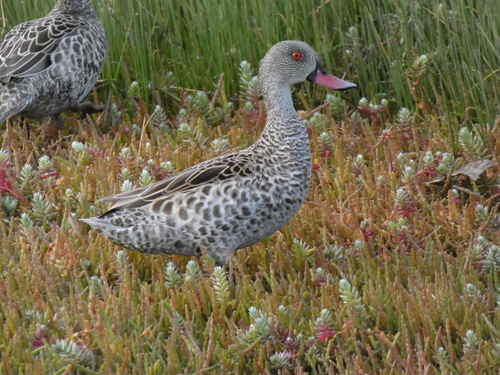
アカハシコガモ (Anas capensis) アカハシコガモ
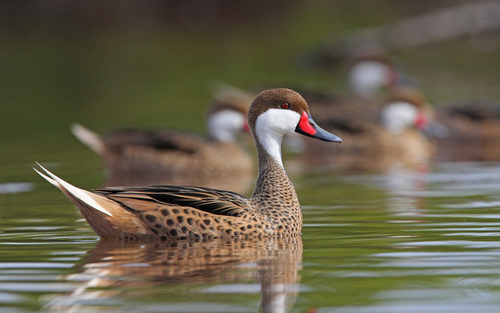
ホオジロオナガガモ (Anas bahamensis) ホオジロオナガガモ

メディア

読み込み中…

要点

アカハシコガモとホオジロオナガガモを区別する最も信頼できる方法は、全体の色合いと顔の模様によるものです:アカハシコガモは非常に淡い、主に灰色のカモで、顔はシンプルでピンクがかったくちばし(成鳥)を持っています。一方、ホオジロオナガガモは明確に茶色で、はっきりした白い頬と赤みを帯びた灰色のくちばしを持っています。飛んでいる時や休んでいる時、オナガガモの尖った尾と緑の翼の鏡は強い手がかりですが、アカハシコガモはより丸い尾を持ち、はっきりした顔のコントラストがありません。両種の幼鳥はくちばしが鈍いですが、顔の模様は重要な違いのままです。どちらも水面で餌を探すカモですが、構造と羽毛はよく見るとかなり異なります。

識別のコツ

  1. 顔の模様は最も早いチェックです: ホオジロオナガガモは常に茶色の顔に大胆な白い頬のパッチを示します;アカハシコガモの顔はすべての年齢でシンプルで淡い灰色です。
  2. 全体の色: アカハシコガモは非常に淡い灰色で、オナガガモの豊かな茶色と比べるとほとんど幽霊のようです。
  3. くちばしの色: 成鳥のアカハシコガモはピンクがかったくちばしを持ち、ホオジロオナガガモは赤い基部の灰色のくちばしを持っています;両種の幼鳥は鈍いくちばしを持っているため、これは成鳥で最も信頼できます。
  4. 尾の形: ホオジロオナガガモは細長く尖った尾を持っており(オナガガモよりは極端ではありません)、休んでいる時と飛んでいる時の両方で見えます。アカハシコガモの尾はより丸いです。
  5. 飛行中の翼の模様: ホオジロオナガガモは虹色の緑の鏡を示します;アカハシコガモはこれを欠き、翼は均一に淡く見えます。
  6. 幼鳥の混乱: 若いオナガガモでも白い頬を保持し、若いアカハシコガモは淡くシンプルな顔を保ちます。幼鳥ではくちばしの色はあまり役に立ちません。
  7. 性差: 両種は性別が似ていますが、雌のオナガガモはやや鈍いです;これは微妙で、主要なフィールドマークではありません。
  8. サイズと構造: アカハシコガモはやや大きく、よりコンパクトですが、これは両者が並んでいないと判断が難しいです。オナガガモの長く尖った尾はより役立ちます。
  9. 生息地の文脈: 野生では、範囲は重なりません。一緒に見られる場合は、捕獲されたものか逃げたものの可能性が高いです;羽毛と構造に頼ってください。
  10. 鳴き声: フィールドでは信頼できる区別にはなりません;どちらも繁殖期以外は静かです。
  11. 群れのサイズ: アカハシコガモは大きな換羽の群れを形成することがあります;オナガガモはより頻繁にペアや小さな群れで見られますが、これは診断的ではありません。
  12. 落とし穴: 幼鳥ではくちばしの色だけに頼らないでください。常にオナガガモの白い頬とアカハシコガモの全体的な淡い外観を確認してください。
  13. 止まっている時と飛んでいる時の視点: 飛んでいる時はオナガガモの緑の鏡と尖った尾を探してください;休んでいる時は顔の模様と全体の色が最も良いです。
  14. 季節の変化: 両種には強い季節的な羽毛の違いはありません;マークは年間を通じて信頼できます。
  15. 不確かな場合: 最も迅速で信頼できる区別のために、顔の模様(白い頬対シンプル)、全体の色(茶色対淡い灰色)、尾の形(尖った対丸い)を優先してください。

大きさ

アカハシコガモはやや大きく、長さは44–46 cmです [wikipedia]。ホオジロオナガガモは亜種によって異なりますが、一般的にはやや小さめです(オス474–710 g、メス505–670 g) [wikipedia]。フィールドでは、サイズの違いは微妙で、両種が一緒でない限り信頼できる区別にはなりません。構造の方が役立ちます:ホオジロオナガガモはより細長く尖った尾を持ち、アカハシコガモはよりコンパクトで丸い尾を持っています。

羽色

幼鳥と成鳥のアカハシコガモは全体的に非常に淡い灰色で、背中はより茶色く、顔はシンプルです。成鳥はピンクがかったくちばしを持ち、幼鳥はピンクを欠きます。どの年齢でも大胆な顔の模様はありません。すべての年齢のホオジロオナガガモは全体的に茶色で、幼鳥でも目立つ白い頬のパッチがあります。成鳥のくちばしは赤い基部の灰色で、幼鳥は鈍いです。飛行中、ホオジロオナガガモは翼に虹色の緑の鏡を示し、尖った尾を持っています;アカハシコガモはこれらの特徴を欠き、均一に淡く見えます。両種の性別は似ていますが、雌のオナガガモはやや鈍いです。

行動

両種は水面で餌を探すカモで、植物や小さな生き物のために頭を下げたり、ついばむことで餌を取ります。アカハシコガモは一般的に静かで、求愛行動中を除いて大きな群れで見られることはほとんどありません。ホオジロオナガガモも同様に振る舞いますが、ペアや小さな群れで見られる可能性が高いです。どちらの種も特に臆病ではありませんが、オナガガモはスリムな体型と長い尾のため、より活発で敏捷に見えることがあります。

生息環境

アカハシコガモはサハラ以南のアフリカの開けた湿地に生息し、基本的に非移動性で、雨に応じて機会的に移動します。ホオジロオナガガモは南アメリカとカリブ海に点在して分布し、アフリカには生息していません。両種は水の近くの植生の下に地面に巣を作ります。野生では生息地の重なりは期待されませんが、両者は野生の水鳥コレクションや逃げたものとして発生することがあります。

声

アカハシコガモはほとんど静かですが、繁殖期のオスは明確な口笛を発し、メスは弱い「クワック」を発します。ホオジロオナガガモの鳴き声はノートに詳細に記載されていませんが、区別のための主要なフィールドマークではありません。

より良い説明を送る

比較と同じ項目を使ってください。文章はすぐに公開されます。

The most reliable way to separate Cape Teal from White-cheeked Pintail is by overall coloration and facial pattern: Cape Teal is a very pale, mostly grey duck with a plain face and pinkish bill (adults), while White-cheeked Pintail is distinctly brown with bold white cheeks and a red-based grey bill. In flight or at rest, the pintail's pointed tail and green wing speculum are strong clues, whereas Cape Teal has a more rounded tail and lacks the bold facial contrast. Juveniles of both species have duller bills, but the face pattern remains a key difference. Both are dabbling ducks, but their structure and plumage are quite different when seen well.

  1. Face pattern is the fastest check: White-cheeked Pintail always shows a bold white cheek patch on a brown face; Cape Teal's face is plain and pale grey at all ages.
  2. Overall color: Cape Teal is very pale grey, almost ghostly compared to the rich brown of the pintail.
  3. Bill color: Adult Cape Teal has a pinkish bill, while White-cheeked Pintail has a grey bill with a red base; both species' juveniles have duller bills, so this is most reliable in adults.
  4. Tail shape: White-cheeked Pintail has a slender, pointed tail (though less extreme than Northern Pintail), visible both at rest and in flight. Cape Teal's tail is more rounded.
  5. Wing pattern in flight: White-cheeked Pintail shows an iridescent green speculum; Cape Teal lacks this and appears uniformly pale in the wing.
  6. Juvenile confusion: Even young pintails retain the white cheek, and young Cape Teal remain pale and plain-faced. Bill color is less helpful in juveniles.
  7. Sex differences: Both species have similar sexes, but female pintails are slightly duller; this is subtle and not a primary field mark.
  8. Size and structure: Cape Teal is a bit larger and more compact, but this is hard to judge unless both are side by side. The pintail's longer, pointed tail is more useful.
  9. Habitat context: In the wild, range does not overlap. If seen together, it's likely in captivity or among escapees; rely on plumage and structure.
  10. Vocalizations: Not a reliable separator in the field; both are quiet outside breeding.
  11. Group size: Cape Teal may form large moulting flocks; pintails are more often in pairs or small groups, but this is not diagnostic.
  12. Pitfalls: Do not rely on bill color alone in juveniles. Always check for the white cheek on pintails and the overall pale look of Cape Teal.
  13. Perched vs. flight views: In flight, look for the pintail's green speculum and pointed tail; at rest, face pattern and overall color are best.
  14. Seasonal change: No strong seasonal plumage differences in either species; marks are reliable year-round.
  15. If uncertain: Prioritize face pattern (white cheek vs. plain), overall color (brown vs. pale grey), and tail shape (pointed vs. rounded) for the quickest and most reliable separation.

Cape Teal is slightly larger, with a length of 44–46 cm [wikipedia]. White-cheeked Pintail varies by subspecies but is generally a bit smaller (male 474–710 g, female 505–670 g) [wikipedia]. In the field, size difference is subtle and not a reliable separator unless both species are together. Structure is more helpful: White-cheeked Pintail has a more slender, pointed tail, while Cape Teal is more compact with a rounded tail.

Juvenile and adult Cape Teal are very pale grey overall, with a browner back and a plain face. Adults have a pinkish bill, while juveniles lack the pink. There is no bold face pattern at any age. White-cheeked Pintail of all ages is brown overall, with a striking white cheek patch that stands out even in juveniles. The bill is grey with a red base in adults, duller in juveniles. In flight, White-cheeked Pintail shows an iridescent green speculum on the wing, and a pointed tail; Cape Teal lacks these features and appears uniformly pale. The sexes are similar in both species, though female pintails are slightly duller.

Both species are dabbling ducks that feed by tipping up or dabbling for aquatic plants and small creatures. Cape Teal is generally quiet except during mating displays, and is rarely seen in large groups except during moult. White-cheeked Pintail behaves similarly, but is more likely to be seen in pairs or small groups. Neither species is particularly shy, but the pintail may appear more active and agile due to its slimmer build and longer tail.

Cape Teal is found in open wetlands of sub-Saharan Africa and is essentially non-migratory, moving only opportunistically with rains. White-cheeked Pintail is patchily distributed in South America and the Caribbean, and is not found in Africa. Both nest on the ground near water under vegetation. Habitat overlap is not expected in the wild, but both can occur in wildfowl collections or as escapees.

Cape Teal is mostly silent, but breeding males give a clear whistle and females a weak 'quack.' White-cheeked Pintail's vocalizations are not described in detail in the notes, but are not a primary field mark for separation.

変更を破棄しますか?

保存していない編集があります。今離れると失われます。

アカハシコガモ · ホオジロオナガガモ · 苦手な鳥