

Motmot

ロウバシガン 対 サケイ

Cereopsis novaehollandiae 対 Syrrhaptes paradoxus

ロウバシガンとサケイのクイズ
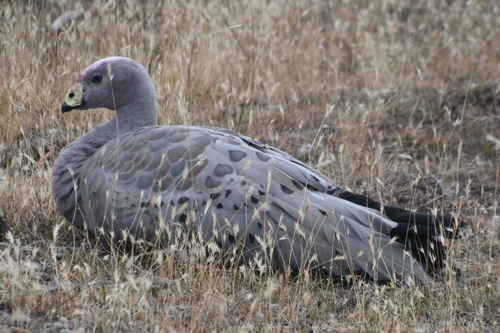
ロウバシガン (Cereopsis novaehollandiae) ロウバシガン
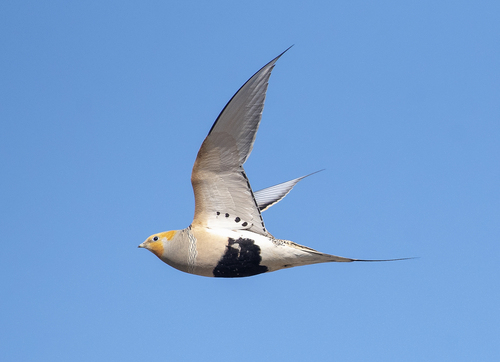
サケイ (Syrrhaptes paradoxus) サケイ

メディア

読み込み中…

要点

ロウバシガンとサケイの最も信頼できる区別は、全体的なサイズと構造です:ロウバシガンは巨大で淡い灰色の鳥で、短くて太いくちばしとピンクの脚を持ち、サケイはずっと小さく、コンパクトで、バフ色の体に鳩のような頭、長く尖った翼と尾を持っています。飛行中、成鳥のロウバシガンは翼の広い暗い後縁と黒い尾を示し、サケイは淡い下翼と黒い腹部斑点を持つ長く尖った翼を示します。幼鳥のロウバシガンは翼に重い斑点があり、淡い黄緑色のセレを持ち、若いサケイはより微妙な模様です。これらの2種は、くちばしの形、脚の色、そして生息地において強く異なります:ロウバシガンは陸生で開けた草原を食べ、サケイは乾燥したステップに生息し、水に向かって長く速い飛行を行います。

識別のコツ

  1. Size and bulk: ロウバシガンはサケイよりもはるかに大きく重いです—鳥がガンサイズに見える場合、それはサケイではありません。これはすべての年齢と性別に当てはまります。
  2. Bill shape and colour: ロウバシガンは短くて太い三角形の黒いくちばしを持ち、大きな淡い黄緑色のセレがくちばしの大部分を覆っています。サケイは目立つセレのない小さな鳩のようなくちばしを持っています。
  3. Legs and feet: ロウバシガンは長いピンクの脚と黒い足を持ち、サケイは羽毛のある脚と前指が融合した独特の足を持ち、後ろの指はありません。サケイの脚ははるかに目立たず、乾燥した地面を歩くために適応しています。
  4. Wing shape in flight: 飛行中、ロウバシガンは広く丸みを帯びた翼を持ち、暗い後縁(飛行羽の黒い先端)と黒い尾を持っています。サケイは長く尖った翼と尾を持ち、淡い下翼と黒い腹部斑点があり—淡い下翼と暗い腹部のコントラストを探してください。
  5. Juvenile plumage: 若いロウバシガンは淡い灰色で、翼と肩羽に重い斑点があり、年を取るにつれてセレが黄緑色に変わります。幼鳥のサケイはより微妙な模様で、ロウバシガンの大胆な翼の斑点とセレはありません。
  6. Head and face: ロウバシガンは体に対して小さな頭を持ち、主に灰色で白っぽい額と冠があります。オスのサケイは灰色の頭と胸、オレンジの顔、灰色の胸帯を持ち、メスは鈍く、より縞模様があり、胸帯はありません。
  7. Body and posture: ロウバシガンは重い体を持ち、遅くてよたよたした歩き方をします。サケイはコンパクトで直立しており、より繊細で鳩のような姿勢を持っています。
  8. Tail: ロウバシガンは短い黒い尾を持ち、サケイは長く尖った尾を持ち、特に飛行中に目立ちます。
  9. Habitat: ロウバシガンは南オーストラリアの草地や沿岸の生息地に見られ、しばしば水の近くにいます。サケイは中央アジアの乾燥したステップに厳密に生息し、豊かな草の近くにはめったにいません。
  10. Flocking and movement: サケイはしばしば大きな群れを作り、水に向かって迅速で直接的な飛行を行い、時には長距離を飛びます。ガンはより定住的で、動かされない限り遠くには飛びません。
  11. Feet visibility: 羽毛のある足で後ろの指がない場合、それはサケイです。足がピンクで羽毛がない場合、それはロウバシガンです。
  12. Flight style: ロウバシガンは遅く深い翼の打撃で飛び、空中で重く見えます。サケイは迅速で機敏で、急速な翼の打撃と流線型のシルエットを持っています。
  13. Sex differences: オスのサケイは胸帯とオレンジの顔を持ち、メスはより縞模様があり、帯はありません。ロウバシガンはサイズ(オスが大きい)を除いて、性的二形性はほとんど示しません。
  14. Vocalization: 利用可能なメモに基づいて診断的ではありません。
  15. Pitfalls: 重い翼の斑点を持つ未成熟のロウバシガンは、遠くからサケイと混同されるかもしれませんが、サイズ、くちばし、脚の色は常に信頼できます。サケイは決してロウバシガンの広い暗い後縁や黒い尾を示しません。

大きさ

ロウバシガンは劇的に大きく、約4530gの重さで、長さは75〜100cmで、重いガンのような体型をしています。サケイはずっと小さく(30〜41cm)、コンパクトで鳩のような体、長い尖った翼、そして細長い外観を持っています。体積と長さの違いは、遠くからでもすぐにわかります。

羽色

幼鳥のロウバシガンは淡い灰色で、翼と肩羽に重い斑点があり、発展中の黄緑色のセレを持っています;成鳥は淡い灰色の羽毛を持ち、胸と背中の羽に細い淡い縁があり、飛行中には特徴的な黒い尾と暗い後縁を持っています。上翼の覆羽と肩羽には茶色がかった灰色の斑点があります。対照的に、サケイはバフ色で上に縞模様があり、黒い腹部斑点と飛行中に見える淡い下翼を持っています。オスは灰色の頭と胸、オレンジの顔、灰色の胸帯を持ち、メスは鈍く、より縞模様があり、胸帯はありません。サケイの翼は長く尖っており、尾も長く尖っていますが、ロウバシガンの広く丸みを帯びた翼と短い尾とは異なります。サケイの足は羽毛があり、 pawのような形をしており、後ろの指がないのが特徴です。

行動

ロウバシガンは主に陸生で、草原を食べ、動かされない限りはめったに飛びません。遅くて重い歩き方をし、しばしばペアや小さな群れで見られます。サケイは非常に移動性が高く、夜明けと夕暮れに水源に向かって大きな群れで急速に飛び、時には長距離を飛びます。その飛行は迅速で直接的で、長く尖った翼を持ち、乾燥した開けた生息地で地面に多くの時間を過ごします。

生息環境

ロウバシガンは南オーストラリアに見られ、通常は沖合の島や沿岸の草地に生息し、開けて草を食べます。サケイは中央アジアの乾燥したステップに生息し、開けた地面で繁殖し、水に向かって毎日長距離を飛びます。サケイは乾燥した環境に適応しており、ロウバシガンは水の近くの豊かな草地を好みます。

より良い説明を送る

比較と同じ項目を使ってください。文章はすぐに公開されます。

The most reliable separation between Cape Barren Goose and Pallas's Sandgrouse is overall size and structure: the goose is a massive, pale grey bird with a short, thick bill and pink legs, while the sandgrouse is much smaller, compact, and buff-coloured with a pigeon-like head and long, pointed wings and tail. In flight, adult Cape Barren Geese show a broad dark trailing edge on the wings and black tail, while Pallas's Sandgrouse displays long, pointed wings with pale underwings and a black belly patch. Juvenile Cape Barren Geese have heavier wing spotting and a pale yellow-green cere, while young sandgrouse are more subtly marked. The two species differ strongly in bill shape, leg colour, and habitat: Cape Barren Goose is terrestrial and grazes open grasslands, while Pallas's Sandgrouse frequents dry steppes and makes long, fast flights to water.

  1. Size and bulk: Cape Barren Goose is vastly larger and heavier than Pallas's Sandgrouse—if the bird looks goose-sized, it is not a sandgrouse. This is true for all ages and sexes.
  2. Bill shape and colour: The goose has a short, thick, triangular black bill with a large pale yellow-green cere covering much of the bill. The sandgrouse has a small, pigeon-like bill without a prominent cere.
  3. Legs and feet: Cape Barren Goose has long, pink legs with black feet, while Pallas's Sandgrouse has feathered legs and unique paw-like feet with fused front toes and no hind toe. The sandgrouse's legs are much less visible and adapted for walking on dry ground.
  4. Wing shape in flight: In flight, the goose has broad, rounded wings with a dark trailing edge (black tips to flight feathers) and a black tail. The sandgrouse has long, pointed wings and tail, with pale underwings and a black belly patch—look for the contrast between the pale underwing and dark belly.
  5. Juvenile plumage: Young Cape Barren Geese are paler grey with heavy spotting on the wings and scapulars, and their cere turns yellow-green as they age. Juvenile sandgrouse are more subtly marked and lack the bold wing spotting and cere of the goose.
  6. Head and face: Cape Barren Goose has a small head relative to its body, mostly grey with a whitish forehead and crown. Male sandgrouse have a grey head and breast, orange face, and a grey breast band; females are duller and more barred, with no breast band.
  7. Body and posture: The goose is heavy-bodied, with a slow, waddling walk. The sandgrouse is compact and upright, with a more delicate, pigeon-like jizz.
  8. Tail: Cape Barren Goose has a short, black tail; Pallas's Sandgrouse has a long, pointed tail, especially obvious in flight.
  9. Habitat: Cape Barren Goose is found in grassy, coastal habitats in southern Australia, often near water. Pallas's Sandgrouse is strictly a bird of dry, open steppes in central Asia, rarely near lush grass.
  10. Flocking and movement: Sandgrouse often gather in large flocks and make rapid, direct flights to water, sometimes over long distances. Geese are more sedentary and rarely fly far unless disturbed.
  11. Feet visibility: If you see feathered, paw-like feet with no hind toe, it is Pallas's Sandgrouse. If the feet are pink and unfeathered, it is Cape Barren Goose.
  12. Flight style: Cape Barren Goose flies with slow, deep wingbeats and appears heavy in the air. Pallas's Sandgrouse is swift and agile, with rapid wingbeats and a streamlined silhouette.
  13. Sex differences: Male sandgrouse have a breast band and orange face; females are more barred and lack the band. Cape Barren Goose shows little sexual dimorphism except in size (males larger).
  14. Vocalization: Not diagnostic based on available notes.
  15. Pitfalls: Immature Cape Barren Geese with heavy wing spotting might be confused with sandgrouse at a distance, but size, bill, and leg colour are always reliable. Sandgrouse never show the goose's broad, dark trailing edge or black tail.

Cape Barren Goose is dramatically larger, weighing around 4530 g and measuring 75–100 cm in length, with a heavy, goose-like build. Pallas's Sandgrouse is much smaller (30–41 cm), with a compact, pigeon-like body, long pointed wings, and a slender appearance. The difference in bulk and length is immediately apparent, even at a distance.

Juvenile Cape Barren Geese are pale grey with heavy spotting on the wings and scapulars, and a developing yellow-green cere; adults have pale grey plumage with fine pale margins on the breast and back feathers, and a distinctive black tail and dark trailing edge to the wings in flight. The upperwing coverts and scapulars have brownish grey spots. Pallas's Sandgrouse, by contrast, is buff-coloured and barred above, with a black belly patch and pale underwings visible in flight. Males have a grey head and breast with an orange face and a grey breast band, while females are duller and more barred, lacking the breast band. The sandgrouse's wings are long and pointed, and the tail is also long and pointed, unlike the goose's broad, rounded wings and short tail. The sandgrouse's feet are feathered and paw-like, lacking a hind toe, which is unique if seen well.

Cape Barren Goose is mostly terrestrial, grazing on grasslands and rarely flying unless disturbed. It walks with a slow, heavy gait and is often seen in pairs or small groups. Pallas's Sandgrouse is highly mobile, flying rapidly in large flocks to water sources at dawn and dusk, sometimes covering great distances. Its flight is swift and direct, with long, pointed wings, and it spends much time on the ground in open, dry habitats.

Cape Barren Goose is found in southern Australia, typically on offshore islands and coastal grasslands, where it grazes openly. Pallas's Sandgrouse inhabits the dry steppes of central Asia, breeding on open ground and making daily long-distance flights to water. The sandgrouse is adapted to arid environments, while the goose prefers lush, grassy areas near water.

変更を破棄しますか?

保存していない編集があります。今離れると失われます。

ロウバシガン · サケイ · 苦手な鳥