

Motmot

ゼレドンミソサザイ 対 シマバラマユミソサザイ

Cantorchilus zeledoni 対 Cantorchilus nigricapillus

ゼレドンミソサザイとシマバラマユミソサザイのクイズ
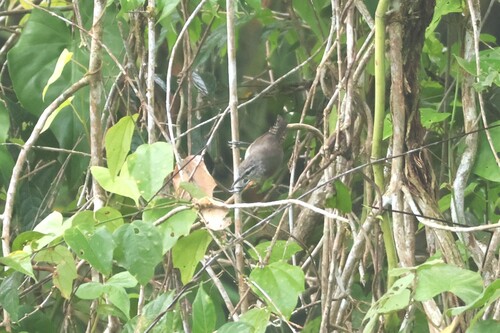
ゼレドンミソサザイ (Cantorchilus zeledoni) ゼレドンミソサザイ
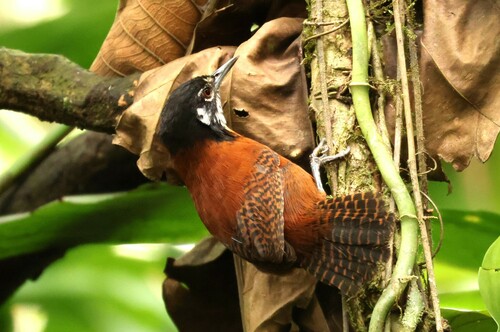
シマバラマユミソサザイ (Cantorchilus nigricapillus) シマバラマユミソサザイ

メディア

読み込み中…

要点

ゼレドンミソサザイとシマバラマユミソサザイの最も信頼できるフィールドマークは頭部の模様です:シマバラマユミソサザイは狭い白い眉斑を持つ際立った黒い顔と冠を示し、一方ゼレドンミソサザイは茶色の冠と白い眉斑を持ちますが、シマバラマユミソサザイの大胆な黒い顔のコントラストは欠けています。すべての年齢において、シマバラマユミソサザイの上面は豊かな栗色で、ゼレドンミソサザイのより控えめな茶色がかった灰色やオリーブ色のトーンと対照的です。両種の幼鳥はより鈍い色合いですが、シマバラマユミソサザイの模様はより鮮明に定義されています。両種は中央アメリカで分布が重なり、似たような密生した低木に生息することがありますが、シマバラマユミソサザイは水により密接に関連しています。サイズは似ていますが、シマバラマユミソサザイは平均してやや重いです。

識別のコツ

  1. Head Pattern (All Ages): シマバラマユミソサザイは常に狭い白い眉斑と白い頬の斑点を持つ黒い顔と冠を示します;ゼレドンミソサザイは茶色の冠、白い眉斑、灰色がかった茶色の目のストライプを持ち、顔や冠に黒はありません。
  2. Upperparts Color: シマバラマユミソサザイの上面は豊かな栗色(黒い冠/後頭部を除く)ですが、ゼレドンミソサザイの上面は茶色がかった灰色からオリーブ色の灰色に移行し、全体的にずっと鈍く、赤褐色が少ないです。
  3. Tail: 両種ともに縞模様の尾を持ちますが、シマバラマユミソサザイの尾は豊かな茶色で大胆な黒い縞模様があり、ゼレドンミソサザイの尾はオリーブ色がかった茶色で、明確ですが対照的ではない暗い縞模様があります。
  4. Underparts: シマバラマユミソサザイは白い喉と胸、赤褐色の下腹部と側面、胸から肛門までの黒い縞模様を持ちます;ゼレドンミソサザイはオフホワイトの喉、灰色の胸、灰色がかった茶色の下腹部を持ち、強い縞模様はありません。
  5. Juvenile Plumage: 両種ともに幼鳥は鈍い色合いですが、シマバラマユミソサザイの幼鳥は黒と白の頭部模様を保持しています(薄くなり、定義が弱くなっていますが)、ゼレドンミソサザイの幼鳥は顔や冠に黒がなく、顔の模様もあまり明確ではありません。
  6. Facial Contrast: どんなに止まっている時や近くから見ても、シマバラマユミソサザイの顔はゼレドンミソサザイの顔よりも対照的で模様がはっきりしています。
  7. Supercilium: 両種ともに白い眉斑を持ちますが、シマバラマユミソサザイの眉斑は狭く、黒で際立たせられていますが、ゼレドンミソサザイの眉斑は広く、茶色に対して際立っています。
  8. Cheek Patch: シマバラマユミソサザイは頬の後ろに明確な白い斑点を示します;ゼレドンミソサザイの頬は灰色とオフホワイトのまだら模様で、明確な白い斑点はありません。
  9. Habitat Clues: 水のすぐそばの密生した植生の中で見られた場合、特に絡み合った低木の中では、シマバラマユミソサザイの方が可能性が高いです;ゼレドンミソサザイは水にそれほど厳密に関連していません。
  10. Size: 両種は長さが似ています;シマバラマユミソサザイは平均してやや重いですが、これはフィールドマークではありません。
  11. Flight Views: どちらの種にも特有の翼や飛行パターンの違いは記述されていません;分離は頭部と体の羽毛に依存し、飛行中でも同様です。
  12. Voice: シマバラマユミソサザイの歌は大きくて複雑ですが、ゼレドンミソサザイの歌はここでは記述されていないので、声に頼って分離しないでください。
  13. Pitfalls: 幼鳥のゼレドンミソサザイは特に地味に見えることがあり、頭部と冠に黒がないことを確認しないとシマバラマユミソサザイと見間違えられることがあります。
  14. Subspecies Variation: シマバラマユミソサザイの亜種は色の強度や縞模様に変化がありますが、すべてが黒い冠と顔を保持しており、ゼレドンミソサザイはこれを示しません。
  15. Context: 分布が重なる地域(コスタリカ、ニカラグア、パナマ)では、シマバラマユミソサザイであると仮定する前に、黒い頭と豊かな栗色の上面を常に確認してください;これらが欠けている場合、ゼレドンミソサザイである可能性が高いです。

大きさ

両種は長さが似ており、ゼレドンミソサザイは約14 cm、シマバラマユミソサザイは12.6 cmから15.6 cmの範囲です。シマバラマユミソサザイは平均してやや重い(成鳥の平均体重約23.9 g)ですが、この違いは微妙で、フィールドで簡単に判断できるものではありません。利用可能な情報源では構造的な違いは強調されていないため、サイズだけでは信頼できる分離要因ではありません。

羽色

行動

両種は密生した低木の中で採餌し、しばしば絡み合った低木や二次成長の中で見られます。シマバラマユミソサザイは特に水の近くでつるや密生した葉の中で探り採餌することで知られています。ゼレドンミソサザイの採餌行動はあまり具体的には記述されていませんが、一般的な習性は似ています。フィールドで信頼できる分離を行うための主要な行動の違いは記載されていません。

生息環境

両種は密生した低木の中で見られ、しばしば過成長した開けた場所、道路脇、または二次林に生息します。シマバラマユミソサザイは特に水路沿いの低木や水の近くの密生した植生に関連していますが、ニカラグアの乾燥した地域にも生息することがあります。ゼレドンミソサザイはコスタリカ、ニカラグア、パナマで見られ、通常は似たような密生した生息地にいますが、シマバラマユミソサザイほど水に密接に関連していません。重なり合う地域では、シマバラマユミソサザイの湿った、より絡み合った生息地の好みが微妙な手がかりになるかもしれませんが、常に診断的であるとは限りません。

声

シマバラマユミソサザイの歌は大きく、速く、豊かな音色で、滑らかな口笛、トリル、さえずりが含まれ、しばしば対抗的に歌われます。ゼレドンミソサザイの声の特定の記述は情報源には提供されていないため、これらのメモだけでは声に頼って分離することはできません。

より良い説明を送る

比較と同じ項目を使ってください。文章はすぐに公開されます。

The most reliable field mark between Canebrake Wren and Bay Wren is the head pattern: Bay Wren shows a striking black face and crown with a narrow white supercilium, while Canebrake Wren has a brown crown and a white supercilium but lacks the Bay Wren’s bold black facial contrast. In all ages, Bay Wren’s upperparts are a rich chestnut, contrasting with Canebrake Wren’s more subdued brownish-gray and olivaceous tones. Juveniles of both are duller, but the Bay Wren’s pattern remains more sharply defined. Both species overlap in range in Central America and can occur in similar dense, low vegetation, but Bay Wren is more closely tied to water. Size is similar, but Bay Wren averages slightly heavier.

  1. Head Pattern (All Ages): Bay Wren always shows a black face and crown with a narrow white supercilium and a white cheek patch; Canebrake Wren has a brown crown, white supercilium, and gray-brown eye stripe, lacking any black on the face or crown.
  2. Upperparts Color: Bay Wren’s upperparts are a rich chestnut (except for the black crown/nape), while Canebrake Wren’s are brownish-gray merging to olivaceous gray on the rump—much duller and less rufous overall.
  3. Tail: Both have barred tails, but Bay Wren’s tail is a rich brown with bold black bars, whereas Canebrake Wren’s is olivaceous brown with well-defined but less contrasting dark bars.
  4. Underparts: Bay Wren has a white throat and breast, rufous brown lower belly and flanks, and black barring from breast to vent; Canebrake Wren has off-white throat, gray chest, and gray-buff lower belly, lacking strong barring.
  5. Juvenile Plumage: Both are duller as juveniles, but Bay Wren juveniles retain the black-and-white head pattern (albeit paler and less defined), while Canebrake Wren juveniles lack any black and have less distinct facial markings.
  6. Facial Contrast: In any perched or close view, Bay Wren’s face appears much more contrasting and patterned than Canebrake Wren’s, which is plainer and more blended.
  7. Supercilium: Both have a white supercilium, but in Bay Wren it is narrower and set off by black, while in Canebrake Wren it is broader and set against brown.
  8. Cheek Patch: Bay Wren shows a distinct white patch at the back of the cheek; Canebrake Wren’s cheeks are mottled gray and off-white, never with a clear white patch.
  9. Habitat Clues: If seen in dense vegetation right along water, especially in tangled thickets, Bay Wren is more likely; Canebrake Wren is less strictly tied to water.
  10. Size: Both are similar in length; Bay Wren averages slightly heavier, but this is not a field mark.
  11. Flight Views: No distinctive wing or flight pattern differences are described for either species; separation relies on head and body plumage, even in flight.
  12. Voice: Bay Wren’s song is loud and complex, but Canebrake Wren’s song is not described here, so do not rely on vocalizations for separation.
  13. Pitfalls: Juvenile Canebrake Wrens may appear especially plain and could be overlooked as Bay Wrens if not checked for the absence of black on the head and crown.
  14. Subspecies Variation: Bay Wren subspecies vary in color intensity and barring, but all retain the black crown and face, which Canebrake Wren never shows.
  15. Context: In areas of range overlap (Costa Rica, Nicaragua, Panama), always check for the black head and rich chestnut upperparts before assuming a wren is Bay Wren; if these are missing, it is likely Canebrake Wren.

Both species are similar in length, with Canebrake Wren at about 14 cm and Bay Wren ranging from 12.6 to 15.6 cm. Bay Wren is slightly heavier on average (mean adult mass ~23.9 g), but this difference is subtle and not easily judged in the field. Structural differences are not emphasized in the available sources, so size alone is not a reliable separator.

  • Juveniles: Both species have duller underparts and less well-defined facial markings than adults, but Bay Wren juveniles still show a pale version of the black-and-white head pattern, while Canebrake Wren juveniles lack any black on the face or crown.
  • Adults: Bay Wren is immediately distinguished by its black face and crown, narrow white supercilium, and white cheek patch, set off against rich chestnut upperparts and a boldly barred brown tail. Canebrake Wren has a brown crown, brownish-gray upperparts merging to olivaceous gray on the rump, and an olivaceous brown tail with dark bars. Its face is marked by a white supercilium and gray-brown eye stripe, but never black. Underparts differ: Bay Wren’s are white on throat and breast, then rufous brown with black barring on the belly and flanks; Canebrake Wren’s are off-white on the throat, gray on the chest, and gray-buff on the lower belly, lacking strong barring. In all ages, Bay Wren’s plumage is richer and more contrasting, while Canebrake Wren is plainer and more muted.

Both species forage in dense, low vegetation, often in tangled thickets or secondary growth. Bay Wren is noted for foraging by probing and gleaning in vines and dense foliage, especially near water. Canebrake Wren’s foraging behavior is less specifically described but is similar in general habits. No major behavioral differences are noted that would reliably separate them in the field.

Both species occur in dense, low vegetation, often in overgrown clearings, roadsides, or secondary forest. Bay Wren is especially associated with thickets along watercourses and dense vegetation near water, though it can occur in drier areas in Nicaragua. Canebrake Wren is found in Costa Rica, Nicaragua, and Panama, typically in similar dense habitats but not as closely tied to water as Bay Wren. In areas of overlap, Bay Wren’s preference for wetter, more tangled habitats may be a subtle clue, but is not always diagnostic.

Bay Wren’s song is described as loud, rapid, and rich-toned, with slurred whistles, trills, and warbles, often given antiphonally. No specific description is provided for Canebrake Wren’s vocalizations in the sources, so voice is not a reliable separator based on these notes alone.

変更を破棄しますか?

保存していない編集があります。今離れると失われます。

ゼレドンミソサザイ · シマバラマユミソサザイ · 苦手な鳥