

Motmot

カンムリウズラ 対 ズアカカンムリウズラ

Callipepla californica 対 Callipepla gambelii

カンムリウズラとズアカカンムリウズラのクイズ
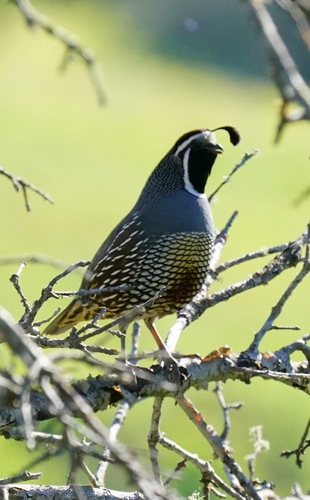
カンムリウズラ (Callipepla californica) カンムリウズラ
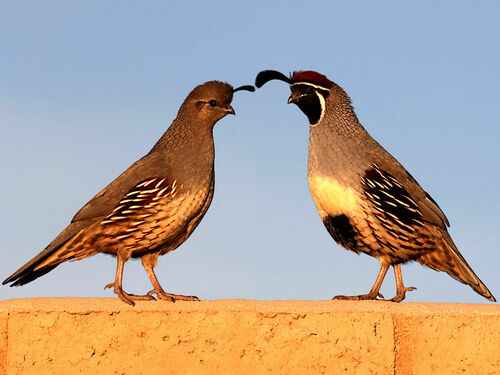
ズアカカンムリウズラ (Callipepla gambelii) ズアカカンムリウズラ

メディア

読み込み中…

要点

カンムリウズラとズアカカンムリウズラを区別するための最も信頼できるフィールドマークは、オスのズアカカンムリウズラの下胸にある太い黒い斑点の存在であり、カンムリウズラのオスにはこれがありません。両種とも前方に垂れ下がるトサカ(羽毛)を持っていますが、ズアカカンムリウズラのオスは銅色の冠を示し、カンムリウズラのオスは黒い顔に白い縁取りがあるより均一な灰色と茶色の頭を持っています。両種の雌はより地味ですが、カンムリウズラの雌は一般的により茶色く、銅色の冠がありません。フィールドでは、ズアカカンムリウズラは通常、わずかに大きく脚が長く、乾燥した砂漠の生息地に見られる可能性が高いのに対し、カンムリウズラは茂みの多い、チャパラル、または郊外のエッジを好みます。幼鳥と未成熟の羽毛は似ており、翼の模様による強い診断はできないため、迅速な区別のためには成鳥のオスの胸と頭の模様に焦点を当ててください。

識別のコツ

  1. オスの胸の斑点: 最も信頼できるマーク—オスのズアカカンムリウズラは下胸に太い黒い斑点を持ち、カンムリウズラのオスにはありません。成鳥のオスの前面がはっきり見えるときにこれを使用してください。
  2. 冠の色(オス): ズアカカンムリウズラのオスは豊かな銅色の赤い冠を示し、カンムリウズラのオスは灰色または茶色がかった冠を持っています。これは良い光の下で中程度の距離で見ることができます。
  3. 顔の模様(オス): カンムリウズラのオスは白いストライプで鮮明に縁取られた黒い顔を持ち、ズアカカンムリウズラのオスは黒い顔を持っていますが、白い縁取りはあまり鮮明ではなく、銅色の冠がより目立ちます。
  4. トサカ(羽毛): 両種とも前方に垂れ下がるトサカを持っていますが、ズアカカンムリウズラでは特にオスでより長く目立つことが多いです。両種の雌はより短く、あまり目立たないトサカを持っています。
  5. 雌の羽毛: 両種の雌はより地味ですが、カンムリウズラの雌は全体的により茶色く、銅色の冠がありません。両方とも鱗状の腹部を持っているので、全体のトーンと頭の色に焦点を当ててください。
  6. 腹部/下部: 両種とも鱗状の腹部を持っていますが、ズアカカンムリウズラは一般的に青灰色がかり、カンムリウズラはより茶色がかっています。これは微妙で、他のマークと組み合わせて使用するのが最適です。
  7. サイズと構造: ズアカカンムリウズラはわずかに大きく脚が長いですが、これは鳥が走ったり直立したりしているときに明らかになることがあります。カンムリウズラはよりコンパクトで丸みを帯びています。
  8. 生息地: フィールドでは生息地を考慮してください—ズアカカンムリウズラはほぼ常に乾燥した砂漠や砂漠の低木に生息し、カンムリウズラは茂みの多い、チャパラル、または郊外のエッジの生息地を好みます。重複ゾーンでは、これは有用な手がかりになることがあります。
  9. 行動: 両種は群れを作り、爆発的に飛び立ちますが、ズアカカンムリウズラは開けた地形でより敏捷で足が速いように見えることがあります。
  10. 幼鳥/未成熟: 若い鳥は非常に似ており—地味で、下は鱗状で、強い頭や胸の模様がありません。幼鳥の羽毛に頼って区別しないでください。
  11. 飛行の視点: どの年齢でも特有の翼や上翼の模様の違いは記載されていません; 両方とも短く丸い翼と迅速で羽音のある飛行を示します。
  12. 声: 提供されたメモには記載されていません; ここでの区別には使用しないでください。
  13. 範囲: もし一方の種のコア範囲外にいる場合、これは強い手がかりになることがありますが、両方ともカリフォルニア州や南西部の一部に出現する可能性があるため、これらの地域ではまず羽毛と生息地を使用してください。
  14. 道路脇の行動: カンムリウズラは特に郊外の地域の道路の端で餌を食べているのが見られる可能性が高く、ズアカカンムリウズラはより厳密に砂漠の鳥です。
  15. 群れのサイズと季節: 両種は繁殖シーズン外で群れを作ります; これは信頼できる区別にはなりません。

大きさ

ズアカカンムリウズラは平均してわずかに大きく、長さ約28 cm(11インチ)、翼幅36–41 cm(14–16インチ)であるのに対し、カンムリウズラは24–27 cm(9.4–10.6インチ)で、翼幅は32–37 cm(13–15インチ)です [wikipedia]。両方とも小さく丸い体のカンムリウズラですが、ズアカカンムリウズラは地面を移動しているときに少し長く脚が長く見えることがあります。体重はかなり重なっているため、信頼できるフィールドマークではありません。

羽色

どちらの種についても特有の年齢別の上翼や飛行のマークは記載されていないため、区別は成鳥の羽毛、特にオスに依存します。

行動

両種は地面に生息し、非常に社交的で、繁殖シーズン外では群れで見られることが多いです。カンムリウズラは特に郊外のエッジや乱れた地域に耐性があり、日当たりの良い場所で砂浴びをしたり、道路脇で餌を食べたりしているのがよく見られます。ズアカカンムリウズラはより厳密に砂漠に適応しており、茂みや開けた地面を素早く移動し、飛ぶのは稀です。両方とも驚かされると短く急速に飛び立ちますが、走ることを好みます。ズアカカンムリウズラは走るときにより敏捷で脚が長く見えることがあります。

生息環境

カンムリウズラは北アメリカ西部の茂みの多い、チャパラル、オークの森林、郊外のエッジの生息地で最も一般的であり、他のいくつかの地域にも導入されています。ズアカカンムリウズラは南西部のアメリカと北西メキシコの乾燥した砂漠地域に密接に関連しており、特にメスキート、サボテン、開けた砂漠の低木のある地域に生息しています。重複ゾーン(例:南カリフォルニア)では、生息地が手がかりになることがあります: ズアカカンムリウズラはより乾燥した、開けた砂漠を好み、カンムリウズラはより密で湿った茂みを好みます。

より良い説明を送る

比較と同じ項目を使ってください。文章はすぐに公開されます。

The most reliable field mark for separating California Quail from Gambel's Quail is the presence of a bold black patch on the lower breast of male Gambel's Quail, which California Quail males lack. Both species have a forward-drooping topknot (plume), but Gambel's Quail males show a coppery crown, while California Quail males have a more uniformly gray and brown head with a black face bordered by white. Females of both species are plainer, but California Quail females are generally browner and lack the copper crown. In the field, Gambel's Quail typically appear slightly larger and longer-legged, and are more likely to be found in arid desert habitats, while California Quail favor brushy, chaparral, or suburban edges. Juvenile and immature plumages are similar and not strongly diagnostic by wing pattern, so focus on adult male breast and head pattern for quick separation.

  1. Male breast patch: The single most reliable mark—male Gambel's Quail have a bold black patch on the lower breast, absent in California Quail males. Use this whenever you have a clear view of the front of an adult male.
  2. Crown color (males): Gambel's Quail males show a rich coppery-red crown, while California Quail males have a gray or brownish crown. This is visible in good light and at moderate distance.
  3. Facial pattern (males): California Quail males have a black face crisply bordered by white stripes, while Gambel's Quail males have a black face but less sharply defined white borders, and the copper crown stands out more.
  4. Topknot (plume): Both species have a forward-drooping topknot, but it is often longer and more prominent in Gambel's Quail, especially in males. Females of both species have a shorter, less distinct topknot.
  5. Female plumage: Females of both species are plainer, but California Quail females are browner overall and lack the copper crown. Both have scaly underparts, so focus on overall tone and head color.
  6. Belly/underparts: Both species have scaly bellies, but Gambel's Quail is generally more bluish-gray, while California Quail is browner. This is subtle and best used in combination with other marks.
  7. Size and structure: Gambel's Quail is slightly larger and longer-legged, which can be apparent when birds are running or standing upright. California Quail is more compact and rounded.
  8. Habitat: In the field, consider habitat—Gambel's Quail is almost always in arid desert or desert scrub, while California Quail prefers brushy, chaparral, or suburban edge habitats. In overlap zones, this can be a useful clue.
  9. Behavior: Both species form coveys and flush explosively, but Gambel's Quail may seem more agile and quick-footed in open terrain.
  10. Juveniles/immatures: Young birds of both species are very similar—drab, scaly below, lacking strong head or breast markings. Do not rely on juvenile plumage for separation.
  11. Flight views: No distinctive wing or upperwing pattern differences are described for any age; both show short, rounded wings and rapid, whirring flight.
  12. Voice: Not described in the provided notes; do not use for separation here.
  13. Range: If you are outside the core range of one species, this can be a strong clue, but both can occur in California and parts of the Southwest—use plumage and habitat first in these areas.
  14. Roadside behavior: California Quail are more likely to be seen feeding at the edge of roads, especially near suburban areas, while Gambel's Quail are more strictly desert birds.
  15. Covey size and season: Both species form coveys outside the breeding season; this is not a reliable separator.

Gambel's Quail is slightly larger on average, measuring about 28 cm (11 in) in length with a wingspan of 36–41 cm (14–16 in), while California Quail is 24–27 cm (9.4–10.6 in) long with a wingspan of 32–37 cm (13–15 in) [wikipedia]. Both are small, round-bodied quail, but Gambel's can look a bit longer and leggier, especially when moving on the ground. Weight overlaps considerably, so is not a reliable field mark.

There are no distinctive age-specific upperwing or flight marks described for either species, so separation relies on adult plumage, especially in males.

  • Adult males: Gambel's Quail males have a coppery-red crown, a bold black face, and a large black patch on the lower breast. California Quail males have a gray and brown head, a black face bordered by crisp white stripes, and lack the black breast patch. Both have a forward-curving topknot, but it is often longer and more prominent in Gambel's Quail.
  • Females: Both are plainer brown, but California Quail females are browner overall and lack the copper crown. Both have a topknot, but it is shorter and less distinct than in males.
  • Underside: Gambel's Quail show a more bluish-gray body with a scaly pattern on the belly, while California Quail are more brownish-gray and also show scaly underparts, but with a generally browner tone.
  • Juveniles/Immatures: Not strongly separable by plumage or wing pattern; both are drab and scaly below, lacking strong head or breast markings.

Both species are ground-dwelling, highly sociable, and often seen in coveys outside the breeding season. California Quail are especially tolerant of suburban edges and disturbed areas, often seen dust-bathing in sunny spots or feeding along roadsides. Gambel's Quail are more strictly desert-adapted, moving quickly on foot through brush and open ground, and are rarely seen in flight except when flushed. Both explode into short, rapid flights when startled, but prefer to run. Gambel's Quail may appear more agile and longer-legged when running.

California Quail are most common in brushy, chaparral, oak woodland, and suburban edge habitats of western North America, and have been introduced to several other regions. Gambel's Quail are tightly linked to arid desert regions of the Southwestern US and northwestern Mexico, especially areas with mesquite, cactus, and open desert scrub. In overlap zones (e.g., southeastern California), habitat can be a clue: Gambel's favors drier, more open desert, while California Quail prefers denser, moister brush.

変更を破棄しますか?

保存していない編集があります。今離れると失われます。

カンムリウズラ · ズアカカンムリウズラ · 苦手な鳥