

Motmot

ハシブトウミガラス 対 ウミガラス

Uria lomvia 対 Uria aalge

ハシブトウミガラスとウミガラスのクイズ
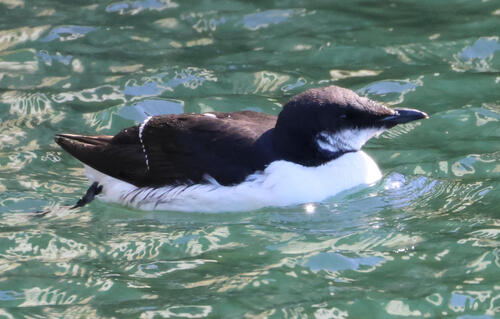
ハシブトウミガラス (Uria lomvia) ハシブトウミガラス
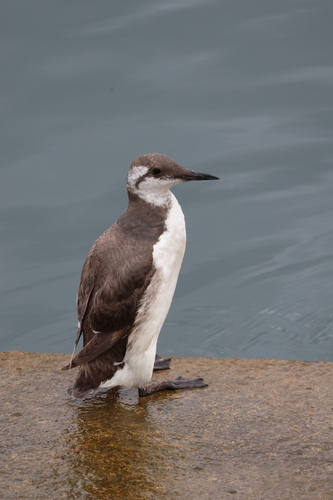
ウミガラス (Uria aalge) ウミガラス

メディア

読み込み中…

要点

ブリュンニヒのハシブトウミガラス(Thick-billed)とウミガラスの間で最も信頼できるフィールドマークはくちばしです:ブリュンニヒのものは明らかに厚く短いくちばしで、白い開口部のストライプがあります(成鳥の場合)、一方ウミガラスのくちばしは細く、このストライプがありません。飛行中、ブリュンニヒは短くてコンパクトに見え、頭と背中は暗く、いくつかのウミガラスに見られる「ブライドル」白いアイストライプの形態がありません。初年度の鳥の場合、くちばしの形はあまり役に立たないので、頭のパターンと全体の構造に焦点を当ててください。両種はサイズが似ていますが、ブリュンニヒは平均してやや大きく、特に太平洋ではがっしりとしています。未熟な鳥と冬の鳥は混乱の原因となることが多いので、くちばしの形、顔のパターン、全体の印象の組み合わせに注意を払ってください。

識別のコツ

  1. Bill shape (adults): ブリュンニヒのハシブトウミガラスは明らかに厚く短いくちばしを持ち、白い開口部のストライプがあります;ウミガラスのくちばしは細く、長く、白いストライプがありません。これは成鳥の近距離での最も信頼できるフィールドマークです。
  2. Bill shape (first-years): 初年度のブリュンニヒでは、くちばしは小さく、白い開口部のストライプが薄いか欠けていることがあり、くちばしの形はあまり信頼できません。未熟な鳥の頭のパターンに焦点を当ててください。
  3. Head and face pattern (all ages): ブリュンニヒは特に太平洋で、より暗く、よりしっかりとした黒っぽい頭と背中を持っています。ウミガラスはより淡い色に見えることがあり、「ブライドル」形態(ウミガラスにのみ見られる)では、白いアイリングと目の後ろに伸びるラインを示します。ブリュンニヒは白いアイストライプと白いくちばしストライプの両方を示すことはありません。
  4. Bridled morph: 「ブライドル」形態(白いアイリングとストライプ)を示すのはウミガラスだけです。これを見たら、それはブリュンニヒではありません。
  5. Winter plumage: 両種は冬に顔に白を発達させますが、ブリュンニヒはウミガラスよりも白が少なく、顔は全体的に暗いままです。ウミガラスは目の後ろに暗いスパーを持つ白い顔を示します。
  6. Flight jizz: ブリュンニヒは飛行中に短くてコンパクトに見え、頭と背中は暗いです。ウミガラスは長くてスリムに見え、冬には淡い顔を持ち、時には白いアイストライプを持つことがあります。
  7. Upperwing pattern (immatures): 未熟な鳥に対して強いコントラストのある上翼パターンは記述されていません;頭のパターンと構造に依存してください。
  8. Tail: 両方とも小さく丸い黒い尾を持っています;有用な区別にはなりません。
  9. Leg color: 両方とも暗い脚を持っていますが、ウミガラスにおける時折の黄色がかった灰色や異常な色は稀であり、信頼できません。
  10. Size: ブリュンニヒは平均してやや大きく重いですが、特に太平洋では、これは微妙であり、鳥が並んでいない限り診断的ではありません。
  11. Plumage color (regional): 太平洋のブリュンニヒ(U. l. arra)は特に上面が深い黒であり、南部イギリスのウミガラスは明らかに茶色がかることがあります。
  12. Colony context: 両種が一緒に見られる場合、ブライドルのある鳥は常にウミガラスです;ブリュンニヒはより密集した北部のコロニーにいる可能性が高いですが、重複は一般的です。
  13. Voice: 両方ともコロニーで騒がしいですが、呼び声は似ており、フィールドで信頼できる区別はできません。
  14. Behavior at sea: 両方とも繁殖シーズン外では静かで外洋性ですが、行動は信頼できる区別にはなりません。
  15. Season: 冬の終わりと春には、初年度の鳥がまだ冬の頭のパターンを示すことがあります;くちばしの色やサイズではなく、構造と顔のパターンを使用してください。

大きさ

両種は大きなウミガラスであり、サイズがかなり重なっていますが、ブリュンニヒのハシブトウミガラスは平均してやや大きく重いです。ブリュンニヒは長さ40〜48 cm、翼幅64〜81 cm、体重736〜1,481 gです。ウミガラスは長さ38〜46 cm、翼幅61〜73 cm、体重775〜1,250 gの範囲です。太平洋のブリュンニヒ(U. l. arra)は特に大きく、主にくちばしの寸法でそうです。フィールドでは、このサイズの違いは微妙であり、鳥が並んでいない限り診断的ではありません。

羽色

行動

両種は強力で直接的な飛行者であり、急速な羽ばたきで非常に優れたダイバーであり、翼を使って水中を「飛ぶ」ことができます。ブリュンニヒは飛行中に短くてコンパクトに見える傾向があり、ウミガラスは長くてスリムに見えます。両方とも海では静かですが、コロニーでは騒がしいです。ブリュンニヒはより深く、長いダイブ(最大150 m、通常はそれ以下)が可能ですが、これは実用的なフィールドマークではありません。両種は単独または群れで採餌し、しばしばコロニーから遠く離れて餌を探します。

生息環境

両種は北大西洋と北太平洋の岩の崖や島で繁殖し、しばしば混合コロニーで見られます。ブリュンニヒはより北で、より大きく密集したコロニーで繁殖する傾向がありますが、広範な重複があります。海では、両方とも繁殖シーズン外では外洋性ですが、ブリュンニヒは北極および亜北極の水域により強く関連しており、ウミガラスは北方および温帯地域でより広範囲に分布しています。しかし、範囲が重なる場所では生息地は信頼できる区別にはなりません。

声

両種は繁殖コロニーで騒がしく、厳しい、カッカッというか、うなり声を出します。ブリュンニヒは厳しいカッカッという呼び声を持つとされ、ウミガラスはうなり声の「ムルル」を出します。両方とも海では一般的に静かです。呼び声はコロニーで近距離でない限り、フィールドで信頼できる区別はできません。

より良い説明を送る

比較と同じ項目を使ってください。文章はすぐに公開されます。

The most reliable field mark between Brünnich's (Thick-billed) Guillemot and Common Guillemot is the bill: Brünnich's has a noticeably thicker, shorter bill with a white gape stripe (on adults), while Common Guillemot's bill is thinner and lacks this stripe. In flight, Brünnich's looks shorter and more compact, with a darker head and back, and lacks the 'bridled' white eye-stripe morph seen in some Common Guillemots. For first-year birds, bill shape is less helpful; focus instead on head pattern and overall structure. Both species are similar in size, but Brünnich's averages slightly larger and bulkier, especially in the Pacific. Immature and winter birds are a frequent source of confusion, so pay close attention to the combination of bill shape, face pattern, and overall jizz.

  1. Bill shape (adults): Brünnich's Guillemot has a noticeably thicker, shorter bill with a white gape stripe; Common Guillemot's bill is thinner, longer, and lacks the white stripe. This is the single most reliable field mark for adults at close range.
  2. Bill shape (first-years): In first-year Brünnich's, the bill is smaller and the white gape stripe may be faint or absent, making bill shape less reliable. Focus on head pattern for immatures.
  3. Head and face pattern (all ages): Brünnich's has a darker, more solidly blackish head and back, especially in the Pacific. Common can appear paler, and in the 'bridled' morph (only in Common), shows a white eye-ring and line extending behind the eye. Brünnich's never shows both a white eye-stripe and a white bill-stripe.
  4. Bridled morph: Only Common Guillemot shows the 'bridled' morph (white eye-ring and stripe). If you see this, it's not Brünnich's.
  5. Winter plumage: Both species develop white on the face in winter, but Brünnich's retains less white, and the face remains darker overall. Common shows a white face with a dark spur behind the eye.
  6. Flight jizz: Brünnich's looks shorter and more compact in flight, with a darker head and back. Common appears longer and slimmer, with a paler face in winter and sometimes a white eye-stripe.
  7. Upperwing pattern (immatures): No strong contrast in upperwing pattern is described for immatures; rely on head pattern and structure.
  8. Tail: Both have a small, rounded black tail; not a useful separator.
  9. Leg color: Both have dark legs, but occasional yellow-grey or aberrant colors in Common are rare and not reliable.
  10. Size: Brünnich's averages slightly larger and heavier, especially in the Pacific, but this is subtle and not diagnostic unless birds are side by side.
  11. Plumage color (regional): Pacific Brünnich's (U. l. arra) is especially deeply black above, while southern British Common Guillemots can be distinctly brownish.
  12. Colony context: If you see both species together, bridled birds are always Common; Brünnich's is more likely in denser, more northerly colonies, but overlap is common.
  13. Voice: Both are noisy at colonies, but calls are similar and not reliably separable in the field.
  14. Behavior at sea: Both are silent and pelagic outside the breeding season; behavior is not a reliable separator.
  15. Season: In late winter and spring, first-year birds may still show winter head pattern; use structure and face pattern rather than bill color or size.

Both species are large auks and overlap considerably in size, but Brünnich's Guillemot is, on average, slightly larger and heavier. Brünnich's measures 40–48 cm in length with a 64–81 cm wingspan and weighs 736–1,481 g. Common Guillemot is 38–46 cm long, with a 61–73 cm wingspan and a weight range of 775–1,250 g. The Pacific Brünnich's (U. l. arra) is especially large, mainly in bill dimensions. In the field, this size difference is subtle and rarely diagnostic unless birds are side by side.

  • Juvenile/First-year birds: For both species, first-year birds resemble adults in winter plumage, but Brünnich's first-years have a smaller bill and the white gape stripe is often faint or missing. Head pattern is the best separator at this age: Brünnich's shows a darker, more solidly blackish head, while Common can show a paler face and, in the 'bridled' morph, a white eye-stripe.
  • Adult breeding plumage: Brünnich's is blacker on the head, neck, and back (especially in the Pacific), while Common is black or dark brown (notably brownish in southern Britain). Brünnich's has a white bill stripe at the gape, which Common lacks. The 'bridled' morph (white eye-ring and line) is only seen in Common Guillemot.
  • Adult winter plumage: Both species develop more white on the face, but Brünnich's retains less white than Common. Common shows a white face with a dark spur behind the eye; Brünnich's face remains darker overall.
  • Flight views: Brünnich's appears shorter and more compact in flight, with a darker upperwing and head. Common can look longer and slimmer, with a paler face in winter and sometimes a white eye-stripe.

Both species are strong, direct fliers with rapid wingbeats and are highly accomplished divers, using their wings to 'fly' underwater. Brünnich's tends to look shorter and more compact in flight, while Common appears longer and slimmer. Both are silent at sea but noisy at colonies. Brünnich's is capable of deeper and longer dives (up to 150 m, though usually less), but this is not a practical field mark. Both species forage singly or in groups, often traveling far from colonies to feed.

Both species breed on rocky cliffs and islands in the North Atlantic and North Pacific, often in mixed colonies. Brünnich's tends to breed further north and in larger, denser colonies, but there is broad overlap. At sea, both are pelagic outside the breeding season, but Brünnich's is more strongly associated with Arctic and sub-Arctic waters, while Common is more widespread in boreal and temperate zones. However, habitat is not a reliable separator where ranges overlap.

Both species are noisy at breeding colonies, producing harsh, cackling or growling calls. Brünnich's is described as having harsh cackling calls, while Common gives a growling "murrrr". Both are generally silent at sea. Vocalizations are not reliably separable in the field unless at close range in colonies.

変更を破棄しますか?

保存していない編集があります。今離れると失われます。

ハシブトウミガラス · ウミガラス · 苦手な鳥