

Thick-billed Murre vs Uria
Uria lomvia contro Uria aalge
Fai un quiz con Thick-billed Murre e Uria
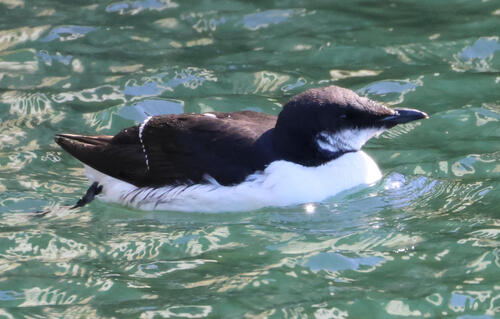 Thick-billed Murre
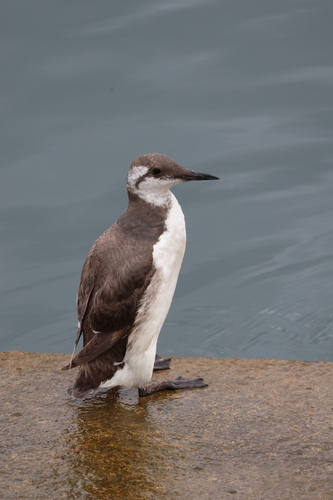 Uria
In breve
Il segno di campo più affidabile tra il Guillemot di Brünnich (Thick-billed) e il Guillemot comune è il becco: il Guillemot di Brünnich ha un becco visibilmente più spesso e corto con una striscia bianca alla bocca (sugli adulti), mentre il becco del Guillemot comune è più sottile e privo di questa striscia. In volo, il Guillemot di Brünnich appare più corto e compatto, con una testa e un dorso più scuri, e non presenta la morfologia 'bridled' con striscia bianca attorno all'occhio vista in alcuni Guillemots comuni. Per gli uccelli di primo anno, la forma del becco è meno utile; concentrati invece sul modello della testa e sulla struttura generale. Entrambe le specie sono simili in dimensioni, ma il Guillemot di Brünnich è mediamente leggermente più grande e robusto, specialmente nel Pacifico. Gli uccelli immaturi e invernali sono una fonte frequente di confusione, quindi presta particolare attenzione alla combinazione di forma del becco, modello del viso e aspetto generale.
Consigli di identificazione
- Forma del becco (adulti): Il Guillemot di Brünnich ha un becco visibilmente più spesso e corto con una striscia bianca alla bocca; il becco del Guillemot comune è più sottile, più lungo e privo della striscia bianca. Questo è il segno di campo più affidabile per gli adulti a distanza ravvicinata.
- Forma del becco (primo anno): Negli esemplari di primo anno del Guillemot di Brünnich, il becco è più piccolo e la striscia bianca alla bocca può essere debole o assente, rendendo la forma del becco meno affidabile. Concentrati sul modello della testa per gli immaturi.
- Modello della testa e del viso (tutte le età): Il Guillemot di Brünnich ha una testa e un dorso di un nero più scuro e solido, specialmente nel Pacifico. Il Guillemot comune può apparire più chiaro e, nella morfologia 'bridled' (solo nel comune), mostra un anello bianco attorno all'occhio e una linea che si estende dietro l'occhio. Il Guillemot di Brünnich non mostra mai sia una striscia bianca attorno all'occhio che una striscia bianca sul becco.
- Morfologia bridled: Solo il Guillemot comune mostra la morfologia 'bridled' (anello bianco attorno all'occhio e striscia). Se vedi questo, non è il Guillemot di Brünnich.
- Piumaggio invernale: Entrambe le specie sviluppano bianco sul viso in inverno, ma il Guillemot di Brünnich mantiene meno bianco e il viso rimane complessivamente più scuro. Il Guillemot comune mostra un viso bianco con una spina scura dietro l'occhio.
- Aspetto in volo: Il Guillemot di Brünnich appare più corto e compatto in volo, con una testa e un dorso più scuri. Il Guillemot comune appare più lungo e snello, con un viso più chiaro in inverno e talvolta una striscia bianca attorno all'occhio.
- Modello dell'ala superiore (immaturi): Non è descritto un forte contrasto nel modello dell'ala superiore per gli immaturi; fai affidamento sul modello della testa e sulla struttura.
- Coda: Entrambi hanno una piccola coda nera arrotondata; non è un separatore utile.
- Colore delle gambe: Entrambi hanno gambe scure, ma occasionali colori giallo-grigi o aberranti nel Guillemot comune sono rari e non affidabili.
- Dimensioni: Il Guillemot di Brünnich è mediamente leggermente più grande e pesante, specialmente nel Pacifico, ma questa è una differenza sottile e non diagnostica a meno che gli uccelli non siano affiancati.
- Colore del piumaggio (regionale): Il Guillemot di Brünnich del Pacifico (U. l. arra) è particolarmente nero sopra, mentre i Guillemots comuni britannici meridionali possono essere distintamente brunastri.
- Contesto della colonia: Se vedi entrambe le specie insieme, gli uccelli bridled sono sempre comuni; il Guillemot di Brünnich è più probabile che si trovi in colonie più dense e settentrionali, ma la sovrapposizione è comune.
- Voce: Entrambi sono rumorosi nelle colonie, ma i richiami sono simili e non separabili in modo affidabile sul campo.
- Comportamento in mare: Entrambi sono silenziosi e pelagici al di fuori della stagione riproduttiva; il comportamento non è un separatore affidabile.
- Stagione: Alla fine dell'inverno e in primavera, gli uccelli di primo anno possono ancora mostrare il modello della testa invernale; usa la struttura e il modello del viso piuttosto che il colore o la dimensione del becco.
Taglia
Entrambe le specie sono grandi auks e si sovrappongono considerevolmente in dimensioni, ma il Guillemot di Brünnich è, in media, leggermente più grande e pesante. Il Guillemot di Brünnich misura 40–48 cm di lunghezza con un'apertura alare di 64–81 cm e pesa 736–1.481 g. Il Guillemot comune è lungo 38–46 cm, con un'apertura alare di 61–73 cm e un intervallo di peso di 775–1.250 g. Il Guillemot di Brünnich del Pacifico (U. l. arra) è particolarmente grande, principalmente nelle dimensioni del becco. Sul campo, questa differenza di dimensioni è sottile e raramente diagnostica a meno che gli uccelli non siano affiancati.
Piumaggio
- Uccelli giovanili/di primo anno: Per entrambe le specie, gli uccelli di primo anno somigliano agli adulti nel piumaggio invernale, ma i primi anni del Guillemot di Brünnich hanno un becco più piccolo e la striscia bianca alla bocca è spesso debole o assente. Il modello della testa è il miglior separatore a questa età: il Guillemot di Brünnich mostra una testa di un nero più scuro e solido, mentre il Guillemot comune può mostrare un viso più chiaro e, nella morfologia 'bridled', una striscia bianca attorno all'occhio.
- Piumaggio di riproduzione adulto: Il Guillemot di Brünnich è più nero sulla testa, sul collo e sul dorso (specialmente nel Pacifico), mentre il Guillemot comune è nero o marrone scuro (notevolmente brunastri nel sud della Gran Bretagna). Il Guillemot di Brünnich ha una striscia bianca sul becco, che il Guillemot comune non ha. La morfologia 'bridled' (anello bianco attorno all'occhio e linea) è vista solo nel Guillemot comune.
- Piumaggio invernale adulto: Entrambe le specie sviluppano più bianco sul viso, ma il Guillemot di Brünnich mantiene meno bianco rispetto al comune. Il Guillemot comune mostra un viso bianco con una spina scura dietro l'occhio; il viso del Guillemot di Brünnich rimane complessivamente più scuro.
- Viste in volo: Il Guillemot di Brünnich appare più corto e compatto in volo, con un'ala superiore e una testa più scure. Il Guillemot comune può apparire più lungo e snello, con un viso più chiaro in inverno e talvolta una striscia bianca attorno all'occhio.
Comportamento
Entrambe le specie sono forti volatori diretti con battiti d'ala rapidi e sono abili subacquei, utilizzando le ali per 'volare' sott'acqua. Il Guillemot di Brünnich tende a sembrare più corto e compatto in volo, mentre il Guillemot comune appare più lungo e snello. Entrambi sono silenziosi in mare ma rumorosi nelle colonie. Il Guillemot di Brünnich è capace di immersioni più profonde e lunghe (fino a 150 m, anche se di solito meno), ma questo non è un segno di campo pratico. Entrambe le specie si nutrono singolarmente o in gruppi, spesso viaggiando lontano dalle colonie per nutrirsi.
Habitat
Entrambe le specie nidificano su scogliere rocciose e isole nell'Atlantico settentrionale e nel Pacifico settentrionale, spesso in colonie miste. Il Guillemot di Brünnich tende a nidificare più a nord e in colonie più grandi e dense, ma c'è una vasta sovrapposizione. In mare, entrambi sono pelagici al di fuori della stagione riproduttiva, ma il Guillemot di Brünnich è più fortemente associato alle acque artiche e subartiche, mentre il Guillemot comune è più diffuso nelle zone boreali e temperate. Tuttavia, l'habitat non è un separatore affidabile dove le aree si sovrappongono.
Voce
Entrambe le specie sono rumorose nelle colonie di riproduzione, producendo richiami aspri, striduli o ringhianti. Il Guillemot di Brünnich è descritto come avente richiami aspri e striduli, mentre il Guillemot comune emette un ringhiante "murrrr". Entrambi sono generalmente silenziosi in mare. Le vocalizzazioni non sono separabili in modo affidabile sul campo a meno che non siano a distanza ravvicinata nelle colonie.