

Motmot

キリアイ 対 サルハマシギ

Calidris falcinellus 対 Calidris ferruginea

キリアイとサルハマシギのクイズ
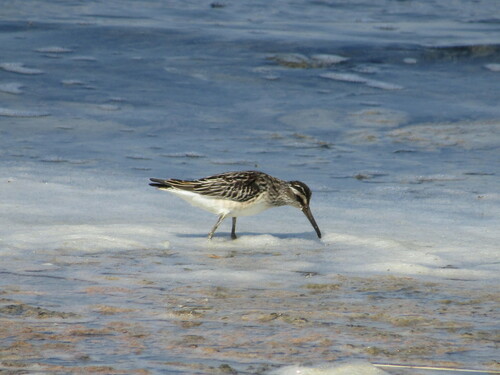
キリアイ (Calidris falcinellus) キリアイ
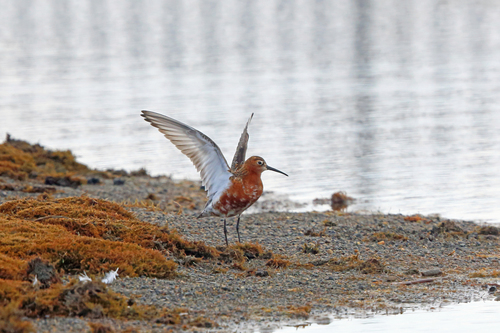
サルハマシギ (Calidris ferruginea) サルハマシギ

メディア

読み込み中…

要点

キリアイとサルハマシギを区別するための最も信頼できるフィールドマークは、Broad-billedの独特な頭部パターンです:強い二重(分割)スーパーシリウムと淡い冠ストライプがあり、すべての羽色と年齢で確認できます。飛行中、サルハマシギは大胆な白い尻と白い翼のストライプを示し、これらはBroad-billedにはありません。幼鳥や非繁殖の鳥は特に混乱を招くことがありますが、頭部パターン、くちばしの形、腹部のマーキングに注意を払うことで、通常は同定が可能です。構造と採餌の姿勢も微妙に異なり、Broad-billedは脚が短く、よりコンパクトに見えます。

識別のコツ

  1. Head pattern is key: キリアイは常に強い二重(分割)スーパーシリウムと淡い冠ストライプを示し、すべての年齢と羽色で確認できます。サルハマシギはこれを示さず、単純な顔に単一の白い眉があります。
  2. In flight, check the rump and wing stripe: すべての年齢のサルハマシギは大きな白い尻の斑点と大胆な白い翼のストライプを持っています。キリアイは両方の特徴を欠いており、尻は対照的ではなく、翼は単純です。
  3. Bill shape: キリアイは中程度の長さの直線的なくちばしを持ち、明確に下向きの先端があります(長く湾曲したくちばしではありません)。サルハマシギのくちばしは長く、細く、全体に均等に湾曲しています。
  4. Leg length: サルハマシギは脚が長く、特に採餌中は背が高く見えます。キリアイは脚が短く、よりコンパクトに見えます。
  5. Underpart markings (non-breeding/juvenile): キリアイは白い脇腹と腹部に茶色のストライプがあり、幼鳥の羽色でも確認できます。サルハマシギは下部がよりクリーンな白で、非繁殖羽色では淡い灰色のストライプがわずかに見られ、幼鳥では鱗状の淡い色合いを持っています。
  6. Upperpart pattern (juvenile): 幼鳥のBroad-billedは背中に淡い「トラムライン」を示しますが、サルハマシギの幼鳥はより均等に鱗状で淡い色合いの上部パターンを持っています。
  7. Breeding plumage: 繁殖羽色のサルハマシギは、繁殖羽色(特にオス)で下部と頭部が豊かな赤褐色で、白い尻と翼のストライプがあります。キリアイは下部が赤褐色を示すことはなく、代わりに淡いフリンジのある暗褐色の上部、黒っぽい胸のマーキングのある白い下部、分割されたスーパーシリウムを持っています。頭部のパターンは常にBroad-billedでより鮮明です。
  8. Face pattern (all ages): キリアイだけが分割されたスーパーシリウムと淡い冠ストライプを持ち、サルハマシギの顔は単純で単一の白い眉を除いて特徴がありません。
  9. Feeding jizz: キリアイはより屈み込んだコンパクトな姿勢を持ち、サルハマシギはより直立して優雅に見えます。
  10. Size: サルハマシギはより大きく重いですが、サイズの重複があるため、これはあくまで補助的なマークです。
  11. Association: Broad-billedはハマシギの群れと一緒にいる可能性が高く、サルハマシギはオープンな干潟で他のCalidrisと一緒にいることがよくあります。
  12. Voice: Broad-billedの乾いた笛のような「dree-it」とクリック音の「dik dik」は役立ちます、特にヨーロッパトウネンが除外された場合に。サルハマシギの鳴き声はこの文脈ではあまり特徴的ではありません。
  13. Seasonal context: 西ヨーロッパでは、キリアイは珍しく、通常は通過中のみで、サルハマシギはより広範囲に分布し、定期的に見られます。
  14. Sex differences (breeding): 繁殖時のオスのサルハマシギはメスよりも豊かな赤褐色を示しますが、両方の性はBroad-billedとは全体的な色合いと頭部パターンで異なります。
  15. Pitfall: 薄暗い光や距離がある場合、サルハマシギの単純な顔と飛行中の白い尻/翼のストライプが最良の手がかりです。Broad-billedの頭部パターンは近くで診断的ですが、遠くでは見逃されることがあります。

大きさ

キリアイはサルハマシギよりもわずかに小さく、軽いです。Broad-billedは16〜18 cmの長さで、体重は約37 g [wikidata]ですが、サルハマシギは18〜23 cmと大きく、通常はより重い(44〜117 g、ここではAVONETの値は示されていません)[wikipedia]。フィールドでは、サルハマシギはしばしば脚が長く、くちばしが長いように見え、後部がより細長く見えます。

羽色

行動

キリアイはより屈み込んだコンパクトな姿勢で採餌する傾向があり、脚が短く見えます。サルハマシギはより直立しており、脚が長く、より優雅な歩き方をしています。両種は群れで行動し、他の小型のシギと混ざることがよくありますが、Broad-billedはハマシギの密集した群れで見られる可能性が高く、サルハマシギはオープンな干潟で他のCalidris種と一緒にいることがよくあります。

生息環境

両種はシベリア北極圏で繁殖する長距離移動者ですが、移動ルートと越冬地は異なります。キリアイは南東への移動のため西ヨーロッパでは珍しく、冬には東アフリカ、南アジア、東南アジア、オーストラレーシアにいる可能性が高いです。サルハマシギはアフリカ、南ユーラシア、オセアニアで広く越冬し、潮汐の干潟や塩田を好みます。重複はありますが、サルハマシギは一般的に沿岸の干潟でより広範囲に分布し、数が多いです。

声

キリアイは乾いた笛のような「dree-it, dree-it」とクリック音の「dik dik」を出し、これはヨーロッパトウネンに似ており、ハマシギよりも高音です。サルハマシギの鳴き声はここでは詳細に説明されていませんが、Broad-billedの特徴的な乾いた笛の音に似ているとは記載されていません。

より良い説明を送る

比較と同じ項目を使ってください。文章はすぐに公開されます。

The most reliable field mark to separate Broad-billed Sandpiper from Curlew Sandpiper is the Broad-billed's distinctive head pattern: a strong double (split) supercilium and pale crown stripe, visible in all plumages and ages. In flight, Curlew Sandpiper shows a bold white rump patch and a white wing stripe, both lacking in Broad-billed. Juveniles and non-breeding birds can be especially confusing, but careful attention to head pattern, bill shape, and underpart markings will usually clinch the ID. Structure and feeding jizz also differ subtly, with Broad-billed appearing shorter-legged and more compact.

  1. Head pattern is key: Broad-billed Sandpiper always shows a strong double (split) supercilium and a pale crown stripe, visible in all ages and plumages. Curlew Sandpiper never shows this; it has a plain face with a single white eyebrow.
  2. In flight, check the rump and wing stripe: Curlew Sandpiper of all ages has a large white rump patch and a bold white wing stripe. Broad-billed Sandpiper lacks both features; its rump is not contrasting, and the wing is plain.
  3. Bill shape: Broad-billed Sandpiper has a medium-length, straight bill with a distinctly downturned tip (not a long, decurved bill). Curlew Sandpiper's bill is longer, thinner, and more evenly decurved throughout its length.
  4. Leg length: Curlew Sandpiper is longer-legged and stands taller, especially when feeding. Broad-billed Sandpiper appears shorter-legged and more compact.
  5. Underpart markings (non-breeding/juvenile): Broad-billed Sandpiper has white flanks and belly with brown-streaked breast, even in juvenile plumage. Curlew Sandpiper is cleaner white below, with only faint pale grey streaks in non-breeding plumage and a scaly, buff-tinged look in juveniles.
  6. Upperpart pattern (juvenile): Juvenile Broad-billed shows pale 'tramlines' down the mantle; Curlew Sandpiper juvenile has a more evenly scaly and buff-tinged upperpart pattern.
  7. Breeding plumage: Curlew Sandpiper is rich reddish below and on the head in breeding plumage (especially males), with a white rump and wing stripe. Broad-billed Sandpiper never shows rufous below; instead, look for dark brown upperparts with pale fringes and the split supercilium.
  8. Face pattern (all ages): Only Broad-billed Sandpiper has the split supercilium and pale crown stripe; Curlew Sandpiper's face is plain except for a single white eyebrow.
  9. Feeding jizz: Broad-billed Sandpiper is more crouched and compact; Curlew Sandpiper is more upright and graceful.
  10. Size: Curlew Sandpiper is larger and heavier, but size overlap means this is only a supporting mark.
  11. Association: Broad-billed is more likely to be with Dunlin flocks; Curlew Sandpiper often with other Calidris on open mudflats.
  12. Voice: Broad-billed's dry, whistling 'dree-it' and clicking 'dik dik' can help, especially if Little Stint is ruled out. Curlew Sandpiper's calls are less distinctive in this context.
  13. Seasonal context: In western Europe, Broad-billed Sandpiper is rare and usually only on passage; Curlew Sandpiper is more widespread and regular.
  14. Sex differences (breeding): Male Curlew Sandpiper is richer rufous below than female, but both sexes differ from Broad-billed by overall coloration and head pattern.
  15. Pitfall: In dull light or at distance, Curlew Sandpiper's plain face and white rump/wing stripe in flight are the best clues; Broad-billed's head pattern is diagnostic up close but can be missed at range.

Broad-billed Sandpiper is slightly smaller and lighter than Curlew Sandpiper. Broad-billed is 16–18 cm long with a body mass around 37 g [wikidata], while Curlew Sandpiper is larger at 18–23 cm and typically heavier (44–117 g, though no AVONET value is given here) [wikipedia]. In the field, Curlew Sandpiper often looks longer-legged and longer-billed, with a more attenuated rear end.

  • Juvenile/First-year birds: Curlew Sandpiper juveniles show a scaly, buff-tinged upperpart pattern with a bold white rump and wing stripe in flight. Broad-billed Sandpiper juveniles have pale 'tramlines' down the mantle, but their underparts are whiter with brown streaking on the breast, and they lack the Curlew's white rump and wing stripe. Broad-billed juveniles also show the split supercilium and pale crown stripe, which Curlew never has.

  • Non-breeding/winter: Both species become greyer above and white below, but Broad-billed always retains its split supercilium and pale crown stripe, while Curlew Sandpiper keeps a plain face with a single white eyebrow. In flight, Curlew Sandpiper's white rump and wing stripe remain diagnostic.

  • Breeding: Curlew Sandpiper adults in breeding plumage are rich reddish below and on the head (males more so), with a white rump and wing stripe. Broad-billed Sandpiper is never rufous below; instead, it has dark brown upperparts with narrow pale fringes, white underparts with blackish breast markings, and the split supercilium. The head pattern is always sharper in Broad-billed.

Broad-billed Sandpiper tends to forage with a more crouched, compact posture and appears shorter-legged. Curlew Sandpiper is more upright, with longer legs and a more graceful gait. Both species are gregarious and often mix with other small waders, but Broad-billed is more likely to be seen in tight flocks with Dunlin, while Curlew Sandpiper often associates with other Calidris species on open mudflats.

Both species are long-distance migrants breeding in the Siberian Arctic, but their migration routes and wintering areas differ. Broad-billed Sandpiper is rare in western Europe due to its south-easterly migration and is more likely in eastern Africa, south and southeast Asia, and Australasia in winter. Curlew Sandpiper winters widely in Africa, southern Eurasia, and Oceania, favoring tidal mudflats and saltpans. Overlap occurs, but Curlew Sandpiper is generally more widespread and numerous on coastal mudflats.

Broad-billed Sandpiper gives a dry, whistling 'dree-it, dree-it' and a clicking 'dik dik', which is similar to Little Stint and higher-pitched than Dunlin. Curlew Sandpiper's calls are not described in detail here, but they are not noted as similar to Broad-billed's distinctive dry, whistling notes.

変更を破棄しますか?

保存していない編集があります。今離れると失われます。

キリアイ · サルハマシギ · 苦手な鳥