

Motmot

ニシカンムリコサイチョウ 対 ハイイロコサイチョウ

Lophoceros bradfieldi 対 Lophoceros nasutus

ニシカンムリコサイチョウとハイイロコサイチョウのクイズ
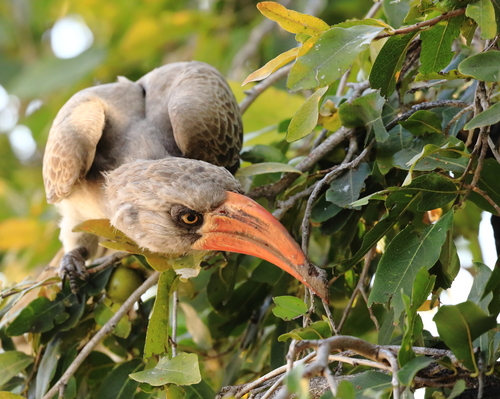
ニシカンムリコサイチョウ (Lophoceros bradfieldi) ニシカンムリコサイチョウ
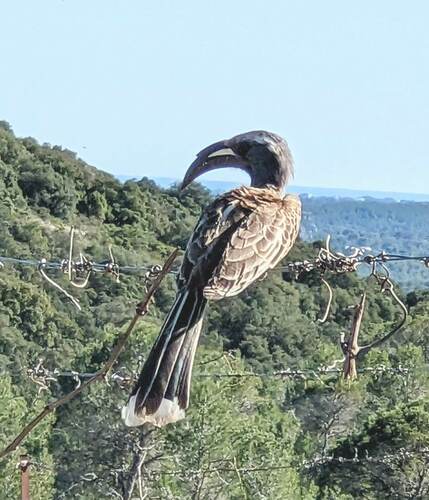
ハイイロコサイチョウ (Lophoceros nasutus) ハイイロコサイチョウ

メディア

読み込み中…

要点

ブラッドフィールドコサイチョウとハイイロコサイチョウを区別する最も信頼できるフィールドマークはくちばしです:ブラッドフィールドは長く、全体が赤いくちばしを持ち、カスクはありませんが、ハイイロコサイチョウは淡いストライプまたは三色の先端を持つ暗いくちばしと小さなカスク(特にオスにおいて)を示します。飛んでいるときや止まっているとき、ブラッドフィールドはずっしりとしており、目を引く白い腹部と白い先端の尾を持ち、黒い背中と翼と対照的です。ハイイロコサイチョウは小さく、スリムで、全体的に灰色がかった茶色で、頭頂部と背中に白い線があります(後者は主に飛行中に見えます)。雌のブラッドフィールドはトルコ石色の顔の皮膚を示すことがあり、ハイイロコサイチョウにはありません。両種は開けた森林のコサイチョウですが、ハイイロコサイチョウははるかに広範囲に分布し、ほとんどの地域で見られる可能性が高いです。

識別のコツ

  1. くちばしの色と構造:ブラッドフィールドコサイチョウは長く、全体が赤いくちばしを持ち、カスクはありません;ハイイロコサイチョウは暗いくちばしを持ち、淡いストライプ(オス)または赤い先端の三色(雌)を持ち、小さなカスクが存在します(特にオスにおいて)。これは、幼鳥のハイイロコサイチョウを除くすべての年齢に対して最も信頼できるフィールドマークです。
  2. 顔の皮膚(雌):雌のブラッドフィールドコサイチョウはトルコ石色の顔の皮膚を示し、ハイイロコサイチョウのどの性別や年齢にも存在しません。
  3. 目の色:ブラッドフィールドコサイチョウは黄色い目を持ち、ハイイロコサイチョウの目の色はノートに特異なものとして指定されていません。
  4. 体と腹部の色:ブラッドフィールドコサイチョウは清潔な白い腹部を持ち、黒い背中と翼と鋭く対照的です。ハイイロコサイチョウはより均一に灰色がかった茶色で、目立つ白い腹部がありません。
  5. 尾のパターン:ブラッドフィールドは白い先端の羽を持つ長い尾を持ち、ハイイロコサイチョウの尾は暗く、目立つ白い先端がありません。
  6. 頭頂部と背中のストライプ:ハイイロコサイチョウは頭頂部の両側に白い線を示し、背中にももう一つ(後者は主に飛行中に見えます)。ブラッドフィールドはこれらの白い線を欠いています。
  7. サイズと体格:ブラッドフィールドは大きく、ずっしりとしており(50–57 cm)小さく、スリムなハイイロコサイチョウ(45–51 cm)と比較されます。これは、両者が一緒に見られるときや経験があるときに最も明らかです。
  8. 飛行スタイル:ハイイロコサイチョウは波状の飛行を持ち、しばしばより敏捷です;ブラッドフィールドは飛行中に重く、遅く見えます。
  9. 幼鳥のくちばし:幼鳥のハイイロコサイチョウは全体が暗いくちばしを持ち、混乱を招くことがありますが、カスクがないこととトルコ石色の顔の皮膚(雌のブラッドフィールドにおいて)がそれらを区別するのに役立ちます。
  10. 性別間の羽毛の類似性:ハイイロコサイチョウの性別は羽毛が似ており、ブラッドフィールドの雌はトルコ石色の顔の皮膚と小さいサイズで区別できます。
  11. 鳴き声:ハイイロコサイチョウは非常に鳴き声が多く、特異なピーピーという呼び声を持っています。ブラッドフィールドは鳴き声が目立たず(説明は提供されていません)、呼んでいる鳥はおそらくハイイロコサイチョウです。
  12. 生息地と豊富さ:ハイイロコサイチョウは開けた森林やサバンナで広範囲にわたり一般的です;ブラッドフィールドは地域的で珍しく、南部アフリカの特定の地域に制限されています。
  13. 止まっているときと飛んでいるとき:ブラッドフィールドの白い先端の尾と清潔な白い腹部は、止まっているときと飛んでいるときの両方で見えますが、ハイイロコサイチョウの白い背中の線は飛行中に最もよく見えます。
  14. カスクの存在:ハイイロコサイチョウの小さなカスク(特にオス)はブラッドフィールドには存在せず、常に滑らかなくちばしのプロファイルを持っています。
  15. 文脈的手がかり:ブラッドフィールドの限られた範囲(ナミビア北東部、ボツワナ北部、アンゴラ南部、ジンバブエ東部)外で見られた場合、その鳥はほぼ確実にハイイロコサイチョウです。

大きさ

ブラッドフィールドコサイチョウは二つのうち大きく、長さは50–57 cmで、ハイイロコサイチョウは45–51 cmで小さいです。ブラッドフィールドは明らかにずっしりとしており、より頑丈で、重い体格と長い尾を持っています。ハイイロコサイチョウは依然として大きな鳥ですが、スリムで軽量に作られており、飛行中や枝を移動するときにより敏捷に見えることがよくあります。両種の雌はオスよりも小さいですが、これはブラッドフィールドにおいて最も明らかで、サイズの違いがより顕著です。

羽色

どちらの種についても特異な幼鳥または未熟な上翼のパターンは記述されていないため、分離は成鳥と一般的な羽毛に依存します。ブラッドフィールドコサイチョウは黒い背中と翼、清潔な白い腹部、白い先端の羽を持つ長い尾で際立っています。赤いくちばしは無地でカスクがありません。雌はトルコ石色の顔の皮膚を示します。目は黄色です。ハイイロコサイチョウは全体的に灰色がかっており、灰色と茶色の羽毛、暗い頭、飛行羽、尾を持っています。頭頂部の両側に白い線が走り、背中にももう一つ(後者は飛行中のみ見えます)。くちばしは暗く、淡いストライプ(オス)または赤い先端の三色(雌)を持ち、小さなカスクが存在し、特にオスにおいて見られます。幼鳥は成鳥に似ていますが、全体が暗いくちばしを持っています。ハイイロコサイチョウの両性は羽毛が似ており、雌のブラッドフィールドのトルコ石色の顔の皮膚が欠けています。腹部は決してブラッドフィールドのように清潔な白ではなく、尾は目立つ白い先端がありません。

行動

両種は果物、昆虫、小さな脊椎動物を求めて木の中で採餌しますが、ブラッドフィールドコサイチョウは目立たない傾向があり、その範囲では珍しい住民です。ハイイロコサイチョウはより広範囲に分布し、波状の飛行で飛んでいるのがよく見られたり、露出した止まり木から目立って鳴いたりします。ブラッドフィールドは飛行中に重く、遅く見えることがありますが、ハイイロコサイチョウはより敏捷で活動的であり、しばしば声で存在をアピールします。

生息環境

ブラッドフィールドコサイチョウはナミビア北東部、ボツワナ北部、アンゴラ南部、ジンバブエ東部のモパネ林と混合トゲの野原の地元の住民です。珍しく、分布は不均一です。ハイイロコサイチョウはサハラ以南のアフリカとアラビア半島南西部の広範囲にわたり、開けた森林とサバンナを好みます。両者が生息する地域では、ハイイロコサイチョウに遭遇する可能性がはるかに高いです。

声

ハイイロコサイチョウは大きな、ピーピーという鳴き声で知られ、しばしば露出した止まり木から鳴きます。ブラッドフィールドコサイチョウの鳴き声は提供されたノートに記述されていないため、声はハイイロコサイチョウの診断にのみ使用され、目立っていて鳴きます。

より良い説明を送る

比較と同じ項目を使ってください。文章はすぐに公開されます。

The most reliable field mark to separate Bradfield's Hornbill from African Grey Hornbill is the bill: Bradfield's has a long, all-red bill with no casque, while African Grey Hornbill shows a dark bill with a pale stripe or tricolored tip and a small casque (especially in males). In flight or perched, Bradfield's is bulkier with a striking white belly and white-tipped tail, contrasting with its black back and wings. African Grey Hornbill is smaller, slimmer, and overall greyer-brown, with a white line down the crown and back (the latter visible mainly in flight). Female Bradfield's can show turquoise facial skin, absent in African Grey. Both species are hornbills of open woodland, but African Grey is much more widespread and likely in most regions.

  1. Bill color and structure: Bradfield's Hornbill has a long, all-red bill with no casque; African Grey Hornbill has a dark bill with a pale stripe (males) or tricolored with a red tip (females), and a small casque is present (especially in males). This is the single most reliable field mark for all ages except juvenile African Grey, which has an all-dark bill.
  2. Facial skin (females): Female Bradfield's Hornbill shows turquoise facial skin, absent in African Grey Hornbill of any sex or age.
  3. Eye color: Bradfield's Hornbill has yellow eyes, while African Grey Hornbill's eye color is not specified as distinctive in the notes.
  4. Body and belly color: Bradfield's Hornbill has a clean white belly, contrasting sharply with its black back and wings. African Grey Hornbill is more uniformly grey-brown, lacking the bold white belly.
  5. Tail pattern: Bradfield's has a long tail with white tip feathers; African Grey Hornbill's tail is dark and lacks a bold white tip.
  6. Crown and back stripes: African Grey Hornbill shows a white line down each side of the crown and another down the back (the latter visible mainly in flight). Bradfield's lacks these white lines.
  7. Size and build: Bradfield's is larger and bulkier (50–57 cm) compared to the smaller, slimmer African Grey (45–51 cm). This is most apparent when both are seen together or with experience.
  8. Flight style: African Grey Hornbill has an undulating flight and is often more agile; Bradfield's appears heavier and slower in flight.
  9. Juvenile bills: Juvenile African Grey Hornbills have all-dark bills, which can be confusing, but the absence of a casque and the presence of turquoise facial skin (in female Bradfield's) still help separate them.
  10. Plumage similarity between sexes: African Grey Hornbill sexes are similar in plumage, while Bradfield's females can be picked out by turquoise facial skin and smaller size.
  11. Vocalizations: African Grey Hornbill is very vocal, with a distinctive piping call. Bradfield's is less conspicuous vocally (no description provided), so a calling bird is likely African Grey.
  12. Habitat and abundance: African Grey Hornbill is widespread and common in open woodland and savannah; Bradfield's is local and uncommon, restricted to specific regions in southern Africa.
  13. Perched vs. in flight: The white-tipped tail and clean white belly of Bradfield's are visible both perched and in flight, while African Grey's white back line is best seen in flight.
  14. Casque presence: The small casque on African Grey Hornbill (especially males) is absent in Bradfield's, which always has a smooth bill profile.
  15. Contextual clues: If seen outside the limited range of Bradfield's (northeastern Namibia, northern Botswana, southern Angola, eastern Zimbabwe), the bird is almost certainly African Grey Hornbill.

Bradfield's Hornbill is the larger of the two, measuring 50–57 cm in length, while African Grey Hornbill is smaller at 45–51 cm. Bradfield's is noticeably bulkier and more robust, with a heavier build and longer tail. African Grey Hornbill, though still a large bird, is slimmer and more lightly built, often appearing more agile in flight and when moving through branches. Females of both species are smaller than males, but this is most apparent in Bradfield's, where the size difference is more pronounced.

No distinctive juvenile or immature upperwing pattern is described for either species, so separation relies on adult and general plumage. Bradfield's Hornbill stands out with a black back and wings, a clean white belly, and a long tail with white tip feathers. The red bill is unmarked and lacks a casque. Females show turquoise facial skin. The eyes are yellow. African Grey Hornbill is greyer overall, with grey and brown plumage, a darker head, flight feathers, and tail. A white line runs down each side of the crown, and another down the back (the latter only visible in flight). The bill is dark with a pale stripe (males) or tricolored with a red tip (females), and a small casque is present, especially in males. Juveniles resemble adults but have an all-dark bill. Both sexes of African Grey have similar plumage, lacking the turquoise facial skin of female Bradfield's. The belly is never as cleanly white as Bradfield's, and the tail lacks the bold white tip.

Both species forage in trees for fruit, insects, and small vertebrates, but Bradfield's Hornbill tends to be less conspicuous and is an uncommon resident in its range. African Grey Hornbill is more widespread and often seen flying with undulating flight or calling conspicuously from exposed perches. Bradfield's may appear heavier and slower in flight, while African Grey is more agile and active, often advertising its presence vocally.

Bradfield's Hornbill is a local resident of mopane woodlands and mixed thorn fields in northeastern Namibia, northern Botswana, southern Angola, and eastern Zimbabwe. It is uncommon and has a patchy distribution. African Grey Hornbill is widespread across much of sub-Saharan Africa and the southwest Arabian Peninsula, favoring open woodland and savannah. In areas where both occur, African Grey is much more likely to be encountered.

African Grey Hornbill is noted for its loud, piping 'pee-o pee-o pee-o' call, often given from an exposed perch. Bradfield's Hornbill's vocalizations are not described in the provided notes, so voice is only diagnostic for African Grey Hornbill, which is conspicuous and vocal.

変更を破棄しますか?

保存していない編集があります。今離れると失われます。

ニシカンムリコサイチョウ · ハイイロコサイチョウ · 苦手な鳥