

Motmot

ボリビアジアリドリ 対 チャミジアリドリ

Grallaria cochabambae 対 Grallaria alvarezi

ボリビアジアリドリとチャミジアリドリのクイズ

ボリビアジアリドリ (Grallaria cochabambae) ボリビアジアリドリ
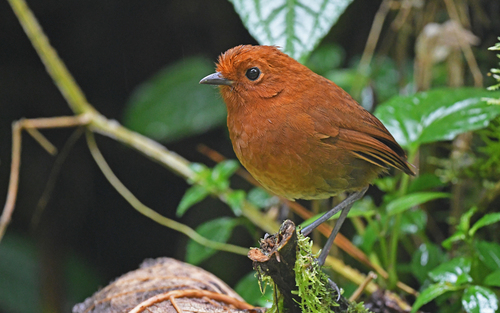
チャミジアリドリ (Grallaria alvarezi) チャミジアリドリ

メディア

読み込み中…

要点

ボリビアジアリドリとチャミジアリドリを分ける最も信頼できる方法は、全体的な羽色のトーンと腹部のパターンによるものです:チャミジアリドリは、上面と胸部が深く、強い赤褐色で、腹部の中央は淡い黄褐色で微妙な鱗模様を示しています。一方、ボリビアジアリドリは全体的な色合いが異なり(詳細は以下)、これらの羽毛の違いに基づいて種として分けられました。どちらもふっくらとした丸い形をしており、短い尾と似たような印象を持っていますが、分布域は重なりません:ボリビアはボリビア固有で、チャミはコロンビア固有です。フィールドでは、赤褐色のトーンの強さと均一性、腹部とのコントラスト、鱗模様のヒントに注目してください。年齢特有の翼のパターンはどちらの種にも記載されていないため、体の羽毛と文脈に依存してください。

識別のコツ

  1. 地理的範囲が最初のチェック:ボリビアジアリドリはボリビアにのみ見られ、チャミはコロンビアにのみ見られます。これらの国の外にいる場合は、識別を再考してください。
  2. 全体的な羽色のトーン:チャミジアリドリは、上面と胸部が深く、強い赤褐色で、ほとんどの赤褐色アントピッタ複合体のメンバーよりも明らかに豊かです。ボリビアジアリドリはそれほど強い赤褐色ではありません;もし鳥が非常に豊かで均一に見える場合は、チャミを優先してください。
  3. 腹部のコントラストとパターン:チャミは、腹部の中央が淡い黄褐色で、下部に微妙な鱗模様を示しています。この淡い、わずかに模様のある腹部を重要なマークとして探してください。ボリビアはコントラストが少なく、鱗模様もあまり目立たないと予想されます。
  4. 胸部のトーン:チャミの胸部は体の他の部分よりもさらに深い赤褐色で、微妙なグラデーションを作ります。ボリビアではこれがそれほど顕著でない場合があります。
  5. 腹部と尾羽の色:チャミの腹部と外尾羽は体の他の部分よりもわずかに淡いです。このコントラストが見られれば、チャミを支持します。
  6. 翼と覆羽のパターン:チャミの飛翔羽と翼の覆羽にはわずかに暗い内側のウェブがありますが、これは微妙なマークであり、フィールドでボリビアと分けるのは難しいでしょう。
  7. くちばし、尾、構造:どちらもふっくらとした丸い形で、短い尾と頑丈なくちばしを持っています;これらの特徴は分けるのには役立ちません。
  8. 性別と年齢:チャミでは性別が似ており、ボリビアには性的二形が記載されていません。どちらの種にも年齢特有の翼や飛行のマークは記載されていないため、これに依存しないでください。
  9. 声:もし2.5〜3.5秒続く急速で下降するトリルや、明確な音の後に短い、途切れ途切れのトリルが聞こえたら、チャミを聞いている可能性が高いです。ボリビアの鳴き声はここでは記載されていないため、これらの歌がないことは診断的ではありません。
  10. 行動:どちらの種も、森の床を跳ねたり走ったりしながら餌を探し、葉の落ち葉をひっくり返したり、獲物を探したりします。行動は分ける要素ではありません。
  11. 文脈:ボリビアの山地森林にいる場合はボリビアジアリドリを期待し、コロンビアではチャミを期待してください。誤認識は主に写真や飼育下で発生し、野生では起こりにくいです。
  12. 落とし穴:最大のリスクは、すべての赤褐色アントピッタ複合体の鳥が同じであると仮定することです;腹部の色とパターンの微妙な違いが重要です。照明が色の認識に影響を与える可能性があるため、良い光の中で鳥を見るようにしてください。
  13. マークが失敗した場合:腹部が見えない場合や鳥が深い影の中にいる場合、種の識別が不可能になることがあります。範囲と鳴き声を支持証拠として使用してください。
  14. フィールドでの使用のための要約:赤褐色のトーンの強さ、腹部のコントラストとパターン、そしてバードウォッチングをしている国に注目してください。疑わしい場合は、専門家のレビューのために写真や音声録音で鳥を記録してください。

大きさ

チャミジアリドリは約14.5〜15 cm(5.7〜5.9インチ)の長さです [wikipedia]。ボリビアジアリドリの直接的な測定は記載されていませんが、どちらも赤褐色アントピッタ複合体のメンバーであるため、サイズと構造は似ていると考えられます。どちらの種もふっくらとした丸い形で、短い尾と頑丈なくちばしを持っているため、サイズと形状は分けるのには信頼できません。

羽色

どちらの種にも年齢特有の翼や飛行パターンの違いは記載されていません;どちらも利用可能なメモには特徴的な幼鳥や未熟な上翼のマークがないようです。成鳥の場合、チャミジアリドリはほぼ完全に強い赤褐色で、胸部はさらに深いトーンです。腹部の中央は淡い黄褐色で、下部にわずかな鱗模様を示し、腹部と外尾羽は体よりも淡いです。飛翔羽と翼の覆羽にはわずかに暗い内側のウェブがあります。ボリビアジアリドリは羽毛の色と鳴き声の違いに基づいて赤褐色アントピッタ複合体から分けられましたが、正確な色の違いはメモには詳細に記載されていません。しかし、ボリビアジアリドリは全体的にそれほど強い赤褐色ではなく、チャミに特有の強いコントラストと微妙な鱗模様が腹部に欠けている可能性があることが示唆されています。チャミでは性別が似ており、ボリビアには性的二形が記載されていません。

行動

どちらの種も典型的なグララリアアントピッタです:ふっくらとした丸い形で、しばしば羽を膨らませ、森の床を跳ねたり走ったりしながら餌を探します。チャミジアリドリは葉の落ち葉をひっくり返したり、土を掘って無脊椎動物やミミズを探すことで知られています。フィールドでこれらの二つの種を確実に分ける行動の特徴はメモにはありません。

生息環境

分布域は強力な分ける要素です:ボリビアジアリドリはボリビア固有であり、チャミジアリドリはコロンビア固有です。ボリビアでバードウォッチングをしている場合、チャミは期待されず、その逆も然りです。どちらも森林の床の環境に生息していますが、ハビタットの詳細は範囲を超えて診断的ではありません。

声

チャミジアリドリには特徴的な長い歌があります:急速でわずかに下降するトリルで、短い低帯域の音が2.5〜3.5秒続き、短い歌:明確な音で始まり、短い間隔の後に4〜5音の速い、加速するトリルが続く、途切れ途切れの鳴き声です。チャミは主に低い止まり木から夜明けに歌います。ボリビアジアリドリは赤褐色アントピッタ複合体から部分的に鳴き声の違いに基づいて分けられましたが、ここではその歌の具体的な説明はありません。したがって、チャミの記載された鳴き声はそのアイデンティティを確認するのに役立ちますが、ボリビアの詳細な歌が欠けているため、これは完全な分ける要素ではありません。

より良い説明を送る

比較と同じ項目を使ってください。文章はすぐに公開されます。

The most reliable way to separate Bolivian Antpitta from Chami Antpitta is by overall plumage tone and belly pattern: Chami Antpitta is a deep, intense reddish-brown above and on the breast, with a paler, buffy-brown center to the belly showing a subtle scaly pattern, while Bolivian Antpitta differs in overall coloration (details below) and was split as a species based on these plumage differences. Both are plump, round antpittas with short tails and similar jizz, but their ranges do not overlap: Bolivian is endemic to Bolivia, Chami to Colombia. In the field, focus on the intensity and uniformity of the reddish tones, the contrast with the belly, and any hint of scaling. Age-specific wing pattern is not described for either species, so rely on body plumage and context.

  1. Geographic range is the first check: Bolivian Antpitta is only found in Bolivia, Chami only in Colombia. If you are outside these countries, reconsider the ID.
  2. Overall plumage tone: Chami Antpitta is a deep, intense reddish-brown above and on the breast, noticeably richer than most rufous antpitta complex members. Bolivian Antpitta is less intensely reddish; if the bird looks very rich and uniform, favor Chami.
  3. Belly contrast and pattern: Chami shows a lighter, buffy-brown center to the belly with a subtle scaly pattern on the lower part. Look for this paler, slightly patterned belly as a key mark. Bolivian is expected to have less contrast and less obvious scaling.
  4. Breast tone: Chami's breast is even deeper reddish than the rest of the body, creating a subtle gradient. This may not be as pronounced in Bolivian.
  5. Ventral and tail feather color: Chami's vent and outer tail feathers are slightly paler than the rest of the body. If you see this contrast, it supports Chami.
  6. Wing and covert pattern: Chami's flight feathers and wing coverts have slightly dusky inner webs, but this is a subtle mark and not likely to separate from Bolivian in the field.
  7. Bill, tail, and structure: Both are plump, round, with short tails and stout bills; these features will not help separate them.
  8. Sex and age: Sexes are alike in Chami, and no sexual dimorphism is noted for Bolivian. No age-specific wing or flight marks are described for either, so do not rely on these.
  9. Voice: If you hear a rapid, descending trill lasting 2.5–3.5 seconds, or a short, stuttering trill after a clear note, you are likely hearing Chami. Bolivian's vocalizations are not described here, so absence of these songs is not diagnostic.
  10. Behavior: Both species forage by hopping or running on the forest floor, pausing to flip leaf litter and probe for prey. Behavior is not a separator.
  11. Context: If you are in montane forest in Bolivia, expect Bolivian Antpitta; in Colombia, expect Chami. Misidentifications are most likely in photos or in captivity, not in the wild.
  12. Pitfalls: The biggest risk is assuming all rufous antpitta complex birds are the same; subtle differences in belly color and pattern are key. Lighting can affect perceived color, so try to see the bird in good light.
  13. When marks fail: If you cannot see the belly or the bird is in deep shadow, identification may not be possible to species. Use range and vocalizations as supporting evidence.
  14. Summary for field use: Focus on the intensity of reddish tones, the contrast and pattern of the belly, and the country you are birding in. If in doubt, document the bird with photos and sound recordings for expert review.

Chami Antpitta is about 14.5–15 cm (5.7–5.9 in) in length [wikipedia]. No direct measurement is given for Bolivian Antpitta, but as both are members of the rufous antpitta complex, they are likely similar in size and structure. Both species are described as plump and round with short tails and stout bills, so size and shape are not reliable for separation.

No age-specific wing or flight pattern differences are described for either species; both appear to lack distinctive juvenile or immature upperwing marks in the available notes. For adults, Chami Antpitta is described as almost entirely an intense reddish-brown, with the breast even deeper in tone. The center of the belly is a lighter buffy brown, showing a slight scaly pattern on the lower part, and the vent and outer tail feathers are paler than the body. The flight feathers and wing coverts have slightly dusky inner webs. Bolivian Antpitta was split from the rufous antpitta complex based on differences in plumage color and vocalizations, but the precise color differences are not detailed in the notes. However, the implication is that Bolivian Antpitta is less intensely reddish overall, and may lack the strong contrast and subtle scaling on the belly that is diagnostic for Chami. Sexes are alike in Chami; no sexual dimorphism is noted for Bolivian.

Both species are typical Grallaria antpittas: plump, round, and often fluffed up, with a tendency to hop or run on the forest floor, pausing to forage. Chami Antpitta is known to flip leaf litter and probe the soil for invertebrates and earthworms. There is no behavioral trait in the notes that reliably separates these two species in the field.

Range is a strong separator: Bolivian Antpitta is endemic to Bolivia, while Chami Antpitta is endemic to Colombia. If you are birding in Bolivia, Chami is not expected, and vice versa. Both inhabit forest floor environments, but habitat details are not diagnostic beyond range.

Chami Antpitta has a distinctive long song: a rapid, slightly descending trill of short, low-bandwidth notes lasting 2.5–3.5 seconds, and a short song: a quick (0.4–0.5 s) vocalization starting with a clear note, then a brief pause, followed by a fast, accelerating trill of 4–5 notes with a stuttering, purring quality. Chami sings mostly at dawn from low perches. Bolivian Antpitta was split from the rufous antpitta complex partly on vocal differences, but no specific description of its song is given here. Thus, Chami's described vocalizations can help confirm its identity, but lack of a detailed Bolivian song means this is not a complete separator.

変更を破棄しますか?

保存していない編集があります。今離れると失われます。

ボリビアジアリドリ · チャミジアリドリ · 苦手な鳥