

Motmot

キノドミドリヤブモズ 対 オリーブミドリヤブモズ

Telophorus zeylonus 対 Chlorophoneus olivaceus

キノドミドリヤブモズとオリーブミドリヤブモズのクイズ
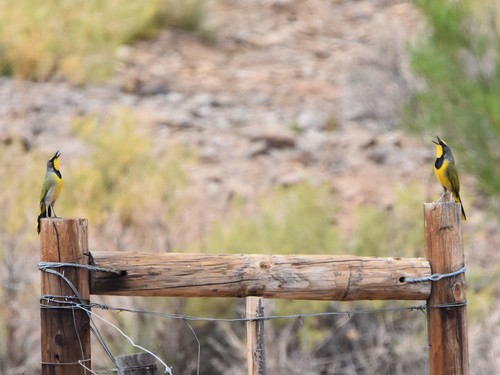
キノドミドリヤブモズ (Telophorus zeylonus) キノドミドリヤブモズ
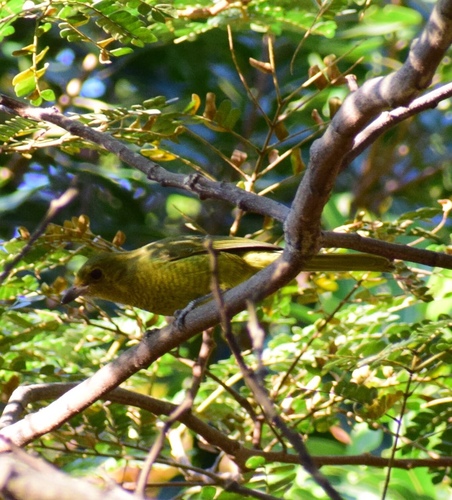
オリーブミドリヤブモズ (Chlorophoneus olivaceus) オリーブミドリヤブモズ

メディア

読み込み中…

要点

The most reliable field mark to separate Bokmakierie from Olive Bushshrike is the Bokmakierie’s bold black collar (gorget) across the bright yellow underparts, which is absent in Olive Bushshrike. Bokmakierie is also much larger and bulkier, with a heavier, strongly hooked bill and a distinctive yellow tip to the black tail. Juvenile Bokmakierie lack the black collar but are still larger and duller below than Olive Bushshrike. Olive Bushshrike is smaller, slimmer, and lacks any black collar, showing more uniform olive-green upperparts and yellow underparts. Both species can be shy, but Bokmakierie is especially skulking, often staying low in open scrub or gardens.

識別のコツ

  1. Black Collar (Gorget): Adult Bokmakierie has a broad black collar across the yellow underparts, extending up the neck sides and through the eye to the bill. Olive Bushshrike never shows a black collar; its underparts are plain yellowish.
  2. Yellow-tipped Black Tail: Bokmakierie’s tail is black with a conspicuous yellow tip, visible both perched and in flight. Olive Bushshrike lacks this feature; its tail is more uniformly colored.
  3. Size and Structure: Bokmakierie is much larger and bulkier, with a heavy, hooked bill and stouter body. Olive Bushshrike is smaller, slimmer, and more delicate, with a finer bill.
  4. Head Pattern: Bokmakierie has a grey head with a yellow supercilium and strong black through the eye. Olive Bushshrike’s face is less contrasting, lacking the bold supercilium and black facial markings.
  5. Juvenile Plumage: Juvenile Bokmakierie lacks the black collar and is duller grey-green below, but remains larger and bulkier than Olive Bushshrike. Juvenile Olive Bushshrike is not described, but the absence of a black collar remains a key difference.
  6. Underparts Color: Both species have yellow underparts, but Bokmakierie’s are brighter and more sharply set off by the black collar. Olive Bushshrike’s yellow is less intense and more blended with the olive upperparts.
  7. Upperparts: Both are olive-green above, but Bokmakierie’s contrast with the yellow underparts and black collar is much stronger. Olive Bushshrike is more uniformly colored overall.
  8. Bill Shape: Bokmakierie’s bill is heavier and more strongly hooked, suited to its predatory habits. Olive Bushshrike’s bill is finer and less robust.
  9. Leg Color: Bokmakierie has blue-grey legs and feet, which may be seen at close range. Leg color for Olive Bushshrike is not specified, but is unlikely to be as distinctive.
  10. Behavior: Bokmakierie is especially skulking and shy, often staying low in dense scrub or hedges, even in open country. Olive Bushshrike is more typical of forest or dense thicket and may be more active in the mid-story.
  11. Habitat: In open, dry, or urban habitats, Bokmakierie is much more likely. In dense forest or moist thicket, Olive Bushshrike is expected.
  12. Vocalizations: Bokmakierie’s loud, whistled duet ('bok-bok-mak-kik') is diagnostic. If heard, it rules out Olive Bushshrike.
  13. Perched vs. Flight Views: The yellow-tipped black tail of Bokmakierie can be a useful flight mark; Olive Bushshrike’s tail is less distinctive.
  14. Sexes: Both species are similar between sexes, so all marks apply to both males and females.
  15. Pitfalls: Juvenile Bokmakierie without a black collar can be confused with Olive Bushshrike, but size, structure, and tail pattern still separate them. In poor light, the black collar may be hard to see, so use multiple marks.

大きさ

Bokmakierie is nearly twice as heavy as Olive Bushshrike (63g vs 33g), and is also longer (22–23 cm vs smaller, not specified for Olive Bushshrike but known to be smaller from comparative sources). In the field, Bokmakierie appears bulkier, with a stouter body and a heavier, more powerful bill. Olive Bushshrike is noticeably lighter, slimmer, and more delicate overall.

羽色

Adult Bokmakierie is olive-green above with a striking bright yellow underbody and a broad black collar (gorget) separating the throat from the breast, which continues up the neck sides through the eye to the bill. The head is grey with a yellow supercilium, and the tail is black with a conspicuous yellow tip. Juvenile Bokmakierie are duller grey-green below and lack the black collar, but still show the overall olive-green upperparts and yellowish underparts. Olive Bushshrike, by contrast, lacks any black collar at all; it is more uniformly olive-green above and yellowish below, without the sharp contrast or the yellow-tipped black tail. The face pattern is less bold, lacking the Bokmakierie’s strong supercilium and facial black. These differences hold for both perched and brief flight views, though Bokmakierie’s tail tip can be a useful flight clue. No age-specific wing or flight pattern marks are described for either species.

行動

Bokmakierie is described as shy and skulking, often keeping low in dense scrub or hedges, though it may be found in open habitats and even urban parks. It is less likely to perch conspicuously than true shrikes. Olive Bushshrike’s behavior is not detailed in the notes, but it is generally less bulky and may be more active in the mid-canopy or forest edge, matching its habitat preferences. Both may be difficult to see well, but Bokmakierie’s tendency to stay low and hidden is notable.

生息環境

Bokmakierie favors open habitats such as karoo scrub, fynbos, and urban parks and gardens, often in drier or more open country. Olive Bushshrike is found in a wider range of wooded habitats, including subtropical or tropical dry and moist forests, montane forest, and shrubland, generally preferring denser, more forested or well-vegetated areas. Overlap can occur in some regions, but Bokmakierie is more typical of open, drier, or human-modified landscapes, while Olive Bushshrike is more tied to forest and dense thicket.

声

Bokmakierie is known for its loud, whistled calls, often given in antiphonal duet, with the classic 'bok-bok-mak-kik' phrase. Olive Bushshrike’s vocalizations are not described in the notes, but Bokmakierie’s distinctive duet and loud, repeated phrases are a strong clue. If you hear the characteristic Bokmakierie call, it is diagnostic.

より良い説明を送る

比較と同じ項目を使ってください。文章はすぐに公開されます。

The most reliable field mark to separate Bokmakierie from Olive Bushshrike is the Bokmakierie’s bold black collar (gorget) across the bright yellow underparts, which is absent in Olive Bushshrike. Bokmakierie is also much larger and bulkier, with a heavier, strongly hooked bill and a distinctive yellow tip to the black tail. Juvenile Bokmakierie lack the black collar but are still larger and duller below than Olive Bushshrike. Olive Bushshrike is smaller, slimmer, and lacks any black collar, showing more uniform olive-green upperparts and yellow underparts. Both species can be shy, but Bokmakierie is especially skulking, often staying low in open scrub or gardens.

  1. Black Collar (Gorget): Adult Bokmakierie has a broad black collar across the yellow underparts, extending up the neck sides and through the eye to the bill. Olive Bushshrike never shows a black collar; its underparts are plain yellowish.
  2. Yellow-tipped Black Tail: Bokmakierie’s tail is black with a conspicuous yellow tip, visible both perched and in flight. Olive Bushshrike lacks this feature; its tail is more uniformly colored.
  3. Size and Structure: Bokmakierie is much larger and bulkier, with a heavy, hooked bill and stouter body. Olive Bushshrike is smaller, slimmer, and more delicate, with a finer bill.
  4. Head Pattern: Bokmakierie has a grey head with a yellow supercilium and strong black through the eye. Olive Bushshrike’s face is less contrasting, lacking the bold supercilium and black facial markings.
  5. Juvenile Plumage: Juvenile Bokmakierie lacks the black collar and is duller grey-green below, but remains larger and bulkier than Olive Bushshrike. Juvenile Olive Bushshrike is not described, but the absence of a black collar remains a key difference.
  6. Underparts Color: Both species have yellow underparts, but Bokmakierie’s are brighter and more sharply set off by the black collar. Olive Bushshrike’s yellow is less intense and more blended with the olive upperparts.
  7. Upperparts: Both are olive-green above, but Bokmakierie’s contrast with the yellow underparts and black collar is much stronger. Olive Bushshrike is more uniformly colored overall.
  8. Bill Shape: Bokmakierie’s bill is heavier and more strongly hooked, suited to its predatory habits. Olive Bushshrike’s bill is finer and less robust.
  9. Leg Color: Bokmakierie has blue-grey legs and feet, which may be seen at close range. Leg color for Olive Bushshrike is not specified, but is unlikely to be as distinctive.
  10. Behavior: Bokmakierie is especially skulking and shy, often staying low in dense scrub or hedges, even in open country. Olive Bushshrike is more typical of forest or dense thicket and may be more active in the mid-story.
  11. Habitat: In open, dry, or urban habitats, Bokmakierie is much more likely. In dense forest or moist thicket, Olive Bushshrike is expected.
  12. Vocalizations: Bokmakierie’s loud, whistled duet ('bok-bok-mak-kik') is diagnostic. If heard, it rules out Olive Bushshrike.
  13. Perched vs. Flight Views: The yellow-tipped black tail of Bokmakierie can be a useful flight mark; Olive Bushshrike’s tail is less distinctive.
  14. Sexes: Both species are similar between sexes, so all marks apply to both males and females.
  15. Pitfalls: Juvenile Bokmakierie without a black collar can be confused with Olive Bushshrike, but size, structure, and tail pattern still separate them. In poor light, the black collar may be hard to see, so use multiple marks.

Bokmakierie is nearly twice as heavy as Olive Bushshrike (63g vs 33g), and is also longer (22–23 cm vs smaller, not specified for Olive Bushshrike but known to be smaller from comparative sources). In the field, Bokmakierie appears bulkier, with a stouter body and a heavier, more powerful bill. Olive Bushshrike is noticeably lighter, slimmer, and more delicate overall.

Adult Bokmakierie is olive-green above with a striking bright yellow underbody and a broad black collar (gorget) separating the throat from the breast, which continues up the neck sides through the eye to the bill. The head is grey with a yellow supercilium, and the tail is black with a conspicuous yellow tip. Juvenile Bokmakierie are duller grey-green below and lack the black collar, but still show the overall olive-green upperparts and yellowish underparts. Olive Bushshrike, by contrast, lacks any black collar at all; it is more uniformly olive-green above and yellowish below, without the sharp contrast or the yellow-tipped black tail. The face pattern is less bold, lacking the Bokmakierie’s strong supercilium and facial black. These differences hold for both perched and brief flight views, though Bokmakierie’s tail tip can be a useful flight clue. No age-specific wing or flight pattern marks are described for either species.

Bokmakierie is described as shy and skulking, often keeping low in dense scrub or hedges, though it may be found in open habitats and even urban parks. It is less likely to perch conspicuously than true shrikes. Olive Bushshrike’s behavior is not detailed in the notes, but it is generally less bulky and may be more active in the mid-canopy or forest edge, matching its habitat preferences. Both may be difficult to see well, but Bokmakierie’s tendency to stay low and hidden is notable.

Bokmakierie favors open habitats such as karoo scrub, fynbos, and urban parks and gardens, often in drier or more open country. Olive Bushshrike is found in a wider range of wooded habitats, including subtropical or tropical dry and moist forests, montane forest, and shrubland, generally preferring denser, more forested or well-vegetated areas. Overlap can occur in some regions, but Bokmakierie is more typical of open, drier, or human-modified landscapes, while Olive Bushshrike is more tied to forest and dense thicket.

Bokmakierie is known for its loud, whistled calls, often given in antiphonal duet, with the classic 'bok-bok-mak-kik' phrase. Olive Bushshrike’s vocalizations are not described in the notes, but Bokmakierie’s distinctive duet and loud, repeated phrases are a strong clue. If you hear the characteristic Bokmakierie call, it is diagnostic.

変更を破棄しますか?

保存していない編集があります。今離れると失われます。

キノドミドリヤブモズ · オリーブミドリヤブモズ · 苦手な鳥