

Motmot

アオヤマガモ 対 マミジロカルガモ

Hymenolaimus malacorhynchos 対 Anas superciliosa

アオヤマガモとマミジロカルガモのクイズ
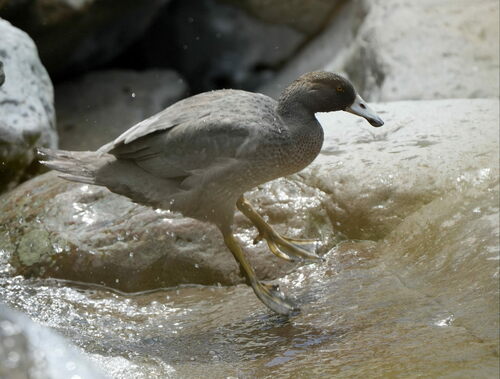
アオヤマガモ (Hymenolaimus malacorhynchos) アオヤマガモ
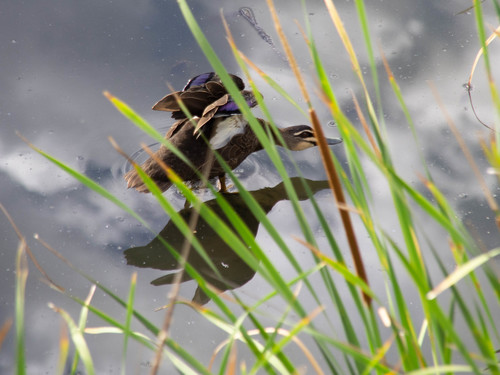
マミジロカルガモ (Anas superciliosa) マミジロカルガモ

メディア

読み込み中…

要点

アオヤマガモとマミジロカルガモを区別する最も信頼できるフィールドマークは全体の羽色です:アオヤマガモは均一な暗いスレートグレーで、微妙な緑がかった光沢と栗色の斑点のある胸を持ち、マミジロカルガモは対照的な淡い顔に大胆な暗い目のストライプと飛行中の緑のスペクルムを示します。幼鳥のアオヤマガモは顔のストライプがなく、オーバーサイズの暗い灰色の脚と足を持ち、より典型的なひな鳥の外観を持つマミジロカルガモとは異なります。くちばしの構造と色も特徴的で、アオヤマガモはくちばしの先端に独特の半円形の柔らかいフラップを示し、ストレス下で色が変化します。飛行中または休息中、アオヤマガモの均一性と強い顔のパターンの欠如が重要であり、マミジロカルガモは常に強い眉斑と顔のコントラストを示します。

識別のコツ

  1. Facial pattern: マミジロカルガモは常に大胆な暗い目のストライプ(眉斑)と暗い冠を持つ淡い顔を示します;アオヤマガモは顔のストライプや淡い部分を示さず、均一なスレートグレーに見えます。これはすべての年齢と距離で最も信頼できるマークです。
  2. Overall color: アオヤマガモは緑がかった頭の光沢と栗色の斑点のある胸を持つ暗いスレートグレーです;マミジロカルガモは体が暗いですが、頭は明らかに淡く、強い顔のコントラストがあります。
  3. Speculum and wing pattern: 飛行中、マミジロカルガモは緑のスペクルムと淡いアンダーウイングを示します;アオヤマガモは白い先端の外側の二次羽と黒い縁取りの内側の二次羽を持ちますが、強いスペクルムや淡いアンダーウイングはありません。これは飛んでいるか羽ばたいている鳥に最も役立ちます。
  4. Bill structure: アオヤマガモは近距離で見える独特の半円形の柔らかいフラップを持ち、興奮するとくちばしがピンク色に変わることがあります。マミジロカルガモはフラップのない標準的なくちばしを持ち、色の変化はありません。
  5. Legs and feet: 幼鳥のアオヤマガモはオーバーサイズの暗い灰色の脚と足を持ちます;マミジロカルガモの幼鳥はより典型的な比率と色合いを持っています。
  6. Iris color: 幼鳥のアオヤマガモは灰色の虹彩を持ち、成鳥では黄色に変わります;マミジロカルガモの虹彩の色は区別には役立ちません。
  7. Size: マミジロカルガモはより大きく、長いですが、これは直接比較または手に持ったときにのみ役立ちます。
  8. Behavior: アオヤマガモは孤独またはペアで、非常に領土意識が強く、急流の川でのみ見られます;マミジロカルガモは群れで行動し、さまざまな湿地を利用します。
  9. Habitat: アオヤマガモは岩の多い森林の山の川に限定されています;マミジロカルガモは低地の湖や都市の池を含むほぼすべての湿地に見られます。
  10. Voice: アオヤマガモは高音の「ウィオ」ホイッスルを出します(主にオス);マミジロカルガモは大きく、速いクワックを出します(主にメス)。ホイッスルが聞こえたらアオヤマガモ、クワックはマミジロカルガモを示します。
  11. Chestnut breast: アオヤマガモは胸に栗色の斑点を示します(メスでは少ない)、マミジロカルガモにはありません。
  12. Feet color: アオヤマガモは暗い灰色の脚と足を持ちます;マミジロカルガモの脚は特に記述されていませんが、診断には役立ちません。
  13. Aggressive display: アオヤマガモは興奮するとピンクのくちばしを示すことがあり、これは地域のカモの中で独特です。
  14. Flight jizz: アオヤマガモは飛行中、均一に暗く、淡いアンダーウイングや強いスペクルムはありません;マミジロカルガモは淡いアンダーウイングと緑のスペクルムを示し、飛行中に目立ちます。
  15. Pitfalls: サイズや一般的な暗さに頼らないでください;常に顔のストライプとスペクルムを確認してください。幼鳥のアオヤマガモは特に暗いカモと混同しやすいですが、淡い顔や目のストライプはありません。

大きさ

マミジロカルガモは2種の中で大きく、平均約1035gで、アオヤマガモは832.5gです。マミジロカルガモはアオヤマガモよりも長く(54–61cm対50–55cm)、この違いはフィールドでは微妙で、姿勢や距離によって簡単に隠されます。両種は性別によるサイズの二形性を示し、オスはメスよりも大きいです。サイズだけでは、両種が並んでいない限り、信頼できる区別にはなりません。

羽色

行動

アオヤマガモは非常に領土意識が強く、特に繁殖期にはほとんど常にペアまたは単独で急流の山の川に見られます。彼らは強力な泳ぎ手であり、登るのが得意で、急流の岩の上に止まっているのがよく見られます。マミジロカルガモは社交的で、群れで行動し、より広範な湿地生息地を利用します。マミジロカルガモは水面をひっくり返して餌を食べますが、アオヤマガモは急流での餌取りに特化しており、時には岩の間で潜ったり、ついばんだりします。アオヤマガモの領土防衛には攻撃的な姿勢と声が含まれ、マミジロカルガモは混成種の群れやマガモと一緒に見られることが多いです。

生息環境

アオヤマガモはニュージーランドに厳密に固有で、森林または山岳地帯の急流の岩の多い川に限定されています。湖、池、または流れの遅い水では決して見られません。マミジロカルガモはオーストラレーシアと太平洋全体に広く分布し、湖、池、川、河口、さらには都市公園を含むほぼすべての湿地を利用します。ニュージーランドでは、マミジロカルガモは低地または開水域で見られる可能性が高く、アオヤマガモは遠隔の高地の川に制限されています。

声

アオヤマガモのオスは特に朝に特徴的な高音の「ウィオ」ホイッスルを出し、メスは静かです。マミジロカルガモのメスは大きく、騒々しいクワックを出し、マガモに似ていますが、より速く、音量が減少します。声はよく聞こえれば役立ちます:ホイッスルの「ウィオ」はアオヤマガモの診断に役立ち、クワックはマミジロカルガモを示します。

より良い説明を送る

比較と同じ項目を使ってください。文章はすぐに公開されます。

The most reliable field mark to separate Blue Duck from Pacific Black Duck is the overall plumage: Blue Duck is a uniform dark slate-grey with a subtle greenish sheen and chestnut-flecked breast, while Pacific Black Duck shows a contrasting pale face with bold dark eye-stripes and a green speculum in flight. Juvenile Blue Ducks lack the facial stripes and have oversized dark grey legs and feet, unlike the more typical duckling appearance of Pacific Black Duck. Bill structure and color are also distinctive, with Blue Duck showing a unique semicircular soft flap at the bill tip and color changes under stress. In flight or at rest, the Blue Duck's uniformity and lack of strong facial pattern are key, whereas Pacific Black Duck always shows a strong supercilium and facial contrast.

  1. Facial pattern: Pacific Black Duck always shows a pale face with a bold dark eye-stripe (supercilium) and dark crown; Blue Duck never shows any facial stripes or pale areas, appearing uniform slate-grey. This is the single most reliable mark at all ages and distances.
  2. Overall color: Blue Duck is dark slate-grey with a greenish head sheen and chestnut-flecked breast; Pacific Black Duck is darker-bodied but with a distinctly paler head and strong facial contrast.
  3. Speculum and wing pattern: In flight, Pacific Black Duck shows a green speculum and pale underwing; Blue Duck has white-tipped outer secondaries and black-margined inner secondaries, but no strong speculum or pale underwing. This is most useful on flying or flapping birds.
  4. Bill structure: Blue Duck has a unique semicircular soft flap at the bill tip, visible at close range, and the bill can turn pink when agitated. Pacific Black Duck has a standard duck bill with no flap and no color change.
  5. Legs and feet: Juvenile Blue Ducks have oversized, dark grey legs and feet; Pacific Black Duck juveniles have more typical proportions and coloration.
  6. Iris color: Juvenile Blue Ducks have a grey iris, turning yellow in adults; Pacific Black Duck iris color is not distinctive for separation.
  7. Size: Pacific Black Duck is larger and longer, but this is only useful with direct comparison or in hand.
  8. Behavior: Blue Duck is solitary or in pairs, fiercely territorial, and found only on fast-flowing rivers; Pacific Black Duck is gregarious, often in flocks, and uses a wide variety of wetlands.
  9. Habitat: Blue Duck is confined to rocky, forested mountain rivers in New Zealand; Pacific Black Duck is found in almost any wetland, including lowland lakes and urban ponds.
  10. Voice: Blue Duck gives a high-pitched 'whio' whistle (mainly males); Pacific Black Duck gives a loud, rapid quack (mainly females). If you hear a whistle, it's Blue Duck; a quack points to PBD.
  11. Chestnut breast: Blue Duck shows chestnut flecking on the breast (less in females), absent in Pacific Black Duck.
  12. Feet color: Blue Duck has dark grey legs and feet; PBD's are not specifically described but are not diagnostic.
  13. Aggressive display: Blue Duck may show a pink bill when agitated, which is unique among ducks in the region.
  14. Flight jizz: Blue Duck in flight appears uniformly dark with no pale underwing or strong speculum; PBD shows a pale underwing and green speculum, making it flashier in flight.
  15. Pitfalls: Do not rely on size or general darkness; always check for facial stripes and speculum. Juvenile Blue Ducks are especially easy to confuse with dark ducks, but lack any pale face or eye-stripe.

Pacific Black Duck is the larger of the two, averaging about 1035 g compared to the Blue Duck's 832.5 g. PBD is also longer (54–61 cm) than Blue Duck (50–55 cm), but this difference is subtle in the field and easily masked by posture or distance. Both species show some sexual size dimorphism, with males larger than females. Size alone is not a reliable separator unless both species are side by side.

  • Juvenile/immature birds: Blue Duck juveniles are slate-grey all over, with oversized dark grey legs and feet and a grey iris; they lack any facial stripes or pale areas. Pacific Black Duck juveniles already show the pale face and strong dark eye-stripes, with a green speculum visible in flight and pale underwing.
  • Adults: Blue Duck adults remain slate-grey with a greenish sheen on the head and chestnut-flecked breast, and have white-tipped outer secondaries and black-margined inner secondaries (not a strong speculum). The bill is pale grey but can turn pink when agitated. Pacific Black Duck adults have a dark body, but the head is distinctly paler with a dark crown and bold dark eye-stripes (supercilium), plus a green speculum and pale underwing in flight. All ages of PBD show this facial pattern, which is never present in Blue Duck.
  • Sexes: Both species have similar plumage between sexes, though female Blue Ducks have slightly less chestnut on the breast.

Blue Duck is highly territorial, especially during breeding, and is almost always seen in pairs or alone on fast-flowing mountain rivers. They are strong swimmers and climbers, often seen perching on rocks in rapids. Pacific Black Duck is sociable, often in flocks, and uses a wider range of wetland habitats. PBD feeds by upending, while Blue Duck specializes in feeding in fast currents, sometimes diving or dabbling among rocks. Blue Duck's territorial defense includes aggressive postures and vocalizations, while Pacific Black Duck is more likely to be seen in mixed-species groups or with Mallards.

Blue Duck is strictly endemic to New Zealand and confined to fast-flowing, rocky rivers in forested or mountainous areas. It is never found on lakes, ponds, or slow-moving water. Pacific Black Duck is widely distributed across Australasia and the Pacific, using almost any wetland, including lakes, ponds, rivers, estuaries, and even urban parks. In New Zealand, PBD is much more likely in lowland or open water, while Blue Duck is restricted to remote, upland rivers.

Blue Duck males give a distinctive high-pitched 'whio' whistle, especially in the morning, while females are quieter. Pacific Black Duck females produce a loud, raucous quack, similar to a Mallard but more rapid and decreasing in volume. Voice is useful if heard well: a whistled 'whio' is diagnostic for Blue Duck, while quacking points to PBD.

変更を破棄しますか?

保存していない編集があります。今離れると失われます。

アオヤマガモ · マミジロカルガモ · 苦手な鳥