

Motmot

アメリカクロウミツバメ 対 コウミツバメ

Hydrobates melania 対 Hydrobates microsoma

アメリカクロウミツバメとコウミツバメのクイズ
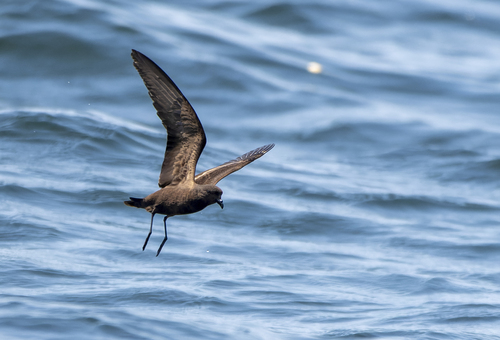
アメリカクロウミツバメ (Hydrobates melania) アメリカクロウミツバメ
コウミツバメ (Hydrobates microsoma) コウミツバメ

メディア

読み込み中…

要点

アメリカクロウミツバメとコウミツバメを区別する最も信頼できる方法はサイズです:アメリカクロウミツバメははるかに大きく、がっしりしており、翼幅が著しく長く、体重も重いです。現場では、アメリカクロウミツバメはコウミツバメのほぼ2倍の長さに見え、コウミツバメは世界で最も小さなウミツバメです。両種は遠くから見ると全体が暗いですが、特に飛行中の構造的な違いが際立っています:アメリカクロウミツバメは幅の広い翼とより緩やかで滑空するような飛行を示し、コウミツバメは小さく、狭い翼と速いコウモリのような羽ばたきを持っています。もし不安な場合は、微妙な羽毛の詳細を探す前に、全体のサイズと比率に焦点を当ててください。

識別のコツ

  1. サイズは最も信頼できるフィールドマークです:アメリカクロウミツバメはコウミツバメのほぼ2倍の長さで、はるかに長い翼幅と重い体を持っています。特に鳥が一緒に見られる場合や他のウミツバメと一緒にいる場合は、これを最初のチェックとして使用してください。
  2. 飛行スタイルが著しく異なります:アメリカクロウミツバメは遅くて深い羽ばたきをし、フラップの間に滑空することが多く、安定した目的意識のある印象を与えます。コウミツバメは非常に速く、羽ばたきが軽やかで、滑空することはほとんどなく、コウモリやツバメのように見えます。
  3. 翼の形と比率:アメリカクロウミツバメは体に対して幅広く長い翼を持っているのに対し、コウミツバメの翼は狭く短く、その小さなサイズに合っています。
  4. 体格と印象:アメリカクロウミツバメは頑丈で細長く見え、よりしっかりした体と長い尾を持っています。コウミツバメは優雅でコンパクト、短い尾を持っています。
  5. 羽毛は強い区別要因ではありません:両者は上面と下面が均一に暗く、年齢や季節に関係なく、特に目立つ淡色のパネル、白い尾、または翼のバーはありません。
  6. くちばしと頭:情報源には明確な違いは記載されていませんが、アメリカクロウミツバメはそのサイズのためにやや重いくちばしに見えることがあります;これは微妙で、海上では信頼できません。
  7. 文脈と季節:コウミツバメは夏の終わりと秋に南カリフォルニア沖で最も見られます。アメリカクロウミツバメはより広範囲で季節を超えて存在することができますが、両者は広く重なります。
  8. 混合群れ:両種が存在する場合、サイズの差は明らかです—コウミツバメの最も小さく、羽ばたきの激しい個体を探し、アメリカクロウミツバメの最も大きく、滑空する鳥を探してください。
  9. 陸上で:両者は歩いているところはほとんど見られませんが、コウミツバメは特に不器用で、巣穴に向かって移動することに限られています。これは海上では有用なフィールドマークではありません。
  10. 年齢特有の翼のパターンはありません:どちらの種も特有の幼鳥や未成熟の上翼のマークを示さないため、年齢は区別の要因ではありません。
  11. 性差はありません:両種のオスとメスは似ているため、性別は識別に役立ちません。
  12. 音声フィールドマークはありません:情報源には海上での区別のための診断的な鳴き声や飛行音は記載されていません。
  13. 落とし穴—距離と光:悪い光や遠距離では、両種は小さく暗い鳥に見えることがあります。常にサイズと飛行スタイルを主要な手がかりとして使用してください。
  14. 落とし穴—単独の鳥:1羽だけが見られる場合は、知られている種と比較するか、鳥の飛行スタイルと比率によってサイズを判断し、単に暗さだけで判断しないでください。
  15. 要約のヒント:ほとんどすべてのフィールド状況で、サイズと飛行スタイルから始めてください—もし鳥が小さく、羽ばたきが激しく、コウモリのように見えるなら、それはコウミツバメです;もしそれが大きく、滑空し、安定しているなら、それはアメリカクロウミツバメです。

大きさ

アメリカクロウミツバメはかなり大きいです:長さ23 cm、翼幅46–51 cm、体重約61.5 g [wikipedia][wikidata]。コウミツバメは比較すると非常に小さく、長さはわずか13–15 cm、翼幅は32 cmで、同じ目の中で最も小さいメンバーです [wikipedia]。一緒に見られる場合や他のウミツバメと一緒にいる場合、アメリカクロウミツバメははるかにがっしりしており、翼が長く見え、コウミツバメは明らかに小さくて繊細です。このサイズの違いは、遠くからでも混合群れの中でも明らかです。

羽色

両種は一般的に全体が暗く、利用可能なメモによると強い対照的な羽毛のマークは欠けています。情報源には、どちらの種についても年齢特有の上翼パターンの違いは記載されていません—両者は上面と下面が均一に暗く、幼鳥や成鳥において淡色のパネル、白い尾、または対照的な翼のバーの言及はありません。したがって、羽毛だけではほとんどのフィールド状況で信頼できる区別要因ではありません;観察者はサイズと構造にもっと依存すべきです。

行動

アメリカクロウミツバメは通常、より安定した浮力のある飛行を示し、長い滑空と遅くて深い羽ばたきを持ち、その大きさを反映しています。コウミツバメははるかに小さいため、速くて羽ばたきが軽やかで、ほぼコウモリのような飛行をし、水面近くを飛ぶことが多いです。両種は飛行中に水から食べ物をついばむことで餌を取りますが、コウミツバメはしばしばより慌ただしく機敏に見え、アメリカクロウミツバメはより計画的で不規則性が少ないように見えます。陸上では、両者は不器用に歩きますが、これは海上ではほとんど観察されません。

生息環境

両種は外洋性で、特に北アメリカの太平洋沿岸沖で見ることができます。コウミツバメはバハ・カリフォルニアとカリフォルニア湾の島々で繁殖し、夏の終わりと秋に南カリフォルニア沖で最もよく見られます [wikipedia]。アメリカクロウミツバメは同様の範囲を持っていますが、一般的により広範囲で、北の方まで見られることがあります。両者は島でコロニーを作って巣を作りますが、これらの詳細は海上での識別にはあまり役立たないでしょう。

より良い説明を送る

比較と同じ項目を使ってください。文章はすぐに公開されます。

The most reliable way to separate Black Storm-Petrel from Least Storm-Petrel is by size: Black is much larger and bulkier, with a notably longer wingspan and heavier build. In the field, Black Storm-Petrel appears almost twice the length of Least, which is the smallest storm-petrel in the world. Both species are all-dark at a distance, but structural differences—especially in flight—are striking: Black Storm-Petrel shows broader wings and a more languid, gliding flight, while Least Storm-Petrel is tiny, with narrow wings and a rapid, bat-like flutter. If you’re unsure, focus on overall size and proportions before looking for subtle plumage details.

  1. Size is the single most reliable field mark: Black Storm-Petrel is nearly twice the length of Least, with a much longer wingspan and heavier build. Use this as your first check, especially when birds are seen together or with other storm-petrels.
  2. Flight style differs markedly: Black Storm-Petrel has slow, deep wingbeats and often glides between flaps, giving a steady, purposeful impression. Least Storm-Petrel has very rapid, fluttery wingbeats and rarely glides, appearing more like a bat or swallow.
  3. Wing shape and proportions: Black Storm-Petrel shows broad, long wings relative to its body, while Least Storm-Petrel’s wings are narrow and short, matching its tiny size.
  4. Bulk and jizz: Black Storm-Petrel looks robust and elongated, with a more substantial body and longer tail. Least Storm-Petrel appears dainty, compact, and short-tailed.
  5. Plumage is not a strong separator: Both are uniformly dark above and below, with no distinctive pale panels, white rump, or wing bars in any age or season according to available sources.
  6. Bill and head: No clear differences are described in the sources, but Black Storm-Petrel may appear to have a slightly heavier bill due to its size; this is subtle and unreliable at sea.
  7. Context and season: Least Storm-Petrel is most likely offshore of southern California in late summer and autumn. Black Storm-Petrel can be present over a broader range and season, but both overlap widely.
  8. Mixed flocks: When both species are present, the size gap is obvious—look for the smallest, most fluttery individuals for Least, and the largest, gliding birds for Black.
  9. On land: Both are rarely seen walking, but Least Storm-Petrel is especially awkward, limited to shuffling to its burrow. This is not a useful field mark at sea.
  10. No age-specific wing patterns: Neither species shows distinctive juvenile or immature upperwing marks, so age is not a factor in separation.
  11. No sexual dimorphism: Males and females look alike in both species, so sex does not aid identification.
  12. No vocal field marks: The sources do not describe any diagnostic calls or flight calls for separation at sea.
  13. Pitfall—distance and light: In poor light or at great distance, both species can appear as small, dark birds. Always use size and flight style as your primary clues.
  14. Pitfall—solo birds: When only one bird is seen, judge size by comparing to known species or by the bird’s flight style and proportions, not just darkness.
  15. Summary tip: In almost all field situations, start with size and flight style—if the bird looks tiny, fluttery, and bat-like, it is Least Storm-Petrel; if it is larger, gliding, and steady, it is Black Storm-Petrel.

Black Storm-Petrel is significantly larger: 23 cm long with a 46–51 cm wingspan and a body mass of about 61.5 g [wikipedia][wikidata]. Least Storm-Petrel is tiny by comparison, only 13–15 cm in length with a 32 cm wingspan, and is the smallest member of its order [wikipedia]. When seen together or with other storm-petrels, Black appears much bulkier and longer-winged, while Least is noticeably petite and delicate. This size difference is often obvious even at a distance or in mixed flocks.

Both species are generally dark overall, lacking strong contrasting plumage marks according to the available notes. No age-specific or upperwing pattern differences are described in the sources for either species—both are uniformly dark above and below, with no mention of pale panels, white rump, or contrasting wing bars in juveniles or adults. Therefore, plumage alone is not a reliable separator in most field situations; observers should rely more on size and structure.

Black Storm-Petrel typically shows a steadier, more buoyant flight with longer glides and slower, deeper wingbeats, reflecting its larger size. Least Storm-Petrel, being much smaller, has a rapid, fluttery, almost bat-like flight, often close to the water surface. Both species feed by picking food from the water while in flight, but Least often appears more frenetic and agile, while Black seems more measured and less erratic. On land, both are awkward walkers, but this is rarely observed at sea.

Both species are pelagic and can be seen offshore, especially off the Pacific coast of North America. Least Storm-Petrel breeds on islands off Baja California and the Gulf of California, and is most often seen off southern California in late summer and autumn [wikipedia]. Black Storm-Petrel has a similar range but is generally more widespread and may be seen farther north. Both are colonial nesters on islands, but these details are unlikely to help with at-sea identification.

変更を破棄しますか?

保存していない編集があります。今離れると失われます。

アメリカクロウミツバメ · コウミツバメ · 苦手な鳥