

Motmot

ミツユビカモメ 対 クビワカモメ

Rissa tridactyla 対 Xema sabini

ミツユビカモメとクビワカモメのクイズ
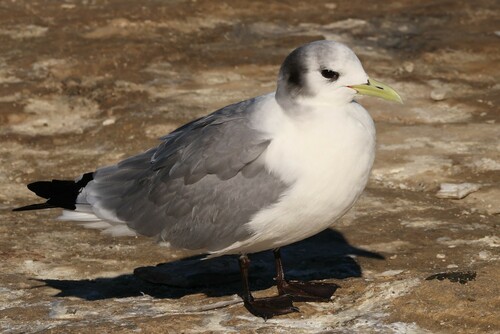
ミツユビカモメ (Rissa tridactyla) ミツユビカモメ
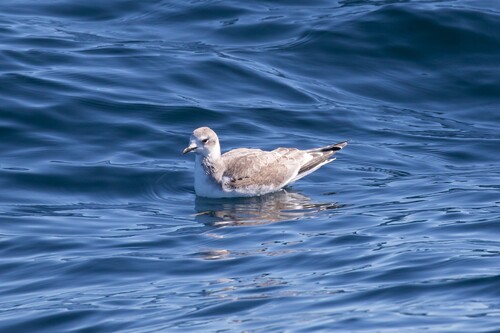
クビワカモメ (Xema sabini) クビワカモメ

メディア

読み込み中…

要点

ブラックレッグキティウェイクとサビンカモメを分ける最も信頼できる方法は、特に飛行中や幼鳥の間で、上翼のパターンによるものです。幼鳥のキティウェイクは翼に大胆な黒い「W」を示し、幼鳥のサビンカモメは灰色の代わりに茶色を使った三色の翼と黒い尾帯を持っています。成鳥は、くちばしの色と構造、翼端と尾の形によってより簡単に分けられます。キティウェイクはより大きく、重く、より頑丈で真っ直ぐなくちばしを持ち、サビンカモメはより華奢で、短く黒と黄色の先端を持つくちばしと明確に分かれた尾を持っています。両種は距離があると混同されることがありますが、翼のパターン、尾の形、くちばしの詳細に注意を払うことで、ほとんどのフィールド識別が解決されます。

識別のコツ

  1. 幼鳥の翼のパターン: 幼鳥のブラックレッグキティウェイクの上翼には大胆な黒い「W」を探してください。サビンカモメの幼鳥はこれがなく、代わりに茶色を使った三色の翼と明確に定義された黒い尾帯を示します。
  2. 尾の形: すべての年齢のサビンカモメは明確に分かれた尾を持ち、特に飛行中に明らかです。キティウェイクの尾は四角またはわずかに丸みを帯びており、深く分かれていることはありません。
  3. くちばしの色と形: 成鳥のキティウェイクは真っ直ぐな黄色のくちばしを持ち(冬は暗い色)、サビンカモメは黒い基部と黄色の先端を持つ短くて細いくちばしを持っています。幼鳥のキティウェイクのくちばしは真っ黒で、サビンカモメの幼鳥のくちばしも暗いですが、より短くて繊細です。
  4. 足の色: キティウェイクは黒い足を持ち(まれにピンクがかることもあります)、サビンカモメの足は暗いですが、わずかに明るく見えることがあります。飛行中には常に見えるわけではありません。
  5. 成鳥の翼のパターン: 成鳥のキティウェイクは均一な灰色の上翼と固体の黒い翼端を示します。サビンカモメの成鳥は、黒い外側の一次羽、白い内側の一次羽/二次羽、淡い灰色の風切羽を持つ印象的な三色の翼を持っています。
  6. 頭のパターン(繁殖期): 繁殖羽毛のサビンカモメの成鳥は、薄い黒い襟のある暗い灰色のフードを持っています。キティウェイクの頭は夏に純白で、フードや襟はありません。
  7. 頭のパターン(非繁殖期): 冬のキティウェイクは目の後ろに暗い汚れと淡い灰色の後頸部の襟を示します。サビンカモメはフードを失い、より平坦な頭に見えます。
  8. サイズと構造: キティウェイクははるかにがっしりしており、長い翼を持っています。サビンカモメは小柄で、長くて細い翼を持ち、よりトンビのような印象を与えます。
  9. 飛行スタイル: キティウェイクは深く安定した翼の打撃で飛びます。サビンカモメはより浮遊感があり、敏捷で、しばしばトンビを思い起こさせます。
  10. 尾帯: 両方の幼鳥は黒い尾帯を持っていますが、サビンカモメの方が狭く、尾は分かれています。キティウェイクの方が広く、尾は四角です。
  11. 換羽のタイミング: サビンカモメは秋まで幼羽を保持し、越冬地で換羽します。キティウェイクは徐々に換羽し、異なる時期に部分的および完全な換羽を行います。
  12. 生息地の文脈: キティウェイクは海の崖や沿岸の水域の近くにいる可能性が高いです。サビンカモメはより外洋性で、稀な内陸の移動者として見られます。
  13. 鳴き声: キティウェイクの鳴き声は大きく鼻にかかった音です。サビンカモメは高音でキュッキュッという音で、聞こえた場合に役立ちます。
  14. 口の色(近くでの観察): キティウェイクは豊かな赤い口の内側を持ち、近くでの遭遇や求愛時に見えることがあります。サビンカモメにはこの特徴がありません。
  15. 年齢の進行: キティウェイクは成鳥の羽毛に達するまでに4年かかり、黒いマーキングが徐々に失われます。サビンカモメは2年で成熟し、幼鳥から成鳥への移行が早いです。

大きさ

ブラックレッグキティウェイクはサビンカモメ(平均185g)よりもかなり大きく重い(平均418g)です。キティウェイクは長さ37〜41cm、翼幅91〜105cmで、サビンカモメは長さ27〜33cm、翼幅81〜87cmです。フィールドでは、キティウェイクはよりがっしりしており、長い翼を持っているように見え、サビンカモメは小柄でより繊細に見え、サイズに対して相対的に長くて細い翼を持っています。

羽色

行動

キティウェイクは典型的な崖に巣を作る海洋カモメで、大きく騒がしいコロニーで見られることが多く、沖合で餌を探しています。彼らの飛行は強く目的があります。サビンカモメは飛行中により浮遊感があり、トンビのようで、水面から食べ物を拾ったり、素早く敏捷な動きで飛んでいるのがよく見られます。サビンカモメは密集した群れで見られる可能性が低く、繁殖期以外はより外洋性です。

生息環境

両種は繁殖期以外は外洋性ですが、ブラックレッグキティウェイクは海の崖で繁殖し、沿岸のコロニーの近くで見られる可能性が高いです。サビンカモメは高い北極のツンドラで繁殖し、長距離を移動し、移動中や冬に沖合で見られることが多いです。サビンカモメは海の遠くで遭遇する可能性が高く、稀な内陸の移動者として見られますが、キティウェイクはより沿岸性です。

声

ブラックレッグキティウェイクは、その高く鼻にかかった「キティーウェイク」という鳴き声にちなんで名付けられ、コロニーでは大きく特徴的です。サビンカモメは高音でキュッキュッという鳴き声を持ち、キティウェイクよりもはるかに騒がしくなく、より繊細です。ほとんどのフィールド状況では、鳴き声が混同されることはありませんが、サビンカモメは一般的に静かで高音です。

より良い説明を送る

比較と同じ項目を使ってください。文章はすぐに公開されます。

The most reliable way to separate Black-legged Kittiwake from Sabine's Gull, especially in flight and among juveniles, is by the upperwing pattern: juvenile kittiwakes show a bold black 'W' across the wings, while juvenile Sabine's Gulls have a tricolored wing with brown replacing grey and a black tail band. Adults are more easily separated by bill color and structure, as well as wingtip and tail shape. Kittiwakes are larger, heavier, and have a more robust, straight bill, while Sabine's Gulls are daintier, with a shorter, black-and-yellow-tipped bill and a distinctly forked tail. Both species can be confused at a distance, especially immature birds, but careful attention to wing pattern, tail shape, and bill details will resolve most field identifications.

  1. Juvenile wing pattern: Look for the bold black 'W' across the upperwing in juvenile Black-legged Kittiwake; Sabine's Gull juvenile lacks this, instead showing a tricolored wing with brown and a sharply defined black tail band.
  2. Tail shape: Sabine's Gull of all ages has a distinctly forked tail, especially obvious in flight; kittiwake's tail is square or slightly rounded, never deeply forked.
  3. Bill color and shape: Adult kittiwake has a straight, yellow bill (dusky in winter), while Sabine's Gull has a shorter, finer bill with a black base and yellow tip. Juvenile kittiwake's bill is solid black; Sabine's juvenile bill is also dark but shorter and more delicate.
  4. Leg color: Kittiwake has black legs (rarely pinkish), Sabine's Gull's legs are dark but may appear slightly paler; not always visible in flight.
  5. Adult wing pattern: Adult kittiwake shows uniform grey upperwings with solid black wingtips; Sabine's Gull adult has a striking tricolored wing: black outer primaries, white inner primaries/secondaries, and pale grey coverts.
  6. Head pattern (breeding): Sabine's Gull adult in breeding plumage has a dark grey hood with a thin black collar; kittiwake's head is pure white in summer, with no hood or collar.
  7. Head pattern (non-breeding): Winter kittiwake shows a dusky smudge behind the eye and faint grey hind-neck collar; Sabine's Gull loses the hood and appears plainer-headed.
  8. Size and structure: Kittiwake is much bulkier and longer-winged; Sabine's Gull is petite, with long, thin wings and a more tern-like jizz.
  9. Flight style: Kittiwake flies with deep, steady wingbeats; Sabine's Gull is more buoyant and agile, often recalling a tern.
  10. Tail band: Both juveniles have a black tail band, but Sabine's is narrower and the tail is forked; kittiwake's is broader and tail is square.
  11. Moult timing: Sabine's Gull retains juvenile plumage into autumn and moults on wintering grounds; kittiwake moults gradually, with partial and full moults at different times.
  12. Habitat context: Kittiwake is more likely near sea cliffs or coastal waters; Sabine's Gull is more pelagic or seen as a rare inland migrant.
  13. Vocalization: Kittiwake's call is loud and nasal; Sabine's is high-pitched and squeaky—useful if heard.
  14. Mouth color (close views): Kittiwake has a rich red mouth lining, sometimes visible in close encounters or courtship; Sabine's Gull lacks this feature.
  15. Age progression: Kittiwake takes four years to reach adult plumage, with gradual loss of black markings; Sabine's Gull matures in two years, with a faster transition from juvenile to adult appearance.

Black-legged Kittiwake is significantly larger and heavier (average 418 g) than Sabine's Gull (average 185 g). Kittiwakes measure 37–41 cm in length with a wingspan of 91–105 cm, while Sabine's Gulls are 27–33 cm long with an 81–87 cm wingspan. In the field, kittiwakes appear bulkier and longer-winged, while Sabine's Gulls look petite and more delicate, with proportionally longer, thinner wings for their size.

  • Juvenile/First-year birds: Juvenile Black-legged Kittiwake shows a bold black 'W' across the upperwings, a black hind-neck collar, solid black bill, and a black terminal band on the tail. Juvenile Sabine's Gull has a tricolored wing (brown instead of grey), a black terminal tail band, but lacks the strong 'W'—instead, the wing pattern is more sharply demarcated with contrasting pale and dark areas. Both have black tail bands, but the kittiwake's is broader and the Sabine's tail is distinctly forked.
  • Second-year Kittiwake: Still shows black on coverts and tail, but bill turns greenish. Sabine's Gull takes two years to reach adult plumage, gradually losing juvenile marks.
  • Adults: Adult kittiwake has a white head and body, grey back, solid black wingtips, black legs, and a yellow bill. In winter, a dusky smudge appears behind the eye and a faint grey hind-neck collar. Sabine's Gull adult has a pale grey back, white underparts, strikingly patterned wings (black outer primaries, white inner primaries/secondaries), and a black bill with a yellow tip. In breeding plumage, Sabine's Gull shows a dark grey hood with a thin black collar; in non-breeding, the hood fades. The forked tail of Sabine's is always a good mark.

Kittiwakes are classic cliff-nesting, oceanic gulls, often seen in large, noisy colonies or feeding offshore. Their flight is strong and purposeful, with deep wingbeats. Sabine's Gull is more buoyant and tern-like in flight, often seen picking food from the water's surface or flying with quick, agile movements. Sabine's is less likely to be seen in dense flocks and is more pelagic outside the breeding season.

Both species are pelagic outside the breeding season, but Black-legged Kittiwake breeds on sea cliffs and is more likely to be seen near coastal colonies. Sabine's Gull breeds in high Arctic tundra and migrates long distances, often seen offshore during migration and winter. Sabine's is more likely to be encountered far out at sea or as a rare migrant inland, while kittiwake is more coastal.

Black-legged Kittiwake is named for its shrill, nasal 'kittee-wa-aaake' call, which is loud and distinctive in colonies. Sabine's Gull has a high-pitched, squeaking call, much less raucous and more delicate than kittiwake. In most field situations, calls are unlikely to be confused, but Sabine's is generally quieter and higher-pitched.

変更を破棄しますか?

保存していない編集があります。今離れると失われます。

ミツユビカモメ · クビワカモメ · 苦手な鳥