

Motmot

ミツユビカモメ 対 ユリカモメ

Rissa tridactyla 対 Chroicocephalus ridibundus

ミツユビカモメとユリカモメのクイズ
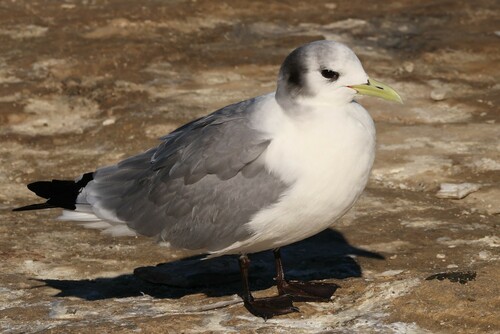
ミツユビカモメ (Rissa tridactyla) ミツユビカモメ
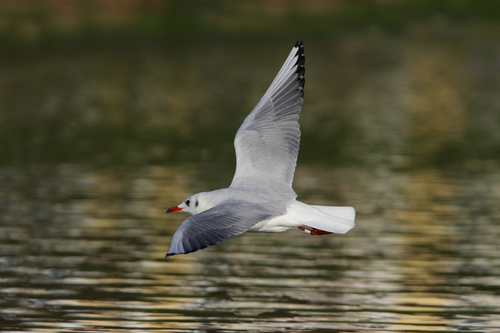
ユリカモメ (Chroicocephalus ridibundus) ユリカモメ

メディア

読み込み中…

要点

ブラックレッグキティウェイクとユリカモメを区別する最も信頼できるフィールドマークは、特に幼鳥と初冬の鳥において、飛行中の上翼パターンです:幼鳥のキティウェイクは翼に大胆な黒の「W」を示し、幼鳥のユリカモメは茶色の手首バーを持ち、「W」がありません。成鳥は脚とくちばしの色で最もよく区別されます—キティウェイクは黒い脚と黄色いくちばしを持ち、ユリカモメは繁殖羽衣で赤い脚とくちばしを持ちます。冬には、キティウェイクは目の後ろに暗い汚れと淡いくちばしを示し、ユリカモメは暗いフードを失い、頭に小さな暗い斑点を2つ残します。キティウェイクは厳密に海洋性で、内陸ではほとんど見られず、ユリカモメは淡水や都市の生息地で一般的です。サイズは重なりがあるため強いフィールドマークではありませんが、キティウェイクはわずかに重く、より頑丈です。

識別のコツ

  1. Juvenile/first-winter upperwing pattern: 幼鳥のキティウェイクは飛行中に上翼に大胆な黒の「W」を示し、その後ろに白いパネルがあります—これはこの年齢でユリカモメと区別するための最も良い方法です。幼鳥のユリカモメは茶色の手首バーを持ち、「W」がありません。
  2. Tail pattern in juveniles: 両種は幼鳥として黒い尾帯を持っていますが、キティウェイクのものは「W」と黒い後頸部の襟と組み合わされていますが、ユリカモメはよりまだらな茶色の体を持ち、襟はありません。
  3. Bill color by age: 幼鳥のキティウェイクは固体の黒いくちばしを持ち、2年目には緑がかり、成鳥になると黄色になります。ユリカモメは幼鳥の時に暗いくちばしを持っていますが、成鳥になると赤くなります。
  4. Leg color: 成鳥のキティウェイクは黒い脚を持ち(まれにピンクがかることもあります)、ユリカモメはすべての成鳥羽衣で赤い脚を持ちます。幼鳥のユリカモメは鈍い脚を持っていますが、決して本当に黒くはありません。
  5. Adult head pattern (breeding): キティウェイクは常に白い頭を持ち、ユリカモメは夏にチョコレートブラウン(本当に黒ではない)フードを持ちます。
  6. Adult head pattern (non-breeding): キティウェイクは目の後ろに灰色の汚れと淡い後頸部の襟を示し、ユリカモメはフードを失い、頭に小さな暗い斑点を2つ示します。
  7. Wingtip pattern (adult): キティウェイクは白い鏡がない固体の黒い翼先を持ち、ユリカモメは黒い先端を持っていますが、外翼の先端には白い先行縁があります。
  8. Bill color (adult): キティウェイクのくちばしは黄色(冬には鈍いオリーブ色)で、ユリカモメのくちばしは成鳥では赤く、幼鳥では暗い色です。
  9. Leg color (adult): キティウェイクの脚は黒く、ユリカモメの脚は赤い(決して黒くはありません)。
  10. Habitat: キティウェイクは海洋性で、内陸ではほとんど見られず、ユリカモメは内陸や都市部で一般的です。
  11. Flight style: キティウェイクはより浮遊感のある、トンビのような飛行をし、ユリカモメはより敏捷で、しばしば野原や水の上を旋回しているのが見られます。
  12. Voice: キティウェイクは鋭い「キティー・ワー・アーケ」という鳴き声を出し、ユリカモメは厳しい「クリー・アー」という鳴き声を出します。
  13. Moult sequence: キティウェイクの換羽は長期にわたり、春には部分的な頭/体の換羽があります。ユリカモメはより典型的なカモメの換羽を持ち、春にフードが発達します。
  14. Structure: キティウェイクはユリカモメに比べてくちばしが短く、頭が小さいですが、これは微妙で、他のマークと組み合わせて使用するのが最適です。
  15. Sexes: 両種は性別間で似ており、性別を区別のために使用しないでください。

大きさ

ブラックレッグキティウェイクはユリカモメよりもやや重い(平均体重418g)ですが、長さと翼幅はかなり重なります。フィールドでは、この違いは微妙で、特に距離がある場合や飛行中には明らかではありません。キティウェイクはわずかにずんぐりしていてコンパクトに見えることがありますが、ユリカモメはスリムで長い翼を持っているように見えることがあります。サイズは主にサポートの手がかりとして使用し、主要な区別要因としては使用しないでください。

羽色

幼鳥/初冬:幼鳥のキティウェイク(2年目まで)は、飛行中に上翼に特徴的で大胆な黒の「W」パターンを示し、「W」の後ろには白い第二次羽と第一次羽があります。彼らのくちばしは最初の年には固体の黒で、2年目には緑がかります。幼鳥のユリカモメは体に茶色のまだらなパターンを持ち、内翼には茶色の手首バー、黒っぽい第二次羽、黒い尾帯を持っていますが、「W」がありません—彼らの上翼はより muted で斑点状です。初冬のユリカモメは茶色の手首バーと黒い尾帯を保持し、灰色の背中が発達します。

成鳥:成鳥のキティウェイクは、清潔な白い頭と体、淡い灰色の背中、固体の黒い翼先(白い鏡なし)、黒い脚、黄色いくちばしを持っています。冬には、目の後ろに灰色の汚れと淡い灰色の後頸部の襟を示し、くちばしは暗いオリーブ色に変わります。夏の成鳥のユリカモメはチョコレートブラウンのフード(距離があると黒に見える)、赤いくちばしと脚、黒い先端を持つ淡い灰色の翼、外翼の白い先行縁を持っています。冬にはフードが失われ、頭に小さな暗い斑点が2つ残り、くちばし/脚は赤みを保ちます。第二冬のユリカモメは成鳥に似ていますが、翼や尾にいくらかの茶色を保持することがあります。キティウェイクはフードやくちばし/脚に赤を示すことはありません。

行動

キティウェイクは厳密に海洋性で、繁殖のために海の崖に来る以外は内陸にはほとんど来ません。彼らは淡水や都市部でくつろいでいるのを見ることはほとんどありません。飛行中、キティウェイクはより浮遊感のある、トンビのような飛行をし、頭を上下に動かすことが少なく、より直接的に滑空します。ユリカモメは非常に群れを成し、大きな群れで湖、川、野原、さらには都市公園で見られることがよくあります。彼らは頭を上下に動かす歩行と動かさない歩行の両方を示し、内陸でごみを漁ったり採餌したりしているのを見る可能性が高いです。彼らの飛行はより敏捷で、しばしば方向を素早く変えることが含まれます。

生息環境

ブラックレッグキティウェイクは海洋の専門家で、繁殖中はほとんど常に海や海岸の崖に見られます。繁殖コロニーから離れると、内陸や淡水ではほとんど見られません。ユリカモメは湖、川、湿地、農地、都市公園、さらには沿岸地域を含むさまざまな生息地で一般的です。もし内陸や都市で小さなカモメを見た場合、それはほぼ確実にユリカモメであり、キティウェイクではありません。

声

キティウェイクは鋭く繰り返される「キティー・ワー・アーケ」という鳴き声を持ち、これは特徴的で種の名前の由来となっています。ユリカモメは厳しい「クリー・アー」や「クリー」という鳴き声を含むより多様なレパートリーを持っていますが、キティウェイクの名前の由来となる鳴き声は出しません。混合の群れでは、キティウェイクの鳴き声はより高音で刺さるように際立っています。

より良い説明を送る

比較と同じ項目を使ってください。文章はすぐに公開されます。

The most reliable field mark to separate Black-legged Kittiwake from Black-headed Gull, especially in juvenile and first-winter birds, is the upperwing pattern in flight: juvenile kittiwakes show a bold black 'W' across the wings, while juvenile black-headed gulls have a brown carpal bar and lack the 'W'. Adults are best separated by leg and bill color—kittiwakes have black legs and yellow bills, while black-headed gulls have red legs and bills in breeding plumage. In winter, kittiwakes show a dusky smudge behind the eye and a pale bill, while black-headed gulls lose their dark hood, retaining only two small dark spots on the head. Kittiwakes are strictly pelagic and rarely seen inland, while black-headed gulls are common in freshwater and urban habitats. Size is not a strong field mark due to overlap, but kittiwakes are slightly heavier and more robust.

  1. Juvenile/first-winter upperwing pattern: Juvenile kittiwakes show a bold black 'W' across the upperwing in flight, with white panels behind it—this is the single best separator from black-headed gull at this age. Juvenile black-headed gulls have a brown carpal bar and lack the 'W'.
  2. Tail pattern in juveniles: Both species have a black tail band as juveniles, but kittiwake's is combined with the 'W' and a black hind-neck collar, while black-headed gulls have a more mottled brown body and no collar.
  3. Bill color by age: Juvenile kittiwakes have a solid black bill, turning greenish in the second year, then yellow by adulthood. Black-headed gulls have a dark bill as juveniles, but it becomes red by adulthood.
  4. Leg color: Adult kittiwakes have black legs (rarely pinkish), while black-headed gulls have red legs in all adult plumages. Juvenile black-headed gulls have duller legs, but never truly black.
  5. Adult head pattern (breeding): Kittiwakes always have a white head; black-headed gulls have a chocolate-brown (not truly black) hood in summer.
  6. Adult head pattern (non-breeding): Kittiwakes show a grey smudge behind the eye and a faint hind-neck collar; black-headed gulls lose the hood and show two small dark spots on the head.
  7. Wingtip pattern (adult): Kittiwakes have solid black wingtips with no white mirrors; black-headed gulls have black tips but with a white leading edge on the outer wing, visible in flight.
  8. Bill color (adult): Kittiwake's bill is yellow (dull olive in winter); black-headed gull's is red in adults, dark in juveniles.
  9. Leg color (adult): Kittiwake's legs are black; black-headed gull's are red (never black).
  10. Habitat: Kittiwakes are marine and rarely seen inland; black-headed gulls are common inland and in urban areas.
  11. Flight style: Kittiwakes have a more buoyant, tern-like flight; black-headed gulls are more agile and often seen wheeling over fields and water.
  12. Voice: Kittiwake gives a shrill 'kittee-wa-aaake' call; black-headed gull gives harsh 'kree-ar' calls.
  13. Moult sequence: Kittiwake's moult is protracted, with partial head/body moult in spring; black-headed gulls have a more typical gull moult, with hood developing in spring.
  14. Structure: Kittiwakes have a shorter bill and smaller head compared to black-headed gulls, but this is subtle and best used in combination with other marks.
  15. Sexes: Both species are similar between sexes; do not use sex as a separator.

Black-legged Kittiwake is somewhat heavier (average body mass 418 g) than Black-headed Gull (average 280.5 g), but their lengths and wingspans overlap considerably. In the field, this difference is subtle and not always apparent, especially at a distance or in flight. Kittiwakes may appear slightly chunkier and more compact, while black-headed gulls can look slimmer and longer-winged. Use size only as a supporting clue, not a primary separator.

Juvenile/first-winter: Juvenile kittiwakes (up to 2nd year) show a distinctive, bold black 'W' pattern across the upperwings in flight, with white secondaries and primaries behind the 'W', a black hind-neck collar, and a black terminal tail band. Their bills are solid black in the first year, turning greenish in the second year. Juvenile black-headed gulls have a brown mottled pattern on the body, a brown carpal bar on the inner wing, blackish secondaries, and a black tail band, but lack the 'W'—their upperwing is more muted and patchy. First-winter black-headed gulls retain the brown carpal bar and black tail band, with a grey back developing.

Adults: Adult kittiwakes have a clean white head and body, pale grey back, solid black wingtips (no white mirrors), black legs, and a yellow bill. In winter, they show a grey smudge behind the eye and a faint grey hind-neck collar, with the bill turning dusky-olive. Adult black-headed gulls in summer have a chocolate-brown hood (appearing black at a distance), red bill and legs, pale grey wings with black tips, and a white leading edge to the outer wing. In winter, the hood is lost, leaving two small dark spots on the head, and the bill/legs remain reddish. Second-winter black-headed gulls are like adults but may retain some brown on the wings/tail. Kittiwakes never show a hood or red on the bill/legs.

Kittiwakes are strictly pelagic, rarely coming inland except to breed on sea cliffs. They are almost never seen loafing on freshwater or in urban areas. In flight, kittiwakes have a more buoyant, tern-like flight with less head-bobbing and more direct gliding. Black-headed gulls are highly gregarious, often found in large flocks on lakes, rivers, fields, and even city parks. They show both head-bobbing and non-bobbing walking, and are much more likely to be seen scavenging or foraging inland. Their flight is more agile and often includes quick changes of direction.

Black-legged Kittiwake is a marine specialist, almost always found at sea or on coastal cliffs during breeding. Away from breeding colonies, it is rarely seen inland or on freshwater. Black-headed Gull is common in a wide variety of habitats, including lakes, rivers, marshes, farmland, and urban parks, as well as coastal areas. If you see a small gull inland or in a city, it is almost certainly a black-headed gull, not a kittiwake.

Kittiwake has a shrill, repeated 'kittee-wa-aaake' call, which is distinctive and gives the species its name. Black-headed Gull has a more varied repertoire, including harsh 'kree-ar' and 'kreee' calls, but does not give the kittiwake's namesake call. In mixed flocks, the kittiwake's call stands out as higher-pitched and more piercing.

変更を破棄しますか?

保存していない編集があります。今離れると失われます。

ミツユビカモメ · ユリカモメ · 苦手な鳥