

Motmot

トビ 対 シロガシラトビ

Milvus migrans 対 Haliastur indus

トビとシロガシラトビのクイズ
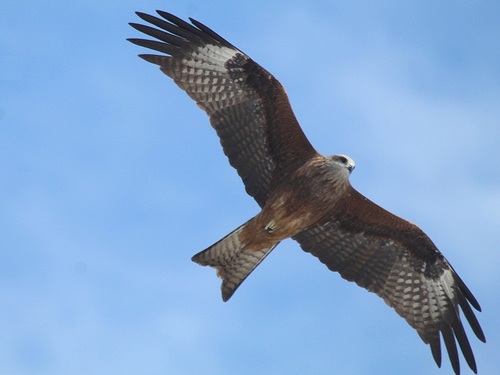
トビ (Milvus migrans) トビ
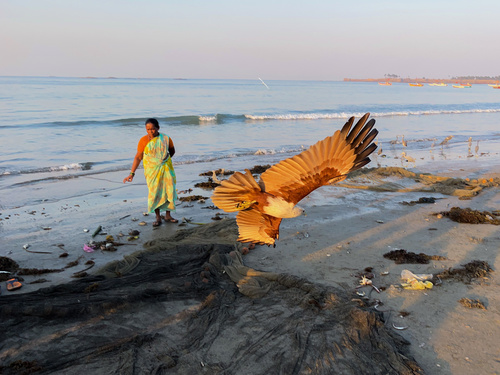
シロガシラトビ (Haliastur indus) シロガシラトビ

メディア

読み込み中…

要点

The most reliable field mark to separate Black Kite from Brahminy Kite is the tail shape in flight: Black Kite always shows a shallowly forked tail, while Brahminy Kite has a rounded tail. Adults are easy to distinguish by plumage: Black Kite is overall dark brown with a paler head, whereas Brahminy Kite has a striking white head and breast contrasting with rich chestnut body and wings. Juveniles can be trickier, but Brahminy Kite juveniles are paler, with shorter wings and a rounded tail, while Black Kite juveniles remain darker and keep the forked tail. Both species are medium-sized kites, but Black Kite is heavier and slightly larger. Habitat can help: Brahminy Kite is mostly coastal or near wetlands, while Black Kite is more generalist and often seen soaring over towns and open country.

識別のコツ

  1. Tail shape in flight: Black Kite always shows a shallow fork, even when the tail is closed; Brahminy Kite's tail is rounded. This is the single most reliable mark for all ages.
  2. Adult plumage: Black Kite is dark brown with a paler (sometimes whitish) head but never has a white breast; Brahminy Kite adults have a gleaming white head, neck, and breast, sharply contrasting with chestnut body and wings.
  3. Juvenile plumage: Juvenile Brahminy Kite is paler brown overall, with a rounded tail and shorter wings; juvenile Black Kite is darker brown, streaked, and keeps the forked tail. In Asia, Brahminy Kite juveniles are paler and less streaked than Black Kite juveniles.
  4. Underwing pattern (juveniles): Brahminy Kite juveniles show a squarish pale patch at the underwing carpal; Black Kite juveniles (especially M. m. lineatus) may have a pale carpal patch, but it is less square and the rest of the wing is darker.
  5. Body structure: Black Kite appears bulkier and longer-winged, with a heavier build; Brahminy Kite is more compact, with shorter wings and a smaller, rounded tail.
  6. Head pattern: Black Kite has a paler head (sometimes whitish) but never as clean and bright as Brahminy Kite's white head and breast. Brahminy Kite's white is crisp and sharply demarcated from the chestnut body.
  7. Flight behavior: Black Kite often soars high, sometimes in flocks, and is more likely to be seen over towns or rubbish dumps; Brahminy Kite is more solitary, often seen low over water.
  8. Perched posture: Black Kite perches upright with a long, forked tail visible; Brahminy Kite perches more compactly, white head obvious.
  9. Habitat: Black Kite is a generalist, found in open country, farmland, and urban areas; Brahminy Kite is coastal or near wetlands, rarely far from water.
  10. Bill and cere: Both have yellow cere and gape, but Black Kite has a black bill; this is subtle and rarely diagnostic at distance.
  11. Leg color: Both have yellow legs, not a useful separator.
  12. Vocalization: Black Kite gives a shrill whistle with a whinnying quality; Brahminy Kite's call is not described here, so use with caution.
  13. Size: Black Kite is heavier and larger-winged, but size overlap means this is not reliable alone.
  14. Seasonal context: In areas where both occur, check habitat and age carefully; confusion is most likely with juveniles in flight.
  15. Common pitfalls: Do not rely on overall brownness alone—juvenile Brahminy Kite can appear brown, but tail shape and head color will separate them. In poor light, check multiple features, especially tail shape and underwing pattern.

大きさ

Black Kite is noticeably heavier (average 828 g) than Brahminy Kite (320–673 g), and has a larger wingspan (about 150 cm vs. Brahminy Kite's 109–124 cm). Both are medium-sized raptors, but Black Kite appears bulkier and longer-winged. In the field, Brahminy Kite may look more compact and less robust, especially in flight.

羽色

Adult Black Kite is overall dark brown with a paler, sometimes whitish, head and neck, and dark flight feathers; no rufous tones. The tail is always shallowly forked, and the underparts are streaked. Adult Brahminy Kite is unmistakable: gleaming white head, neck, and breast, with rich chestnut (reddish-brown) body and wings, and black wing tips. The tail is rounded. Juvenile Brahminy Kite is browner overall but still paler than Black Kite juveniles, with a rounded tail and shorter wings. Juvenile Black Kite is dark brown above and below, with a streaked appearance and a shallow forked tail. In flight, Brahminy Kite juveniles show a squarish pale patch at the underwing carpal, while Black Kite juveniles may show a pale carpal patch (especially in some subspecies), but the overall impression is darker and less contrasting.

行動

Both species soar with wings angled in a shallow dihedral, but Black Kite is more likely to be seen in large flocks, especially near human settlements, scavenging or soaring high. Brahminy Kite is usually solitary or in pairs, often seen patrolling coastlines or wetlands, and may be seen swooping low over water. Perched, Black Kite often sits upright with a long, slightly forked tail visible, while Brahminy Kite perches more compactly, with the rounded tail and white head obvious.

生息環境

Black Kite is highly adaptable and found in a wide range of habitats, from open countryside and farmland to urban areas, often far from water. Brahminy Kite, in contrast, is strongly associated with coasts, estuaries, and large inland wetlands, rarely venturing far from water. If you see a kite inland far from water, it's more likely a Black Kite; if it's near the coast or a wetland, check carefully for Brahminy.

声

Black Kite gives a distinctive shrill whistle followed by a rapid whinnying call. Brahminy Kite's call is not described in the provided notes, so voice is not a reliable separator here.

より良い説明を送る

比較と同じ項目を使ってください。文章はすぐに公開されます。

The most reliable field mark to separate Black Kite from Brahminy Kite is the tail shape in flight: Black Kite always shows a shallowly forked tail, while Brahminy Kite has a rounded tail. Adults are easy to distinguish by plumage: Black Kite is overall dark brown with a paler head, whereas Brahminy Kite has a striking white head and breast contrasting with rich chestnut body and wings. Juveniles can be trickier, but Brahminy Kite juveniles are paler, with shorter wings and a rounded tail, while Black Kite juveniles remain darker and keep the forked tail. Both species are medium-sized kites, but Black Kite is heavier and slightly larger. Habitat can help: Brahminy Kite is mostly coastal or near wetlands, while Black Kite is more generalist and often seen soaring over towns and open country.

  1. Tail shape in flight: Black Kite always shows a shallow fork, even when the tail is closed; Brahminy Kite's tail is rounded. This is the single most reliable mark for all ages.
  2. Adult plumage: Black Kite is dark brown with a paler (sometimes whitish) head but never has a white breast; Brahminy Kite adults have a gleaming white head, neck, and breast, sharply contrasting with chestnut body and wings.
  3. Juvenile plumage: Juvenile Brahminy Kite is paler brown overall, with a rounded tail and shorter wings; juvenile Black Kite is darker brown, streaked, and keeps the forked tail. In Asia, Brahminy Kite juveniles are paler and less streaked than Black Kite juveniles.
  4. Underwing pattern (juveniles): Brahminy Kite juveniles show a squarish pale patch at the underwing carpal; Black Kite juveniles (especially M. m. lineatus) may have a pale carpal patch, but it is less square and the rest of the wing is darker.
  5. Body structure: Black Kite appears bulkier and longer-winged, with a heavier build; Brahminy Kite is more compact, with shorter wings and a smaller, rounded tail.
  6. Head pattern: Black Kite has a paler head (sometimes whitish) but never as clean and bright as Brahminy Kite's white head and breast. Brahminy Kite's white is crisp and sharply demarcated from the chestnut body.
  7. Flight behavior: Black Kite often soars high, sometimes in flocks, and is more likely to be seen over towns or rubbish dumps; Brahminy Kite is more solitary, often seen low over water.
  8. Perched posture: Black Kite perches upright with a long, forked tail visible; Brahminy Kite perches more compactly, white head obvious.
  9. Habitat: Black Kite is a generalist, found in open country, farmland, and urban areas; Brahminy Kite is coastal or near wetlands, rarely far from water.
  10. Bill and cere: Both have yellow cere and gape, but Black Kite has a black bill; this is subtle and rarely diagnostic at distance.
  11. Leg color: Both have yellow legs, not a useful separator.
  12. Vocalization: Black Kite gives a shrill whistle with a whinnying quality; Brahminy Kite's call is not described here, so use with caution.
  13. Size: Black Kite is heavier and larger-winged, but size overlap means this is not reliable alone.
  14. Seasonal context: In areas where both occur, check habitat and age carefully; confusion is most likely with juveniles in flight.
  15. Common pitfalls: Do not rely on overall brownness alone—juvenile Brahminy Kite can appear brown, but tail shape and head color will separate them. In poor light, check multiple features, especially tail shape and underwing pattern.

Black Kite is noticeably heavier (average 828 g) than Brahminy Kite (320–673 g), and has a larger wingspan (about 150 cm vs. Brahminy Kite's 109–124 cm). Both are medium-sized raptors, but Black Kite appears bulkier and longer-winged. In the field, Brahminy Kite may look more compact and less robust, especially in flight.

Adult Black Kite is overall dark brown with a paler, sometimes whitish, head and neck, and dark flight feathers; no rufous tones. The tail is always shallowly forked, and the underparts are streaked. Adult Brahminy Kite is unmistakable: gleaming white head, neck, and breast, with rich chestnut (reddish-brown) body and wings, and black wing tips. The tail is rounded. Juvenile Brahminy Kite is browner overall but still paler than Black Kite juveniles, with a rounded tail and shorter wings. Juvenile Black Kite is dark brown above and below, with a streaked appearance and a shallow forked tail. In flight, Brahminy Kite juveniles show a squarish pale patch at the underwing carpal, while Black Kite juveniles may show a pale carpal patch (especially in some subspecies), but the overall impression is darker and less contrasting.

Both species soar with wings angled in a shallow dihedral, but Black Kite is more likely to be seen in large flocks, especially near human settlements, scavenging or soaring high. Brahminy Kite is usually solitary or in pairs, often seen patrolling coastlines or wetlands, and may be seen swooping low over water. Perched, Black Kite often sits upright with a long, slightly forked tail visible, while Brahminy Kite perches more compactly, with the rounded tail and white head obvious.

Black Kite is highly adaptable and found in a wide range of habitats, from open countryside and farmland to urban areas, often far from water. Brahminy Kite, in contrast, is strongly associated with coasts, estuaries, and large inland wetlands, rarely venturing far from water. If you see a kite inland far from water, it's more likely a Black Kite; if it's near the coast or a wetland, check carefully for Brahminy.

Black Kite gives a distinctive shrill whistle followed by a rapid whinnying call. Brahminy Kite's call is not described in the provided notes, so voice is not a reliable separator here.

変更を破棄しますか?

保存していない編集があります。今離れると失われます。

トビ · シロガシラトビ · 苦手な鳥