

Nibbio bruno vs Brahminy Kite
Milvus migrans contro Haliastur indus
Fai un quiz con Nibbio bruno e Brahminy Kite
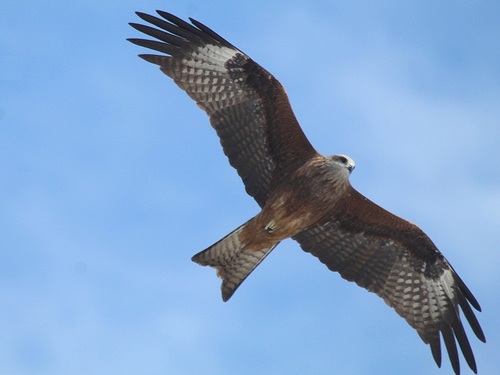 Nibbio bruno
 Brahminy Kite
In breve
Il segno di campo più affidabile per separare il Nibbio bruno dal Brahminy Kite è la forma della coda in volo: il Nibbio bruno mostra sempre una coda leggermente forked, mentre il Brahminy Kite ha una coda arrotondata. Gli adulti sono facili da distinguere per il piumaggio: il Nibbio bruno è complessivamente marrone scuro con una testa più chiara, mentre il Brahminy Kite ha una testa e un petto bianchi sorprendenti che contrastano con il corpo e le ali castano ricco. I giovani possono essere più difficili, ma i giovani Brahminy Kite sono più chiari, con ali più corte e una coda arrotondata, mentre i giovani Nibbio bruno rimangono più scuri e mantengono la coda forked. Entrambe le specie sono aquile di dimensioni medie, ma il Nibbio bruno è più pesante e leggermente più grande. L'habitat può aiutare: il Brahminy Kite è per lo più costiero o vicino a zone umide, mentre il Nibbio bruno è più generalista e spesso visto librarsi sopra città e campagna aperta.
Consigli di identificazione
- Tail shape in flight: Il Nibbio bruno mostra sempre una coda forked leggera, anche quando la coda è chiusa; la coda del Brahminy Kite è arrotondata. Questo è il segno più affidabile per tutte le età.
- Adult plumage: Il Nibbio bruno è marrone scuro con una testa più chiara (a volte biancastra) ma non ha mai un petto bianco; gli adulti del Brahminy Kite hanno una testa, un collo e un petto bianchi lucenti, in netto contrasto con il corpo e le ali castano.
- Juvenile plumage: Il giovane Brahminy Kite è marrone più chiaro nel complesso, con una coda arrotondata e ali più corte; il giovane Nibbio bruno è marrone più scuro, striato, e mantiene la coda forked. In Asia, i giovani Brahminy Kite sono più chiari e meno striati rispetto ai giovani Nibbio bruno.
- Underwing pattern (juveniles): I giovani Brahminy Kite mostrano una macchia pallida squadrata al carpo dell'ala inferiore; i giovani Nibbio bruno (soprattutto M. m. lineatus) possono avere una macchia carpo pallida, ma è meno quadrata e il resto dell'ala è più scuro.
- Body structure: Il Nibbio bruno appare più robusto e con ali più lunghe, con una costruzione più pesante; il Brahminy Kite è più compatto, con ali più corte e una coda più piccola e arrotondata.
- Head pattern: Il Nibbio bruno ha una testa più chiara (a volte biancastra) ma mai così pulita e luminosa come la testa e il petto bianchi del Brahminy Kite. Il bianco del Brahminy Kite è nitido e ben demarcato dal corpo castano.
- Flight behavior: Il Nibbio bruno spesso vola in alto, a volte in stormi, ed è più probabile vederlo sopra città o discariche; il Brahminy Kite è più solitario, spesso visto basso sopra l'acqua.
- Perched posture: Il Nibbio bruno si posa eretto con una lunga coda forked visibile; il Brahminy Kite si posa in modo più compatto, con la testa bianca evidente.
- Habitat: Il Nibbio bruno è un generalista, trovato in campagna aperta, terreni agricoli e aree urbane; il Brahminy Kite è costiero o vicino a zone umide, raramente lontano dall'acqua.
- Bill and cere: Entrambi hanno cere e aperture gialle, ma il Nibbio bruno ha un becco nero; questo è sottile e raramente diagnostico a distanza.
- Leg color: Entrambi hanno gambe gialle, non un separatore utile.
- Vocalization: Il Nibbio bruno emette un fischio acuto con una qualità di nitrito; il richiamo del Brahminy Kite non è descritto qui, quindi usare con cautela.
- Size: Il Nibbio bruno è più pesante e ha ali più grandi, ma la sovrapposizione delle dimensioni significa che questo non è affidabile da solo.
- Seasonal context: Nelle aree in cui entrambe si trovano, controllare attentamente l'habitat e l'età; la confusione è più probabile con i giovani in volo.
- Common pitfalls: Non fare affidamento solo sulla marrone complessivo—il giovane Brahminy Kite può apparire marrone, ma la forma della coda e il colore della testa li separeranno. In scarsa luce, controllare più caratteristiche, specialmente la forma della coda e il modello dell'ala inferiore.
Taglia
Il Nibbio bruno è notevolmente più pesante (media 828 g) rispetto al Brahminy Kite (320–673 g), e ha un'apertura alare più grande (circa 150 cm contro i 109–124 cm del Brahminy Kite). Entrambi sono rapaci di dimensioni medie, ma il Nibbio bruno appare più robusto e con ali più lunghe. Sul campo, il Brahminy Kite può apparire più compatto e meno robusto, specialmente in volo.
Piumaggio
L'adulto Nibbio bruno è complessivamente marrone scuro con una testa e un collo più chiari, a volte biancastri, e piume di volo scure; nessun tono ruggine. La coda è sempre leggermente forked, e le parti inferiori sono striate. L'adulto Brahminy Kite è inconfondibile: testa, collo e petto bianchi lucenti, con corpo e ali castano ricco (marrone-rossiccio), e punte delle ali nere. La coda è arrotondata. Il giovane Brahminy Kite è complessivamente più marrone ma ancora più chiaro dei giovani Nibbio bruno, con una coda arrotondata e ali più corte. Il giovane Nibbio bruno è marrone scuro sopra e sotto, con un aspetto striato e una coda forked leggera. In volo, i giovani Brahminy Kite mostrano una macchia pallida squadrata al carpo dell'ala inferiore, mentre i giovani Nibbio bruno possono mostrare una macchia carpo pallida (soprattutto in alcune sottospecie), ma l'impressione generale è più scura e meno contrastante.
Comportamento
Entrambe le specie volano con le ali angolate in un dihedro leggero, ma il Nibbio bruno è più probabile essere visto in grandi stormi, specialmente vicino a insediamenti umani, a cercare cibo o librarsi in alto. Il Brahminy Kite è solitamente solitario o in coppie, spesso visto pattugliare le coste o le zone umide, e può essere visto tuffarsi basso sopra l'acqua. Posato, il Nibbio bruno spesso si siede eretto con una lunga coda leggermente forked visibile, mentre il Brahminy Kite si posa in modo più compatto, con la coda arrotondata e la testa bianca evidente.
Habitat
Il Nibbio bruno è altamente adattabile e si trova in una vasta gamma di habitat, dalla campagna aperta e terreni agricoli ad aree urbane, spesso lontano dall'acqua. Il Brahminy Kite, al contrario, è fortemente associato a coste, estuari e grandi zone umide interne, raramente avventurandosi lontano dall'acqua. Se vedi un kite nell'entroterra lontano dall'acqua, è più probabile che sia un Nibbio bruno; se è vicino alla costa o a una zona umida, controlla attentamente per il Brahminy.
Voce
Il Nibbio bruno emette un fischio acuto distintivo seguito da un rapido richiamo di nitrito. Il richiamo del Brahminy Kite non è descritto nelle note fornite, quindi la voce non è un separatore affidabile qui.