

クロハラウミツバメ 対 ムナフカラムシクイ
Fregetta tropica 対 Curruca layardi
クロハラウミツバメとムナフカラムシクイのクイズ
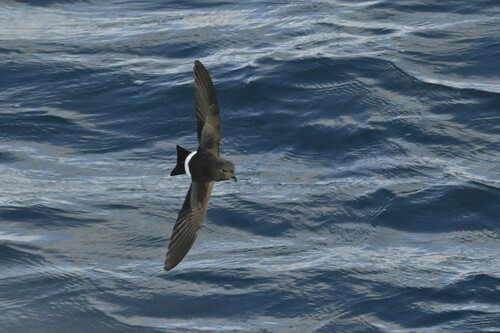 クロハラウミツバメ
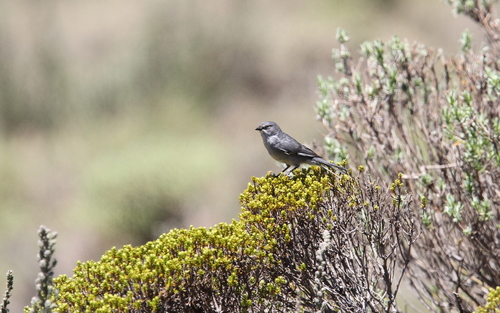 ムナフカラムシクイ
要点
The most reliable way to separate Black-bellied Storm-Petrel from Layard's Warbler is by overall structure and context: the storm-petrel is a robust, black-and-white seabird with long legs that trail past the tail in flight, while Layard's Warbler is a small, slender, terrestrial songbird of African shrublands. In flight, the storm-petrel's white rump band and (usually) dark belly stripe are distinctive, but beware that some individuals can show a white belly. Layard's Warbler lacks any bold black-and-white contrast, and is never seen at sea. If you see a bird bouncing off ocean waves, it's a storm-petrel; if it's flitting through dry bushes, it's the warbler.
識別のコツ
- Habitat is the first check: If the bird is at sea, it is Black-bellied Storm-Petrel; if in dry shrubland, it is Layard's Warbler. There is no overlap in habitat.
- Flight style: Storm-petrel bounces and patters on the water, with a bounding, erratic flight and legs trailing well past the tail. Layard's Warbler never shows this behavior and flies in short, direct hops between bushes.
- Legs and feet in flight: Black-bellied Storm-Petrel's long black legs and feet are visible beyond the tail in flight—a unique feature among small seabirds. Layard's Warbler's legs are short and never project past the tail.
- Plumage contrast: Storm-petrel is black with a bold white rump band and white underwings/flanks; warbler is plain and lacks any strong contrast or rump band.
- Belly stripe: Most Black-bellied Storm-Petrels show a broad black belly stripe, but beware that some (especially F. t. melanoleuca) may have a broken or even white belly. Layard's Warbler never shows a belly stripe.
- White underwing: Storm-petrel has white underwing coverts visible from below; warbler does not.
- Bill shape: Storm-petrel has a short, thick, blunt bill typical of seabirds; warbler has a fine, pointed bill for insect feeding.
- Size: Storm-petrel is much heavier and bulkier than the warbler. Even at a distance, the storm-petrel's proportions are more robust.
- Tail shape: Storm-petrel's tail is short and squared or slightly rounded, often appearing stubby; warbler's tail is longer and more graduated, typical of a small passerine.
- Voice: Storm-petrel is silent at sea; warbler's voice is not described, so do not rely on vocalizations for separation.
- Contextual clues: If the bird is interacting with ocean waves, feeding by pattering, or seen in a flock of other seabirds, it is a storm-petrel. If it is alone or in a loose group in bushes, it is a warbler.
- Geographic range: Layard's Warbler is only found in southern Africa; Black-bellied Storm-Petrel is pelagic and breeds on remote southern islands, rarely seen near land except at colonies.
- Pitfall: Some storm-petrels can lack the belly stripe, but the overall black-and-white pattern, white rump, and trailing legs are still diagnostic. No warbler, including Layard's, can show this combination.
- Sex/age: No sex or age of Layard's Warbler resembles a storm-petrel. All ages of storm-petrel show the key structural and plumage features, though belly stripe can be variable.
- Summary tip: If you are unsure, focus on habitat, flight style, and presence/absence of white rump and trailing legs—these will separate every individual in the field.
大きさ
Black-bellied Storm-Petrel is much heavier (52 g) than Layard's Warbler, which is a typical small warbler and much lighter (exact mass not given, but warblers are usually under 20 g) [wikidata, avonet]. The storm-petrel is stocky and compact for a seabird, but still far bulkier than any warbler. In the hand or with a clear view, the storm-petrel's size and proportions are unmistakable compared to the much smaller, more delicate warbler.
羽色
- Juvenile/immature/adult Black-bellied Storm-Petrel: All ages show a striking black-and-white pattern: mostly black with a white rump band, white underwings and flanks, and a (usually) broad black belly stripe. However, the belly stripe can be broken or even absent in some birds (notably the melanoleuca subspecies, which may show a white belly). The legs and feet are black and extend well beyond the tail in flight. The upperwing is dark, with white underwing coverts visible from below.
- Layard's Warbler (all ages): Lacks any black-and-white contrast. The warbler is a plain, small, drab bird without a rump band, belly stripe, or white underwing. Its plumage is adapted for camouflage in shrubland, not for bold contrast. No age or sex of Layard's Warbler could be mistaken for a storm-petrel in plumage.
行動
Black-bellied Storm-Petrel is a pelagic seabird, feeding by bouncing and pattering on the ocean surface, often slapping its belly against the water and changing direction by kicking its feet. Its flight is distinctive: bounding, erratic, and low over the waves, with legs trailing. Layard's Warbler is strictly terrestrial, foraging in dry shrubland, moving through bushes and low vegetation, never seen at sea. The warbler's movements are typical for a small songbird: flitting, hopping, and sometimes making short flights between shrubs. The context of behavior is a strong clue: a bird at sea is never Layard's Warbler.
生息環境
Black-bellied Storm-Petrel is found over open ocean, especially in southern, colder waters, and only comes to land to breed on remote islands. Layard's Warbler is restricted to dry shrubland in southern Africa (Lesotho, Namibia, South Africa) and never occurs at sea. If you are birding inland or in shrubland, you will not encounter Black-bellied Storm-Petrel; if you are offshore, you will not see Layard's Warbler.
声
Black-bellied Storm-Petrel is mostly silent at sea; at breeding colonies, it gives a drawn-out shrill whistle. Layard's Warbler's song and calls are not described in the provided notes, so vocalizations are not a reliable field mark for separation based on current information.