

Motmot

クロシチホウ 対 キバラカエデチョウ

Spermestes bicolor 対 Coccopygia melanotis

クロシチホウとキバラカエデチョウのクイズ
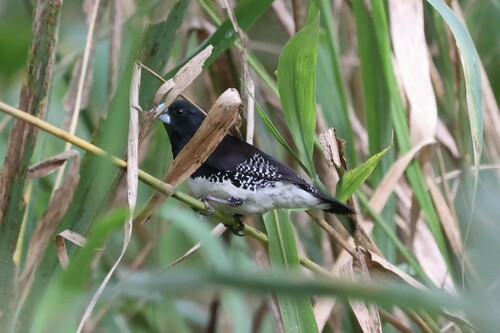
クロシチホウ (Spermestes bicolor) クロシチホウ
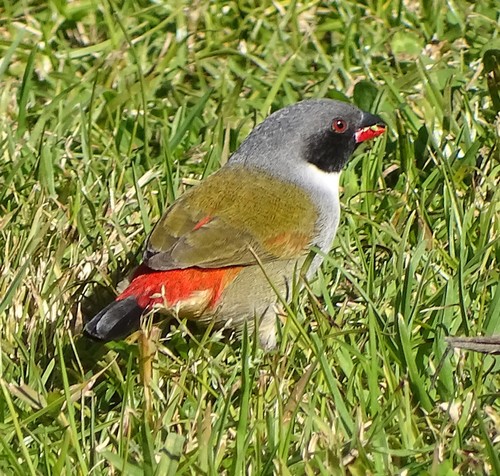
キバラカエデチョウ (Coccopygia melanotis) キバラカエデチョウ

メディア

読み込み中…

要点

ブラックアンドホワイトマニキンとキバラカエデチョウを区別する最も信頼できるフィールドマークは全体の羽毛パターンです:マニキンは鮮やかなコントラストのある黒と白の体を示し、キバラカエデチョウは灰色の頭と胸、淡い黄色の腹、オリーブ色の翼、赤い尾羽を持っています。幼鳥のキバラカエデチョウはより鈍く、全体が黒いくちばしを持っており、これがマニキンと混同されることがありますが、マニキンは決してキバラカエデチョウのオリーブ色や黄色のトーン、赤い尾羽を示しません。両者は小型のエストリルディッドフィンチですが、キバラカエデチョウはわずかに小さく、スリムです。生息地と群れの行動も役立ちます:マニキンは湿ったサバンナや森林にいる可能性が高く、しばしば大きな群れで見られますが、キバラカエデチョウは高地の低木地や開けた森林を好み、通常は小さな群れで見られます。

識別のコツ

  1. Plumage contrast: 成熟したブラックアンドホワイトマニキンは常にオリーブ、黄色、赤のトーンがない鮮明な黒と白のパターンを示します。キバラカエデチョウの成鳥はよりカラフルで、灰色の頭、オリーブ色の翼、黄色の腹、赤い尾羽を持っています。これは成鳥にとって最も信頼できるマークです。
  2. Red rump: キバラカエデチョウ(成鳥と一部の幼鳥)だけが、止まっている時や飛んでいる時に見える赤い下背部と尾羽を示します。マニキンは尾羽に赤を示しません。
  3. Face pattern and sex: オスのキバラカエデチョウは黒い顔を持ち、メスは灰色の顔を持っています;マニキンは性別に関係なく常に黒い頭と胸を持っています。オリーブ色と黄色の鳥を見たら、それはメスのキバラカエデチョウです。
  4. Bill color in juveniles: 幼鳥のキバラカエデチョウは全体が黒いくちばしを持っており、マニキンに似ることがありますが、全体的に鈍く、コントラストが少ない羽毛と赤い尾羽の欠如を探してください。マニキンの幼鳥はオリーブ/黄色のトーンを示しません。
  5. Underparts color: キバラカエデチョウは淡い黄色の腹を持ち、マニキンの腹部は白です。光が悪いとこれは微妙ですが、黄色がかったトーンはキバラカエデチョウを指し示します。
  6. Upperparts and wings: キバラカエデチョウは背中と翼にオリーブ色を示しますが、マニキンは上面が均一に暗いです。飛んでいる時、キバラカエデチョウは赤い尾羽を見せることがありますが、マニキンは暗くて平凡です。
  7. Tail color: キバラカエデチョウは赤い尾羽と対照的な黒い尾羽を持ち、マニキンの尾羽は上面の他の部分とあまり区別がありません。
  8. Size and structure: キバラカエデチョウはわずかに小さく、スリムですが、これは微妙で羽毛マークと組み合わせて使用するのが最適です。
  9. Flocking behavior: マニキンはしばしば大きく、密な群れで見られますが、キバラカエデチョウは小さく、緩い群れで見られます。
  10. Habitat: マニキンは湿ったサバンナと森林を好みます;キバラカエデチョウは南アフリカの高地の低木地、開けた森林、または大きな庭にいる可能性が高いです。
  11. Voice: もし柔らかい「スウィー、スウィー」という声を聞いたら、それはキバラカエデチョウです。この呼び声がない場合、マニキンを確認することはできません。
  12. Sex differences: キバラカエデチョウだけが顔の色に明確な性差を示します;マニキンの性別は似ています。
  13. Juvenile confusion: 両種の幼鳥は鈍いですが、キバラカエデチョウの幼鳥は特に平凡で、マニキンの鮮やかな黒と白のコントラストが欠けています。くちばしの色だけでは不十分です—全体の色と尾羽を探してください。
  14. Perched vs. flight views: 飛んでいる時、キバラカエデチョウの赤い尾羽に注意してください;マニキンは上面が暗く、色のフラッシュはありません。
  15. Pitfalls: 光が悪い場合や短い視界では、幼鳥のキバラカエデチョウは全体が黒いくちばしと鈍い羽毛のためにマニキンのように見えることがあります。可能な限りオリーブ/黄色のトーンと尾羽の色を確認してください。

大きさ

キバラカエデチョウはブラックアンドホワイトマニキンよりわずかに小さく、軽量で、成鳥の質量は約7.8グラムです [wikidata]。両者は小型のフィンチですが、キバラカエデチョウはより繊細でスリムに見える傾向があり、マニキンはよりがっしりしています。フィールドでは、サイズの違いは微妙で、羽毛と構造と組み合わせて使用するのが最適です。

羽色

成鳥のブラックアンドホワイトマニキンは大胆な黒と白のパターンを示します:黒い頭と胸、白い腹部、暗い上面で、オリーブ、黄色、赤を欠いています。キバラカエデチョウの成鳥は灰色の頭と胸、淡い黄色の腹、オリーブ色の背中と翼、そして黒い尾羽を持つ特徴的な赤い下背部と尾羽を持っています。オスは黒い顔を持ち、メスは灰色の顔を持っています。幼鳥のキバラカエデチョウははるかに鈍く、赤い尾羽とオリーブ色のトーンが欠けており、全体が黒いくちばしを持っており、外見上マニキンに似ることがありますが、より均一でコントラストが少ないパターンを示します。ブラックアンドホワイトマニキンの幼鳥も成鳥の鮮明なコントラストが欠けていますが、どの年齢でもオリーブや黄色のトーンや赤い尾羽を示しません。飛んでいる時、キバラカエデチョウの赤い尾羽が見えることがありますが、マニキンはより均一な暗い上翼と背中を示します。

行動

ブラックアンドホワイトマニキンは、特に繁殖シーズン外では大きな群れで見られることが多く、グループで遭遇する可能性が高いです。キバラカエデチョウは通常、小さな群れで見られ、飼いならされたと説明され、低い植生の中で静かに餌を探すことが多いです。キバラカエデチョウは大きな群れを形成しません。両種は活発で社交的ですが、群れのサイズとグループの結束は手がかりになることがあります。

生息環境

ブラックアンドホワイトマニキンはサハラ以南のアフリカに広く分布し、湿ったサバンナや熱帯または亜熱帯の湿った低地森林を好みます [wikipedia]。キバラカエデチョウは南アフリカに自生し、高地の乾燥した低木地や開けた森林を好みますが、一部の亜種は低地や大きな庭に生息しています [wikipedia]。したがって、キバラカエデチョウはより乾燥した高地の生息地にいる可能性が高く、マニキンはより湿った低地を好みます。重複が発生することもありますが、文脈が役立ちます。

声

キバラカエデチョウは柔らかく高音の「スウィー、スウィー」という呼び声を出します [wikipedia]。提供されたノートにはブラックアンドホワイトマニキンの声の説明がないため、声は聞こえた場合にキバラカエデチョウを確認するためだけに役立ち、マニキンを除外するためには役立ちません。

より良い説明を送る

比較と同じ項目を使ってください。文章はすぐに公開されます。

The most reliable field mark to separate Black-and-white Mannikin from Swee Waxbill is overall plumage pattern: mannikins show a sharply contrasting black-and-white body, while Swee Waxbills have a grey head and breast, pale yellow belly, olive wings, and a red rump. Juvenile Swee Waxbills are duller and have an all-black bill, which can cause confusion with mannikins, but the mannikin never shows the Swee's olive and yellow tones or red rump. Both are small estrildid finches, but Swee Waxbill is slightly smaller and slimmer. Habitat and flocking behavior can also help: mannikins are more likely in moist savanna and forest, often in larger groups, while Swee Waxbills prefer upland shrubland and open forest, usually in small parties.

  1. Plumage contrast: Adult Black-and-white Mannikin always shows a sharply defined black-and-white pattern with no olive, yellow, or red tones. Swee Waxbill adults are more colorful, with a grey head, olive wings, yellow belly, and a red rump. This is the most reliable mark for adults.
  2. Red rump: Only Swee Waxbill (adult and some immatures) shows a red lower back and rump, visible when perched or in flight. Mannikin never shows red on the rump.
  3. Face pattern and sex: Male Swee Waxbill has a black face, female has a grey face; mannikin always has a black head and breast, regardless of sex. If you see a grey-faced bird with olive and yellow, it's a female Swee Waxbill.
  4. Bill color in juveniles: Juvenile Swee Waxbill has an all-black bill, which can resemble mannikin, but look for overall duller, less contrasting plumage and lack of red rump. Mannikin juveniles do not show olive/yellow tones.
  5. Underparts color: Swee Waxbill has a pale yellow belly, while mannikin underparts are white. In poor light, this can be subtle, but yellowish tones point to Swee Waxbill.
  6. Upperparts and wings: Swee Waxbill shows olive on the back and wings, while mannikin is uniformly dark above. In flight, Swee Waxbill may flash a red rump, mannikin remains dark and plain.
  7. Tail color: Swee Waxbill has a black tail contrasting with the red rump; mannikin's tail is less distinct from the rest of the upperparts.
  8. Size and structure: Swee Waxbill is slightly smaller and slimmer, but this is subtle and best used alongside plumage marks.
  9. Flocking behavior: Mannikins are often in larger, tighter flocks, while Swee Waxbills are in small, loose parties.
  10. Habitat: Mannikin prefers moist savanna and forest; Swee Waxbill is more likely in upland shrubland, open forest, or large gardens in southern Africa.
  11. Voice: If you hear a soft 'swee, swee', it's Swee Waxbill. Lack of this call does not confirm mannikin.
  12. Sex differences: Only Swee Waxbill shows clear sexual dimorphism in face color; mannikin sexes are similar.
  13. Juvenile confusion: Both species' juveniles are duller, but Swee Waxbill juveniles are especially plain and lack the mannikin's sharp black-and-white contrast. Bill color is not enough alone—look for overall color and rump.
  14. Perched vs. flight views: In flight, watch for the Swee Waxbill's red rump; mannikin remains dark above with no color flash.
  15. Pitfalls: In poor light or brief views, juvenile Swee Waxbill can look like mannikin due to the all-black bill and dull plumage. Always check for olive/yellow tones and rump color when possible.

Swee Waxbill is slightly smaller and lighter than Black-and-white Mannikin, with an adult mass of about 7.8 grams [wikidata]. Both are small finches, but Swee Waxbill tends to look more delicate and slim, while mannikins are stockier. In the field, size difference is subtle and best used in combination with plumage and structure.

Adult Black-and-white Mannikin shows a bold black-and-white pattern: black head and breast, white underparts, and dark upperparts, lacking any olive, yellow, or red. Swee Waxbill adults have a grey head and breast, pale yellow belly, olive back and wings, and a distinctive red lower back and rump with a black tail. Males have a black face, females a grey face. Juvenile Swee Waxbills are much duller, lacking the red rump and olive tones, and have an all-black bill, which can superficially resemble mannikins, but still show a more uniform, less sharply contrasting pattern. Black-and-white Mannikin juveniles also lack the adult's sharp contrast but do not show olive or yellow tones or a red rump at any age. In flight, the Swee's red rump may be visible, while mannikin shows a more uniform dark upperwing and back.

Black-and-white Mannikins are often seen in larger flocks, especially outside the breeding season, and are more likely to be encountered in groups. Swee Waxbills are typically found in small parties and are described as tame, often foraging quietly in low vegetation. Swee Waxbills do not form large flocks. Both species are active and social, but flock size and group cohesion can be a clue.

Black-and-white Mannikin is widespread in sub-Saharan Africa, favoring moist savanna and tropical or subtropical moist lowland forest [wikipedia]. Swee Waxbill is native to Southern Africa and prefers upland dry shrubland and open forest, though some subspecies occur in lowlands and large gardens [wikipedia]. Thus, Swee Waxbill is more likely in drier, higher elevation habitats, while mannikin prefers wetter, lower areas. Overlap can occur, but context helps.

Swee Waxbill gives a soft, high-pitched 'swee, swee' call [wikipedia]. There is no vocal description for Black-and-white Mannikin in the provided notes, so voice is only useful for confirming Swee Waxbill if heard, not for ruling out mannikin.

変更を破棄しますか?

保存していない編集があります。今離れると失われます。

クロシチホウ · キバラカエデチョウ · 苦手な鳥