

Motmot

コハクチョウ 対 オオハクチョウ

Cygnus columbianus 対 Cygnus cygnus

コハクチョウとオオハクチョウのクイズ
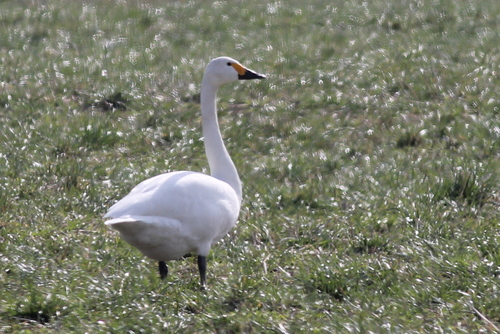
コハクチョウ (Cygnus columbianus) コハクチョウ
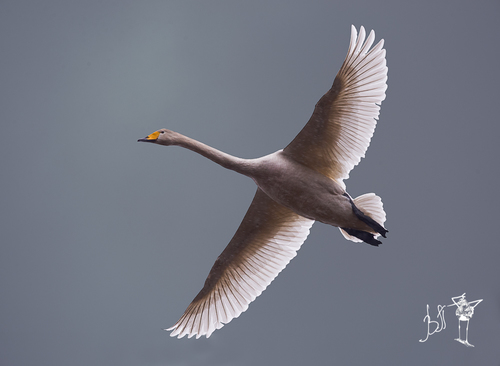
オオハクチョウ (Cygnus cygnus) オオハクチョウ

メディア

読み込み中…

要点

コハクチョウとオオハクチョウの最も信頼できるフィールドマークはくちばしの模様です:コハクチョウは常にくちばしに黄色よりも黒が多く、黄色の斑点の前端は鈍く、オオハクチョウは黒よりも黄色が多く、黄色の斑点が前方に尖っています。オオハクチョウはまた、コハクチョウに比べてはるかに大きく、長い首を持ち、より角ばった頭をしています。両種は成鳥としては純白ですが、幼鳥は淡い灰色で、構造とくちばしの模様で最もよく区別されます。飛行中または静止中は、サイズと首の長さが強い手がかりですが、最も明確な区別のためには常にくちばしを注意深く確認してください。

識別のコツ

  1. くちばしの模様は最も信頼できるフィールドマークです: コハクチョウは常にくちばしに黄色よりも黒が多く、黄色の斑点は前端が鈍く、オオハクチョウは常に黒よりも黄色が多く、黄色の斑点が前方に尖っています。これはすべての年齢に適用されますが、幼鳥のくちばしは鈍いです。
  2. サイズと構造: オオハクチョウははるかに大きく重く、明らかに長い首と大きな体を持っています。直接比較や混合群では、コハクチョウは小さく短い首に見え、ほぼガチョウのように見えます。
  3. 頭の形: コハクチョウは丸い頭のプロファイルを持ち、オオハクチョウはより角ばったまたはくさび形です。これは静止中でも飛行中でも見えます。
  4. 首の長さ: オオハクチョウの首は相対的に長く、しばしばまっすぐに保たれます。コハクチョウの首は短く、わずかに曲がっているかS字型に見えることがあります。
  5. くちばしの詳細: 各コハクチョウは独自のくちばしの模様を持っていますが、常に黒が黄色よりも多いです。オオハクチョウの黄色の斑点はより広範で尖っています。コハクチョウでは、黄色はオオハクチョウのようにくちばしの先端まで伸びることはありません。
  6. 幼鳥の区別: 両種の幼鳥は淡い灰色ですが、くちばしの模様と構造(上記の通り)が最も良い手がかりです。幼鳥のオオハクチョウのくちばしはピンクがかっており、黄色が多く、コハクチョウよりも黄色が広範です。
  7. 足の色: 両方とも黒い足を持っていますが、稀にコハクチョウは黄色がかった足を示すことがあります。これは信頼できる区別にはなりません。
  8. 尾の形: 両方とも丸い尾を持っていますが、これはこの二種の間の強い区別にはなりません(コブハクチョウに対してはより有用です)。
  9. 羽毛: 両方とも成鳥としては純白ですが、時々水からの鉄分によって頭や首が錆びたように染まることがあります。未成熟の個体は淡い灰色で、強い上翼の模様はありません。
  10. 飛行の印象: 飛行中、オオハクチョウは長く重く見え、長い首とより力強い羽ばたきを持っています。コハクチョウはよりコンパクトで敏捷です。
  11. 行動: オオハクチョウは群れの中で明らかな飛行前の合図(頭の上下、振り、羽ばたき)を示す可能性が高いですが、コハクチョウはこれをあまり目立たなく行います。
  12. 鳴き声: オオハクチョウの鳴き声は低音で共鳴しやすいですが、両方とも大きく、バグリングします。注意して使用してください。
  13. 生息地と文脈: 両方が生息する場所では、オオハクチョウはより大きな群れや大きな水域にいる可能性が高いですが、生息地の重複は広範です。
  14. 性別と季節: 両種のオスはわずかに大きいですが、これはフィールドでの診断にはなりません。季節的な変動は主要な識別マークには影響しません。
  15. 落とし穴: 全体の白さ、足の色、尾の形に頼らないでください。特に光が悪い場合や距離がある場合は、最も信頼できる区別のためにくちばしの模様と構造に焦点を当ててください。

大きさ

オオハクチョウはコハクチョウよりもかなり大きく重いです。成鳥のオオハクチョウは平均約11,375gで、長さは140〜165cm、翼幅は205〜275cmです。コハクチョウは平均6,781.5gで、長さは115〜150cm、翼幅は168〜211cmです。距離があっても、オオハクチョウはより大きく、長い体と首を持っているように見えます。混合群では、コハクチョウは著しく小さく短い首に見え、時にはオオハクチョウの中にいる大きな白いガチョウを思い起こさせます。

羽色

両種の幼鳥と未成熟の鳥は淡い灰色から灰褐色で、上翼や体に強い模様がなく、どの年齢でも翼の模様は信頼できる区別にはなりません。両種は成鳥としては純白ですが、両方とも鉄分の多い水から頭や首に錆びたような金色の染みを示すことがあります。主な違いはくちばしにあります:成鳥のコハクチョウは主に黒いくちばしを持ち、基部に変動する黄色があります(常にオオハクチョウよりも黄色が少ない)し、各個体の模様はユニークです。オオハクチョウは主に黄色いくちばしを持ち、前方に尖った黄色の斑点が伸びています。幼鳥のくちばしは鈍く、ピンクがかって黄色を置き換え、黒っぽい灰色が黒を置き換えますが、全体の模様(コハクチョウはより黒く、オオハクチョウはより黄色い)は依然として適用されます。両方の足は黒ですが、稀にコハクチョウは黄色がかった足を示すことがあります。

行動

両種は非常に社交的で、特に冬には家族グループや群れでよく見られます。オオハクチョウは飛行前の頻繁で目立つ合図(頭の上下、振り、羽ばたき)で知られており、コハクチョウではこれがあまり強調されません。飛行中、オオハクチョウは長い首と重い体に見え、コハクチョウはよりコンパクトでガチョウのような印象を持っています。両種は浅い水で逆さになって餌を食べ、野原で草を食べますが、オオハクチョウはそのサイズのために混合群で優位に立つことがあります。

生息環境

両種は北極または亜北極の湿地で繁殖し、温帯の低地湿地、湖、洪水した野原で冬を過ごします。彼らの分布はユーラシアの一部で重なり合い、特に冬に見られます。西ヨーロッパでは、コハクチョウはより小さな群れや時には小さな水域にいる可能性が高く、オオハクチョウはより広範囲に分布し、しばしば大きなグループで見られます。しかし、両方が生息する場所では生息地は信頼できる区別にはなりません。

声

両種は非常に鳴き声が大きく、バグリングの呼び声を持っています。オオハクチョウの呼び声はより共鳴し、低音であると説明され(3または4羽の群れでkloo-kloo-kloo)、コハクチョウは高音でわずかに共鳴が少ないです。実際には、違いは微妙で、特に距離がある場合や混合群ではフィールドでの診断には常に適用されません。

より良い説明を送る

比較と同じ項目を使ってください。文章はすぐに公開されます。

The most reliable field mark between Bewick's Swan and Whooper Swan is the bill pattern: Bewick's Swan always shows more black than yellow on the bill, with a blunt front edge to the yellow patch, while Whooper Swan shows more yellow than black, with the yellow patch pointed forward. Whooper Swan is also much larger and longer-necked, with a more angular head, compared to the compact, short-necked, rounded-headed Bewick's. Both species are pure white as adults, but juveniles are pale grey and best separated by structure and bill pattern. In flight or at rest, size and neck length are strong clues, but always check the bill carefully for the most definitive separation.

  1. Bill pattern is the single most reliable field mark: Bewick's Swan always shows more black than yellow on the bill, with the yellow patch blunt at the front edge; Whooper Swan always has more yellow than black, with the yellow patch pointed forward. This works for all ages, though juvenile bills are duller.
  2. Size and structure: Whooper Swan is much larger and heavier, with a noticeably longer neck and bigger body. In direct comparison or mixed flocks, Bewick's looks small and short-necked, almost goose-like.
  3. Head shape: Bewick's has a rounded head profile, while Whooper's is more angular or wedge-shaped. This is visible both at rest and in flight.
  4. Neck length: Whooper Swan's neck is proportionally longer and often held straighter; Bewick's neck is shorter and can appear slightly kinked or S-shaped.
  5. Bill details: Each Bewick's Swan has a unique bill pattern, but always with more black than yellow. Whooper's yellow patch is more extensive and pointed. In Bewick's, the yellow never extends as far toward the bill tip as in Whooper.
  6. Juvenile separation: Both species' juveniles are pale grey, but bill pattern and structure (as above) are still the best clues. Juvenile Whooper's bill is pinkish and yellowish, but the yellow is more extensive than in Bewick's.
  7. Feet color: Both have black feet, but rare Bewick's may show yellowish feet; this is not a reliable separator.
  8. Tail shape: Both have rounded tails, but this is not a strong separator between these two (more useful against Mute Swan).
  9. Plumage: Both are pure white as adults, sometimes stained rusty on the head/neck from water. Immatures are pale grey, with no strong upperwing pattern to separate them.
  10. Flight jizz: In flight, Whooper Swan looks longer and heavier, with a longer neck and more powerful wingbeats. Bewick's is more compact and agile.
  11. Behavior: Whooper Swans are more likely to display obvious pre-flight signaling (head bobs, shakes, wing flaps) in flocks; Bewick's do this less noticeably.
  12. Vocalizations: Whooper's call is lower-pitched and more resonant, but both are loud and bugling; use with caution.
  13. Habitat and context: Where both occur, Whooper is more likely in larger flocks and on bigger waterbodies, but habitat overlap is extensive.
  14. Sex and season: Males are slightly larger in both species, but this is not diagnostic in the field. Seasonal variation does not affect the main ID marks.
  15. Pitfalls: Do not rely on overall whiteness, leg color, or tail shape. Focus on bill pattern and structure for the most reliable separation, especially in poor light or at distance.

Whooper Swan is substantially larger and heavier than Bewick's Swan. Adult Whooper Swans average about 11,375 g, with lengths of 140–165 cm and wingspans of 205–275 cm. Bewick's Swan averages 6,781.5 g, with lengths of 115–150 cm and wingspans of 168–211 cm. Even at a distance, Whooper Swans appear bulkier, with longer bodies and necks. In mixed flocks, Bewick's will look notably smaller and shorter-necked, sometimes recalling a large white goose among the Whoopers.

Juvenile and immature birds of both species are pale grey to grey-brown, lacking strong patterning on the upperwing or body, so wing pattern is not a reliable separator at any age. Both species are pure white as adults, though both can show rusty or golden staining on the head and neck from iron-rich water. The key difference is in the bill: adult Bewick's Swans have mostly black bills with variable yellow at the base (always less yellow than Whooper), and each individual's pattern is unique; Whooper Swans have mostly yellow bills with a pointed yellow patch extending forward. Juvenile bills are duller, with pinkish replacing yellow and blackish-grey replacing black, but the overall pattern (more black in Bewick's, more yellow in Whooper) still applies. Feet are black in both, but rare Bewick's may show yellowish feet.

Both species are highly social and often seen in family groups or flocks, especially in winter. Whooper Swan is noted for its frequent and conspicuous signaling before flight (head bobs, shakes, wing flaps), which is less emphasized in Bewick's. In flight, Whooper Swans appear longer-necked and heavier, while Bewick's have a more compact, goose-like jizz. Both species feed by upending in shallow water and graze in fields, but Whooper Swans may dominate in mixed flocks due to their size.

Both species breed in arctic or subarctic wetlands and winter in temperate lowland wetlands, lakes, and flooded fields. Their ranges overlap in parts of Eurasia, especially in winter. In western Europe, Bewick's is more likely in smaller flocks and sometimes on smaller waterbodies, while Whooper Swan is more widespread and often found in larger groups. However, habitat is not a reliable separator where both occur.

Both species are very vocal, with loud, bugling calls. Whooper Swan's call is described as more resonant and lower-pitched (kloo-kloo-kloo in groups of three or four), while Bewick's is higher-pitched and slightly less resonant. In practice, the difference is subtle and not always diagnostic in the field, especially at distance or in mixed flocks.

変更を破棄しますか?

保存していない編集があります。今離れると失われます。

コハクチョウ · オオハクチョウ · 苦手な鳥