

Motmot

Atlantic Yellow-nosed Albatross 対 マユグロアホウドリ

Thalassarche chlororhynchos 対 Thalassarche melanophris

Atlantic Yellow-nosed Albatrossとマユグロアホウドリのクイズ

Atlantic Yellow-nosed Albatross (Thalassarche chlororhynchos) Atlantic Yellow-nosed Albatross
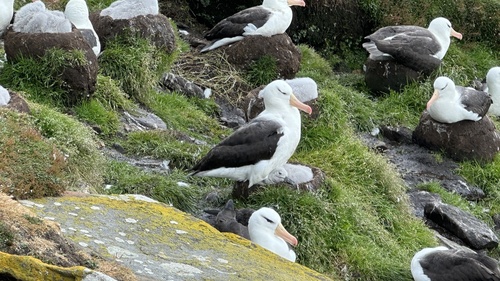
マユグロアホウドリ (Thalassarche melanophris) マユグロアホウドリ

メディア

読み込み中…

要点

アトランティックイエローノーズアホウドリとマユグロアホウドリを区別する最も信頼できるフィールドマークは、下翼の黒い縁の幅と形状です:アトランティックイエローノーズは薄く均一な黒い縁を示し、マユグロははるかに広く不規則な黒い縁があります。幼鳥のアトランティックイエローノーズは白い頭と全黒のくちばしを持ち、幼鳥のマユグロは灰色の頭と襟、暗い角色のくちばしを示します。くちばしの色と頭の模様はすべての年齢で重要ですが、飛行中の下翼の模様が最も早く区別する方法であり、特に距離がある場合に有効です。両者は黒と白のモリマワクですが、これらの特徴に注意を払うことで、ほとんどのフィールドでの混乱を解消できます。

識別のコツ

  1. Underwing pattern in flight (all ages): アトランティックイエローノーズは下翼に薄く均一な黒い縁を示し、マユグロは広く不規則な黒い縁があります。これは、どの距離でも最も早く信頼できるフィールドマークです。
  2. Juvenile head and bill: 幼鳥のアトランティックイエローノーズは白い頭と全黒のくちばしを持ち、幼鳥のマユグロは灰色の頭と襟、暗い角色のくちばしと暗い先端を持っています。近距離または写真でこれを使用してください。
  3. Adult head color: 成鳥のアトランティックイエローノーズは灰色の頭に大きな暗いアイパッチを持ち、マユグロは白い頭に大胆な暗い眉があります。このコントラストは中距離でも見えます。
  4. Bill color (adults): アトランティックイエローノーズは主に黒いくちばしに黄色い線(クルミニコーン)とピンクの先端を持ち、マユグロは黄色-オレンジのくちばしに暗い赤-オレンジの先端を持っています。くちばしの色は近距離で最もよく見えます。
  5. Overall size and structure: マユグロはよりがっしりとしており、長く、翼幅が広いです。アトランティックイエローノーズは小さく、より細身で、翼が狭いです。これは混合群れや経験によって最も明らかです。
  6. Upperwing and saddle: 両者は暗い上翼とサドルを持っていますが、これらは二者間で信頼できる違いではありません。
  7. Tail and rump: 両者は暗い尾と白い臀部を持っていますが、これは有用な区別点ではありません。
  8. Facial pattern: マユグロの暗い眉は、キャンベルアホウドリ(この比較には含まれていません)を除いて、モリマワクの中で独特です。アトランティックイエローノーズはこれを欠いており、代わりに灰色の頭と暗いアイパッチを示します。
  9. Bill tip color: アトランティックイエローノーズのくちばしのピンクの先端は、近距離で微妙ですが役立つマークです。マユグロのくちばしの先端は暗いオレンジです。
  10. Context and abundance: 北大西洋やカツオドリのコロニーの中で見られた場合、マユグロの方がはるかに可能性が高いです。南大西洋では、すべてのフィールドマークを注意深く確認してください。
  11. Immature confusion: 幼鳥のマユグロはハイガシラアホウドリに似ることがありますが、常に暗い眉とくちばしの色を確認してください。
  12. Voice: フィールドでの区別には役立ちません。
  13. Sex and season: どちらの種にも、識別に影響を与える性的二形や強い季節変動はありません。
  14. Pitfalls: 上翼やサドルの色だけに頼らないでください;常に下翼の縁と頭/くちばしの模様を確認してください。幼鳥のアトランティックイエローノーズの白い頭は、このペアのモリマワクの中で独特です。
  15. Flight jizz: アトランティックイエローノーズの狭い翼と軽い体型は経験によって明らかになるかもしれませんが、常に羽毛とくちばし/頭の模様で確認してください。

大きさ

アトランティックイエローノーズアホウドリはマユグロアホウドリよりも明らかに小さく、軽いです。アトランティックイエローノーズは体重が約2060g [wikidata]であるのに対し、マユグロははるかに重く(通常2.9〜4.7kg、ここではAVONET/Wikidataの値は示されていません)長いです(80〜95cm対アトランティックイエローノーズの81cm)。フィールドでは、マユグロはよりがっしりとしており、翼幅が広い(200〜240cm対アトランティックイエローノーズの狭い翼)ように見えます。アトランティックイエローノーズはまた、特に狭い翼を持ち、直接比較や混合群れで明らかになることがあります。

羽色

幼鳥は頭とくちばしの色で最もよく区別されます:幼鳥のアトランティックイエローノーズは白い頭と全黒のくちばしを持ち、幼鳥のマユグロは灰色の頭と襟、暗い角色のくちばしを持っています。すべての年齢において、下翼の模様が診断的です:アトランティックイエローノーズは下翼に薄く均一な黒い縁を示し、マユグロは広く不規則な黒い縁を持っています。成鳥のアトランティックイエローノーズは灰色の頭に大きな暗いアイパッチと、主に黒いくちばしに黄色い線とピンクの先端を持ち、成鳥のマユグロは白い頭に特徴的な暗い眉と、黄色-オレンジのくちばしに暗いオレンジの先端を持っています。両者は暗い上翼とサドルを持っていますが、頭とくちばしの模様は一貫して異なります。

行動

両種は飛行中の典型的なモリマワクであり、硬い翼で海の上を低く滑空します。マユグロアホウドリは大きく重いため、飛行中により頑丈で力強く見えることがありますが、アトランティックイエローノーズはより細身で狭い翼に見えます。フィールドでこれら二者を区別するための止まっているまたは餌を取っている鳥に関する強い行動の違いは、情報源には記載されていません。

生息環境

両種は遠洋性であり、陸から遠く離れた場所で見ることができますが、マユグロアホウドリは世界的に広く一般的であり、北大西洋やカツオドリのコロニーの中での迷行記録も含まれます。アトランティックイエローノーズは南大西洋により制限されています。生息地だけでは診断的ではありませんが、北大西洋のカツオドリの中で見られた場合、マユグロの方がはるかに可能性が高いです。

声

これら二種のフィールドでの区別のために記載された診断的な声の違いはありません。両者はコロニーで騒がしいですが、これらの音は海や飛行中の識別には役立ちません。

より良い説明を送る

比較と同じ項目を使ってください。文章はすぐに公開されます。

The most reliable field mark to separate Atlantic Yellow-nosed Albatross from Black-browed Albatross is the width and shape of the black border on the underwing: Atlantic Yellow-nosed shows a thin, even black margin, while Black-browed has a much broader, irregular black border. Juvenile Atlantic Yellow-nosed also has a white head and all-black bill, whereas juvenile Black-browed shows a grey head and collar with a dark horn-colored bill. Bill color and head pattern are key at all ages, but the underwing pattern in flight is the quickest way to distinguish them, especially at a distance. Both are black-and-white mollymawks, but careful attention to these features will resolve most field confusion.

  1. Underwing pattern in flight (all ages): Atlantic Yellow-nosed shows a thin, even black margin to the underwing; Black-browed has a broad, irregular black border. This is the fastest and most reliable field mark at any distance.
  2. Juvenile head and bill: Juvenile Atlantic Yellow-nosed has a white head and all-black bill. Juvenile Black-browed has a grey head and collar with a dark horn-colored bill and dark tip. Use this at close range or in photos.
  3. Adult head color: Adult Atlantic Yellow-nosed has a grey head with a large dark eye patch; Black-browed has a white head with a bold dark eyebrow. This contrast is visible even at moderate range.
  4. Bill color (adults): Atlantic Yellow-nosed has a mostly black bill with a yellow line (culminicorn) and a pink tip. Black-browed has a yellow-orange bill with a darker reddish-orange tip. Bill color is best seen at close range.
  5. Overall size and structure: Black-browed is bulkier, longer, and has a broader wingspan. Atlantic Yellow-nosed is smaller and more slender with narrower wings. This is most apparent in mixed flocks or with experience.
  6. Upperwing and saddle: Both have dark upperwings and saddles, but these are not reliably different between the two.
  7. Tail and rump: Both have dark tails and white rumps; not a useful separation point.
  8. Facial pattern: The dark eyebrow of Black-browed is unique among mollymawks except Campbell Albatross (not in this comparison). Atlantic Yellow-nosed lacks this, instead showing a grey head and dark eye patch.
  9. Bill tip color: The pink tip of Atlantic Yellow-nosed’s bill is a subtle but helpful mark at close range; Black-browed’s bill tip is a darker orange.
  10. Context and abundance: If seen in the North Atlantic or among gannet colonies, Black-browed is far more likely. In the South Atlantic, check all field marks carefully.
  11. Immature confusion: Immature Black-browed may resemble Grey-headed Albatross, but always check for the dark eyebrow and bill color.
  12. Voice: Not useful for field separation.
  13. Sex and season: No sexual dimorphism or strong seasonal variation in either species that affects identification.
  14. Pitfalls: Do not rely on upperwing or saddle color alone; always check underwing margin and head/bill pattern. Juvenile Atlantic Yellow-nosed’s white head is unique among mollymawks in this pair.
  15. Flight jizz: Atlantic Yellow-nosed’s narrower wings and lighter build may be apparent with experience, but always confirm with plumage and bill/head pattern.

Atlantic Yellow-nosed Albatross is distinctly smaller and lighter than Black-browed Albatross. The Atlantic Yellow-nosed averages about 2060 g in body mass [wikidata], while Black-browed is much heavier (typically 2.9–4.7 kg, though no AVONET/Wikidata value is given here) and longer (80–95 cm vs. Atlantic Yellow-nosed’s 81 cm). In the field, Black-browed appears bulkier and has a broader wingspan (200–240 cm vs. narrower wings in Atlantic Yellow-nosed). Atlantic Yellow-nosed also has notably narrower wings, which can be apparent in direct comparison or in mixed flocks.

Juveniles are best separated by head and bill color: juvenile Atlantic Yellow-nosed has a white head and all-black bill, while juvenile Black-browed has a grey head and collar with a dark horn-colored bill. For all ages, the underwing pattern is diagnostic: Atlantic Yellow-nosed shows a thin, even black margin to the underwing, whereas Black-browed has a broad, irregular black border. Adult Atlantic Yellow-nosed has a grey head with a large dark eye patch and a mostly black bill with a yellow line and pink tip; Black-browed adult has a white head with a distinctive dark eyebrow and a yellow-orange bill with a darker orange tip. Both have dark upperwings and saddles, but the head and bill patterns are consistently different.

Both species are typical mollymawks in flight, gliding low over the ocean with stiff-winged, arcing flight. Black-browed Albatross, being larger and heavier, may appear more robust and powerful in flight, while Atlantic Yellow-nosed looks more slender with narrower wings. There are no strong behavioral differences noted in the sources for perched or feeding birds that would separate these two in the field.

Both species are pelagic and can be seen far from land, but Black-browed Albatross is much more widespread and common globally, including vagrant records in the North Atlantic and even among gannet colonies. Atlantic Yellow-nosed is more restricted to the South Atlantic. Habitat alone is not diagnostic, but if seen among gannets in the North Atlantic, Black-browed is far more likely.

No diagnostic vocal differences are described for field separation between these two species. Both are noisy at colonies, but these sounds are not useful for identification at sea or in flight.

変更を破棄しますか?

保存していない編集があります。今離れると失われます。

Atlantic Yellow-nosed Albatross · マユグロアホウドリ · 苦手な鳥