

Motmot

キンイロコウヨウジャク 対 シュイロマシコ

Ploceus hypoxanthus 対 Carpodacus sipahi

キンイロコウヨウジャクとシュイロマシコのクイズ
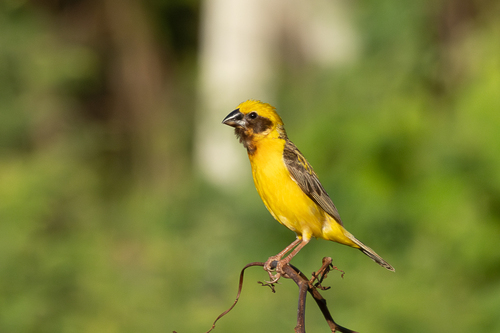
キンイロコウヨウジャク (Ploceus hypoxanthus) キンイロコウヨウジャク
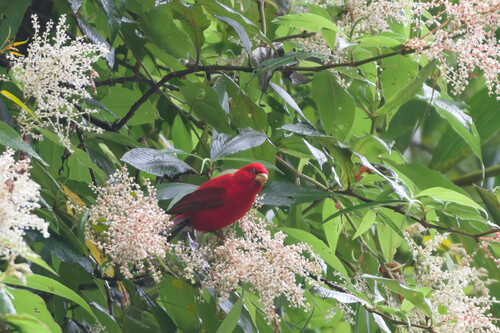
シュイロマシコ (Carpodacus sipahi) シュイロマシコ

メディア

読み込み中…

要点

最も信頼できるフィールドマークは、繁殖期のオスキンイロコウヨウジャクの明るい黄色の羽毛、黒い顔のマスク、強い黒いくちばしであり、これはシュイロマシコには見られません。しかし、繁殖期以外や雌、幼鳥では、キンイロコウヨウジャクはずっと地味になり、他の黄色がかったスズメ目の鳥と混同されることがありますが、それでもシュイロマシコよりも明らかに太いくちばしを持っています。対照的に、シュイロマシコは決して黄色ではありません:成鳥のオスは深いスカーレットレッドで、雌や幼鳥はオリーブ色または茶色がかっており、黄色の色合いはありません。くちばしの形と色、全体的な構造も、この2種を区別するのに役立ちます。特に羽毛があいまいな場合においてです。生息地と範囲は東南アジアの一部でのみ重なりますが、文脈があいまいな場合に役立つことがあります。

識別のコツ

  1. 繁殖期のオスキンイロコウヨウジャク:明るい黄色の羽毛、太い黒い顔のマスク、強い黒いくちばしを探してください。シュイロマシコはこの組み合わせを示しません。
  2. 非繁殖期/雌/幼鳥のキンイロコウヨウジャク:地味な黄色がかった茶色ですが、明らかに太く円錐形のくちばしを持っています。シュイロマシコは年齢や性別に関係なく、黄色の色合いや黒いマスクを示しません。
  3. シュイロマシコ成鳥のオス:全体的に深いスカーレットレッドで、黒い翼と尾を持ち、決して黄色やマスクはありません。キンイロコウヨウジャクは赤い羽毛を示しません。
  4. シュイロマシコ雌/幼鳥:オリーブ色または茶色がかっており、黄色や黒いマスクがなく、織り手よりも淡い、頑丈さに欠けるくちばしを持っています。もし太くて暗いくちばしを持つ茶色がかった鳥を見たら、キンイロコウヨウジャクを疑ってください;もしくちばしが淡く、鳥がよりコンパクトであれば、シュイロマシコを疑ってください。
  5. くちばしの形と色:キンイロコウヨウジャクは太く強い黒いくちばしを持っています(特に繁殖期のオスでは)、一方シュイロマシコはそれほど大きくなく、淡いくちばしを持っています。
  6. 構造:織り手は長くてスリムで、より細長い体と尾を持っています。シュイロマシコはよりコンパクトでずんぐりしています。
  7. 行動:織り手はしばしばコロニーで見られ、特に水の近くで巣を編んでいるのが観察されることがあります。シュイロマシコはより孤独または小さな群れで見られ、木や茂みで餌を探します。
  8. 生息地:もし鳥が開けた湿った草地や農地にいる場合、特にコロニーであれば、キンイロコウヨウジャクの可能性が高いです。もし森林や茂みのある丘にいる場合、特に高い標高であれば、シュイロマシコの可能性が高いです。
  9. 地理的文脈:ヒマラヤや隣接する丘ではシュイロマシコが期待されます;低地の東南アジア、特に湿地ではキンイロコウヨウジャクの可能性が高いです。
  10. 特徴的な幼鳥の翼の模様はない:どちらの種も幼鳥や未熟な個体の飛行中の独特な上翼の模様を示さないため、くちばしの形と全体的な色に頼ってください。
  11. 羽毛の落とし穴:非繁殖期や未熟な織り手は地味に見えることがあり、他の黄色がかったスズメ目の鳥と混同されることがありますが、太いくちばしが決め手です。シュイロマシコは決して黄色や黒いマスクを示しません。
  12. 性別/季節:繁殖期のオスキンイロコウヨウジャクだけが明るい黄色で黒いマスクを持ち、他の年齢や性別は地味です。シュイロマシコのオスは常に赤く、雌や幼鳥はオリーブ色または茶色がかっています。
  13. コロニー対孤立:葦や畑の大きな群れは織り手を示し、単独または小さな群れの木や茂みはシュイロマシコを示します。
  14. 巣の観察:もし複雑に編まれた巣を見たら、あなたは織り手を見ているのであって、シュイロマシコではありません。
  15. 声:現在のメモでは診断的ではありません;分離のために呼び声や歌に頼らないでください。

大きさ

シュイロマシコは重い鳥です(体重約40g [wikidata])、一方キンイロコウヨウジャクは織り手としては中型ですが、おそらく軽いです(正確な体重は不明)。織り手の平均的な長さは約22 cm [wikipedia]で、織り手としては長く、シュイロマシコと重なる可能性がありますが、シュイロマシコはより頑丈でコンパクトです。織り手のくちばしはより太く、円錐形で、特に側面から見ると明らかです。シュイロマシコはよりスズメのような体型で、くちばしはそれほど大きくなく、よりコンパクトでずんぐりした体を持っています。

羽色

繁殖期のオスキンイロコウヨウジャクは間違いなく識別可能です:全体的に明るい黄色で、黒い顔のマスクと強い黒いくちばしを持っています。非繁殖期のオス、雌、幼い織り手はずっと地味で、黄色がかった茶色で、他の織り手と混同されることがありますが、それでもシュイロマシコよりも太いくちばしを持っています。シュイロマシコのオスは深いスカーレットレッドで、黒い翼と尾を持ち、決して黄色やマスクはありません;雌や幼鳥はオリーブ色または茶色がかっており、黄色や黒いマスクがなく、淡い、頑丈さに欠けるくちばしを持っています。どちらの種にも特徴的な幼鳥や未熟な上翼の模様に関するメモはありません。キンイロコウヨウジャクの亜種は、背中により緑がかった黄色や上胸により生のシエナ色を示すことがありますが、これはシュイロマシコの色合いとは重なりません。すべての年齢と性別において、シュイロマシコは織り手の黄色や黒いマスクを示さず、キンイロコウヨウジャクはシュイロマシコの深い赤を示しません。

行動

キンイロコウヨウジャクはしばしばコロニーで見られ、特に湿地や農業地域で、葦や草の中で巣を編んでいるのが観察されることがあります。彼らは開けた低地の湿った生息地で見られる可能性が高いです。シュイロマシコは通常、単独または小さな群れで見られ、木や茂みで餌を探し、開けた湿地で見られる可能性は低いです。彼らの行動は森林やエッジのスズメに典型的で、しばしば直立して止まり、葉の間を移動します。

生息環境

キンイロコウヨウジャクは、季節的に湿ったまたは洪水の低地の草地、湿地、農地に生息し、主に東南アジア(カンボジア、インドネシア、ラオス、ミャンマー、タイ、ベトナム)に分布しています [wikipedia]。シュイロマシコはヒマラヤや隣接する丘の鳥で、時にはさらに南の東南アジアで冬を越しますが、一般的には森林や茂みのある生息地で見られ、しばしば高い標高で見られます。北タイや隣接する地域で重なりが見られることがありますが、生息地の好みは異なります:織り手は開けた湿地や畑に、スズメは森林や茂みのある丘に生息します。

より良い説明を送る

比較と同じ項目を使ってください。文章はすぐに公開されます。

The most reliable field mark is the breeding male Asian Golden Weaver’s bright yellow plumage with a black face mask and strong black bill, which is never matched by the Scarlet Finch. However, outside the breeding season or in females and immatures, Asian Golden Weavers become much duller and can be confused with other yellowish passerines, but still show a noticeably thicker bill than the Scarlet Finch. Scarlet Finches, in contrast, are never yellow: adult males are deep scarlet red, while females and immatures are olive or brownish, lacking any yellow tones. Bill shape and color, as well as overall structure, also help separate these two, especially when plumage is ambiguous. Habitat and range overlap only in parts of Southeast Asia, but context can help in ambiguous cases.

  1. Breeding male Asian Golden Weaver: Look for bright yellow plumage with a bold black face mask and strong black bill. Scarlet Finch never shows this combination.
  2. Non-breeding/female/immature Asian Golden Weaver: Duller yellowish-brown, but still with a noticeably thick, conical bill. Scarlet Finch of any age or sex never shows yellow tones or a black mask.
  3. Scarlet Finch adult male: Deep scarlet red overall with black wings and tail, never yellow or masked. Asian Golden Weaver never shows red plumage.
  4. Scarlet Finch female/immature: Olive or brownish, lacking yellow or black mask, with a paler, less robust bill than the weaver. If you see a brownish bird with a thick, dark bill, suspect weaver; if the bill is paler and the bird is more compact, suspect finch.
  5. Bill shape and color: Asian Golden Weaver has a thick, strong, black bill (especially in breeding males), while Scarlet Finch has a less massive, paler bill.
  6. Structure: Weavers are longer and slimmer, with a more elongated body and tail. Scarlet Finch is more compact and chunky.
  7. Behavior: Weavers are often seen in colonies, especially near water, and may be observed weaving nests. Scarlet Finches are more solitary or in small groups, foraging in trees or bushes.
  8. Habitat: If the bird is in open, wet, grassy or agricultural land, especially in a colony, Asian Golden Weaver is more likely. If in forested or shrubby hills, especially at higher elevation, Scarlet Finch is more likely.
  9. Geographic context: In the Himalayas or adjacent hills, Scarlet Finch is expected; in lowland Southeast Asia, especially in wetlands, Asian Golden Weaver is more likely.
  10. No distinctive juvenile wing patterns: Neither species shows a unique upperwing pattern in flight for juveniles or immatures, so rely on bill shape and overall color.
  11. Plumage pitfalls: Non-breeding and immature weavers can look drab and may be confused with other yellowish passerines, but the thick bill is a giveaway. Scarlet Finch never shows yellow or a black mask.
  12. Sex/season: Only breeding male Asian Golden Weaver is bright yellow with a black mask; all other ages and sexes are duller. Scarlet Finch males are always red, females/immatures olive or brownish.
  13. Colony vs solitary: Large groups in reeds or fields point to weaver; single or small groups in trees/shrubs point to finch.
  14. Nest observation: If you see intricate woven nests, you are looking at weavers, not finches.
  15. Voice: Not diagnostic with current notes; do not rely on calls or songs for separation.

Scarlet Finch is a heavier bird (body mass ~40g [wikidata]), while Asian Golden Weaver is medium-sized for a weaver but likely lighter (exact mass not given). The weaver averages about 22 cm in length [wikipedia], which is long for a weaver and may overlap with the Scarlet Finch, but the finch is more robust and compact. The weaver’s bill is thicker and more conical, especially obvious in side view. Scarlet Finch is more finch-like in build, with a less massive bill and a more compact, chunky body.

Breeding male Asian Golden Weavers are unmistakable: bright yellow overall with a black face mask and strong black bill. Non-breeding males, females, and young weavers are much duller, yellowish-brown, and can be confused with other weavers, but still have a thicker bill than finches. Scarlet Finch males are deep scarlet red with black wings and tail, never yellow or masked; females and immatures are olive or brownish, lacking any yellow or black mask, and have a paler, less robust bill. There are no notes of distinctive juvenile or immature upperwing patterns for either species. Subspecies of Asian Golden Weaver may show more greenish-yellow on the mantle and more raw sienna on the upper breast, but this does not overlap with the Scarlet Finch’s color palette. In all ages and sexes, Scarlet Finch never shows the yellow or black mask of the weaver, and Asian Golden Weaver never shows the deep red of the finch.

Asian Golden Weavers are often seen in colonies, especially in wetland or agricultural areas, and may be observed weaving nests in reeds or grasses. They are more likely to be seen in open, lowland, wet habitats. Scarlet Finches are typically found singly or in small groups, foraging in trees or bushes, and are less likely to be seen in open wetlands. Their behavior is more typical of forest or edge finches, often perching upright and moving through foliage.

Asian Golden Weaver is found in seasonally wet or flooded lowland grasslands, swamps, and arable land, mostly in Southeast Asia (Cambodia, Indonesia, Laos, Myanmar, Thailand, Vietnam) [wikipedia]. Scarlet Finch is a bird of the Himalayas and adjacent hills, sometimes wintering further south into Southeast Asia, but is generally found in forested or shrubby habitats, often at higher elevations. Overlap may occur in northern Thailand and adjacent regions, but habitat preferences differ: weavers in open wetlands and fields, finches in wooded or shrubby hills.

変更を破棄しますか?

保存していない編集があります。今離れると失われます。

キンイロコウヨウジャク · シュイロマシコ · 苦手な鳥