

Asian Golden Weaver vs Scarlet Finch
Ploceus hypoxanthus contro Carpodacus sipahi
Fai un quiz con Asian Golden Weaver e Scarlet Finch
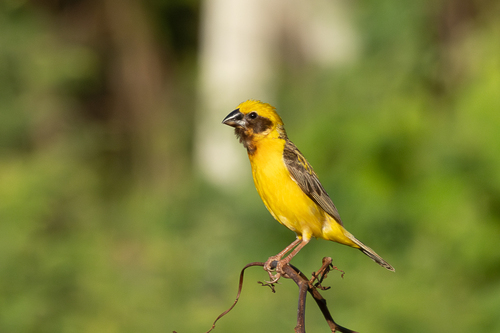 Asian Golden Weaver
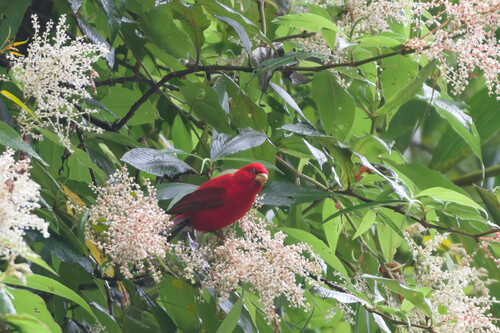 Scarlet Finch
In breve
Il segno distintivo più affidabile è il plumaggio giallo brillante del maschio in riproduzione dell'Asian Golden Weaver con una maschera facciale nera e un forte becco nero, che non è mai eguagliato dallo Scarlet Finch. Tuttavia, al di fuori della stagione di riproduzione o nelle femmine e nei giovani, gli Asian Golden Weavers diventano molto più opachi e possono essere confusi con altri passeriformi giallastri, ma mostrano comunque un becco visibilmente più spesso rispetto allo Scarlet Finch. Gli Scarlet Finches, al contrario, non sono mai gialli: i maschi adulti sono di un rosso scarlatto profondo, mentre le femmine e i giovani sono olivastri o marroni, privi di toni gialli. La forma e il colore del becco, così come la struttura generale, aiutano anche a separare questi due, specialmente quando il piumaggio è ambiguo. L'habitat e l'areale si sovrappongono solo in alcune parti del sud-est asiatico, ma il contesto può aiutare nei casi ambigui.
Consigli di identificazione
- Maschio in riproduzione dell'Asian Golden Weaver: Cerca un piumaggio giallo brillante con una maschera facciale nera audace e un forte becco nero. Lo Scarlet Finch non mostra mai questa combinazione.
- Asian Golden Weaver non in riproduzione/femmina/giovane: Giallo-marrone più opaco, ma con un becco conico visibilmente spesso. Lo Scarlet Finch di qualsiasi età o sesso non mostra mai toni gialli o una maschera nera.
- Maschio adulto di Scarlet Finch: Rosso scarlatto profondo nel complesso con ali e coda nere, mai giallo o mascherato. L'Asian Golden Weaver non mostra mai piumaggio rosso.
- Femmina/giovane di Scarlet Finch: Olivastra o marrone, priva di maschera gialla o nera, con un becco più chiaro e meno robusto rispetto al weaver. Se vedi un uccello marrone con un becco spesso e scuro, sospetta il weaver; se il becco è più chiaro e l'uccello è più compatto, sospetta il finch.
- Forma e colore del becco: L'Asian Golden Weaver ha un becco spesso, forte e nero (specialmente nei maschi in riproduzione), mentre lo Scarlet Finch ha un becco meno massiccio e più chiaro.
- Struttura: I weavers sono più lunghi e snelli, con un corpo e una coda più allungati. Lo Scarlet Finch è più compatto e robusto.
- Comportamento: I weavers sono spesso visti in colonie, specialmente vicino all'acqua, e possono essere osservati mentre tessono nidi. Gli Scarlet Finches sono più solitari o in piccoli gruppi, foraggiando tra gli alberi o nei cespugli.
- Habitat: Se l'uccello si trova in terreni aperti, umidi, erbosi o agricoli, specialmente in una colonia, è più probabile che sia un Asian Golden Weaver. Se si trova in colline boscose o cespugliose, specialmente a elevazioni più alte, è più probabile che sia uno Scarlet Finch.
- Contesto geografico: Nelle Himalaya o nelle colline adiacenti, ci si aspetta di trovare lo Scarlet Finch; nelle pianure del sud-est asiatico, specialmente nelle zone umide, è più probabile trovare l'Asian Golden Weaver.
- Nessun modello distintivo di ali giovanili: Nessuna delle due specie mostra un modello unico di ali superiori in volo per i giovani o i giovani immaturi, quindi fai affidamento sulla forma del becco e sul colore generale.
- Trappole del piumaggio: I weavers non in riproduzione e i giovani possono apparire opachi e possono essere confusi con altri passeriformi giallastri, ma il becco spesso è un indizio. Lo Scarlet Finch non mostra mai giallo o una maschera nera.
- Sesso/stagione: Solo il maschio in riproduzione dell'Asian Golden Weaver è giallo brillante con una maschera nera; tutte le altre età e sessi sono più opachi. I maschi di Scarlet Finch sono sempre rossi, le femmine/immaturi sono olivastri o marroni.
- Colonia vs solitario: Grandi gruppi in canneti o campi indicano un weaver; gruppi singoli o piccoli in alberi/cespugli indicano un finch.
- Osservazione del nido: Se vedi nidi intricati tessuti, stai guardando i weavers, non i finches.
- Voce: Non diagnostica con le note attuali; non fare affidamento su richiami o canti per la separazione.
Taglia
Lo Scarlet Finch è un uccello più pesante (massa corporea ~40g [wikidata]), mentre l'Asian Golden Weaver è di dimensioni medie per un weaver ma probabilmente più leggero (massa esatta non fornita). Il weaver ha una lunghezza media di circa 22 cm [wikipedia], che è lunga per un weaver e può sovrapporsi con lo Scarlet Finch, ma il finch è più robusto e compatto. Il becco del weaver è più spesso e più conico, particolarmente evidente di profilo. Lo Scarlet Finch è più simile a un finch nella struttura, con un becco meno massiccio e un corpo più compatto e robusto.
Piumaggio
I maschi in riproduzione degli Asian Golden Weavers sono inconfondibili: gialli brillanti nel complesso con una maschera facciale nera e un forte becco nero. I maschi non in riproduzione, le femmine e i giovani weavers sono molto più opachi, giallo-marroni, e possono essere confusi con altri weavers, ma hanno comunque un becco più spesso rispetto ai finches. I maschi di Scarlet Finch sono di un rosso scarlatto profondo con ali e coda nere, mai gialli o mascherati; le femmine e i giovani sono olivastri o marroni, privi di qualsiasi maschera gialla o nera, e hanno un becco più chiaro e meno robusto. Non ci sono note di modelli distintivi di ali superiori per i giovani o gli immaturi di nessuna delle due specie. Le sottospecie di Asian Golden Weaver possono mostrare più giallo-verde sul mantello e più ocra cruda sul petto superiore, ma questo non si sovrappone alla palette di colori dello Scarlet Finch. In tutte le età e sessi, lo Scarlet Finch non mostra mai la maschera gialla o nera del weaver, e l'Asian Golden Weaver non mostra mai il rosso profondo del finch.
Comportamento
Gli Asian Golden Weavers sono spesso visti in colonie, specialmente in aree umide o agricole, e possono essere osservati mentre tessono nidi in canneti o erbe. È più probabile vederli in habitat aperti, umidi e pianeggianti. Gli Scarlet Finches si trovano tipicamente singolarmente o in piccoli gruppi, foraggiando tra gli alberi o nei cespugli, e sono meno probabili da vedere in zone umide aperte. Il loro comportamento è più tipico dei finches di foresta o di margine, spesso posandosi in posizione eretta e muovendosi attraverso il fogliame.
Habitat
L'Asian Golden Weaver si trova in prati umidi o allagati a bassa quota, paludi e terreni arabili, principalmente nel sud-est asiatico (Cambogia, Indonesia, Laos, Myanmar, Thailandia, Vietnam) [wikipedia]. Lo Scarlet Finch è un uccello delle Himalaya e delle colline adiacenti, a volte invernando più a sud nel sud-est asiatico, ma si trova generalmente in habitat boschivi o cespugliosi, spesso a elevazioni più alte. La sovrapposizione può verificarsi nel nord della Thailandia e nelle regioni adiacenti, ma le preferenze di habitat differiscono: i weavers in zone umide aperte e campi, i finches in colline boscose o cespugliose.
Asian Golden Weaver · Scarlet Finch · I miei uccelli difficili