

コサメビタキ 対 チャムネサメビタキ
Muscicapa dauurica 対 Muscicapa muttui
コサメビタキとチャムネサメビタキのクイズ
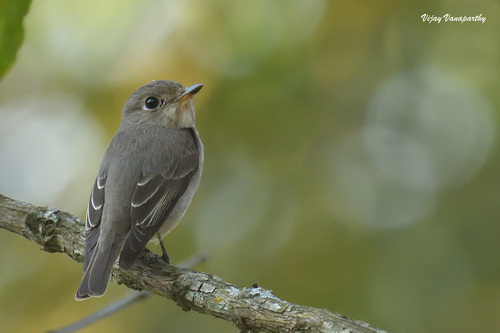 コサメビタキ
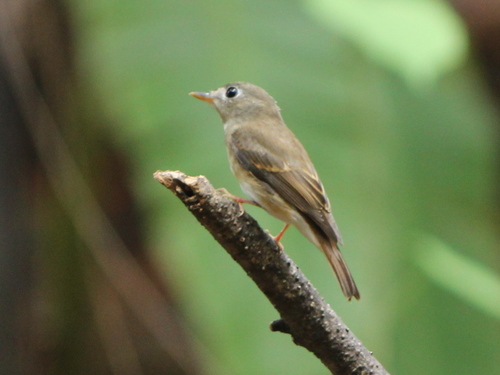 チャムネサメビタキ
要点
The most reliable field mark between Asian Brown Flycatcher and Brown-breasted Flycatcher is leg color: Asian Brown has distinctly dark (blackish) legs, while Brown-breasted shows pale, flesh-colored legs. When viewing immatures or birds in flight, check for rufous tones on the tail and flight feathers—present in Brown-breasted but absent in Asian Brown. Structurally, Asian Brown appears greyer and plainer, with a relatively larger, darker bill, while Brown-breasted is warmer olive-brown above and has a paler lower mandible. Both are small, slim flycatchers, but subtle differences in plumage and structure, especially around the face and underparts, are key to separation.
識別のコツ
- Leg color: Asian Brown Flycatcher always has blackish legs; Brown-breasted Flycatcher has pale, flesh-colored legs. This is the most reliable field mark at close range.
- Bill color and shape: Asian Brown’s bill is dark and relatively large and broad-based, while Brown-breasted’s bill is paler below (flesh-colored) and appears finer.
- Rufous in tail and wings: Brown-breasted shows obvious rufous on the upper tail coverts, outer tail feathers, and edges of the flight feathers (all ages). Asian Brown lacks these rufous tones and is plainer grey-brown above.
- Upperparts color: Asian Brown is grey-brown (becoming greyer with age), while Brown-breasted is olive-brown with warmer tones.
- Underparts: Asian Brown has whitish underparts with brown-tinged flanks; Brown-breasted has a pale brown breast and sides, with a buffy white belly and white chin/throat.
- Facial pattern: Brown-breasted shows a conspicuous pale eye ring and pale lores, giving a more contrasting face. Asian Brown’s face is plainer, with less pronounced 'spectacles.'
- Juvenile/first-winter plumage: Juvenile Asian Brown is scaly brown above and on the breast, but never shows rufous in the tail or wings. Brown-breasted juveniles retain the rufous tones.
- Tail length and shape: Asian Brown may appear slightly longer-tailed, but this is subtle and not always reliable.
- Legs and feet in shade: In poor light, leg color may be hard to judge—use other marks in these cases.
- Habitat context: In dense, moist forest, especially near the ground, Brown-breasted is more likely; in more open woodland or edge, Asian Brown is more probable.
- Flight views: Look for rufous in the tail and wing edges for Brown-breasted; Asian Brown will appear plain.
- Vocalizations: If heard, a faint 'tseet' or 'chi-chi-chi-chi' series suggests Brown-breasted, but silence or generic flycatcher calls do not help.
- Bill base color: Brown-breasted’s lower mandible is pale, sometimes visible even at a distance; Asian Brown’s is dark.
- Subtle subspecies variation: Asian Brown Flycatcher subspecies poonensis is paler and browner above, with a deeper bill and more mottled underparts, but still lacks rufous in the tail and has dark legs.
- Seasonal context: In southern India and Sri Lanka in winter, Brown-breasted is more likely in dense forest, while Asian Brown is a passage migrant or winter visitor in a wider range of wooded habitats.
大きさ
Both species are very similar in size, with Brown-breasted Flycatcher measuring 13–14 cm in length and weighing around 12 g. Asian Brown Flycatcher is about 13 cm long, so there is effectively no size difference in the field. Structure is also similar, though Asian Brown may appear slightly longer-tailed and has a relatively larger, broader-based bill.
羽色
Juvenile and first-winter Asian Brown Flycatchers have scaly brown upperparts, head, and breast, lacking any rufous tones. In contrast, Brown-breasted Flycatcher of all ages shows olive-brown upperparts with brighter rufous on the upper tail coverts, outer tail feathers, and edges of the flight feathers—a key mark, especially in flight or when the tail is fanned. Adults of Asian Brown are grey-brown above (greyer with age), with whitish underparts and brown-tinged flanks, while Brown-breasted has a pale brown breast and sides, white chin and throat, and buffy white belly. Brown-breasted also shows a conspicuous pale eye ring and pale lores, while Asian Brown’s face is plainer, sometimes with less contrasting 'spectacles.' Bill color is diagnostic: Asian Brown’s bill is dark (especially the lower mandible), while Brown-breasted’s is pale flesh-colored below. Leg color is a standout: blackish in Asian Brown, pale in Brown-breasted.
行動
Both species behave as typical Muscicapa flycatchers, sallying for insects from low to mid-level perches. Brown-breasted Flycatcher often forages closer to the forest floor and below the canopy, while Asian Brown is less tied to dense forest and may be seen in more open woodland or edge habitats. No major behavioral differences are noted in the sources.
生息環境
Asian Brown Flycatcher is more adaptable, found in a range of wooded habitats, including open woodland, forest edge, and sometimes gardens or parks. Brown-breasted Flycatcher is more closely associated with forest interiors, especially foraging below the canopy and near the ground. In winter, Brown-breasted is found in southern India and Sri Lanka, while Asian Brown is a widespread migrant across much of Asia. Overlap is possible in migration, but habitat preference can help: Brown-breasted prefers denser, moister forest.
声
Brown-breasted Flycatcher gives a very faint 'tseet' or a series of 'chi-chi-chi-chi' notes ending with a low 'chit-chit,' usually only audible at close range. No distinctive vocalization is described for Asian Brown Flycatcher in the sources provided, so voice is not a reliable separation in most field situations.