

Motmot

クロトウゾクカモメ 対 オオトウゾクカモメ

Stercorarius parasiticus 対 Stercorarius maccormicki

クロトウゾクカモメとオオトウゾクカモメのクイズ
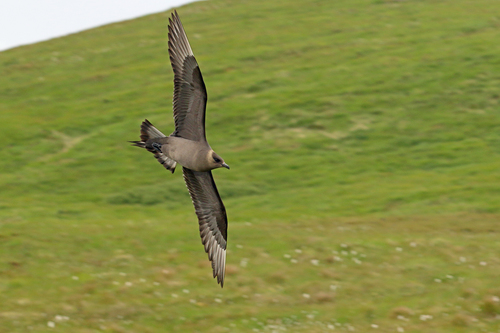
クロトウゾクカモメ (Stercorarius parasiticus) クロトウゾクカモメ
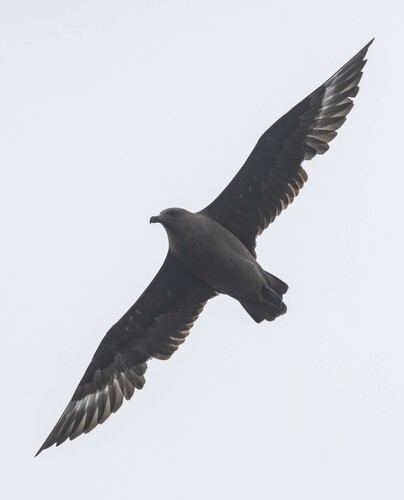
オオトウゾクカモメ (Stercorarius maccormicki) オオトウゾクカモメ

メディア

読み込み中…

要点

アークティック・スカイアと南極・スカイアの最も信頼できるフィールドマークはサイズと構造です:南極・スカイアははるかに大きく、巨大な樽型の胸と重い体格を持ち、アークティック・スカイアは明らかに小さく、スリムです。飛行中、両者は白い翼のフラッシュを示しますが、南極・スカイアのものはより広く、より強力な翼にセットされています。成鳥のアークティック・スカイア(特に明るい形態)は、南極・スカイアにはない特徴的な尖った中央尾の突起を持っています。幼鳥や暗い形態の鳥はより難しいですが、南極・スカイアは常により大きく、寒色系に見えます。もし岸からスカイアを見て、それが小さく、敏捷で、トンビのように見えるなら、それはほぼ確実にアークティック・スカイアです。

識別のコツ

  1. サイズと構造が最も信頼できるフィールドマークです: 南極・スカイアははるかに大きく、重厚で、樽型の胸と太い首を持っています。アークティック・スカイアは小さく、スリムで、より流線型です。これはすべての年齢と形態に当てはまります。
  2. 成鳥の尾の形: 成鳥のアークティック・スカイア(特に明るい形態)は、尾の残りの部分から約7cm延びた尖った中央尾のストリーマーを持っています。南極・スカイアはこの特徴がなく、より四角い尾を持っています。
  3. 翼の形と飛行スタイル: アークティック・スカイアはより敏捷で、ハヤブサのようで、翼が狭く、迅速でアクロバティックな飛行をします。南極・スカイアは翼が広く、遅く、より力強く、直接的な飛行をします。
  4. 白い翼のフラッシュ: 両種は白い翼のフラッシュを示しますが、南極・スカイアではより広い翼にセットされており、鳥のサイズのためにより目立つように見えることがあります。このマークだけでは診断には不十分です。
  5. 羽毛のトーン: アークティック・スカイア(特に幼鳥や中間形態)は一般的に暖かい茶色ですが、南極・スカイアは寒色系の茶色または灰色がかっています。これは微妙で、構造と組み合わせて使用するのが最良です。
  6. 頭と首のコントラスト: 成鳥の南極・スカイア(淡色/中間形態)は、淡い(白っぽいまたは藁色の茶色)頭と暗い体との間に鋭いコントラストを示します。アークティック・スカイア(明るい形態)は、黒い帽子を持つ黄白色の頭と首を持っていますが、コントラストはそれほど鋭くありません。
  7. 幼鳥の混乱: 幼鳥のアークティック・スカイアはより茶色く、スリムで、短いがまだ尖った尾を持っています。幼鳥の南極・スカイアはより大きく、寒色系の茶色で、尖った尾がありません。幼鳥では羽毛よりも構造とジズを重視してください。
  8. くちばしの色: 南極・スカイアはくちばしの基部に青色を示すことがあります(特に幼鳥や暗い形態で)、しかしこれは微妙で、遠くからは見えにくいです。
  9. 生息地と範囲: 北半球にいる場合、特に岸近くでは、小さなスカイアはほぼ確実にアークティック・スカイアです。南極・スカイアは南の海以外では珍しい漂流者です。
  10. 行動: アークティック・スカイアはトンビやカモメを追いかける敏捷な行動をすることが多いです。南極・スカイアはより力任せで、アクロバティックではありません。
  11. 止まっている姿勢: 南極・スカイアは止まっているときに巨大で重厚な胸を持っているように見えます;アークティック・スカイアはよりコンパクトで、威圧感が少ないです。
  12. 羽毛の形態の落とし穴: 両種は明るい、中間、暗い形態を持っているため、色だけでは安全な区別にはなりません。常にサイズと構造を最初に使用してください。
  13. 声: 信頼できる区別にはなりません;アークティック・スカイアは繁殖地で鼻声の鳴き声を出しますが、両者は通常は巣から離れると静かです。
  14. 季節と文脈: 尾のストリーマーを持つ成鳥のアークティック・スカイアは繁殖期にのみ見られます;幼鳥や非繁殖の鳥は長い尾がありませんが、スリムな構造を保っています。南極・スカイアは移動以外では南の海の外では見られません。
  15. 相対的な豊富さ: アークティック・スカイアは北で岸から見られる最も一般的なジャガーです。南極・スカイアは北半球のほとんどで珍しいか、存在しません。

大きさ

南極・スカイアはアークティック・スカイア(41–48 cm、質量300–650 g)よりも劇的に重く(平均成鳥質量約1349 g)および長い(約53 cm)です。フィールドでは、南極・スカイアははるかに頑丈に見え、樽型の胸と太い首を持っていますが、アークティック・スカイアはコンパクトでより流線型です。このサイズの違いは、特にカモメやトンビと一緒に見たときには、距離があっても通常は明らかです。

羽色

幼鳥と未成熟の羽毛は混乱の主な原因です。両種は暗い、中間、淡い形態を示すことができ、両者とも白い翼のフラッシュを持っていますが、文脈と構造が助けになります。幼鳥のアークティック・スカイアはより茶色く、暖かいトーンで、よりハヤブサのような飛行と尖った中央尾の突起を持っています(ただし成鳥より短いです)。幼鳥の南極・スカイアは寒色系の茶色で、より大きく、尖った尾がありません。両種の成鳥は淡い頭が暗い体と対照的に見えることがありますが、南極・スカイアではこのコントラストがより鋭く、頭はしばしば藁色または白っぽいです。成鳥のアークティック・スカイア(明るい形態)は、黒い帽子を持つ黄白色の頭と首、尖った中央尾のストリーマーを持っています。両者の暗い形態は主に暗い茶色ですが、南極・スカイアのものは寒色系でより均一です。すべての年齢において、南極・スカイアの白い翼のフラッシュはより広く、より強力な翼にセットされています。

行動

両種は攻撃的なクリプトパラサイトで、カモメやトンビを食べ物のために襲います。アークティック・スカイアは飛行中により敏捷でハヤブサのようで、しばしばアクロバティックな追跡を行います。南極・スカイアは敏捷性は低いですが、より力強く、力任せの飛行に依存しています。地上では、南極・スカイアはそのサイズと姿勢のためにより威圧的で支配的に見えます。

生息環境

アークティック・スカイアは北半球のツンドラ、高地、島々で繁殖し、その範囲内で岸から見られる最も一般的なジャガーです。南極・スカイアは南極で繁殖し、南の海の外ではめったに遭遇しませんが、珍しい漂流者として見られることがあります。もしあなたが南極地域の外の北半球にいるなら、小さなスカイアはほぼ確実にアークティック・スカイアです。南極・スカイアは移動以外では北大西洋で信頼できる記録はほとんどありません。

声

アークティック・スカイアは繁殖地以外では通常静かですが、繁殖地では鼻声の鳴き声や叫び声を出します。南極・スカイアの鳴き声は提供されたメモには記載されていませんが、両種は一般的に海上では静かで、移動中に鳴くことはほとんどありません。声は区別のための信頼できるフィールドマークではありません。

より良い説明を送る

比較と同じ項目を使ってください。文章はすぐに公開されます。

The most reliable field mark between Arctic Skua and South Polar Skua is size and structure: South Polar Skua is much larger, with a massive barrel chest and heavy build, while Arctic Skua is noticeably smaller and slimmer. In flight, both show a white wing flash, but South Polar Skua's is set in a broader, more powerful wing. Adult Arctic Skuas (especially light morphs) have a distinctive pointed central tail projection, absent in South Polar Skua. Juvenile and dark morph birds are trickier, but South Polar Skua always looks bulkier and colder-toned. If you see a skua from shore and it seems small, agile, and tern-like, it's almost certainly an Arctic Skua.

  1. Size and structure are the most reliable field marks: South Polar Skua is much larger and bulkier, with a barrel chest and thick neck. Arctic Skua is smaller, slimmer, and more streamlined. This is true for all ages and morphs.
  2. Tail shape in adults: Adult Arctic Skua (especially light morphs) has a pointed central tail streamer, extending about 7 cm beyond the rest of the tail. South Polar Skua lacks this feature and has a more squared-off tail.
  3. Wing shape and flight style: Arctic Skua is more agile and falcon-like, with narrower wings and quick, acrobatic flight. South Polar Skua has broader wings and a slower, more powerful, and direct flight.
  4. White wing flash: Both species show a white wing flash, but in South Polar Skua it is set in a broader wing and may appear more prominent due to the bird's size. This mark alone is not diagnostic.
  5. Plumage tones: Arctic Skua (especially juveniles and intermediates) is generally warmer brown, while South Polar Skua is colder brown or greyish. This is subtle and best used in combination with structure.
  6. Head and neck contrast: Adult South Polar Skua (pale/intermediate morphs) shows a sharp contrast between a pale (whitish or straw-brown) head and darker body. Arctic Skua (light morph) has a yellowish-white head and neck with a black cap, but the contrast is less sharp.
  7. Juvenile confusion: Juvenile Arctic Skua is browner and slimmer, with a shorter but still pointed tail. Juvenile South Polar Skua is bulkier, colder brown, and lacks the pointed tail. Use structure and jizz over plumage in juveniles.
  8. Bill color: South Polar Skua may show a blue base to the bill (especially in juveniles and dark morphs), but this is subtle and hard to see at distance.
  9. Habitat and range: If you are in the northern hemisphere, especially near shore, a small skua is almost certainly Arctic Skua. South Polar Skua is a rare vagrant outside the southern oceans.
  10. Behavior: Arctic Skua is more likely to be seen performing agile chases of terns and gulls. South Polar Skua relies more on brute force and is less acrobatic.
  11. Perched posture: South Polar Skua appears massive and heavy-chested when perched; Arctic Skua is more compact and less imposing.
  12. Plumage morph pitfalls: Both species have light, intermediate, and dark morphs, so color alone is not a safe separator. Always use size and structure first.
  13. Voice: Not a reliable separator; Arctic Skua gives nasal mewing calls on breeding grounds, but both are usually silent away from nests.
  14. Season and context: Adult Arctic Skuas with tail streamers are only seen in breeding season; juveniles and non-breeding birds lack the long tail but retain slim structure. South Polar Skua is unlikely outside southern oceans except in migration.
  15. Relative abundance: Arctic Skua is the most common jaeger seen from shore in the north. South Polar Skua is rare or absent in most of the northern hemisphere.

South Polar Skua is dramatically heavier (average adult mass ~1349 g) and longer (about 53 cm) than Arctic Skua (41–48 cm, mass 300–650 g). In the field, South Polar Skua appears much more robust, with a barrel-shaped chest and a thick neck, while Arctic Skua is compact and more streamlined. This size difference is usually obvious even at a distance, especially when seen alongside gulls or terns.

Juvenile and immature plumages are the main source of confusion. Both species can show dark, intermediate, and pale morphs, and both have a white wing flash, but the context and structure help. Juvenile Arctic Skua is browner and warmer-toned, with a more falcon-like flight and a pointed central tail projection (though shorter than in adults). Juvenile South Polar Skua is colder brown, bulkier, and lacks the pointed tail. Adults of both species can show pale heads contrasting with darker bodies, but in South Polar Skua this contrast is sharper and the head is often straw-brown or whitish. Adult Arctic Skua (light morph) has a yellowish-white head and neck with a black cap, and a pointed central tail streamer. Dark morphs of both are mostly dark brown, but South Polar Skua's is colder and more uniform. In all ages, South Polar Skua's white wing flash is set in a broader, more powerful wing.

Both species are aggressive kleptoparasites, harassing gulls and terns for food. Arctic Skua is more agile and falcon-like in flight, often performing acrobatic chases. South Polar Skua is less agile but more forceful, relying on brute strength and direct flight. On the ground, South Polar Skua appears more imposing and dominant due to its size and posture.

Arctic Skua breeds on tundra, high fells, and islands in the northern hemisphere, and is the most common jaeger seen from shore in its range. South Polar Skua breeds in the Antarctic and is rarely encountered outside the southern oceans, except as a rare vagrant. If you are in the northern hemisphere outside the Antarctic region, a small skua is almost certainly Arctic Skua. South Polar Skua is rarely, if ever, reliably recorded in the North Atlantic outside migration.

Arctic Skua is usually silent except on the breeding grounds, where it gives nasal mewing and wailing calls. South Polar Skua's vocalizations are not described in the provided notes, but both species are generally quiet at sea and rarely vocalize during migration. Voice is not a reliable field mark for separation.

変更を破棄しますか?

保存していない編集があります。今離れると失われます。

クロトウゾクカモメ · オオトウゾクカモメ · 苦手な鳥