

Motmot

アラビアコノハズク 対 ヨーロッパコノハズク

Otus pamelae 対 Otus scops

アラビアコノハズクとヨーロッパコノハズクのクイズ
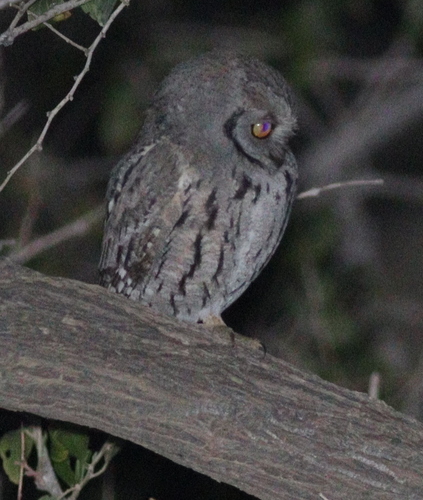
アラビアコノハズク (Otus pamelae) アラビアコノハズク
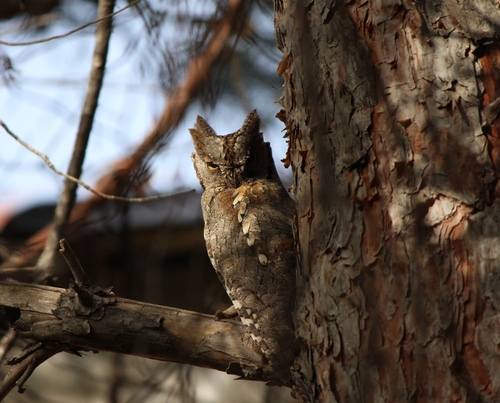
ヨーロッパコノハズク (Otus scops) ヨーロッパコノハズク

メディア

読み込み中…

要点

アラビアコノハズクとヨーロッパコノハズクをフィールドで区別するのは難しいです。両者は小型で、耳の房があり、全体的な色合いが似ています。フィールドでの最も信頼できる区別は、分布と文脈によるものです:アラビアコノハズクはアラビア半島に限定されており、ヨーロッパコノハズクはヨーロッパとアジア全体に広がり、渡りを行います。直接比較すると、ヨーロッパコノハズクはわずかに大きく、渡りに適した長くて狭い翼を持ち、顔と腹部がより淡いです。鳴き声も異なり、ヨーロッパコノハズクは深いヒキガエルのような口笛を出します。年齢特有の翼の模様の違いは資料に詳しく記載されていないため、構造、文脈、微妙な羽毛の手がかりに焦点を当ててください。

識別のコツ

  1. Range is diagnostic: アラビアコノハズクはサウジアラビア、オマーン、イエメンにのみ見られます。ヨーロッパコノハズクはアラビアでは信頼できる場所には見られず、ヨーロッパとアジアに広がっています。
  2. Size and structure: ヨーロッパコノハズクはわずかに大きく、長くて狭い翼を持っています。飛行中のより細長い、渡りの「ジズ」を探してくださいが、重複と観察者のバイアスに注意してください。
  3. Facial pattern: ヨーロッパコノハズクは顔と腹部がより淡く、淡い肩のラインがあります。良い光の下では、このコントラストが見えることがあります;アラビアコノハズクはおそらくより均一に色付けされています。
  4. Ear-tufts: 両種とも小さな耳の房を持っているため、これは有用な区別にはなりません。
  5. Perched posture: 両者は直立して止まりますが、ヨーロッパコノハズクは翼の長さのためにわずかに細長く見えることがあります。
  6. Plumage tone: ヨーロッパコノハズクは灰褐色と記載されています;アラビアコノハズクの色合いはあまり詳しく記載されていませんが、おそらく似ています。悪い光の中での色に基づく識別には注意してください。
  7. Flight style: ヨーロッパコノハズクは長い翼で強く、直接的な飛行をします;アラビアコノハズクはおそらく力強さが少ないように見えるかもしれませんが、これは微妙です。
  8. Vocalization: ヨーロッパコノハズクの深いヒキガエルのような口笛は特異です。ヨーロッパやアジアでこの呼び声を聞いたら、それは診断的です。アラビアコノハズクの呼び声は記載されていないため、アラビアでは声に頼らないでください。
  9. Habitat context: アラビアでは、どのコノハズクもほぼ確実にアラビアコノハズクです。ヨーロッパやアジアでは、ヨーロッパコノハズクがデフォルトです。
  10. No age-specific wing pattern: どちらの種も特異な幼鳥や未熟な翼のマークがあるとは記載されていないため、これに頼らないでください。
  11. Seasonal context: ヨーロッパコノハズクは渡りを行います;冬にサハラ以南のアフリカで見られた場合、それはヨーロッパコノハズクです。アラビアコノハズクは限られた範囲内で年間を通じて生息しています。
  12. Population context: アラビアコノハズクは数が非常に少なく、より局所的です;ヨーロッパコノハズクはその範囲内で広く一般的です。
  13. Pitfalls: サイズや色だけに頼らないでください。重複や照明が誤解を招く可能性があります。常に最初に場所を考慮してください。
  14. Sex and age: どちらの種にも性的二形や年齢特有のマークは記載されていないため、これらは区別には有用ではありません。
  15. Checklist approach: アラビアでは、他に証明されない限りアラビアコノハズクを仮定してください。他の場所では、ヨーロッパコノハズクがデフォルトです。羽毛と構造はサポート証拠としてのみ使用してください。

大きさ

ヨーロッパコノハズクはわずかに大きく、全長19–21 cm、翼開長47–54 cmです [wikipedia]。アラビアコノハズクは小型と記載されていますが、正確な測定値は提供されていません;おそらく似ていますが、わずかに小さいかもしれません。手に取ったり、優れた視界で見ると、ヨーロッパコノハズクは翼が長く、少しずんぐりした印象を与えるかもしれません。ほとんどの観察者にとって、これらのサイズの違いは微妙で、単独では常に信頼できるわけではありません。

羽色

どちらの種についても、年齢特有の翼や飛行パターンの違いは詳しく提供されていません。両者は小さな耳の房と直立した姿勢を持つ灰褐色の羽毛を示します。ヨーロッパコノハズクは顔、腹部、淡い肩のラインがより淡いことが注目されており、良い光の下でのフィールドマークとして有用です。アラビアコノハズクは詳細に記載されていませんが、おそらく全体的により均一に色付けされています。止まっている鳥では、ヨーロッパコノハズクの淡い顔と暗い頭部/耳の房とのコントラストを探してください。どちらの種についても特異な幼鳥や未熟な翼のパターンについての言及はありませんので、これらは診断的ではありません。

行動

両種は直立して止まり、通常は単独またはペアで見られます。ヨーロッパコノハズクは長くて狭い翼で強く、直接的な飛行を持つと記載されており、これはその渡りの習性に関連しています。アラビアコノハズクは渡りを行わず、アラビア半島に特有であるため、翼の長さがあまり目立たず、飛行があまり力強くないかもしれませんが、これは明示的には記載されていません。両者は夜行性で秘密主義的であり、日中は密な覆いの中で休むことがよくあります。

生息環境

アラビアコノハズクはサウジアラビア、オマーン、イエメンに特有であり、アラビア半島の外には見られません。ヨーロッパコノハズクは南ヨーロッパ、南シベリア、西ヒマラヤで繁殖し、サハラ以南のアフリカで冬を越し、一部の個体群は地中海に生息しています。したがって、地理的な位置はしばしば最も信頼できる手がかりです:アラビアで見られるコノハズクはほぼ確実にアラビアコノハズクであり、ヨーロッパやアジアのものはヨーロッパコノハズクです。重複は期待されません。

声

ヨーロッパコノハズクはヒキガエル(Alytes)を思わせる深く反復的な口笛を出し、両性が鳴きます。アラビアコノハズクの鳴き声についての記載はありませんが、ヨーロッパの特異な呼び声はその範囲内での重要なフィールドマークです。両者が考慮される地域では、声が診断的である可能性がありますが、実際には分布がより重要です。

より良い説明を送る

比較と同じ項目を使ってください。文章はすぐに公開されます。

Distinguishing Arabian Scops Owl from Eurasian Scops Owl in the field is challenging, as both are small, upright-perching owls with ear-tufts and similar overall coloration. The most reliable separation in the field is by range and context: Arabian Scops Owl is restricted to the Arabian Peninsula, while Eurasian Scops Owl is widespread across Europe and Asia and migratory. In direct comparison, Eurasian Scops Owl is slightly larger with longer, narrower wings suited for migration, and has a paler face and underparts. Vocalizations are also distinct, with Eurasian Scops Owl giving a deep, toad-like whistle. Age-specific wing pattern differences are not detailed in the sources, so focus on structure, context, and subtle plumage cues.

  1. Range is diagnostic: Arabian Scops Owl is only found in Saudi Arabia, Oman, and Yemen. Eurasian Scops Owl is never reliably found in Arabia, but is widespread in Europe and Asia.
  2. Size and structure: Eurasian Scops Owl is slightly larger with longer, narrower wings. Look for a more elongated, migratory 'jizz' in flight, but beware overlap and observer bias.
  3. Facial pattern: Eurasian Scops Owl shows a paler face and underparts, with a pale shoulder line. In good light, this contrast can be visible; Arabian Scops Owl is likely more uniformly colored.
  4. Ear-tufts: Both species have small ear-tufts, so this is not a useful separator.
  5. Perched posture: Both perch upright, but Eurasian Scops Owl may appear slightly more elongated due to wing length.
  6. Plumage tone: Eurasian Scops Owl is described as grey-brown; Arabian Scops Owl's coloration is less well described but is probably similar. Use caution with color-based IDs in poor light.
  7. Flight style: Eurasian Scops Owl has a strong, direct flight on long wings; Arabian Scops Owl may appear less powerful, but this is subtle.
  8. Vocalization: Eurasian Scops Owl's deep, toad-like whistle is distinctive. If you hear this call in Europe or Asia, it's diagnostic. Arabian Scops Owl's call is not described, so do not rely on voice in Arabia.
  9. Habitat context: In Arabia, any scops owl is almost certainly Arabian Scops Owl. In Europe or Asia, Eurasian Scops Owl is the default.
  10. No age-specific wing pattern: Neither species is described as having distinctive juvenile or immature wing marks, so do not rely on this for separation.
  11. Seasonal context: Eurasian Scops Owl is migratory; if seen in Africa south of the Sahara in winter, it is Eurasian. Arabian Scops Owl is resident year-round in its limited range.
  12. Population context: Arabian Scops Owl is much less numerous and more localized; Eurasian Scops Owl is widespread and common in its range.
  13. Pitfalls: Do not rely on size or color alone, as overlap and lighting can mislead. Always consider location first.
  14. Sex and age: No sexual dimorphism or age-specific marks are described for either species, so these are not useful for separation.
  15. Checklist approach: In Arabia, assume Arabian Scops Owl unless proven otherwise. Elsewhere, Eurasian Scops Owl is the default. Use plumage and structure only as supporting evidence.

Eurasian Scops Owl is marginally larger, measuring 19–21 cm in length with a wingspan of 47–54 cm [wikipedia]. Arabian Scops Owl is described as small, but no precise measurements are provided; it is likely similar but perhaps slightly smaller. In hand or with excellent views, Eurasian Scops Owl may appear longer-winged and a bit bulkier, reflecting its migratory lifestyle. For most observers, these size differences will be subtle and not always reliable in isolation.

No detailed age-specific wing or flight pattern differences are provided for either species. Both show grey-brown plumage with small ear-tufts and upright posture. Eurasian Scops Owl is noted for a paler face, underparts, and a pale shoulder line, which can be a useful field mark in good light. Arabian Scops Owl is not described in detail, but is likely more uniformly colored overall. In perched birds, look for the contrast between the pale face and darker crown/ear-tufts in Eurasian Scops Owl. No mention is made of distinctive juvenile or immature wing patterns for either species, so these are not diagnostic.

Both species perch upright and are typically seen singly or in pairs. Eurasian Scops Owl is described as having a strong, direct flight on long, narrow wings, a feature associated with its migratory habits. Arabian Scops Owl, being non-migratory and endemic to the Arabian Peninsula, may show less pronounced wing length and a less powerful flight, but this is not explicitly described. Both are nocturnal and secretive, often roosting in dense cover during the day.

Arabian Scops Owl is endemic to Saudi Arabia, Oman, and Yemen, and is not found outside the Arabian Peninsula. Eurasian Scops Owl breeds across southern Europe, southern Siberia, and the western Himalayas, and winters in sub-Saharan Africa, with some populations resident in the Mediterranean. Thus, geographic location is often the most reliable clue: any scops owl seen in Arabia is almost certainly Arabian Scops Owl, while those in Europe or Asia are Eurasian Scops Owl. Overlap is not expected.

Eurasian Scops Owl gives a deep, repetitive whistle reminiscent of midwife toads (Alytes), and both sexes call. No vocal description is provided for Arabian Scops Owl, but the Eurasian's distinctive call is a key field mark in its range. In areas where both might be considered, voice could be diagnostic, but in practice, range is more important.

変更を破棄しますか?

保存していない編集があります。今離れると失われます。

アラビアコノハズク · ヨーロッパコノハズク · 苦手な鳥