

Motmot

アメリカシロペリカン 対 ヒメアカクロサギ

Pelecanus erythrorhynchos 対 Egretta caerulea

アメリカシロペリカンとヒメアカクロサギのクイズ
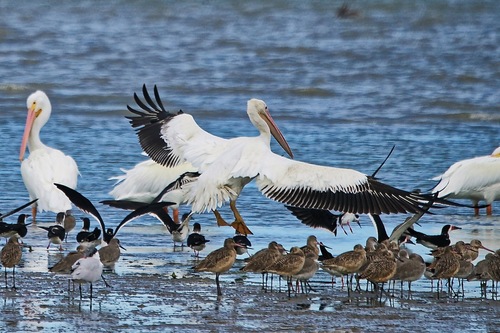
アメリカシロペリカン (Pelecanus erythrorhynchos) アメリカシロペリカン
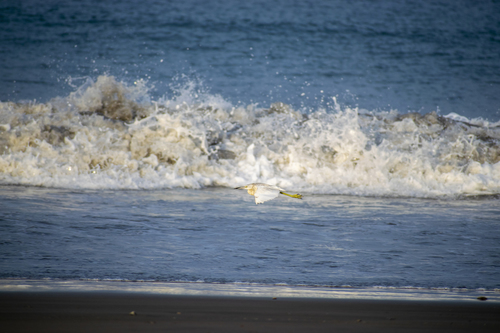
ヒメアカクロサギ (Egretta caerulea) ヒメアカクロサギ

メディア

読み込み中…

要点

アメリカシロペリカンとヒメアカクロサギの最も信頼できるフィールドマークは、全体のサイズと構造です:ペリカンは巨大で重い体を持つ鳥で、大きなオレンジ色のくちばしと、飛行中にのみ見える黒い飛行羽毛を持っています。一方、サギは細長く、小型の水鳥で、二色のくちばしと、幼鳥では全体が白い羽毛を持っています。未熟なヒメアカクロサギは、その淡い色のためにペリカンのような白い鳥と間違われることがよくありますが、彼らのはるかに小さなサイズと異なる比率は明確です。飛行中、アメリカシロペリカンは、他の白い翼に対して際立った黒い初級羽と二級羽を示し、幼鳥のヒメアカクロサギは、わずかに暗い初級羽を持つほぼ白い翼を持っています。両種の成鳥は色によって簡単に区別できます:ペリカンは黒い翼先を持つ純白で、サギはマルーン色の頭を持つ濃い青です。構造、くちばしの形、飛行スタイルも区別のための重要な要素です。

識別のコツ

  1. Size is decisive: カナダガンやオオアオサギの近くにいる場合は、直接比較してください—アメリカシロペリカンは、ヒメアカクロサギを含むどのサギよりもはるかに大きいです。
  2. Bill shape and color: ペリカンは大きく平らな上部のくちばしを持ち、大きな喉の袋(繁殖期の成鳥では鮮やかなオレンジ色)があります;ヒメアカクロサギは細長く尖った二色のくちばし(青みがかった基部、黒い先端)を持っています。
  3. Flight pattern: 飛行中、ペリカンは白い翼に対して際立った黒い初級羽と二級羽を示します;サギは均一な翼(幼鳥は白、成鳥は暗い)を持ち、白い幼鳥ではわずかに暗い初級羽しかありません—決して鮮明な白黒パターンではありません。
  4. Neck posture in flight: ペリカンは首を伸ばして飛びます;サギはS字型に首を引っ込めて飛びます。
  5. Plumage—adults: 成鳥のペリカンは全て白(飛行中にのみ見える黒い飛行羽を除く)です;成鳥のヒメアカクロサギは繁殖期にマルーン色または赤みがかった頭を持つ濃い青です。
  6. Plumage—juveniles: 幼鳥のヒメアカクロサギは全て白で、二色のくちばしと緑がかった脚を持ち、時々ペリカンのような白い鳥と混同されますが、はるかに小さく、ペリカンの黒い飛行羽がありません。
  7. Plumage—immature/transitional: 成鳥の羽毛に移行中の未熟なヒメアカクロサギは、斑点のある白と青の羽毛を示します;ペリカンは決して斑点のあるまたは青い色合いを示しません。
  8. Leg color: サギは緑がかったまたは黒っぽい脚を持っています(繁殖期:黒);ペリカンは淡いオレンジまたは黄色がかった脚を持ち、決して暗くありません。
  9. Bare part color in breeding: ペリカンのくちばしと顔の皮膚は鮮やかなオレンジ色になります;サギの顔の部分はターコイズ色に変わり、脚/足は黒になります。
  10. Feeding behavior: ペリカンは群れで泳ぎながらくちばしを水に浸けて餌を取ります;サギはゆっくりと忍び寄り、浅い水で獲物を突き刺します。
  11. Perched posture: ペリカンはずんぐりしており、水中や砂州に低く座ることが多いです;サギは直立して細長く、水辺で動かずに立っていることが多いです。
  12. Habitat context: ペリカンは狭い湿地や葦の中にはほとんどいません;サギは岸から遠く離れた場所や開けた水の上にはほとんどいません。
  13. Flock size: ペリカンはしばしば大きく目立つ群れで見られます;ヒメアカクロサギは主に孤独または小さな群れで見られます。
  14. Wing shape: ペリカンの翼は広く長く、滑空に適しています;サギの翼は狭く、より丸みを帯びています。
  15. Confusion risk: 唯一の混乱の可能性は、遠くのペリカンと幼鳥のヒメアカクロサギ(全て白)です;サイズ、くちばし、飛行パターンを使用して区別してください—ペリカンは常にはるかに大きく、飛行中に翼に黒を示します。

大きさ

サイズは最も劇的な違いです:アメリカシロペリカンは北アメリカの最大の鳥の一つで、平均してほぼ6 kg(5945 g)で、翼幅は最大3メートルです。ヒメアカクロサギは小型のサギで、体重は約340 g、翼幅は1メートルをわずかに超えます。遠くからでも、ペリカンの体格と長い翼は、サギのはるかに小さく、細い体型と比較して際立っています。混合群れや遠くから見ると、ペリカンは存在するどのサギよりも圧倒的に大きく見えます。

羽色

行動

アメリカシロペリカンはしばしば大きな群れで滑空しているのが見られ、安定した浅い羽ばたきで滑空し、めったに羽ばたきません。彼らは群れで泳ぎながらくちばしを水に浸けて餌を取りますが、決して潜りません。ヒメアカクロサギは孤独または小さな群れで見られ、浅い水で狩りをする際にゆっくりと意図的に動きます。飛行中、サギはゆっくりと深い羽ばたきをし、首を引っ込めて飛びますが、ペリカンはまっすぐな首と巨大な滑空飛行を持っています。ペリカンは高い空や開けた水で見られる可能性がはるかに高いですが、サギは湿地の端、浅瀬、干潟に留まります。

生息環境

アメリカシロペリカンは大きな湖、貯水池、沿岸の潟を好み、しばしば岸から遠く離れた場所や開けた水にいます。彼らは内陸で繁殖し、沿岸で冬を越します。ヒメアカクロサギは湿地、沼、池、浅い湿地(淡水と塩水の両方)に生息し、通常は植生や干潟の近くにいます。両者がいくつかの沿岸地域に出現することがありますが、ペリカンはサギが好む狭く植生のある湿地にはほとんど見られません。

より良い説明を送る

比較と同じ項目を使ってください。文章はすぐに公開されます。

The most reliable field mark between American White Pelican and Little Blue Heron is overall size and structure: the pelican is a massive, heavy-bodied bird with a huge orange bill and black flight feathers visible only in flight, while the heron is a slender, small wader with a two-toned bill and, in juveniles, all-white plumage. Immature Little Blue Herons are often mistaken for white birds like pelicans due to their pale color, but their much smaller size and different proportions are unmistakable. In flight, American White Pelicans show striking black primaries and secondaries against otherwise white wings, while juvenile Little Blue Herons have mostly white wings with only slightly darker primaries. Adults of both species are easily told apart by color: pure white with black wingtips for the pelican, and dark blue with maroon head for the heron. Structure, bill shape, and flight style are also key for separation.

  1. Size is decisive: If the bird is anywhere near a Canada Goose or Great Blue Heron, compare directly—American White Pelican is vastly larger than any heron, including Little Blue.
  2. Bill shape and color: Pelican has a huge, flat-topped bill with a large throat pouch (vivid orange in breeding adults); Little Blue Heron has a slender, pointed, two-toned bill (bluish base, black tip).
  3. Flight pattern: In flight, pelicans show bold black primaries and secondaries contrasting with white wings; herons have uniform wings (white in juveniles, dark in adults) with only slightly darker primaries in white juveniles—never a crisp black-and-white pattern.
  4. Neck posture in flight: Pelicans fly with necks outstretched; herons fly with necks retracted in an S-shape.
  5. Plumage—adults: Adult pelicans are all white (except black flight feathers, seen only in flight); adult Little Blue Herons are dark blue with maroon or reddish heads in breeding season.
  6. Plumage—juveniles: Juvenile Little Blue Herons are all white with a two-toned bill and greenish legs, sometimes confused with white birds like pelicans, but are much smaller and lack the pelican’s black flight feathers.
  7. Plumage—immature/transitional: Immature Little Blue Herons molting into adult plumage show patchy white and blue feathers; pelicans never show patchy or blue coloration.
  8. Leg color: Herons have greenish or blackish legs (breeding: black); pelicans have pale, orange or yellowish legs, never dark.
  9. Bare part color in breeding: Pelican’s bill and facial skin become vivid orange; heron’s lores turn turquoise and legs/feet black.
  10. Feeding behavior: Pelicans feed by swimming in groups and dipping bills; herons stalk slowly and spear prey in shallow water.
  11. Perched posture: Pelicans are bulky, often sitting low in the water or on sandbars; herons are upright, slender, and often stand motionless at water’s edge.
  12. Habitat context: Pelicans are rarely in tight marshes or among reeds; herons are rarely far from shore or on open water.
  13. Flock size: Pelicans often in large, conspicuous flocks; Little Blue Herons are mostly solitary or in small groups.
  14. Wing shape: Pelican wings are broad and long, suited for soaring; heron wings are narrower and more rounded.
  15. Confusion risk: The only likely confusion is a juvenile Little Blue Heron (all white) with a distant pelican; use size, bill, and flight pattern to separate—pelicans are always much larger and show black in the wings in flight.

Size is the most dramatic difference: American White Pelican is one of the largest North American birds, averaging nearly 6 kg (5945 g), with a wingspan up to 3 meters. Little Blue Heron is a small heron, weighing about 340 g, with a wingspan just over 1 meter. Even at great distance, the pelican’s bulk and long wings stand out compared to the heron's much smaller, slimmer build. In mixed flocks or at a distance, the pelican will dwarf any heron present.

  • Juvenile/immature birds: Juvenile Little Blue Herons are almost entirely white, with only slightly darker upper primaries, and a two-toned bill (bluish base, black tip). Juvenile American White Pelicans are also pale but have light grey plumage with a darker brownish nape and remiges, and dull grey bare parts. In flight, the pelican’s black primaries and secondaries are bold and obvious, creating a strong black-and-white contrast; the heron's wings are mostly white with only faintly darker primaries, lacking any bold pattern.

  • Adults: Adult American White Pelicans are bright white with black primaries and secondaries visible only in flight; perched birds look all white. During breeding, the pelican’s bill and facial skin turn vivid orange. Adult Little Blue Herons are dark blue overall with a maroon (breeding: dark red) head and neck, and a two-toned bill. No white is present in adult plumage except in transitional immatures.

  • Transitioning immatures: Little Blue Herons in molt show patchy white and dark feathers, sometimes confusing, but never with the crisp black-and-white wing pattern of the pelican.

American White Pelicans are often seen soaring in large flocks, gliding with steady, shallow wingbeats and rarely flapping. They feed by swimming in groups and dipping their bills in the water, never diving. Little Blue Herons are solitary or in small groups, moving slowly and deliberately as they hunt in shallow water. In flight, herons have slow, deep wingbeats and fly with their necks retracted, unlike the pelican’s straight neck and massive, gliding flight. Pelicans are much more likely to be seen high overhead or on open water; herons stick to marsh edges, shallows, and mudflats.

American White Pelicans prefer large lakes, reservoirs, and coastal lagoons, often far from shore or on open water. They breed inland and winter along coasts. Little Blue Herons are found in marshes, swamps, ponds, and shallow wetlands, both fresh and saltwater, usually close to vegetation or mudflats. While both may occur in some coastal areas, pelicans are rarely found in the tight, vegetated marshes favored by herons.

変更を破棄しますか?

保存していない編集があります。今離れると失われます。

アメリカシロペリカン · ヒメアカクロサギ · 苦手な鳥