

Motmot

アメリカシロペリカン 対 オオアオサギ

Pelecanus erythrorhynchos 対 Ardea herodias

アメリカシロペリカンとオオアオサギのクイズ
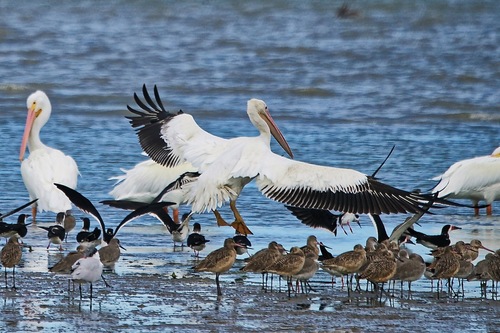
アメリカシロペリカン (Pelecanus erythrorhynchos) アメリカシロペリカン
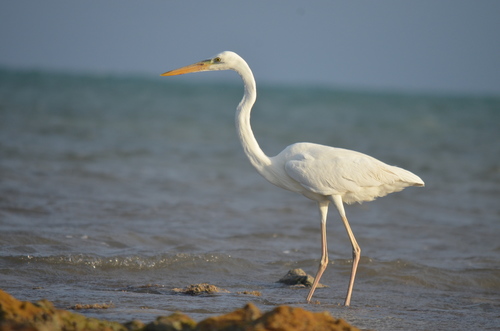
オオアオサギ (Ardea herodias) オオアオサギ

メディア

読み込み中…

要点

The most reliable field mark is the American White Pelican’s striking black-and-white wing pattern in flight, visible in all ages, contrasting with the Great Blue Heron’s uniform gray-blue wings. Immature pelicans show pale gray plumage with dark remiges, while immature herons are duller but never show black-and-white wings. Structurally, pelicans are much bulkier with massive orange bills and short legs, while herons are slender, long-legged, and have a dagger-like bill. Perched, pelicans appear white and chunky; herons are tall, slim, and grayish. Both species can be seen near water, but their flight style and shape are unmistakably different.

識別のコツ

  1. In flight, look for black-and-white wings: American White Pelican of any age shows a bold black trailing edge and tips on otherwise white wings; Great Blue Heron’s wings are uniform gray-blue with no black-and-white pattern. This is the single most reliable mark, especially at distance or in poor light.
  2. Body shape and size: Pelicans are huge, heavy-bodied birds with a thick neck and short legs trailing behind in flight. Herons are tall, slender, and long-legged, with a much narrower body and long neck.
  3. Bill structure: Pelicans have an enormous, flat-topped orange bill with a large throat pouch, especially vivid in breeding adults. Herons have a long, pointed, dagger-like yellowish bill, never as deep or broad as a pelican’s.
  4. Neck posture in flight: Pelicans fly with their necks outstretched and straight, while herons always retract their necks into an S-shape when flying.
  5. Perched appearance: Pelicans are white (adults) or pale gray (immatures), squat, and often seen in groups on sandbars or floating. Herons are tall, gray-blue, and stand alone or in loose groups, usually upright at the water’s edge.
  6. Leg length and color: Herons have very long, gray legs that extend well beyond the tail in flight and are obvious when perched. Pelicans’ legs are much shorter and less conspicuous, rarely extending past the tail in flight.
  7. Head and face pattern: Adult herons have a white face with black plumes extending from above the eye, and a rusty-streaked neck. Pelicans have a plain white (adult) or pale gray (immature) head, lacking any facial stripes or plumes.
  8. Plumage in immatures: Immature pelicans are light gray with darker brownish nape and remiges, but still show the black-and-white wing pattern in flight. Immature herons are dull grayish with a dark crown and weak flank pattern, but never show black-and-white wings.
  9. Feeding behavior: Pelicans feed by swimming in groups and dipping their bills; herons hunt alone, stalking and striking at prey with their bill.
  10. Group size: Pelicans are often seen in large flocks, especially in flight or on water. Herons are usually solitary or in small groups.
  11. Breeding season bill/skin color: Pelicans’ bills and facial skin turn vivid orange in breeding season; herons’ bills become more orange briefly but never as bright or extensive.
  12. Habitat context: Pelicans favor open water and sandbars; herons are more often at the water’s edge, in marshes or among reeds.
  13. Flight style: Pelicans soar and glide on steady wings, often with little flapping. Herons fly with slow, deep wingbeats and a pronounced S-shaped neck.
  14. Voice: Not diagnostic for separation, as neither species is notably vocal in typical field encounters.
  15. Size at a distance: If you see a bird that looks as large as a swan or larger, it is almost certainly a pelican; herons, though tall, are much lighter and less massive.

大きさ

American White Pelican is dramatically larger and heavier, averaging about 5945 g (13 lbs) compared to the Great Blue Heron’s 2295 g (5 lbs) [wikidata]. The pelican’s wingspan (240–300 cm) dwarfs the heron’s (167–201 cm). Pelicans are bulkier, with a huge body and bill, while herons are tall but much lighter and more slender. Even at a distance, pelicans appear massive and broad-winged, while herons look elongated and graceful.

羽色

In flight, all ages of American White Pelican show a bold black-and-white wing pattern: white coverts and inner wings, with black primaries and secondaries forming a sharp contrast [wikipedia]. This is diagnostic at any age, including immatures, which are otherwise pale gray with darker brownish nape and remiges. Great Blue Herons, including immatures, have uniformly gray-blue upperwings with no black-and-white contrast. On the ground, adult pelicans are almost entirely white with some yellowish or grayish wash depending on season, while herons are blue-gray with a white face, black head plumes, and rusty or streaked neck. Immature herons are duller, with a dark crown and weak flank pattern, but still never approach the pelican’s white or gray-and-black look. Bill color is also a clue: pelicans have a massive, flat, orange bill (especially bright in breeding), while herons have a long, pointed, yellowish bill (orange only briefly in breeding).

行動

American White Pelicans soar on broad, steady wings, often in flocks, gliding with necks outstretched and rarely flapping. They feed by swimming in groups and dipping their bills, never spearing prey. Great Blue Herons fly with slow, deep wingbeats and always retract their necks into an S-shape. They are solitary hunters, stalking prey in shallow water and striking with their bill. Perched, pelicans loaf in groups, often sitting on sandbars or floating; herons stand alone or in loose groups, upright and motionless, often among reeds or at water’s edge.

生息環境

Both species are found near water, but American White Pelicans prefer open lakes, large rivers, and coastal lagoons, often in larger groups. Great Blue Herons are more versatile, found at ponds, marshes, rivers, estuaries, and even small urban wetlands, typically alone or in small numbers. Pelicans are more likely on open water or exposed sandbars, while herons are usually at the water’s edge or wading in shallows.

より良い説明を送る

比較と同じ項目を使ってください。文章はすぐに公開されます。

The most reliable field mark is the American White Pelican’s striking black-and-white wing pattern in flight, visible in all ages, contrasting with the Great Blue Heron’s uniform gray-blue wings. Immature pelicans show pale gray plumage with dark remiges, while immature herons are duller but never show black-and-white wings. Structurally, pelicans are much bulkier with massive orange bills and short legs, while herons are slender, long-legged, and have a dagger-like bill. Perched, pelicans appear white and chunky; herons are tall, slim, and grayish. Both species can be seen near water, but their flight style and shape are unmistakably different.

  1. In flight, look for black-and-white wings: American White Pelican of any age shows a bold black trailing edge and tips on otherwise white wings; Great Blue Heron’s wings are uniform gray-blue with no black-and-white pattern. This is the single most reliable mark, especially at distance or in poor light.
  2. Body shape and size: Pelicans are huge, heavy-bodied birds with a thick neck and short legs trailing behind in flight. Herons are tall, slender, and long-legged, with a much narrower body and long neck.
  3. Bill structure: Pelicans have an enormous, flat-topped orange bill with a large throat pouch, especially vivid in breeding adults. Herons have a long, pointed, dagger-like yellowish bill, never as deep or broad as a pelican’s.
  4. Neck posture in flight: Pelicans fly with their necks outstretched and straight, while herons always retract their necks into an S-shape when flying.
  5. Perched appearance: Pelicans are white (adults) or pale gray (immatures), squat, and often seen in groups on sandbars or floating. Herons are tall, gray-blue, and stand alone or in loose groups, usually upright at the water’s edge.
  6. Leg length and color: Herons have very long, gray legs that extend well beyond the tail in flight and are obvious when perched. Pelicans’ legs are much shorter and less conspicuous, rarely extending past the tail in flight.
  7. Head and face pattern: Adult herons have a white face with black plumes extending from above the eye, and a rusty-streaked neck. Pelicans have a plain white (adult) or pale gray (immature) head, lacking any facial stripes or plumes.
  8. Plumage in immatures: Immature pelicans are light gray with darker brownish nape and remiges, but still show the black-and-white wing pattern in flight. Immature herons are dull grayish with a dark crown and weak flank pattern, but never show black-and-white wings.
  9. Feeding behavior: Pelicans feed by swimming in groups and dipping their bills; herons hunt alone, stalking and striking at prey with their bill.
  10. Group size: Pelicans are often seen in large flocks, especially in flight or on water. Herons are usually solitary or in small groups.
  11. Breeding season bill/skin color: Pelicans’ bills and facial skin turn vivid orange in breeding season; herons’ bills become more orange briefly but never as bright or extensive.
  12. Habitat context: Pelicans favor open water and sandbars; herons are more often at the water’s edge, in marshes or among reeds.
  13. Flight style: Pelicans soar and glide on steady wings, often with little flapping. Herons fly with slow, deep wingbeats and a pronounced S-shaped neck.
  14. Voice: Not diagnostic for separation, as neither species is notably vocal in typical field encounters.
  15. Size at a distance: If you see a bird that looks as large as a swan or larger, it is almost certainly a pelican; herons, though tall, are much lighter and less massive.

American White Pelican is dramatically larger and heavier, averaging about 5945 g (13 lbs) compared to the Great Blue Heron’s 2295 g (5 lbs) [wikidata]. The pelican’s wingspan (240–300 cm) dwarfs the heron’s (167–201 cm). Pelicans are bulkier, with a huge body and bill, while herons are tall but much lighter and more slender. Even at a distance, pelicans appear massive and broad-winged, while herons look elongated and graceful.

In flight, all ages of American White Pelican show a bold black-and-white wing pattern: white coverts and inner wings, with black primaries and secondaries forming a sharp contrast [wikipedia]. This is diagnostic at any age, including immatures, which are otherwise pale gray with darker brownish nape and remiges. Great Blue Herons, including immatures, have uniformly gray-blue upperwings with no black-and-white contrast. On the ground, adult pelicans are almost entirely white with some yellowish or grayish wash depending on season, while herons are blue-gray with a white face, black head plumes, and rusty or streaked neck. Immature herons are duller, with a dark crown and weak flank pattern, but still never approach the pelican’s white or gray-and-black look. Bill color is also a clue: pelicans have a massive, flat, orange bill (especially bright in breeding), while herons have a long, pointed, yellowish bill (orange only briefly in breeding).

American White Pelicans soar on broad, steady wings, often in flocks, gliding with necks outstretched and rarely flapping. They feed by swimming in groups and dipping their bills, never spearing prey. Great Blue Herons fly with slow, deep wingbeats and always retract their necks into an S-shape. They are solitary hunters, stalking prey in shallow water and striking with their bill. Perched, pelicans loaf in groups, often sitting on sandbars or floating; herons stand alone or in loose groups, upright and motionless, often among reeds or at water’s edge.

Both species are found near water, but American White Pelicans prefer open lakes, large rivers, and coastal lagoons, often in larger groups. Great Blue Herons are more versatile, found at ponds, marshes, rivers, estuaries, and even small urban wetlands, typically alone or in small numbers. Pelicans are more likely on open water or exposed sandbars, while herons are usually at the water’s edge or wading in shallows.

変更を破棄しますか?

保存していない編集があります。今離れると失われます。

アメリカシロペリカン · オオアオサギ · 苦手な鳥