

Pelícano Norteamericano vs Garza Azulada
Pelecanus erythrorhynchos frente a Ardea herodias
Juega un quiz con Pelícano Norteamericano y Garza Azulada
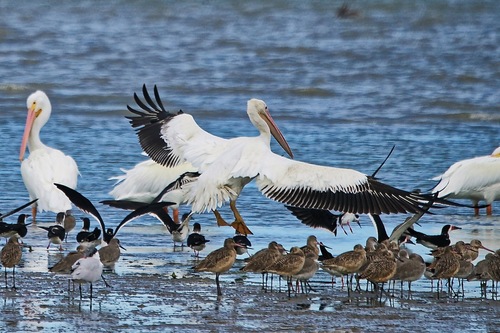 Pelícano Norteamericano
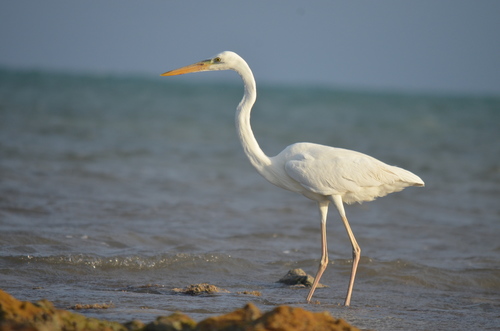 Garza Azulada
En breve
La marca de campo más confiable es el llamativo patrón de alas en blanco y negro del Pelícano Norteamericano en vuelo, visible en todas las edades, contrastando con las alas uniformes en gris-azulado de la Garza Azulada. Los pelícanos inmaduros muestran plumaje gris pálido con remiges oscuros, mientras que las garzas inmaduras son más apagadas pero nunca muestran alas en blanco y negro. Estructuralmente, los pelícanos son mucho más robustos con enormes picos naranjas y patas cortas, mientras que las garzas son esbeltas, de patas largas y tienen un pico en forma de daga. Posados, los pelícanos parecen blancos y robustos; las garzas son altas, delgadas y grisáceas. Ambas especies pueden verse cerca del agua, pero su estilo y forma de vuelo son inconfundiblemente diferentes.
Consejos de identificación
- En vuelo, busca alas en blanco y negro: El Pelícano Norteamericano de cualquier edad muestra un borde trasero negro audaz y puntas en alas de otro modo blancas; las alas de la Garza Azulada son uniformemente gris-azuladas sin patrón en blanco y negro. Esta es la marca más confiable, especialmente a distancia o en poca luz.
- Forma y tamaño del cuerpo: Los pelícanos son enormes, aves de cuerpo pesado con un cuello grueso y patas cortas que cuelgan detrás en vuelo. Las garzas son altas, esbeltas y de patas largas, con un cuerpo mucho más estrecho y un cuello largo.
- Estructura del pico: Los pelícanos tienen un enorme pico naranja con una gran bolsa en la garganta, especialmente vívido en los adultos en época de cría. Las garzas tienen un pico largo, puntiagudo y amarillento, nunca tan profundo o ancho como el de un pelícano.
- Postura del cuello en vuelo: Los pelícanos vuelan con el cuello estirado y recto, mientras que las garzas siempre retraen sus cuellos en forma de S al volar.
- Apariencia posada: Los pelícanos son blancos (adultos) o gris pálido (inmaduros), robustos, y a menudo se ven en grupos en bancos de arena o flotando. Las garzas son altas, gris-azuladas, y se encuentran solas o en grupos sueltos, generalmente erguidas en la orilla del agua.
- Longitud y color de las patas: Las garzas tienen patas muy largas y grises que se extienden mucho más allá de la cola en vuelo y son obvias cuando están posadas. Las patas de los pelícanos son mucho más cortas y menos conspicuas, rara vez se extienden más allá de la cola en vuelo.
- Patrón de cabeza y cara: Las garzas adultas tienen una cara blanca con plumas negras que se extienden desde arriba del ojo, y un cuello con manchas oxidadas. Los pelícanos tienen una cabeza blanca simple (adultos) o gris pálido (inmaduros), careciendo de cualquier franja o pluma facial.
- Plumaje en inmaduros: Los pelícanos inmaduros son de color gris claro con nuca y remiges marrón más oscuros, pero aún muestran el patrón de alas en blanco y negro en vuelo. Las garzas inmaduras son de un gris apagado con una corona oscura y un patrón de flanco débil, pero nunca muestran alas en blanco y negro.
- Comportamiento alimenticio: Los pelícanos se alimentan nadando en grupos y sumergiendo sus picos; las garzas cazan solas, acechando y atacando a sus presas con su pico.
- Tamaño del grupo: Los pelícanos a menudo se ven en grandes bandadas, especialmente en vuelo o sobre el agua. Las garzas suelen ser solitarias o en pequeños grupos.
- Color del pico/piel en época de cría: Los picos y la piel facial de los pelícanos se vuelven de un naranja vívido en la época de cría; los picos de las garzas se vuelven más naranjas brevemente pero nunca tan brillantes o extensos.
- Contexto del hábitat: Los pelícanos prefieren aguas abiertas y bancos de arena; las garzas se encuentran más a menudo en la orilla del agua, en pantanos o entre juncos.
- Estilo de vuelo: Los pelícanos planean y se deslizan con alas firmes, a menudo con poco aleteo. Las garzas vuelan con aleteos lentos y profundos y un cuello en forma de S pronunciada.
- Voz: No es diagnóstica para la separación, ya que ninguna de las especies es notablemente vocal en encuentros típicos de campo.
- Tamaño a distancia: Si ves un ave que parece tan grande como un cisne o más grande, casi con certeza es un pelícano; las garzas, aunque altas, son mucho más ligeras y menos masivas.
Tamaño
Pelícano Norteamericano is dramatically larger and heavier, averaging about 5945 g (13 lbs) compared to the Garza Azulada’s 2295 g (5 lbs) [wikidata]. The pelican’s wingspan (240–300 cm) dwarfs the heron’s (167–201 cm). Pelicans are bulkier, with a huge body and bill, while herons are tall but much lighter and more slender. Even at a distance, pelicans appear massive and broad-winged, while herons look elongated and graceful.
Plumaje
In flight, all ages of Pelícano Norteamericano show a bold black-and-white wing pattern: white coverts and inner wings, with black primaries and secondaries forming a sharp contrast [wikipedia]. This is diagnostic at any age, including immatures, which are otherwise pale gray with darker brownish nape and remiges. Great Blue Herons, including immatures, have uniformly gray-blue upperwings with no black-and-white contrast. On the ground, adult pelicans are almost entirely white with some yellowish or grayish wash depending on season, while herons are blue-gray with a white face, black head plumes, and rusty or streaked neck. Immature herons are duller, with a dark crown and weak flank pattern, but still never approach the pelican’s white or gray-and-black look. Bill color is also a clue: pelicans have a massive, flat, orange bill (especially bright in breeding), while herons have a long, pointed, yellowish bill (orange only briefly in breeding).
Comportamiento
Los Pelícanos Norteamericanos planean con alas anchas y firmes, a menudo en bandadas, deslizándose con los cuellos estirados y raramente aleteando. Se alimentan nadando en grupos y sumergiendo sus picos, nunca clavando a sus presas. Las Garzas Azuladas vuelan con aleteos lentos y profundos y siempre retraen sus cuellos en forma de S. Son cazadores solitarios, acechando a sus presas en aguas poco profundas y atacando con su pico. Posados, los pelícanos descansan en grupos, a menudo sentados en bancos de arena o flotando; las garzas se encuentran solas o en grupos sueltos, erguidas e inmóviles, a menudo entre juncos o en la orilla del agua.
Hábitat
Ambas especies se encuentran cerca del agua, pero los Pelícanos Norteamericanos prefieren lagos abiertos, ríos grandes y lagunas costeras, a menudo en grupos más grandes. Las Garzas Azuladas son más versátiles, encontrándose en estanques, pantanos, ríos, estuarios e incluso pequeños humedales urbanos, típicamente solas o en pequeños números. Los pelícanos son más propensos a estar en aguas abiertas o bancos de arena expuestos, mientras que las garzas suelen estar en la orilla del agua o vadear en aguas poco profundas.
Pelícano Norteamericano · Garza Azulada · Mis aves difíciles