

Motmot

オオフラミンゴ 対 コフラミンゴ

Phoenicopterus ruber 対 Phoeniconaias minor

オオフラミンゴとコフラミンゴのクイズ
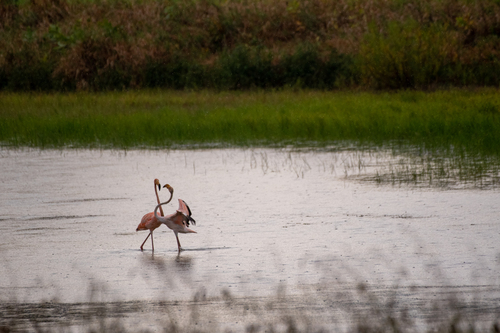
オオフラミンゴ (Phoenicopterus ruber) オオフラミンゴ
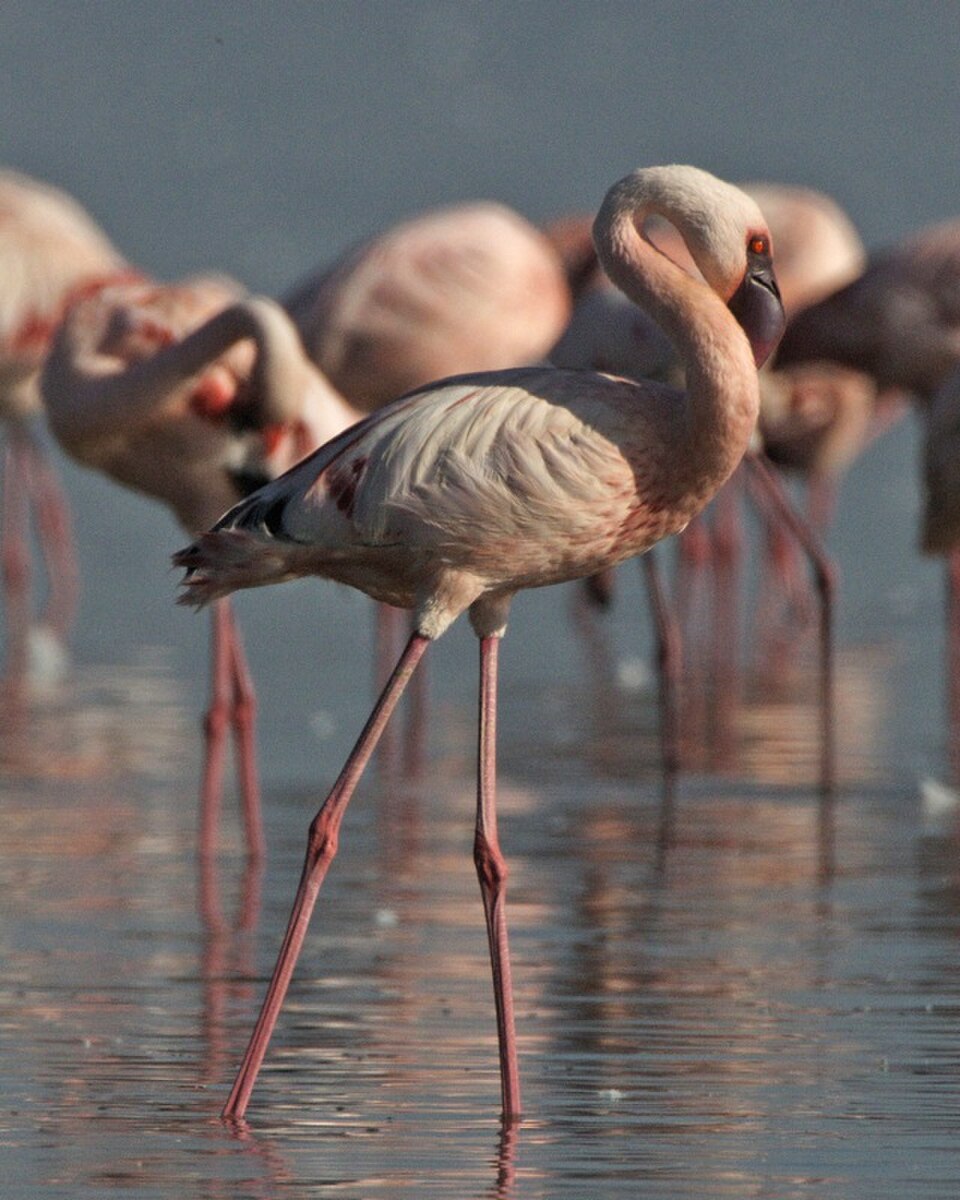
コフラミンゴ (Phoeniconaias minor) コフラミンゴ

メディア

読み込み中…

要点

アメリカフラミンゴとコフラミンゴを区別する最も信頼できるフィールドマークは、全体的なサイズと構造です:アメリカフラミンゴははるかに背が高く、重く、首と脚が長く、より明るく、豊かなピンク色を示し、脚は完全にピンクで、くちばしのほとんどがピンクで黒い先端があります。コフラミンゴは著しく小さく、首と脚が短く、全体的に淡いピンクですが、くちばしははるかに黒く、胸にはしばしば深いカーマインの洗いが見られます。飛行中、両種は黒い一次羽と二次羽を示しますが、アメリカフラミンゴは赤い翼の覆い羽を持ち、コフラミンゴのものは淡いです。近距離ではくちばしの色と脚の色が重要です。生息地と分布も役立ちます:アメリカフラミンゴはアメリカ大陸に限定されているのに対し、コフラミンゴはアフリカとインドに見られます。

識別のコツ

  1. サイズと構造:アメリカフラミンゴはコフラミンゴよりもはるかに大きく、高い(120–145 cm)です。特に鳥が立っているときや水に浸かっているときに、長い首と脚を探してください。これは両種が一緒に見られるときの最も明白な違いですが、孤立している場合や距離がある場合には微妙なことがあります。
  2. くちばしの色とパターン:アメリカフラミンゴは黒い先端のある主にピンクのくちばしを持ち、コフラミンゴのくちばしは広範囲に黒く、基部だけが淡いピンクを示しています。これは近距離での重要なマークであり、成鳥に適用されます。
  3. 脚の色:両種はピンクの脚を持っていますが、アメリカフラミンゴの脚は完全にピンクで、しばしば長くて頑丈に見えます。コフラミンゴの脚もピンクですが、鳥の小さなサイズのためにより繊細に見えます。
  4. 全体的な羽色のトーン:アメリカフラミンゴは全体的により豊かで深いピンクで、時には「バラ色」と表現されます。コフラミンゴは淡いピンクからピンクがかった白ですが、胸にはしばしば深いカーマインの洗いがあります。照明によってこの印象が影響を受けることがあるので、注意して使用してください。
  5. 飛行中の翼の覆い羽:飛行中、アメリカフラミンゴは黒い一次羽と二次羽と対照的な赤い翼の覆い羽を示します。コフラミンゴの翼の覆い羽は淡いため、対照があまり際立ちません。これは、鳥が近距離から中距離で飛んでいるときに最もよく見られます。
  6. 地理的分布:アメリカフラミンゴはアメリカ大陸にしか見られず、コフラミンゴはアフリカとインドにしか見られません。カリブ海、ユカタン、またはガラパゴスにいる場合、ほぼ確実にアメリカフラミンゴを見ています。アフリカやインドのアルカリ湖にいる場合は、コフラミンゴです。
  7. 姿勢と体型:アメリカフラミンゴはより細長く、威厳があり、長い歩幅と首を持っています。コフラミンゴはよりコンパクトで、しばしば首が短く、脚も短く見えます。
  8. 採餌行動:両種は濾過摂食を行いますが、コフラミンゴの深いくちばしは微細藻類を濾過するために適応しています。これは、近くで見ることができない限り、フィールドでは容易に観察できません。
  9. 群れの構造:両種は群れを作りますが、コフラミンゴは特に巨大な雛の育成クレッチを形成することで有名です。ただし、これは混合または非繁殖群れの成鳥を区別するための信頼できるマークではありません。
  10. 声:アメリカフラミンゴはガチョウのような鳴き声を出します。コフラミンゴの特徴的な鳴き声についての記述はノートにありませんので、声に頼って区別しないでください。
  11. 性別と年齢:情報源には、どちらの種にも強い性的二形性は記載されていません。年齢特有の翼のパターンの違いについての記述はないため、詳細な地域の知識がない限り、すべての年齢に成鳥のマークを使用してください。
  12. 落とし穴:アメリカフラミンゴをより淡く、さらに大きなヨーロッパフラミンゴと混同しないでください。コフラミンゴははるかに小さく、特徴的な黒いくちばしを持っています。照明と距離によって色の違いがわかりにくくなることがあるので、構造とくちばしのパターンを主要なマークとして使用してください。
  13. マークが失敗したとき:遠くからまたは光が悪い場合、サイズとくちばしの色を判断するのが難しいことがあります。範囲と生息地を強力な手がかりとして使用してください。

大きさ

アメリカフラミンゴはかなり大きいです:成鳥は120–145 cmの高さで、平均3052 gの質量を持ち、アメリカ大陸で最も大きなフラミンゴです。コフラミンゴは最も小さなフラミンゴ種で、高さはわずか80–90 cmで、体重は1.2–2.7 kgです。この違いは一緒に見たときには際立っていますが、距離がある場合や直接比較がない場合には判断が難しくなることがあります。アメリカフラミンゴの長い首と脚は、飛行中でもしばしば明らかで、より細長く、威厳のある外観を与えます。コフラミンゴはよりコンパクトで、細長く見えません。

羽色

未熟な個体や幼鳥の年齢特有の翼のパターンの違いについての詳細な記述は情報源にはありませんので、分離は成鳥と一般的な羽色に依存します。成鳥のアメリカフラミンゴは全体的に鮮やかなピンクで、赤い翼の覆い羽と黒い一次羽および二次羽を持ち、脚は完全にピンクで、くちばしは主にピンクで黒い先端があります。コフラミンゴは淡いピンクからピンクがかった白で、胸には深いカーマインの洗いがあり、はるかに広範囲に黒いくちばしを持っています。脚もピンクですが、全体的な印象はより淡く、繊細な鳥です。飛行中、両種は黒い一次羽と二次羽を示しますが、アメリカフラミンゴの赤い翼の覆い羽はより強く対照的です。提供されたノートには、どちらの種の診断的な幼鳥や未熟な上翼パターンについての記述はありません。

行動

両種は非常に社交的で、大きな群れで見られることが多く、頭を下げて浅い水で餌を取ります。アメリカフラミンゴはその高さと長い歩幅のために、より威厳があるように見えることがあります。コフラミンゴも社交的ですが、特に巨大な雛の育成クレッチを形成することで知られ、時には10万人以上になりますが、これは成鳥のフィールドマークではありません。両種は似たような方法で濾過摂食を行いますが、コフラミンゴの深いくちばしは微細藻類を食べるための特化を反映しています。

生息環境

アメリカフラミンゴは西インド諸島、南アメリカ北部(ガラパゴスを含む)、およびユカタン半島に見られ、通常は塩水の潟、干潟、浅い沿岸湖に生息しています。コフラミンゴはサハラ以南のアフリカと西インドに限定されており、非常にアルカリ性または塩水の湖を好み、他のほとんどの鳥には不適切な極端な化学条件を持つことがよくあります。したがって、地理的な文脈は通常強力な手がかりです:アメリカフラミンゴはアフリカやインドには見られず、コフラミンゴはアメリカ大陸には生息していません。

声

アメリカフラミンゴはガチョウのような鳴き声を出します。コフラミンゴについての鳴き声の記述はノートに提供されていないため、声は信頼できる区別の特徴ではありません。

より良い説明を送る

比較と同じ項目を使ってください。文章はすぐに公開されます。

The most reliable field mark to separate American Flamingo from Lesser Flamingo is overall size and structure: American Flamingo is much taller and heavier, with a longer neck and legs, and shows a brighter, richer pink coloration with solid pink legs and a mostly pink bill with a black tip. Lesser Flamingo is notably smaller, with a shorter neck and legs, and is paler pink overall, but has a much more extensively black bill and often shows a deeper carmine wash on the breast. In flight, both species show black primaries and secondaries, but American Flamingo has redder wing coverts, while Lesser Flamingo's are paler. Bill color and leg color are key at close range. Habitat and range also help: American Flamingo is restricted to the Americas, while Lesser Flamingo is found in Africa and India.

  1. Size and Structure: American Flamingo is much larger and taller (120–145 cm) than Lesser Flamingo (80–90 cm). Look for a longer neck and legs, especially when birds are standing or wading. This is the most obvious difference when both species are seen together, but can be subtle in isolation or at a distance.
  2. Bill Color and Pattern: American Flamingo has a mostly pink bill with a black tip, while Lesser Flamingo's bill is extensively black, with only the base showing pale pink. This is a key mark at close range and works for adults.
  3. Leg Color: Both species have pink legs, but American Flamingo's are solidly pink and often appear longer and more robust. Lesser Flamingo's legs are also pink but look more delicate due to the bird's smaller size.
  4. Overall Plumage Tone: American Flamingo is a richer, deeper pink overall, sometimes described as 'rosy.' Lesser Flamingo is paler pink to pinkish white, but often with a deeper carmine wash on the breast. Lighting can affect this impression, so use with caution.
  5. Wing Coverts in Flight: In flight, American Flamingo shows red wing coverts contrasting with black primaries and secondaries. Lesser Flamingo's wing coverts are paler, so the contrast is less striking. This is best seen when birds are flying at close to medium range.
  6. Geographic Range: American Flamingo is only found in the Americas, while Lesser Flamingo is only found in Africa and India. If you are in the Caribbean, Yucatán, or Galápagos, you are almost certainly seeing American Flamingo. If you are at an alkaline lake in Africa or India, it is Lesser Flamingo.
  7. Jizz and Posture: American Flamingo appears more elongated and stately, with a long stride and neck. Lesser Flamingo is more compact and often appears shorter-necked and shorter-legged.
  8. Feeding Behavior: Both species filter-feed, but Lesser Flamingo's deeper bill is adapted for filtering tiny algae. This is not easily observed in the field unless you have a close view.
  9. Flock Structure: Both species are gregarious, but Lesser Flamingo is famous for forming enormous breeding creches. However, this is not a reliable mark for separating adults in mixed or non-breeding flocks.
  10. Voice: American Flamingo gives a goose-like honking. No distinctive Lesser Flamingo call is described in the notes, so do not rely on voice for separation.
  11. Sex and Age: No strong sexual dimorphism is noted for either species in the sources. No age-specific wing pattern differences are described, so use adult marks for all ages unless you have more detailed local knowledge.
  12. Pitfalls: Do not confuse American Flamingo with Greater Flamingo, which is paler and larger still; Lesser Flamingo is much smaller and has the distinctive black bill. Lighting and distance can make color differences less obvious, so use structure and bill pattern as primary marks.
  13. When Marks Fail: At great distance or in poor light, size and bill color may be hard to judge. Use range and habitat as strong supporting clues.

American Flamingo is substantially larger: adults stand 120–145 cm tall and average 3052 g in mass [wikidata], making it the largest flamingo in the Americas. Lesser Flamingo is the smallest flamingo species, standing only 80–90 cm tall and weighing 1.2–2.7 kg [wikipedia]. The difference is striking when seen together, but can be harder to judge at a distance or without direct comparison. American Flamingo's longer neck and legs are often apparent even in flight, giving it a lankier, more stately appearance. Lesser Flamingo appears more compact and less elongated.

No detailed age-specific wing pattern differences are described in the sources for immatures or juveniles, so separation relies on adult and general plumage. Adult American Flamingo is a vivid pink overall, with red wing coverts and black primary and secondary flight feathers; its legs are entirely pink, and the bill is mostly pink with a black tip. Lesser Flamingo is paler pink to pinkish white, with a deeper carmine wash on the breast and a much more extensively black bill. Its legs are also pink, but the overall impression is of a paler, daintier bird. In flight, both show black primaries and secondaries, but American Flamingo's red wing coverts contrast more strongly. No diagnostic juvenile or immature upperwing patterns are described for either species in the provided notes.

Both species are highly gregarious and often seen in large flocks, feeding in shallow water with their heads down. American Flamingo may appear more stately due to its greater height and longer stride. Lesser Flamingo, while also social, is noted for forming especially massive creches of chicks, sometimes over 100,000 strong, but this is not a field mark for adults. Both species filter-feed in similar fashion, but Lesser Flamingo's deeper bill reflects its specialization for feeding on microscopic algae.

American Flamingo is found in the West Indies, northern South America (including the Galápagos), and the Yucatán Peninsula, typically in saline lagoons, mudflats, and shallow coastal lakes [wikipedia]. Lesser Flamingo is restricted to sub-Saharan Africa and western India, favoring highly alkaline or saline lakes, often with extreme chemical conditions unsuitable for most other birds. Thus, geographic context is usually a strong clue: American Flamingo is not found in Africa or India, and Lesser Flamingo is not native to the Americas.

American Flamingo gives a goose-like honking call [wikipedia]. No vocal description is provided for Lesser Flamingo in the notes, so voice is not a reliable separation feature based on the current information.

変更を破棄しますか?

保存していない編集があります。今離れると失われます。

オオフラミンゴ · コフラミンゴ · 苦手な鳥