

Motmot

アメリカオオバン 対 アメリカムラサキバン

Fulica americana 対 Porphyrio martinica

アメリカオオバンとアメリカムラサキバンのクイズ
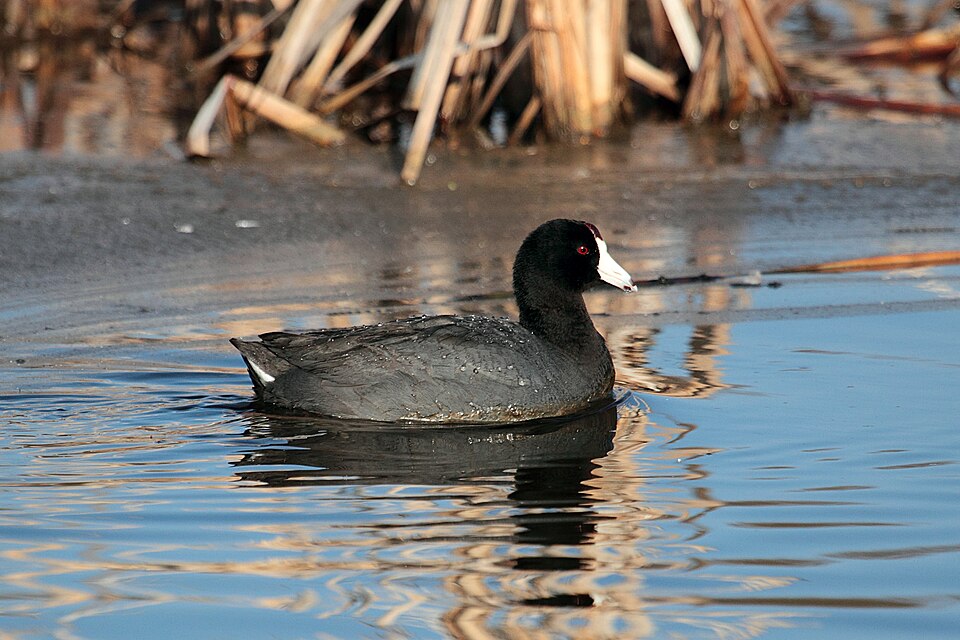
アメリカオオバン (Fulica americana) アメリカオオバン
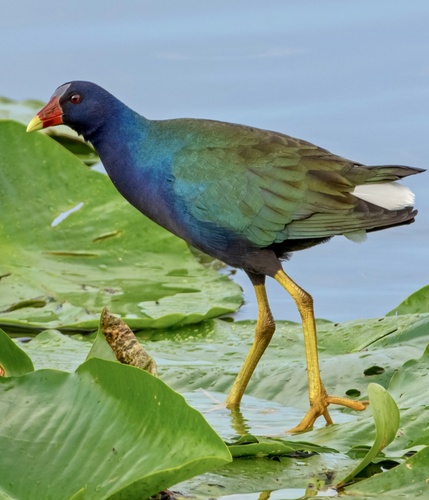
アメリカムラサキバン (Porphyrio martinica) アメリカムラサキバン

メディア

読み込み中…

要点

アメリカオオバンとアメリカムラサキバンの最も信頼できるフィールドマークは、くちばしとシールドの色です:アメリカオオバンは白いくちばしとシールドに赤褐色の斑点がありますが、成鳥のアメリカムラサキバンは赤と黄色のくちばしと淡い青のシールドを示します。幼鳥や未成熟の鳥は混乱を招くことがありますが、アメリカムラサキバンはより茶色で、白い尾羽の覆い羽を示し、アメリカオオバンはオリーブブラウンの冠を持つ灰色です。飛行中、アメリカムラサキバンは明るい黄色の足をぶら下げますが、アメリカオオバンはよりコンパクトで暗い足を持ち、より安定した飛行をします。特に鳥が歩いたり登ったりしているときの構造と足の色も重要です。両種は湿地に生息しますが、アメリカオオバンはより大きく、攻撃的であり、アメリカムラサキバンはより軽快で敏捷です。

識別のコツ

  1. くちばしとシールドの色(すべての年齢): 成鳥のアメリカオオバンは白いくちばしとシールドに赤褐色の斑点があります;成鳥のアメリカムラサキバンは赤と黄色のくちばしと淡い青のシールドを持っています。未成熟のアメリカムラサキバンは淡いくちばしとシールドを持っていますが、アメリカオオバンのように白ではありません。
  2. 足と足の色(すべての年齢): 成鳥のアメリカムラサキバンは明るい黄色の足と足を持ち、遠くからでも飛行中でも見えます。アメリカオオバンは灰色または緑がかった足を持ち、lobed toes(指の間に膜がない)を持ち、明るい黄色ではありません。
  3. 幼鳥/未成熟の羽毛: 幼鳥のアメリカオオバンはオリーブブラウンの冠を持つ灰色の体で、白い尾羽の覆い羽がありません。幼鳥のアメリカムラサキバンは淡い茶色で、緑青銅のヒントがあり、白い尾羽の覆い羽を持ち、茶色の足と足を持っています。未成熟のアメリカムラサキバンは胸に紫が少しあり、淡いくちばしとシールドを持つ茶色の青銅の体を示します。
  4. 成鳥の体の色: 成鳥のアメリカオオバンは全体的に暗灰色から黒です;成鳥のアメリカムラサキバンは紫青で、虹色の緑とターコイズを持っていますが、悪い光の中では暗く見えることがあります。
  5. 尾羽のパターン: アメリカムラサキバン(すべての年齢)は白い尾羽の覆い羽を示し、特に登ったり尾を振ったりしているときに顕著です。アメリカオオバンは対照的な尾羽の覆い羽を持っていません。
  6. 飛行の特徴: アメリカムラサキバンは足をぶら下げて弱く飛び、しばしばカバーに急速に落ちます;アメリカオオバンはより安定した、より直接的な飛行をし、足を引っ込めます。
  7. サイズと体格: アメリカオオバンははるかに重く、体格が大きく、よりアヒルのようなシルエットを持っています。アメリカムラサキバンはより細身で繊細です。
  8. 植物上の行動: アメリカムラサキバンはしばしば浮遊植物の上を歩いたり、葦の間を登ったりし、長い指を使います。アメリカオオバンはめったに登らず、より泳いだり固い地面を歩いたりする可能性が高いです。
  9. 攻撃性と群れ行動: アメリカオオバンはしばしば攻撃的で、大きな群れで見られます;アメリカムラサキバンはあまり攻撃的でなく、より孤独または小さな家族グループで見られます。
  10. 生息地の好み: アメリカオオバンは開水域を利用し、乱されたり都市化された湿地に対してより耐性があります。アメリカムラサキバンは密な植生のある縁に固執し、開水域を避けます。
  11. 性差: 両種は羽毛において性別において同形ですが、アメリカオオバンの雌は雄よりも小さいです;アメリカムラサキバンの雄は雌よりもわずかに大きいです。
  12. 季節的文脈: 冬には、アメリカムラサキバンは南部アメリカの北では珍しく、アメリカオオバンは水が開いている場合、さらに北で見つけることができます。
  13. くちばしの形: 両者は太いくちばしを持っていますが、アメリカオオバンのものは短く鈍いです;アメリカムラサキバンのものはわずかに長く、先端が尖っています。
  14. 足の構造: アメリカオオバンはlobed toes(指の間に膜がない)を持ち、歩いているときに見えます;アメリカムラサキバンは登るための長く細い指を持っています。
  15. 照明の落とし穴: 悪い光の中では、アメリカムラサキバンは鈍いまたは茶色がかって見えることがありますが、くちばしとシールドの色はよく見えれば診断的です。

大きさ

アメリカオオバンはアメリカムラサキバンよりもかなり重く、体格が大きいです。アメリカオオバンは34〜43 cmの長さで、翼幅は58〜71 cmで、雄は最大848 gまでの重さがあり、雌は427 gから始まります。対照的に、アメリカムラサキバンは小さくて軽く、長さは26〜37 cm、翼幅は50〜61 cmで、平均的な成鳥の体重は約236 g(雄は約257 g、雌は約215 g)です。フィールドでは、アメリカオオバンはより頑丈でアヒルのように見え、アメリカムラサキバンはより細身で繊細です。

羽色

幼鳥と未成熟の鳥は混乱を招く可能性が最も高いです。幼鳥のアメリカオオバンはオリーブブラウンの冠を持つ灰色の体で、くちばしや足に明るい色がありません;彼らは約4ヶ月で成鳥の羽毛に移行します。幼鳥のアメリカムラサキバンは淡い茶色で、翼と背中に緑青銅のヒントがあり、白い尾羽の覆い羽と茶色の足と足を持っています。未成熟のアメリカムラサキバンは胸に紫が少しあり、淡いくちばしとシールドを持つ茶色の青銅の体を示します。成鳥のアメリカオオバンは均一に暗灰色から黒で、白いくちばしとシールド(赤褐色の斑点付き)を持っていますが、成鳥のアメリカムラサキバンは目を引く紫青で、虹色の緑とターコイズ、赤と黄色のくちばし、淡い青のシールド、明るい黄色の足と足を持っています。悪い光の中では、アメリカムラサキバンは暗く見えることがありますが、くちばしとシールドの色は独特です。飛行中、アメリカムラサキバンの黄色い足は目立ち、アメリカオオバンの足はあまり見えず、暗いです。

行動

アメリカオオバンは攻撃的で、しばしば群れで見られ、アヒルのように泳ぎ、安定した直接的な動きで移動します。彼らは地上で waddling gait(よちよち歩き)で歩き、lobed toes(指の間に膜がない)のおかげで、めったに登りません。アメリカムラサキバンはより孤独または小さな家族グループで、敏捷なクライマーであり、浮遊植物の上を歩いたり、葦や茎の間を長い指を使って登ったりするのがよく見られます。飛行中、アメリカムラサキバンは弱い飛行をし、通常は足をぶら下げて短い距離を飛びますが、アメリカオオバンはより直接的で安定した飛行をし、めったに足をぶら下げません。

生息環境

両種は湿地、池、密な植生のある湖に生息していますが、アメリカオオバンはより広範囲に分布し、開水域でも見られ、より大きな湖や流れの遅い川でも見つけることができます。アメリカムラサキバンは浅い縁に沿った密な浮遊植物を好み、開水域で見られる可能性は低いです。アメリカオオバンは水が開いている北部地域に年間を通じて存在する可能性が高いですが、アメリカムラサキバンはより温暖な南部の湿地に制限され、漂流する可能性が高いです。

より良い説明を送る

比較と同じ項目を使ってください。文章はすぐに公開されます。

The most reliable field mark between American Coot and Purple Gallinule is the bill and shield color: coots have a white bill and shield with a reddish-brown spot, while adult gallinules show a red and yellow bill with a pale blue shield. Juvenile and immature birds can be tricky, but gallinules are browner and show white undertail coverts, while coots are grayish with olive-brown crowns. In flight, gallinules dangle bright yellow legs, whereas coots have more compact, dark legs and a steadier flight. Structure and leg color, especially when birds are walking or climbing, are also key. Both species can occur in marshes, but coots are bulkier and more aggressive, while gallinules are lighter and more agile.

  1. Bill and shield color (all ages): Adult coots have a white bill and shield with a reddish-brown spot; adult gallinules have a red and yellow bill with a pale blue shield. Immature gallinules have a pale bill and shield, but never white like coot.
  2. Leg and foot color (all ages): Adult gallinules have bright yellow legs and feet, visible even at a distance or in flight. Coots have grayish or greenish legs with lobed toes, never bright yellow.
  3. Juvenile/immature plumage: Juvenile coots are gray with olive-brown crowns and lack white undertail coverts. Juvenile gallinules are light brown with green-bronze hints and always show white undertail coverts; immatures are brown-bronze with some purple on chest.
  4. Adult body color: Adult coots are dark gray to black overall; adult gallinules are purple-blue with iridescent green and turquoise, though they may look dusky in poor light.
  5. Undertail pattern: Gallinules (all ages) show white undertail coverts, especially when climbing or flicking the tail. Coots do not have contrasting undertail coverts.
  6. Flight jizz: Gallinules fly weakly with legs dangling and often drop quickly into cover; coots have steadier, more direct flight and keep legs tucked.
  7. Size and bulk: Coots are much heavier and bulkier, with a more duck-like silhouette. Gallinules are more slender and delicate.
  8. Behavior on vegetation: Gallinules often walk on floating plants or climb among reeds, using long toes. Coots rarely climb and are more likely to swim or walk on solid ground.
  9. Aggression and flocking: Coots are often aggressive and seen in larger groups; gallinules are less aggressive and more solitary or in small family groups.
  10. Habitat preference: Coots use open water and are more tolerant of disturbed or urban wetlands. Gallinules stick to dense, vegetated margins and avoid open water.
  11. Sex differences: Both species are sexually monomorphic in plumage, but coot females are smaller than males; gallinule males are slightly larger than females.
  12. Seasonal context: In winter, gallinules are rare north of the southern U.S., while coots can be found farther north if water is open.
  13. Bill shape: Both have thick bills, but coot's is shorter and blunter; gallinule's is slightly longer and more pointed at the tip.
  14. Feet structure: Coots have lobed toes (not webbed), visible when walking; gallinules have long, slender toes for climbing.
  15. Lighting pitfalls: In poor light, gallinules can appear dull or brownish, but the bill and shield color remain diagnostic if seen well.

American Coots are significantly heavier and bulkier than Purple Gallinules. Coots measure 34–43 cm in length with a wingspan of 58–71 cm, and males can weigh up to 848 g, with females starting at 427 g. In contrast, Purple Gallinules are smaller and lighter, at 26–37 cm long, wingspan 50–61 cm, and average adult body mass around 236 g (males ~257 g, females ~215 g). In the field, coots appear more robust and duck-like, while gallinules are more slender and delicate.

Juvenile and immature birds are the most likely to be confused. Juvenile American Coots are gray-bodied with olive-brown crowns and lack any bright color on the bill or legs; they transition to adult plumage by about 4 months. Juvenile Purple Gallinules are light brown with hints of green-bronze on the wings and back, white undertail coverts, and brown legs and feet. Immature gallinules show a brown-bronze body with some purple on the chest and a pale bill and shield. Adult coots are uniformly dark gray to black with a white bill and shield (with a reddish-brown spot), while adult gallinules are strikingly purple-blue with iridescent green and turquoise, a red and yellow bill, pale blue shield, and bright yellow legs and feet. In poor light, gallinules can look dusky or brownish, but the bill and shield color remain distinctive. In flight, gallinules' yellow legs trail and are obvious; coots' legs are less visible and darker.

American Coots are aggressive, often seen in groups, and swim like ducks with a steady, direct movement. They walk with a waddling gait on land, thanks to their lobed toes, and rarely climb. Purple Gallinules are more solitary or in small family groups, and are agile climbers, often seen walking on floating vegetation or clambering among reeds and stems using their long toes. In flight, gallinules are weak fliers, usually flying short distances with legs dangling, while coots have a more direct, steady flight and rarely dangle their legs.

Both species are found in marshes, ponds, and lakes with dense vegetation, but American Coots are more widespread and can be found in open water, even on larger lakes and sluggish rivers. Purple Gallinules prefer dense, floating vegetation along shallow margins and are less likely to be seen on open water. Coots are more likely to be present year-round in northern areas where water stays open, while gallinules are more restricted to warmer, southern wetlands and are more prone to vagrancy.

変更を破棄しますか?

保存していない編集があります。今離れると失われます。

アメリカオオバン · アメリカムラサキバン · 苦手な鳥