

Motmot

アメリカガモ 対 オナガガモ

Anas rubripes 対 Anas acuta

アメリカガモとオナガガモのクイズ
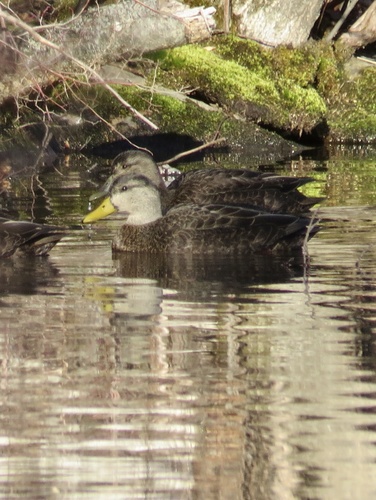
アメリカガモ (Anas rubripes) アメリカガモ
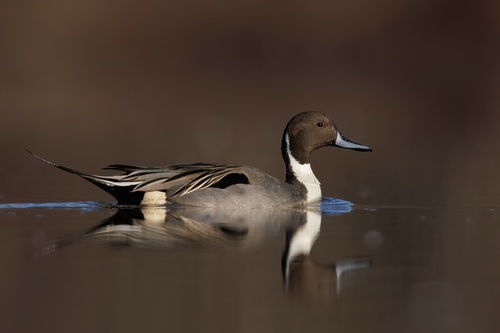
オナガガモ (Anas acuta) オナガガモ

メディア

読み込み中…

要点

アメリカガモとオナガガモを区別するための最も信頼できるフィールドマークは、特に飛行中や幼鳥の中でのスペクルムと翼のパターンです:アメリカガモは主に黒い縁取りのあるバイオレットブルーのスペクルムを示し、白はほとんどまたは全くありません。一方、オナガガモは暗いスペクルムを持ち、特に雌や幼鳥では目立つ白い後縁があります。オナガガモはまた、特にスレンダーで、長い首を持ち、雄では特徴的な尖った尾を持っています。アメリカガモは全体的にずんぐりしていて暗く見え、両性ともにくすんだ均一な茶色の体とやや明るい茶色の頭を示します。くちばしの色、体の形、飛行スタイルに注意を払うことで、特に羽毛があいまいな場合にIDを確定するのに役立ちます。

識別のコツ

  1. スペクルムと翼のパターン(すべての年齢): アメリカガモは主に黒い縁取りのあるバイオレットブルーのスペクルムを示し、白はほとんどまたは全くありません;オナガガモ(特に雌や幼鳥)は暗いスペクルムを持ち、飛行中や時には休んでいる時にも見える目立つ白い後縁があります。
  2. 幼鳥の腹部: 幼鳥のアメリカガモは下部に壊れた淡い羽毛の縁を持ち、ストライプ状に見えます;幼鳥のオナガガモはあまりスカロップされておらず、より均一です。
  3. 尾の形(成鳥の雄): 雄のオナガガモは非常に長く尖った中央の尾羽を持ち、鋭いピンのような尾を形成します;アメリカガモの尾はすべての年齢と性別で短く丸いです。
  4. 体の形と印象: オナガガモはスレンダーで長い首を持ち、優雅で、前傾姿勢で泳ぎ、飛行中は速く後ろに引かれた翼を持っています。アメリカガモはずんぐりしていて、首が太く、より水平で重い印象を与えます。
  5. くちばしの色: アメリカガモの雄は黄色いくちばしを持ち、雌は暗い斑点のある鈍い緑色です。オナガガモの両性は青灰色のくちばしを持っています。
  6. 足と足の色: アメリカガモは暗い水かきのあるオレンジ色の足を持ち、オナガガモは青灰色の足と足を持っています。
  7. 頭のパターン: アメリカガモは均一に暗い茶色の頭を持ち、体よりやや淡い色で、暗い目と頭頂のストリークがあります。オナガガモの雄は繁殖羽毛でチョコレートブラウンの頭と白い首のストライプを持ち、雌はより均一な灰茶色の頭を持っています。
  8. 飛行中の翼の下: アメリカガモは暗い下半身と対照的な白い翼の下の裏地を示します;オナガガモの翼の下は対照が少ないです。
  9. 羽毛のトーン: アメリカガモは全体的に暗く均一な茶色で、オナガガモはより明るく、コントラストがあり(雄では)目を引く白と茶色のパターンがあります。
  10. サイズの印象: アメリカガモはより重くて頑丈に見え、オナガガモはスリムで長い首を持っています。
  11. 声: 聞こえた場合、アメリカガモの雌は大きく下降するクワックを出し、オナガガモの雄はフルートのような笛の音を出し、雌はより粗いクワックを出します。
  12. 生息地の文脈: 樹木が多いまたは密に植生のある東部の湿地ではアメリカガモがより可能性が高く、開けた湿地、干潟、または大きな湖ではオナガガモがより可能性が高いです、特に東部アメリカ以外では。
  13. 落とし穴—雌/幼鳥の混同: 雌と幼鳥のオナガガモはアメリカガモに表面的に似て見えることがありますが、常に白い縁取りのあるスペクルムとより斑点のある明るい体を確認してください。
  14. 落とし穴—ハイブリッド: アメリカガモはマガモとハイブリッド化することがありますが、オナガガモとはできません;オナガガモのハイブリッドは稀で、通常は明らかな構造的違いを示します。
  15. 季節的変化: 複雑な羽毛のオナガガモの雄は雌に似ていますが、長い尾と翼のパターンを保持します;アメリカガモは季節的変化が少ないです。

大きさ

アメリカガモはオナガガモと比較して重くてずんぐりしています(平均体重約1181.5g)対してオナガガモは約945.5gです。両方とも大型の水面を泳ぐカモですが、アメリカガモはより頑丈で厚みがあり、オナガガモはより細長く優雅で、長い首を持ち、雄でははるかに長い尾を持っています。フィールドでは、オナガガモはしばしばスリムで流線型に見え、特に飛行中にそうです。長さと翼幅は重なりますが、全体的な印象は重くて暗いカモ(アメリカガモ)対して、軽くてより優雅なカモ(オナガガモ)です。

羽色

行動

オナガガモは水上でも飛行中でも姿勢がより優雅で細長く、しばしば首を伸ばし、体を水面に低く保ちます。オナガガモは前傾姿勢で流線型のプロファイルで泳ぎ、速くやや後ろに引かれた翼で飛びます。アメリカガモはずんぐりしていて水面に高く座り、より水平で細長くないプロファイルを持っています。飛行中、アメリカガモはオナガガモよりも重くて敏捷性が低く、深く遅い翼の拍動を示します。

生息環境

両種は淡水および沿岸の湿地で重なることがありますが、アメリカガモは特に沿岸および樹木の多い湿地により結びついています。オナガガモは北半球全体に広い範囲を持ち、開けた湿地、干潟、または洪水のある田んぼでより可能性があります。移動中や冬には、オナガガモはより大きく開けた水域で見られることがあり、アメリカガモはより保護された植生のある湿地を好みます。

声

両種はクワックの鳴き声を持っていますが、アメリカガモの雌はマガモに似た大きな下降するクワックを出し、オナガガモの雌はより粗いクワックを出し、雄はフルートのような笛の音を出します。声は遠くからは診断的ではありませんが、雄のオナガガモの笛の音は聞こえた場合に特徴的です。

より良い説明を送る

比較と同じ項目を使ってください。文章はすぐに公開されます。

The most reliable field mark to separate American Black Duck from Northern Pintail—especially in flight or among immatures—is the speculum and wing pattern: American Black Duck shows a violet-blue speculum with mostly black borders and little or no white, while Northern Pintail has a darker speculum with a prominent white trailing edge (especially in females and juveniles). Pintails are also notably more slender, with a longer neck and, in males, a distinctive pointed tail. Black Ducks look bulkier and darker overall, with both sexes showing a dusky, uniform brown body and a slightly lighter brown head. Careful attention to bill color, body shape, and flight style will help clinch the ID, especially when plumage is ambiguous.

  1. Speculum and wing pattern (all ages): American Black Duck shows a violet-blue speculum with mostly black borders and little or no white; Northern Pintail (especially females and juveniles) has a darker speculum with a prominent white trailing edge, visible in flight and sometimes at rest.
  2. Juvenile underparts: Juvenile Black Ducks have broken, pale feather edges below, giving a streaked look; juvenile Pintails are less scalloped and more uniform below.
  3. Tail shape (adult males): Male Pintail has extremely long, pointed central tail feathers, giving a sharp, pin-like tail; Black Duck tail is short and rounded in all ages and sexes.
  4. Body shape and jizz: Pintails are slender, long-necked, and graceful, with a forward-leaning swimming posture and fast, swept-back wingbeats in flight. Black Ducks are bulkier, with a thicker neck and a more horizontal, heavy look.
  5. Bill color: Black Duck males have yellow bills; females have dull green with dark marks. Pintails of both sexes have blue-grey bills.
  6. Leg and foot color: Black Ducks have orange feet with dark webbing; Pintails have blue-grey legs and feet.
  7. Head pattern: Black Ducks have a uniformly dark brown head, slightly paler than the body, with a dark eye and crown streak. Pintail males have a chocolate-brown head with a white neck stripe in breeding plumage; females have a more uniform, grey-brown head.
  8. Underwing in flight: Black Duck shows white underwing linings contrasting with a dark underbody; Pintail underwing is less contrasting.
  9. Plumage tone: Black Ducks are overall darker and more uniform brown; Pintails are lighter, with more contrast and (in males) striking white and brown patterning.
  10. Size impression: Black Ducks appear heavier and more robust; Pintails are slimmer and longer-necked.
  11. Voice: If heard, Black Duck female gives loud, descending quacks; Pintail drake gives a flute-like whistle, and female a rougher quack.
  12. Habitat context: In wooded or densely vegetated eastern wetlands, Black Duck is more likely; in open marshes, flooded fields, or large lakes, Pintail is more likely, especially outside the eastern US.
  13. Pitfall—female/juvenile confusion: Female and juvenile Pintails can look superficially similar to Black Ducks, but always check for the white-bordered speculum and more mottled, lighter body.
  14. Pitfall—hybrids: Black Duck can hybridize with Mallard, but not with Pintail; Pintail hybrids are rare and usually show obvious structural differences.
  15. Seasonal variation: Pintail males in eclipse resemble females but retain the long tail and wing pattern; Black Ducks show little seasonal change.

American Black Duck is heavier and bulkier (mean mass ~1181.5g) compared to Northern Pintail (~945.5g). While both are large dabbling ducks, Black Ducks appear more robust and thickset, whereas Pintails are more elongated and graceful, with a longer neck and, in males, a much longer tail. In the field, Pintails often look slimmer and more streamlined, especially in flight. Length and wingspan overlap, but the overall impression is of a heavier, darker duck (Black Duck) versus a lighter, more elegant one (Pintail).

  • Juvenile/immature birds in flight: American Black Duck juveniles resemble adult females but have paler, broken feather edges below, giving a streaked look; their speculum is violet-blue with mostly black borders and rarely any white trailing edge. Juvenile Pintails are less neatly scalloped than adults, with a dull brown speculum and a narrow but distinct white trailing edge—this white is often visible even at a distance.
  • Adult males: Black Duck males are dark brown overall with a slightly paler brown head and yellow bill; their speculum is violet-blue with black borders, lacking white. Pintail drakes in breeding plumage are unmistakable: chocolate-brown head, white neck stripe, white underparts, long pointed central tail feathers, and a black speculum with a white trailing edge.
  • Adult females: Black Duck females are dark and uniform, with a dull greenish bill and dark marks; their speculum is as above. Female Pintails are lighter brown, more mottled and scalloped, with a grey-brown head, blue-grey bill, and a pointed but shorter tail. Their speculum is dark brown with a prominent white rear border.
  • Feet and bill: Black Ducks have orange feet with dark webbing; Pintails have blue-grey legs and feet. Black Duck males have yellow bills, females dull green; Pintails of both sexes have blue-grey bills.

Northern Pintail is more graceful and elongated in posture, both on water and in flight, often holding its neck outstretched and its body low to the water. Pintails swim with a forward-leaning, streamlined profile and fly with fast, slightly swept-back wings. Black Ducks are bulkier and sit higher in the water, with a more horizontal, less elongated profile. In flight, Black Ducks appear heavier and less agile than Pintails, with deeper, slower wingbeats.

Both species can overlap in freshwater and coastal wetlands, but American Black Duck is more tied to eastern North America, especially in coastal and wooded wetlands. Northern Pintail has a much broader range across the Northern Hemisphere and is more likely in open wetlands, marshes, and flooded fields. In migration and winter, Pintails may be found in larger, more open bodies of water, while Black Ducks favor more sheltered, vegetated wetlands.

Both species have quacking calls, but Black Duck females give a loud, descending series of quacks similar to Mallard, while Pintail females have a rougher quack and drakes give a flute-like whistle. Voice is rarely diagnostic at a distance, but the male Pintail's whistle is distinctive if heard.

変更を破棄しますか?

保存していない編集があります。今離れると失われます。

アメリカガモ · オナガガモ · 苦手な鳥