

Motmot

ハーディスズメフクロウ 対 アカスズメフクロウ

Glaucidium hardyi 対 Glaucidium brasilianum

ハーディスズメフクロウとアカスズメフクロウのクイズ
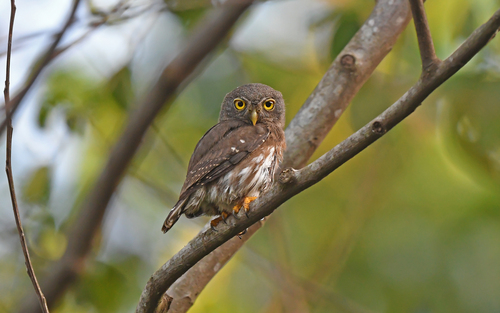
ハーディスズメフクロウ (Glaucidium hardyi) ハーディスズメフクロウ
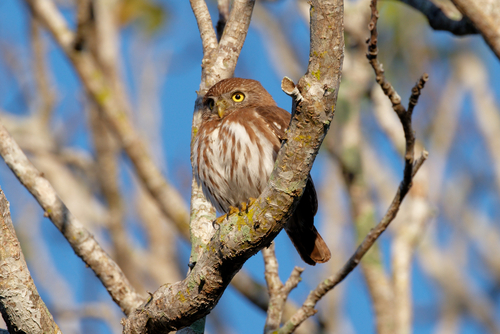
アカスズメフクロウ (Glaucidium brasilianum) アカスズメフクロウ

メディア

読み込み中…

要点

アマゾンヒメフクロウとアカスズメフクロウを区別する最も信頼できるフィールドマークは冠の模様です:アマゾンは灰褐色の冠に細かい白い点(成鳥)または無地(幼鳥)を示し、アカスズメフクロウは細長い白またはバフの筋がある冠を持っています。両種は後頭部に「偽の目」を持ち、全体的な形状は似ていますが、アカスズメフクロウはわずかに重く、色の変異が大きく、時には赤褐色に見えることがあります。アマゾンヒメフクロウは湿ったアマゾンの森林の厳格な冠層専門家であり、アカスズメフクロウは半開放の森林を好み、はるかに広範囲に分布しています。幼鳥の羽毛は微妙に異なり、特に冠と腹部の筋模様において異なります。鳴き声は似ていますが、フィールドで信頼性を持って区別することはできません。

識別のコツ

  1. Crown pattern (adults): アマゾンヒメフクロウは灰褐色の冠に細かい白い点を持ち、アカスズメフクロウは冠に細長い白またはバフの筋を持っています。これは成鳥にとって最も一貫したフィールドマークです。
  2. Crown pattern (juveniles): 幼鳥のアマゾンヒメフクロウは無地で斑点のない冠を持ち、幼鳥のアカスズメフクロウは冠の筋を保持しています。これは若い鳥に使用してください。
  3. Underpart streaking: アマゾンはそれ以外は白い腹部に広い茶色または赤褐色の筋を示し、アカスズメフクロウはより重く広範囲に白い筋があり、時にはより乱れた外観を持っています。
  4. Tail pattern: 両者は淡いバーのある暗い尾を持っていますが、アカスズメフクロウは全体的により赤褐色に見えることがあり、いくつかの形態ではより均一な赤褐色の尾を示すことがあります。アマゾンの尾は常に大きな白い斑点/バーのある暗褐色です。
  5. Supercilia: アカスズメフクロウは顔の円盤の上に目立つ白い眉斑を示し、これはアマゾンよりも明らかになることがあります。
  6. Nape 'false eyes': 両種は後頭部に2つの暗い斑点を持っています;これは区別要因ではありません。
  7. Bill and cere color: アマゾンは緑がかった黄色のくちばしと淡い黄色のセレを持ち、アカスズメフクロウの詳細は指定されていないため、診断にはなりません。
  8. Size and structure: アカスズメフクロウはわずかに重く、より大きな足と爪を持っているように見えることがありますが、これは微妙であり、並べて見ない限り信頼できません。
  9. Color morphs: アカスズメフクロウは非常に変異が大きく、灰褐色から豊かな赤褐色の形態があります。アマゾンは上面がより一貫して灰褐色です。
  10. Flight style: アカスズメフクロウはしばしばウッドペッカーに似た波状の飛行を使用します;アマゾンの飛行スタイルは特に特徴的とは記述されていません。
  11. Habitat: アマゾンは高い湿ったアマゾンの森林(冠層/亜冠層)に制限されており、アカスズメフクロウは乾燥した森林や都市部を含む広範囲の半開放およびエッジの生息地に見られます。
  12. Geographic range: アマゾンはアマゾン盆地と隣接地域に制限されており、アカスズメフクロウは南部アメリカからアルゼンチンまで広範囲に分布しています。アマゾンの外では、アカスズメフクロウがはるかに可能性が高いです。
  13. Behavior: アマゾンは静かに止まり、めったに見られません;アカスズメフクロウはしばしば目立ち、大胆です。
  14. Vocalizations: 両種は似たような高音の鳴き声を持っています;よく研究されていない限り、声だけに頼らないでください。
  15. Sexual dimorphism: 両性は似ていますが、アカスズメフクロウの雌はわずかに赤みがかっているかもしれません。これは信頼できるフィールドマークではありません。

大きさ

両種は非常に小さなフクロウですが、アカスズメフクロウはわずかに重いです(平均成鳥の質量約69.7 g [wikidata])に対し、アマゾンヒメフクロウは約60 g [wikipedia]です。両者は約14〜15 cmの長さです。手に持ったり直接比較したりすると、アカスズメフクロウはわずかにがっしりして見えることがあり、より大きな足と爪を持っていますが、これは微妙であり、通常は距離から診断できません。

羽色

成鳥の場合、アマゾンヒメフクロウは小さな白い点のある灰褐色の冠を持ち、アカスズメフクロウは冠に細長い白またはバフの筋を示します。両者は暗い後頭部の斑点(「偽の目」)、白い斑点のある翼の覆い羽、そして重く筋のある白い腹部を持っていますが、アマゾンの腹部の筋は広く茶色または赤褐色であり、アカスズメフクロウはより重く、広範囲に筋がある傾向があります。尾の模様は似ています:両者は淡いバーのある暗い尾を持っていますが、アカスズメフクロウはより赤褐色を示し、いくつかの形態では尾がより均一に赤褐色である可能性があります。幼鳥のアマゾンヒメフクロウは無地(斑点のない)冠を持ち、腹部の筋はあまり明確ではありませんが、幼鳥のアカスズメフクロウは冠の筋を保持しています。両種は羽毛において性差がなく、アカスズメフクロウの雌は全体的にわずかに赤みがかっているかもしれません。

行動

アマゾンヒメフクロウは厳格に日中活動し、冠層または亜冠層で静かに止まり、長時間動かないことがよくあります。アカスズメフクロウは主に薄明かりの時間に活動しますが、日中もよく活動し、より開放的またはエッジの生息地で狩りをし、時にはウッドペッカーを思わせる波状の飛行を使用します。両種は小鳥による襲撃の対象となります。アマゾンはより秘密主義でめったに見られませんが、アカスズメフクロウは大胆でしばしば目立ちます。

生息環境

アマゾンヒメフクロウはアマゾン盆地の高い湿った熱帯常緑林の冠層および亜冠層の専門家であり、開放的またはエッジの生息地にあまり出かけません。アカスズメフクロウははるかに適応力があり、南テキサスやアリゾナから中央アメリカおよび南アメリカの多くを通り、乾燥した森林、ギャラリー林、さらには都市公園を含む広範囲の半開放の森林生息地を占めています。密で連続したアマゾンの冠層で見られる場合、アマゾンがはるかに可能性が高いですが、開放的または断片化された森林ではアカスズメフクロウが期待されます。

声

両種は繰り返し、高音で短い音やトリルを出します。アマゾンヒメフクロウの主な鳴き声は柔らかく、下降する高音のトリルであり、アカスズメフクロウは一連の短い高音のツイートを出します。実際には、彼らの鳴き声は非常に似ており、経験や録音分析なしではフィールドで信頼性を持って区別することはできません。

より良い説明を送る

比較と同じ項目を使ってください。文章はすぐに公開されます。

The most reliable field mark to separate Amazonian Pygmy-Owl from Ferruginous Pygmy-Owl is the crown pattern: Amazonian shows a gray-brown crown with fine white dots (adults) or plain (juveniles), while Ferruginous has a crown with elongated white or buff streaks. Both species have 'false eyes' on the nape and similar overall shape, but Ferruginous Pygmy-Owl is slightly heavier and more variable in color, sometimes appearing rufous. Amazonian Pygmy-Owl is a strict canopy specialist of humid Amazonian forests, while Ferruginous Pygmy-Owl prefers semi-open woodlands and is much more widespread. Juvenile plumage is subtly different, especially on the crown and underpart streaking. Vocalizations are similar but not reliably separable in the field.

  1. Crown pattern (adults): Amazonian Pygmy-Owl has a gray-brown crown with fine white dots; Ferruginous Pygmy-Owl has elongated white or buff streaks on the crown. This is the most consistent field mark for adults.
  2. Crown pattern (juveniles): Juvenile Amazonian Pygmy-Owls have a plain, unspotted crown, while juvenile Ferruginous Pygmy-Owls retain crown streaks. Use this for young birds.
  3. Underpart streaking: Amazonian shows broad brown or rufous-brown streaks on otherwise white underparts; Ferruginous is more heavily and extensively streaked white, sometimes with a messier appearance.
  4. Tail pattern: Both have dark tails with pale bars, but Ferruginous can be more rufous overall and may show a more uniform rufous tail in some morphs. Amazonian's tail is always dark brown with large white spots/bars.
  5. Supercilia: Ferruginous Pygmy-Owl shows prominent white supercilia above the facial disc, which can be more obvious than in Amazonian.
  6. Nape 'false eyes': Both species have two dark nape spots; this is not a separator.
  7. Bill and cere color: Amazonian has a greenish yellow bill and pale yellow cere; Ferruginous details not specified, so not diagnostic.
  8. Size and structure: Ferruginous is slightly heavier and may appear stockier with larger feet and talons, but this is subtle and unreliable unless seen side-by-side.
  9. Color morphs: Ferruginous Pygmy-Owl is highly variable, with gray-brown to rich rufous morphs. Amazonian is more consistently gray-brown above.
  10. Flight style: Ferruginous often uses undulating flight, similar to woodpeckers; Amazonian's flight style is not described as distinctive.
  11. Habitat: Amazonian is restricted to tall, humid Amazonian forests (canopy/subcanopy); Ferruginous is found in a wide range of semi-open and edge habitats, including dry forests and urban areas.
  12. Geographic range: Amazonian is limited to the Amazon Basin and adjacent regions; Ferruginous is widespread from the southern US to Argentina. If outside the Amazon, Ferruginous is far more likely.
  13. Behavior: Amazonian perches quietly and is rarely seen; Ferruginous is often conspicuous and bold.
  14. Vocalizations: Both species have similar high-pitched calls; do not rely on voice alone unless well-studied.
  15. Sexual dimorphism: Both sexes look alike, but Ferruginous females may be slightly more reddish. This is not a reliable field mark.

Both species are very small owls, but Ferruginous Pygmy-Owl is slightly heavier (average adult mass ~69.7 g [wikidata]) compared to Amazonian Pygmy-Owl (~60 g [wikipedia]). Both are about 14–15 cm in length. In the hand or with a direct comparison, Ferruginous may appear a bit stockier with larger feet and talons, but this is subtle and not usually diagnostic at a distance.

For adults, Amazonian Pygmy-Owl has a gray-brown crown with small white dots, while Ferruginous Pygmy-Owl shows elongated white or buff streaks on the crown. Both have dark nape spots ('false eyes'), white-spotted wing coverts, and heavily streaked white underparts, but Amazonian's underpart streaks are broad and brown or rufous-brown, while Ferruginous tends to have heavier, more extensive streaking. Tail pattern is similar: both have dark tails with pale bars, though Ferruginous can show more rufous, and its tail may be more uniformly rufous in some morphs. Juvenile Amazonian Pygmy-Owls have a plain (unspotted) crown and less distinct underpart streaking, while juvenile Ferruginous Pygmy-Owls retain crown streaks. Both species lack sexual dimorphism in plumage, though Ferruginous females may be slightly more reddish overall.

Amazonian Pygmy-Owl is strictly diurnal and perches quietly in the canopy or subcanopy, often remaining motionless for long periods. Ferruginous Pygmy-Owl is primarily crepuscular but often active by day, hunting in more open or edge habitats and sometimes using undulating flight reminiscent of woodpeckers. Both species are subject to mobbing by small birds. Amazonian is more secretive and rarely seen, while Ferruginous is bold and often conspicuous.

Amazonian Pygmy-Owl is a canopy and subcanopy specialist of tall, humid, tropical evergreen forests in the Amazon Basin, rarely venturing into open or edge habitats. Ferruginous Pygmy-Owl is much more adaptable, occupying a wide range of semi-open wooded habitats from southern Texas and Arizona through much of Central and South America, including dry forests, gallery woodlands, and even urban parks. If seen in dense, continuous Amazonian canopy, Amazonian is far more likely; in open or fragmented woodland, Ferruginous is expected.

Both species give repeated, high-pitched, short notes or trills. Amazonian Pygmy-Owl's main call is a soft, descending, high-pitched trill, while Ferruginous Pygmy-Owl gives a series of short, high-pitched tweets. In practice, their calls are very similar and not reliably separable in the field without experience or recording analysis.

変更を破棄しますか?

保存していない編集があります。今離れると失われます。

ハーディスズメフクロウ · アカスズメフクロウ · 苦手な鳥