

Motmot

シロハラアマツバメ 対 ニシヒメアマツバメ

Tachymarptis melba 対 Apus affinis

シロハラアマツバメとニシヒメアマツバメのクイズ
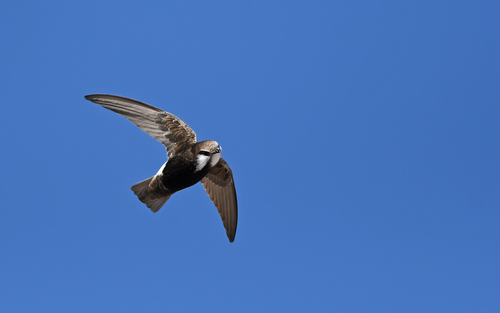
シロハラアマツバメ (Tachymarptis melba) シロハラアマツバメ
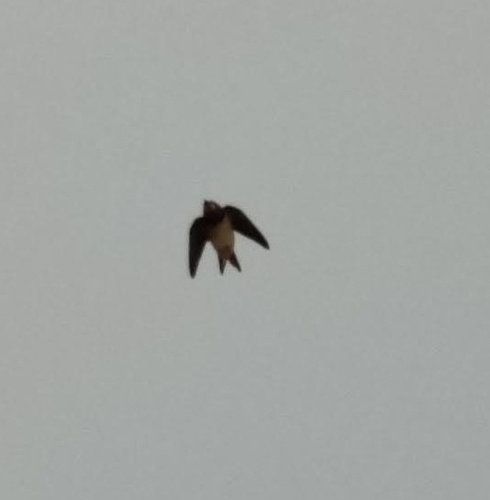
ニシヒメアマツバメ (Apus affinis) ニシヒメアマツバメ

メディア

読み込み中…

要点

アルプスアマツバメとニシヒメアマツバメを区別する最も信頼できるフィールドマークは、腹部のパターンです:アルプスアマツバメは、暗い胸のバンドで分けられた目立つ白い腹部と喉を示し、一方、ニシヒメアマツバメは全体的に黒っぽく、小さな白い喉と大胆な白い尾羽の斑点だけを持っています。飛行中、アルプスアマツバメははるかに大きく、翼が長く、深く、遅く、力強い飛行をしますが、ニシヒメアマツバメはコンパクトで、短い四角い尾とひらひらした速い羽ばたきを持っています。幼鳥のアルプスアマツバメは成鳥に似ていますが、羽毛の縁が淡い色をしていますが、ニシヒメアマツバメの幼鳥はこの特徴を示しません。両種は都市部や崖の生息地で見ることができますが、サイズと腹部のコントラストが最良のフィールドの手がかりです。

識別のコツ

  1. Underpart pattern (all ages): アルプスアマツバメは、暗い胸のバンドで分けられた大胆な白い腹部と喉を示します;ニシヒメアマツバメは、小さな白い喉の斑点を除いて、下側は暗いです。
  2. White rump patch (all ages): ニシヒメアマツバメは、飛行中と休息中に見える、側面に広がる目立つ白い尾羽の斑点を持っています;アルプスアマツバメは尾羽に白い部分がありません。
  3. Size and structure: アルプスアマツバメははるかに大きく、体重が重く、長い翼幅と広い三日月形の翼を持っています;ニシヒメアマツバメは小さく、コンパクトで、短い尾を持っています。
  4. Tail shape: アルプスアマツバメは短く、浅く分かれた尾を持っています;ニシヒメアマツバメの尾は短くて四角く、すべての羽は先端が丸いです。
  5. Wing shape: アルプスアマツバメの翼は長く、後方に傾いており、ブーメランの形をしています;ニシヒメアマツバメの翼は短く、尖っていないため、飛行中により三角形の外観を与えます。
  6. Flight style: アルプスアマツバメは深く、遅く、力強い羽ばたきで飛び、しばしば滑空します;ニシヒメアマツバメは速く、ひらひらした、ハウスマーチンのような飛行をします。
  7. Juvenile シロハラアマツバメ: 上部に淡い羽毛の縁を探してください、わずかに鱗状の外観を与えます;ニシヒメアマツバメの幼鳥はこれを示しません。
  8. Plumage tone: アルプスアマツバメは上面がオリーブブラウンで、翼先が黒いです;ニシヒメアマツバメは白い斑点を除いて光沢のある黒です。
  9. Breast band: アルプスアマツバメの暗い胸のバンドは診断的で、白い喉を白い腹部から分けます;ニシヒメアマツバメは胸のバンドを示しません。
  10. Habitat context: 両方は町や崖で見られますが、アルプスアマツバメは山岳地域に多く見られ、ニシヒメアマツバメは低地や都市の生息地の広い範囲に見られます。
  11. Voice: アルプスアマツバメの鳴き声は引き伸ばされたツイッターで、ニシヒメアマツバメの鳴き声は高いツイッターです;サポート証拠としてのみ使用してください。
  12. Perched views: アルプスアマツバメは止まっているときにずっと大きく、ずっしりとした印象を与え、体と翼が長いです;ニシヒメアマツバメは小さくてコンパクトです。
  13. Confusion risk: 遠くから見ると、ニシヒメアマツバメの白い尾羽はアルプスアマツバメの腹部の斑点と間違えられることがありますが、アルプスアマツバメは白い尾羽を示さず、ニシヒメアマツバメは白い腹部を示しません。
  14. Flock composition: 重複ゾーンでは混合群れが可能です;サイズと腹部のパターンを直接比較してください。
  15. Season/age: 両種の重要なフィールドマークは年間を通じて、すべての羽毛で存在しますが、幼鳥のアルプスアマツバメの淡い羽毛の縁は、晩夏/秋のボーナスの手がかりです。

大きさ

アルプスアマツバメは劇的に大きく、体重は約96g、長さは20〜23cmで、はるかに小さいニシヒメアマツバメ(翼幅はわずか33cm、長さは記載されていませんが、はるかに少ない)と比較されます。アルプスアマツバメの翼幅は約54〜60cmで、ニシヒメアマツバメのほぼ2倍です。フィールドでは、アルプスアマツバメはずっしりとした印象を与え、翼が長く、ツバメのようなシルエットに見えますが、ニシヒメアマツバメは明らかに小さく、よりコンパクトです。

羽色

行動

アルプスアマツバメは、深い羽ばたきと長い三日月形の翼で滑空する傾向があり、より遅く、力強い飛行を持っています。その飛行は、大きなツバメやマーチンを思わせるとよく表現されます。対照的に、ニシヒメアマツバメはひらひらした速い羽ばたきと、より不規則なハウスマーチンのような飛行を持っています。両種はほとんどの時間を飛んで過ごし、昆虫を捕まえ、両方とも垂直な表面で飲水し、休息しますが、アルプスアマツバメの飛行は明らかにより頑丈で、ひらひらしません。

生息環境

両種は都市部や岩の崖で見られ、時には古い建物に巣を作ります。アルプスアマツバメは南ヨーロッパからヒマラヤにかけての山岳地域に厳密に関連していますが、ニシヒメアマツバメはアフリカと南西アジアに広く分布し、南ヨーロッパへの局所的な繁殖や迷子があるだけです。南ヨーロッパや北アフリカでは、特に人間の居住地や崖の近くで重複が可能です。

声

アルプスアマツバメは引き伸ばされたツイッターの鳴き声を出し、ニシヒメアマツバメは高いツイッターの鳴き声を持っています。両者は多少似ていますが、アルプスアマツバメの鳴き声はより長く、引き伸ばされており、より遅く、力強い飛行に合っています。声の違いは微妙で、分離のための最も信頼できるフィールドマークではありません。

より良い説明を送る

比較と同じ項目を使ってください。文章はすぐに公開されます。

The most reliable field mark to separate Alpine Swift from Little Swift is the underpart pattern: Alpine Swift shows a striking white belly and throat separated by a dark breast band, while Little Swift is blackish overall with only a small white throat and a bold white rump patch. In flight, Alpine Swift is much larger and longer-winged, with a deep, slow, powerful flight, whereas Little Swift is compact, with a short square tail and a fluttery, rapid wingbeat. Juvenile Alpine Swifts resemble adults but have pale-edged feathers, while Little Swift immatures do not show this feature. Both species can be seen in urban and cliff habitats, but size and underpart contrast are the best field clues.

  1. Underpart pattern (all ages): Alpine Swift shows a bold white belly and throat, separated by a dark breast band; Little Swift is dark below except for a small white throat patch.
  2. White rump patch (all ages): Little Swift has a prominent white rump patch extending onto the flanks, visible in flight and at rest; Alpine Swift lacks any white on the rump.
  3. Size and structure: Alpine Swift is much larger and heavier-bodied, with a long wingspan and broad, crescent-shaped wings; Little Swift is small, compact, and short-tailed.
  4. Tail shape: Alpine Swift has a short, shallowly forked tail; Little Swift's tail is short and square, with all feathers rounded at the tip.
  5. Wing shape: Alpine Swift's wings are long, swept-back, and boomerang-shaped; Little Swift's wings are shorter and less pointed, giving a more triangular look in flight.
  6. Flight style: Alpine Swift flies with deep, slow, powerful wingbeats and often soars; Little Swift has a rapid, fluttery, house martin-like flight.
  7. Juvenile Alpine Swift: Look for pale feather edges on the upperparts, giving a slightly scaled appearance; Little Swift juveniles do not show this.
  8. Plumage tone: Alpine Swift is olive-brown above with blacker wingtips; Little Swift is glossy black except for white patches.
  9. Breast band: Alpine Swift's dark breast band is diagnostic and separates the white throat from the white belly; Little Swift never shows a breast band.
  10. Habitat context: Both can be found in towns and cliffs, but Alpine Swift is more likely in mountainous regions, Little Swift in a wider range of lowland and urban habitats.
  11. Voice: Alpine Swift's call is a drawn-out twitter, Little Swift's is a high twitter; use only as supporting evidence.
  12. Perched views: Alpine Swift appears much larger and bulkier when perched, with a longer body and wings; Little Swift is small and compact.
  13. Confusion risk: At distance, Little Swift's white rump can be mistaken for Alpine Swift's belly patch, but Alpine Swift never shows a white rump, and Little Swift never shows a white belly.
  14. Flock composition: Mixed flocks are possible in overlap zones; compare directly for size and underpart pattern.
  15. Season/age: Both species' key field marks are present year-round and in all plumages, but juvenile Alpine Swift's pale feather edges are a bonus clue in late summer/autumn.

Alpine Swift is dramatically larger, with a body mass around 96 g and a length of 20–23 cm, compared to the much smaller Little Swift (wingspan only 33 cm, length not stated but much less). Alpine Swift's wingspan is about 54–60 cm, nearly double that of Little Swift. In the field, Alpine Swift will appear bulkier, longer-winged, and swallow-like in silhouette, while Little Swift is noticeably smaller and more compact.

  • Juvenile/immature Alpine Swift: Similar to adults but with pale-edged feathers, especially on the upperparts, which can give a slightly scaled look in fresh plumage. This pale edging is not present in Little Swift.
  • Adult Alpine Swift: Shows a distinctive white belly and throat, separated by a dark breast band and flanked by olive-brown sides and undertail-coverts. The upperparts are olive-brown with blacker wing-tips. The white underparts are oval and highly visible in flight.
  • Little Swift (all ages): Plumage is black except for a small white throat and a bold white rump patch that wraps onto the flanks. Underparts are otherwise dark. The tail is short and square, with all rectrices round-tipped. No pale feather edges or underpart patches as in Alpine Swift.
  • Key contrast: Alpine Swift's white belly and throat with a dark band is unique and never shown by Little Swift, which instead has a white rump patch and otherwise dark plumage.

Alpine Swift has a slower, more powerful flight, with deep wingbeats and a tendency to soar or glide on long, crescent-shaped wings. Its flight is often described as reminiscent of a large swallow or martin. Little Swift, in contrast, has a fluttery, rapid wingbeat and a more erratic, house martin-like flight. Both species spend most of their time on the wing, catching insects, and both drink and roost on vertical surfaces, but Alpine Swift's flight is noticeably more robust and less fluttery.

Both species can be found in urban areas and at rocky cliffs, sometimes nesting in old buildings. Alpine Swift is more strictly associated with mountainous regions from southern Europe to the Himalayas, while Little Swift is widespread in Africa and southwestern Asia, with only local breeding or vagrancy into southern Europe. Overlap is possible in southern Europe and North Africa, especially near human settlements or cliffs.

Alpine Swift gives a drawn-out twittering call, while Little Swift has a high twittering call. Both are somewhat similar, but Alpine Swift's call is longer and more drawn out, matching its slower, more powerful flight. Vocal differences are subtle and not the most reliable field mark for separation.

変更を破棄しますか?

保存していない編集があります。今離れると失われます。

シロハラアマツバメ · ニシヒメアマツバメ · 苦手な鳥