

Motmot

フサエリショウノガン 対 サバクフサエリショウノガン

Chlamydotis undulata 対 Chlamydotis macqueenii

フサエリショウノガンとサバクフサエリショウノガンのクイズ
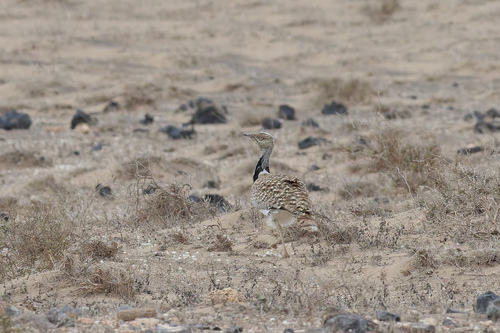
フサエリショウノガン (Chlamydotis undulata) フサエリショウノガン
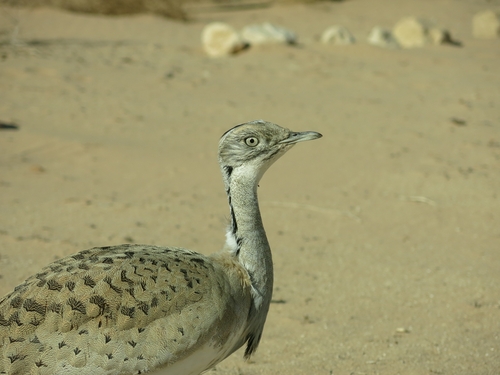
サバクフサエリショウノガン (Chlamydotis macqueenii) サバクフサエリショウノガン

メディア

読み込み中…

要点

アフリカフサエリショウノガンとアジアフサエリショウノガンの最も信頼できるフィールドマークは、飛行中の上翼のパターンです:アジアフサエリショウノガンは、一次羽の基部に明確な白い斑点を示し、下から見ると主に白い翼に黒い後縁が見えますが、アフリカフサエリショウノガンはこの特徴がなく、飛行羽毛により広範囲の黒と茶色を示します。両種は上面が茶色、下面が白で、黒い首の縞模様がありますが、アフリカフサエリショウノガンは一般的に小さく、鈍い色合いで、特に雌は上面が灰色に見えます。構造とディスプレイ行動は似ていますが、サイズや上面の色調の微妙な違いが良い観察に役立ちます。生息地は強い手がかりです:アフリカフサエリショウノガンは北アフリカとカナリア諸島に限定されているのに対し、アジアフサエリショウノガンは中東から中央アジアを横断して東に分布しています。

識別のコツ

  1. Underwing pattern in flight (all ages): アジアフサエリショウノガンは、一次羽の基部に大胆な白い斑点を示し、下翼は主に白く、黒い後縁があります。アフリカフサエリショウノガンはこれがなく、飛行羽毛により広範囲の黒と茶色を示すため、下翼のコントラストが少なくなります。
  2. Upperwing pattern (all ages): 上から見ると、両種は飛行羽毛に大きな黒と茶色の領域を示しますが、アジアフサエリショウノガンでは一次羽の白い基部が特に良い光の下でより明確に見えます。
  3. Size and bulk: アジアフサエリショウノガンは一般的に大きく、がっしりしていますが、重なりがあります。これは特に孤立した鳥に対して補助的なマークとしてのみ使用してください。
  4. Female plumage: アフリカフサエリショウノガンの雌は雄よりも上面が灰色ですが、アジアフサエリショウノガンの雌はわずかに色が薄いだけです。これは微妙で、他のマークと一緒に使用するのが最適です。
  5. Neck stripes: 両種は首の側面に黒い縞模様がありますが、これは有用な区別にはなりません。
  6. Crown and upperpart tone: アフリカフサエリショウノガンは全体的に鈍い傾向がありますが、特に上面で変動があり、常に信頼できるわけではありません。
  7. Display behavior: 両種は立てた首の羽毛と頭の引き込みを伴う派手な求愛ディスプレイを持っていますが、フィールドでのディスプレイによる分離は実用的ではありません。
  8. Habitat and range: アフリカフサエリショウノガンは北アフリカとカナリア諸島に限定されており、アジアフサエリショウノガンは中東から東に分布しています。特に潜在的な迷鳥の狭いゾーンの外では、位置を強い手がかりとして使用してください。
  9. Perched birds: 鳥が飛んでいないときの分離は非常に難しく、微妙なサイズと上面の色調に頼る必要がありますが、不確実性が予想されます。
  10. Sexual dimorphism: 両種は類似の性差を示します—雄は大きくて重いですが、羽毛は性別間でほぼ同じです。
  11. Juvenile/immature birds: 下翼のパターンはすべての年齢で飛行中に診断的です。成鳥のパターンを上回る幼鳥特有の上翼マークは記載されていません。
  12. Vocalizations: 有用なフィールドマークではありません—両種はほとんど静かで、求愛する雄からの低い轟音のみです。
  13. Pitfalls: 首の縞模様や一般的な茶色と白の色合いに頼らないでください;これらは共有されています。飛行中の下翼のパターンと範囲に焦点を当ててください。
  14. Seasonal variation: どちらの種にも主要な季節的羽毛の変化は記載されておらず、マークは年間を通じて安定しています。
  15. When in doubt: 飛行中に下翼が見えない場合や知られている範囲の外にいる場合、識別は不確かのままかもしれません。範囲、サイズ、微妙な羽毛の色調の組み合わせを使用してくださいが、重なりが予想されます。

大きさ

アフリカフサエリショウノガンはアジアフサエリショウノガンよりもわずかに小さく、軽いです。アフリカフサエリショウノガンは長さ55〜75 cm、翼幅135〜170 cmで、平均体重は約1.5 kg(雌は軽く、雄は重い)です [wikidata]。アジアフサエリショウノガンは長さ約65 cm、翼幅140 cmで、雄は雌より9〜15%大きいです。フィールドでは、サイズの重なりはかなりありますが、アジアフサエリショウノガンは特に直接比較や経験がある場合、よりがっしりして見える傾向があります。

羽色

年齢に関連する主な違いは、飛行中に見られる翼のパターンです:アジアフサエリショウノガン(すべての年齢)は、一次羽の基部に目立つ白い斑点を示し、主に白い下翼に黒い後縁を持ちます。アフリカフサエリショウノガンはこの白い斑点がなく、飛行羽毛により広範囲の黒と茶色を示すため、下翼のコントラストが少なくなります。両種は上面が茶色、下面が白で、首の側面に黒い縞模様があります。両方の雌は小さく、色が薄いですが、アフリカフサエリショウノガンの雌は雄よりも明らかに上面が灰色で、アジアフサエリショウノガンの雌はわずかに色が薄いだけです。止まっている鳥では違いは微妙ですが、飛行中では下翼のパターンが診断的です。

行動

両種は類似のバスタード行動を示します:首の羽毛を立て、頭を引き込む派手な求愛ディスプレイと地面に巣を作る習性です。両種の雄は派手なディスプレイを行いますが、フィールドでのディスプレイの詳細は信頼できる分離ができません。両方とも雑食性で、乾燥した開けた風景で地面を掘り起こして餌を探します。フィールド識別のための強い行動的分離はありません。

生息環境

アフリカフサエリショウノガンは北アフリカとカナリア諸島の乾燥した生息地に見られ、アジアフサエリショウノガンはシナイ半島からイランを経て中央アジアとモンゴルの砂漠やステップ地域に生息しています。範囲は強い手がかりです:北アフリカのフサエリショウノガンはアフリカフサエリショウノガンであり、中東から東に分布する鳥はアジアフサエリショウノガンです。重なりは非常にまれで、迷鳥の場合にのみ可能です。

声

両種はほとんど静かですが、雄は繁殖ディスプレイ中に低い轟音を出すことがあります。これらの声は通常、フィールドでの分離には有用ではなく、頻繁ではなく微妙であり、音は診断的な違いを示しません。

より良い説明を送る

比較と同じ項目を使ってください。文章はすぐに公開されます。

The most reliable field mark between African Houbara and Asian Houbara is the pattern of the upperwing in flight: Asian Houbara shows a distinct white patch at the base of the primaries, visible from below as a mostly white wing with a black trailing edge, while African Houbara lacks this feature and shows more extensive black and brown on the flight feathers. Both species are brown above and white below with black neck stripes, but African Houbara is generally smaller and duller, with females especially appearing greyer above. Structure and display behavior are similar, but subtle differences in size and upperpart tone can help in good views. Habitat is a strong clue: African Houbara is restricted to North Africa and the Canary Islands, while Asian Houbara occurs from the Middle East eastwards across Central Asia.

  1. Underwing pattern in flight (all ages): Asian Houbara shows a bold white patch at the base of the primaries, making the underwing mostly white with a black trailing edge. African Houbara lacks this, showing more extensive black and brown on the flight feathers, so the underwing is less contrasting.
  2. Upperwing pattern (all ages): From above, both species show large areas of black and brown on the flight feathers, but the white base of the primaries is more apparent in Asian Houbara, especially in good light.
  3. Size and bulk: Asian Houbara is generally larger and bulkier, but there is overlap. Use this only as a supporting mark, especially for lone birds.
  4. Female plumage: African Houbara females are greyer above than males, while Asian Houbara females are only slightly paler. This is subtle and best used with other marks.
  5. Neck stripes: Both species have black stripes down the sides of the neck; this is not a useful separator.
  6. Crown and upperpart tone: African Houbara tends to be duller overall, especially on the upperparts, but this is variable and not always reliable.
  7. Display behavior: Both species have flamboyant courtship displays with erected neck feathers and head withdrawal; field separation by display is not practical.
  8. Habitat and range: African Houbara is confined to North Africa and the Canary Islands; Asian Houbara is found from the Middle East eastwards. Use location as a strong clue, especially outside the narrow zone of potential vagrancy.
  9. Perched birds: Separation is very difficult when birds are not in flight; rely on subtle size and upperpart tone, but expect uncertainty.
  10. Sexual dimorphism: Both species show similar sex differences—males are larger and heavier, but plumage is nearly identical between sexes.
  11. Juvenile/immature birds: The underwing pattern remains diagnostic in flight for all ages; there are no described juvenile-specific upperwing marks that override the adult pattern.
  12. Vocalizations: Not a useful field mark—both species are largely silent, with only low booming notes from displaying males.
  13. Pitfalls: Do not rely on neck stripes or general brown-and-white coloration; these are shared. Focus on underwing pattern in flight and range.
  14. Seasonal variation: No major seasonal plumage changes described for either species; marks are stable year-round.
  15. When in doubt: If you cannot see the underwing in flight or are outside the known range, identification may remain uncertain. Use a combination of range, size, and subtle plumage tone, but expect overlap.

African Houbara is slightly smaller and lighter than Asian Houbara. African Houbara measures 55–75 cm in length with a wingspan of 135–170 cm, and an average body mass around 1.5 kg (females lighter, males heavier) [wikidata]. Asian Houbara averages about 65 cm in length and a 140 cm wingspan, with males 9–15% larger than females. In the field, size overlap is substantial, but Asian Houbara tends to look bulkier, especially in direct comparison or with experience.

The key age-related difference is in the wing pattern seen in flight: Asian Houbara (all ages) shows a prominent white patch at the base of the primaries, resulting in a mostly white underwing with a black trailing edge. African Houbara lacks this white patch, instead showing more extensive black and brown on the flight feathers, so the underwing is less contrasting. Both species are brown above and white below, with black stripes down the sides of the neck. Females of both are smaller and paler, but African Houbara females are distinctly greyer above than males, while Asian Houbara females are only slightly paler. In perched birds, the difference is subtle, but in flight, the underwing pattern is diagnostic.

Both species display similar bustard behaviors: elaborate courtship displays with neck feather erection and head withdrawal, and ground-nesting habits. Males of both species perform flamboyant displays, but the details of the display are not reliably separable in the field. Both are omnivorous and forage on the ground, often in arid open landscapes. There is no strong behavioral separation for field identification.

African Houbara is found in arid habitats of North Africa and the Canary Islands, never ranging into Asia. Asian Houbara occupies desert and steppe regions from the Sinai Peninsula, across Iran, to Central Asia and Mongolia. Range is a strong clue: any houbara in North Africa is African Houbara, while birds from the Middle East eastward are Asian Houbara. Overlap is extremely rare and only possible with vagrants.

Both species are largely silent, but males may give low booming notes during breeding displays. These vocalizations are not typically useful for field separation, as they are infrequent and subtle, and the notes do not describe diagnostic differences.

変更を破棄しますか?

保存していない編集があります。今離れると失われます。

フサエリショウノガン · サバクフサエリショウノガン · 苦手な鳥