

Wonga Pigeon vs Bar-shouldered Dove
Leucosarcia melanoleuca contro Geopelia humeralis
Fai un quiz con Wonga Pigeon e Bar-shouldered Dove
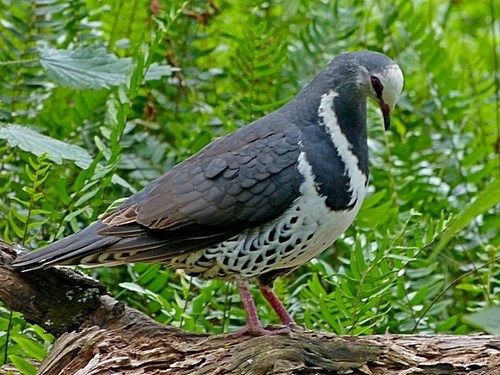 Wonga Pigeon
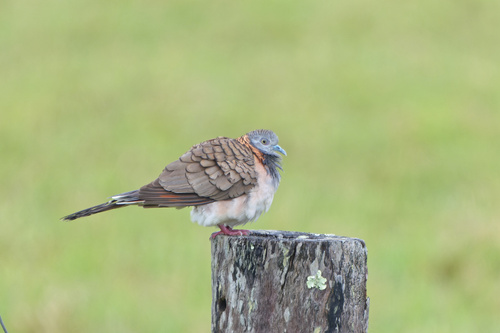 Bar-shouldered Dove
In breve
Il segno distintivo più affidabile per separare il Wonga Pigeon dal Bar-shouldered Dove è la dimensione e la struttura complessiva: il Wonga Pigeon è molto più grande e massiccio, con un corpo largo e una lunga coda, mentre il Bar-shouldered Dove è visibilmente più snello e più piccolo. I Wonga Pigeons immaturi possono essere più marroni e meno distintamente marcati, ma appaiono comunque molto più massicci di qualsiasi Bar-shouldered Dove. In volo o a terra, cerca il ventre bianco del Wonga Pigeon con una 'V' macchiata di scuro sul petto, in contrasto con il petto blu-grigio del Bar-shouldered Dove e la nuca barrata di rame. Entrambe le specie si nutrono a terra, ma la loro struttura, il piumaggio e la voce sono abbastanza distinti con un'attenta osservazione.
Consigli di identificazione
- Dimensione e Struttura: Il Wonga Pigeon è molto più grande e massiccio del Bar-shouldered Dove. Se l'uccello sembra delle dimensioni di un piccione o più grande, è un Wonga; se sembra un tipico piccione, è un Bar-shouldered.
- Schema del Petto: Cerca il ventre bianco con una 'V' macchiata di grigio scuro sul petto nel Wonga Pigeon (tutte le età, anche se meno distintivo nei giovani). Il Bar-shouldered Dove non mostra mai questo schema.
- Colore della Schiena e della Testa: Il Wonga Pigeon ha una schiena blu-grigia pastello e una testa bianco-cremosa, che sfuma dal corpo. Il Bar-shouldered Dove ha un petto blu-grigio, ali a scacchi marrone-rame e una nuca barrata di rame e striata.
- Nuca e Collo: Il Bar-shouldered Dove mostra piume della nuca striate di colore rame (non presenti nel Wonga Pigeon). Questo è un segno chiave a distanza ravvicinata o in buona luce.
- Colore dell'Anello Oculare: Il Wonga Pigeon ha un anello oculare rosa attorno a occhi marrone scuro. L'anello oculare del Bar-shouldered Dove è solitamente grigio, che diventa marrone-rossastro solo negli adulti in riproduzione.
- Colore delle Zampe: Il Wonga Pigeon ha zampe rosse; il colore delle zampe del Bar-shouldered Dove non è distintivo per la separazione.
- Forma e Lunghezza della Coda: Il Wonga Pigeon ha una coda lunga e larga; la coda del Bar-shouldered Dove è anch'essa lunga, ma l'uccello è molto più snello nel complesso.
- Stile di Volo: Il Wonga Pigeon si alza esplosivamente con forti battiti d'ali e appare pesante in volo. Il Bar-shouldered Dove è veloce, diretto e produce un suono fischiante con le ali.
- Piumaggio Giovanile: I Wonga Pigeons giovanili sono più marroni e meno distintamente marcati ma sono comunque più grandi e con più bianco sotto di qualsiasi Bar-shouldered Dove. I Bar-shouldered Doves giovanili sono semplicemente versioni più opache degli adulti.
- Habitat: Le foreste umide dense o le foreste pluviali favoriscono fortemente il Wonga Pigeon. I boschi aperti, i margini o i parchi urbani sono più tipici per il Bar-shouldered Dove.
- Dimensione del Gruppo: Il Wonga Pigeon è solitamente solitario o in coppie; il Bar-shouldered Dove è spesso visto in coppie o in stormi sciolti.
- Voce: 'Coo' persistente e acuto per il Wonga Pigeon; 'cook-a-wook' melodioso o 'coolicoo' per il Bar-shouldered Dove.
- Comportamento: Il Wonga Pigeon è timido ed elusivo, spesso udito ma non visto. Il Bar-shouldered Dove è più avvicinabile e visibile.
- Distribuzione Geografica: Entrambe le specie si sovrappongono nell'Australia orientale, ma il Bar-shouldered Dove si trova anche più a nord e nel sud della Nuova Guinea.
- Specie Confondibili: Il Bar-shouldered Dove è talvolta confuso con il Spotted Turtle Dove, ma non con il Wonga Pigeon da osservatori esperti a causa del grande divario di dimensioni.
Taglia
Il Wonga Pigeon è un vero peso massimo tra i piccioni australiani, con una massa corporea media di 429 g e una lunghezza di 38–40 cm. Al contrario, il Bar-shouldered Dove è molto più piccolo e leggero, misurando solo 26–30 cm di lunghezza (nessun dato sulla massa, ma tipico per i piccoli piccioni). Anche a distanza, il Wonga Pigeon appare con un corpo largo, collo spesso e coda lunga, mentre il Bar-shouldered Dove è snello, con una testa piccola e più delicato nel complesso. La dimensione da sola può spesso separare questi due, specialmente quando visti insieme o con specie familiari per scala.
Piumaggio
I Wonga Pigeons giovanili sono più marroni nel complesso con una 'V' bianca meno distintiva sul petto, ma mostrano comunque il caratteristico ventre bianco della specie e la schiena blu-grigia pastello. Gli adulti sono sorprendentemente bianchi sotto con macchie grigie scure che formano una chiara 'V' sul petto e una testa bianco-cremosa. Il Bar-shouldered Dove, sia adulto che giovanile, non ha alcuna 'V' bianca o ampie parti bianche sotto. Invece, mostra un petto blu-grigio, ali a scacchi marrone-rame e una nuca barrata di rame distintiva. Le piume della nuca sono striate di rame e l'anello oculare è grigio (che diventa marrone-rossastro negli adulti in riproduzione). I Bar-shouldered Doves giovanili sono più opachi ma mostrano comunque le stesse differenze strutturali e di schema. Nessuna delle due specie mostra forti schemi specifici per età nelle ali in volo, ma le ampie ali del Wonga Pigeon e il ventre bianco sono distintivi, mentre le ali del Bar-shouldered Dove sono più appuntite e il volo è veloce con un suono fischiante.
Comportamento
Entrambe le specie sono foraggiatrici a terra, ma il Wonga Pigeon è molto più elusivo e timido, spesso alzandosi esplosivamente con forti battiti d'ali quando disturbato. Il Bar-shouldered Dove è più probabile che venga visto in coppie o in stormi sciolti, nutrendosi apertamente di semi. In volo, il Wonga Pigeon appare pesante e diretto, mentre il Bar-shouldered Dove è più veloce e agile, con un caratteristico fischio d'ali. Il Wonga Pigeon è più spesso udito che visto, specialmente in foreste dense, mentre il Bar-shouldered Dove è più tollerante agli spazi aperti e alla presenza umana.
Habitat
Il Wonga Pigeon è ristretto all'Australia orientale, dal Queensland centrale all'est della Victoria, e preferisce le foreste pluviali dense, le foreste di eucalipti umidi e occasionalmente le foreste costiere o parchi e giardini ben vegetati. Il Bar-shouldered Dove è nativo dell'Australia e della Nuova Guinea meridionale, e si trova in una gamma più ampia di habitat aperti, inclusi i margini dei boschi, le foreste aperte e persino le aree urbane. Se ti trovi in una foresta umida e densa, è più probabile che tu veda un Wonga Pigeon; in boschi aperti o parchi suburbani, il Bar-shouldered Dove è la scelta predefinita.
Voce
Il richiamo del Wonga Pigeon è un forte 'coo' acuto ripetuto per diversi secondi, spesso udito da una copertura profonda. Durante la corteggiamento, i maschi emettono un 'coo' morbido e trillato mentre si inchinano. Il Bar-shouldered Dove ha un richiamo distintivo e melodioso 'cook-a-wook' o 'coolicoo', che è abbastanza diverso nel ritmo e nel tono rispetto al 'coo' persistente del Wonga Pigeon. La voce è un forte indizio se l'uccello non è visto chiaramente.
Wonga Pigeon · Bar-shouldered Dove · I miei uccelli difficili