

Tordo dorato vs Tordela
Zoothera aurea contro Turdus viscivorus
Fai un quiz con Tordo dorato e Tordela
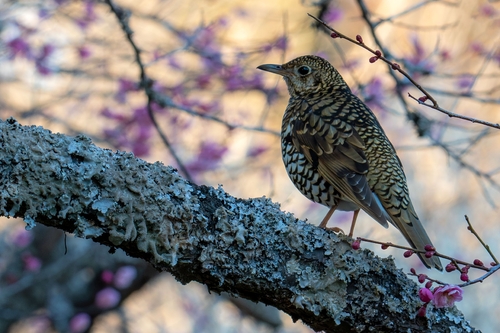 Tordo dorato
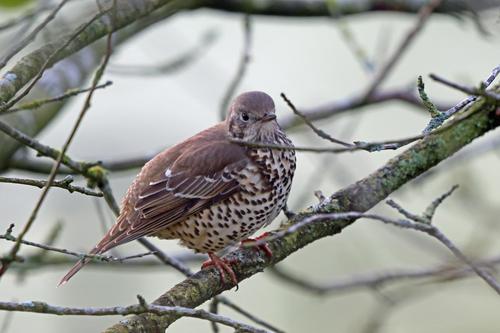 Tordela
In breve
Il modo più affidabile per separare il Tordo dorato dalla Tordela è il loro schema delle ali inferiori in volo: il Tordo dorato mostra una netta banda nera attraverso le copritrici bianche delle ali inferiori, mentre la Tordela ha ali inferiori bianche senza alcuna banda scura. Sugli uccelli posati, il Tordo dorato è pesantemente scallopato sotto con piume dorate o giallastre bordate di nero, mentre la Tordela è più chiara, con macchie nere rotonde su uno sfondo color sabbia o bianco sporco. I giovani Tordela possono sembrare confusamente patternati, ma mancano delle tonalità dorate e delle ali inferiori distintive del Tordo dorato. Anche la struttura e il comportamento aiutano: il Tordo dorato è più compatto e riservato, mentre la Tordela è più grande, più chiara e spesso sta eretta in aree aperte.
Consigli di identificazione
- Schema delle ali inferiori in volo (tutte le età): Il Tordo dorato mostra una netta banda nera attraverso le copritrici bianche delle ali inferiori—unico tra i tordi nella regione. Le ali inferiori della Tordela sono bianche. Dai sempre priorità a questo segno se l'uccello è visto in volo.
- Schema delle parti inferiori (posato, tutte le età): Il Tordo dorato ha un pesante scalloping o scaling nero su uno sfondo dorato o giallastro. La Tordela è più chiara, con macchie nere rotonde su un ventre e un petto color sabbia o bianco sporco.
- Confusione giovanile: I giovani Tordela hanno macchie più piccole e rotonde e segni a goccia di crema sulle parti superiori, ma mancano delle tonalità dorate e del forte scalloping nero del Tordo dorato. I giovani Tordo dorato mostrano già la banda diagnostica delle ali inferiori.
- Schema della coda: La Tordela ha punte bianche sulle piume esterne della coda, visibili quando la coda è aperta. Il Tordo dorato non mostra queste punte bianche.
- Colorazione generale: Il Tordo dorato appare dorato o giallastro sotto, specialmente in buona luce; la Tordela è più grigio-marrone sopra e sabbiosa o bianco sporco sotto.
- Struttura: La Tordela è più grande, più robusta, e ha una coda più lunga, spesso tenuta eretta. Il Tordo dorato è più compatto e arrotondato, con una coda più corta.
- Comportamento: La Tordela è spesso vista in aperto, eretta e allerta, a volte in stormi. Il Tordo dorato è timido, riservato, e preferisce coperture dense.
- Habitat: La Tordela frequenta boschi aperti, parchi, e campi; il Tordo dorato si attiene a foreste dense e umide ed è raramente visto lontano dalla copertura.
- Stile di volo: La Tordela ha un volo ondulato e rimbalzante con planate; il Tordo dorato è più diretto e costante quando viene spaventato.
- Vocalizzazione: Se sentito, il Tordo dorato emette un fischio meccanico e acuto 'tuuu...tuuu...tuuu' con lunghe pause. Il canto della Tordela è un forte, flautato gorgheggio (non dettagliato nelle note).
- Contesto stagionale: Entrambe le specie possono essere trovate in aree sovrapposte in alcune zone, ma il Tordo dorato è più probabile che sia un migrante o visitatore invernale, mentre la Tordela è spesso residente o forma stormi in autunno/inverno.
- Nessun dimorfismo sessuale: Entrambe le specie hanno piumaggio simile nei maschi e nelle femmine, quindi non fare affidamento sul sesso per l'identificazione.
- Forma delle macchie: Le macchie della Tordela sono rotonde e irregolarmente posizionate; il Tordo dorato ha un scaling più regolare e scallopato.
- Colore delle parti superiori: La Tordela è grigio-marrone chiaro sopra; il Tordo dorato ha una tonalità più calda, marrone dorato.
- Indizi contestuali: Se l'uccello si trova in un parco cittadino o in un campo aperto, è più probabile che sia una Tordela; se in una foresta umida profonda, sospetta il Tordo dorato.
Taglia
La Tordela è generalmente più grande e pesante del Tordo dorato. La Tordela misura 27–30 cm di lunghezza (a seconda della sottospecie), con un'apertura alare di circa 45 cm e un peso medio di circa 130 g, raggiungendo fino a 167 g in alcuni individui [wikipedia]. Il Tordo dorato è simile in lunghezza (27–31 cm) ma è tipicamente più snello e meno robusto [wikipedia]. La Tordela appare particolarmente con una coda lunga e robusta, mentre il Tordo dorato è più compatto e arrotondato.
Piumaggio
I giovani e gli adulti Tordo dorato di tutte le età mostrano un forte scaling o scalloping nero su uno sfondo dorato o giallastro, specialmente sulle parti inferiori. In volo, tutte le età rivelano una sorprendente banda nera attraverso le copritrici bianche delle ali inferiori—una caratteristica diagnostica chiave non trovata nella Tordela. Gli adulti e i giovani Tordela sono più chiari, con parti superiori grigio-marroni e macchie nere rotonde sulle parti inferiori giallastre-sabbiose o bianco sporco. I giovani Tordela hanno macchie più piccole e centri a goccia di crema sulle piume delle parti superiori, ma mai le tonalità dorate o il forte scalloping del Tordo dorato. Le ali inferiori della Tordela sono bianche, prive di qualsiasi banda nera. Anche lo schema della coda differisce: la Tordela ha punte bianche sulle piume esterne della coda, mentre il Tordo dorato non mostra questa caratteristica. Entrambe le specie mancano di dimorfismo sessuale nel piumaggio.
Comportamento
Le Tordela sono spesso viste erette e allerta in aree aperte, saltellando con la testa alta e a volte sbattendo le ali e le code. Sono più propense a essere viste in stormi, specialmente al di fuori della stagione di nidificazione, e sono generalmente più audaci e terrestri. Il Tordo dorato è riservato, preferendo coperture dense e muovendosi silenziosamente a terra o basse negli alberi. In volo, la Tordela ha un volo ondulato e rimbalzante intervallato da planate, mentre il Tordo dorato è meno spesso visto in aperto ma mostra un volo più diretto e costante quando viene spaventato.
Habitat
La Tordela è diffusa in tutta Europa, Asia temperata e Nord Africa, comunemente trovata in boschi aperti, parchi e persino spazi verdi urbani. È spesso vista in aperto, specialmente su prati o campi. Il Tordo dorato preferisce boschi densi e umidi e bordi forestali, raramente avventurandosi lontano dalla copertura. Se vista in habitat aperto, di solito è solo brevemente quando spaventata.
Voce
Il Tordo dorato ha un forte fischio meccanico che si diffonde lontano, con ogni frase che dura circa un secondo e separata da lunghe pause (5–10 secondi): un ripetuto 'tuuu...tuuu...tuuu.' Il canto della Tordela non è descritto nelle note fornite, ma è generalmente noto per essere un forte, flautato e piuttosto aspro gorgheggio, spesso emesso da una cima d'albero. I richiami non sono diagnostici con le informazioni fornite.